A practical guide to accommodation, entertainment and related searches, with clear limits on what the available details establish.
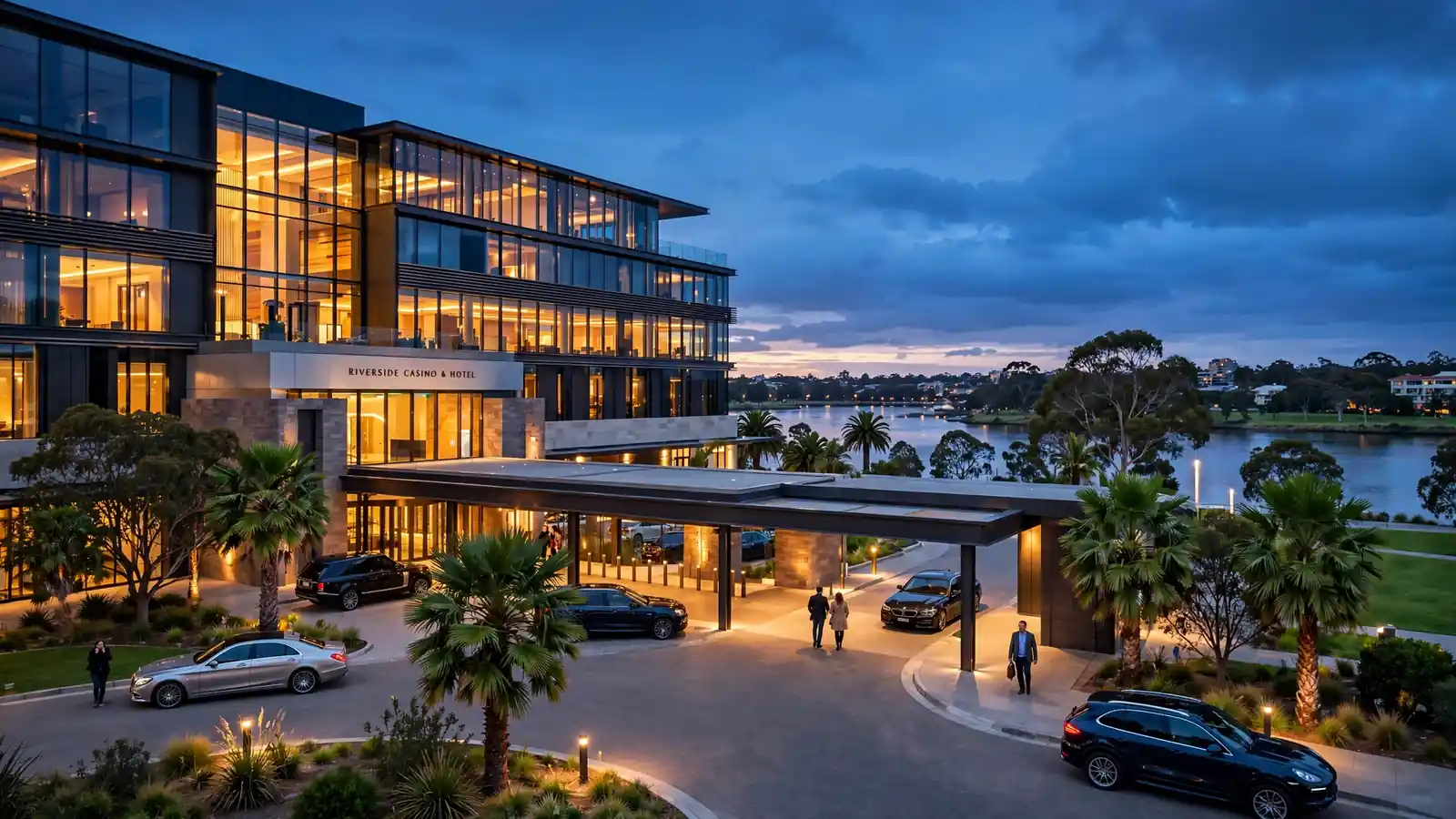
A hotel associated with a casino sounds like a single, settled proposition: a place to stay, attached to a place to play. In practice, the phrase can carry more certainty than it deserves. A venue name beside the word “hotel” does not, by itself, establish that accommodation is operated on the same site, what kind of rooms are offered, or whether a package is available. Those are separate particulars, not consequences of the label.
That distinction matters when considering a stay at Perth Casino. The idea of a casino hotel may suggest that a room can be booked as part of the venue, perhaps alongside dining or entertainment. But an expectation is not a room description. It says nothing reliable about bed arrangements, views, accessibility, included services, check-in conditions or the relationship between any accommodation business and the casino itself. Each detail needs its own confirmation.
The same restraint applies to prices. A phrase such as “hotel deal” may evoke a reduced rate, a bundled stay or a seasonal offer. It does not establish that a deal currently exists, what it includes, or which dates it covers. Prices and terms can change; a general association between a hotel and a casino cannot substitute for an actual offer with clear conditions. A bargain without terms is only a hopeful noun.
Choosing an online casino while searching for options in Perth means checking the details that are actually available, rather than assuming every operator suits the same needs. This list offers a concise reference to help you assess the listed casinos.
Roby Casino
Roby Casino is listed with a Curacao eGaming license held by Roby Games Ltd.
DragonSlots Casino
DragonSlots Casino is listed under the Curacao Gaming Authority, with Jumpman Gaming Ltd as the licensee.
Thor Casino
Thor Casino is listed with a Curacao license from Antillephone N.V. for Versus Odds B.V. Its minimum deposit is EUR 20.
7Bit Casino
7Bit Casino is operated by Dama N.V. and listed as licensed in Curacao.
Golden Pokies
Golden Pokies is listed with a Curacao license; no further operator details are provided here.
Rollero Casino
Rollero Casino is listed with a Curacao Gaming Control Board license, OGL/2023/176/0095, held by Hollycorn N.V.
MrPacho
MrPacho lists crypto payouts at 30–120 minutes and fiat payouts at 24–72 hours. The minimum deposit is A$30.
Kingmaker
Kingmaker lists crypto payouts at approximately 90 minutes and fiat payouts at 1–5 days. Its minimum deposit is A$30.
JustCasino
JustCasino is listed with a Curacao Gaming Control Board license; no further operator details are provided here.
WinSpirit Casino
WinSpirit Casino is listed with a Curacao eGaming license, OGL/2024/923/0383, from Antillephone N.V. Its minimum deposit is A$30.
For anyone weighing a stay within the venue, the useful questions are concrete. Is there accommodation at the casino itself, or is the phrase being used more loosely? Who operates the rooms? What is included in the rate, and what costs extra? Are cancellation conditions, accessibility details and booking dates stated plainly? These are not fussy distinctions. They determine whether “staying at the casino” means sleeping in the same complex, booking through a related business, or simply choosing somewhere else in the city.
Room descriptions deserve the same close reading as prices. A room category is not a guarantee of a particular layout or view unless the terms say so. Nor does the word “hotel” establish that facilities commonly associated with hotels are present. Amenities, services and access arrangements should be treated as individual claims, rather than filled in from an image of what a casino resort might look like.
There is also a difference between a hotel that happens to be near a casino and accommodation that forms part of it. The first is a question of location; the second is a question of ownership, operation and booking. The two can blur in casual wording, especially when a venue’s name is used as a landmark. But proximity does not create a shared reception desk, a room package or a common operator. Those relationships have to be stated, not imagined.
 Pokies by Region: Australian Casino GuideExplore city- and state-based topics for online pokies and casinos across Australia, including regional searches for pokies and casino play.
 Adelaide Casino Hotel: Rooms and Stay DetailsLearn how to check whether accommodation is offered by Adelaide Casino or by a nearby property, and what to verify on booking…
Opening times belong to another category again. The hours of a casino’s public areas do not establish when a hotel reception operates, whether rooms can be booked, or what access arrangements apply to overnight guests. Likewise, a hotel listing cannot be used to infer the casino’s current opening hours. Accommodation and venue operations may be connected in a visitor’s plans, but one does not answer the other.
A sensible account of Perth Casino accommodation therefore stays modest. It can distinguish an on-site hotel from nearby lodging, and a confirmed booking offer from a phrase that merely sounds promotional. It should not turn the general idea of a casino hotel into invented room features, prices or deals. In hospitality, as elsewhere, atmosphere is not a specification.
A casino can appear in a city’s entertainment life as a destination, an employer and a building whose fortunes are tied to a larger story of urban development. Those roles are easy to bundle together. They are not interchangeable. A venue’s past, its present operating status and its next public event each require different evidence.
The question of whether Perth’s casino is open is the most immediate, and the least well answered by old descriptions or general listings. Operating hours can change; a venue’s name remaining familiar does not establish that every part of it is accessible, or that it is operating as usual. A dated announcement about reopening is not a reliable guide to present conditions. Status is a matter of time, not reputation.
Attention: A dated announcement about reopening is not a reliable guide to present conditions, as operating hours and accessibility can change.
That distinction matters because “open” can mean several things in ordinary conversation: a property may be operating, a particular area may be available, or an event may be taking place. Without current information, none of those meanings should be silently substituted for another. The calendar is not the building.
Development is another word with a long shadow. It may refer to construction, refurbishment, a change in ownership or management, or a wider proposal for the precinct. These are different stages, and a proposal is not a completed project. The language of development can make a future possibility sound like a present fact; a careful account keeps intention, approval and delivery apart.
The same discipline applies to entertainment. A standing reputation for hosting leisure activity cannot establish a programme for a particular date. Events may be announced, altered or cancelled, and a listing without a clear date can linger long after its usefulness has passed. Current event information should identify what is actually scheduled and when, rather than rely on the broad promise that a casino is an entertainment venue.
There is a social history in that promise. Casinos have long tried to present gambling as one element in a wider evening out, placing it beside performances, dining and other forms of public leisure. That framing gives the institution a civic appearance: not merely a place where money changes hands, but a destination on the city’s calendar. Yet the label “entertainment” does not erase the distinctions between activities, nor does it confirm which are available at a particular venue now.
 Casino in Queensland: Hotels, Dining and Practical DetailsCompare on-site stays with nearby accommodation, and see what the search can confirm about poker, dining, parking, pool access and online table…
 Brisbane Casino Guide to Hotels, Dining and DetailsExplore how casino-hotel listings differ from nearby accommodation, plus what to check on rooms, dining, parking, rewards and venue services.
Employment belongs to a different register. A casino may be discussed as a source of work, but general expectations about hospitality or gaming roles do not establish that Perth has vacancies, what positions exist, or what conditions apply. Those details belong in current recruitment notices. The word “employment” can sound reassuringly concrete; without an actual role and its terms, it remains only a category.
For anyone following the venue’s development, public announcements are more useful when they specify what has happened, what remains proposed and what changes for visitors or staff. For those following events, dates and programme details matter more than broad promotional language. And for anyone trying to establish whether the casino is currently open, a recent, direct status update is more useful than a historic reference to its opening or reopening.
The city’s entertainment calendar is made of particulars: dates, doors, stages and decisions. A name alone supplies none of them.
A stay near a casino and a room inside one are different arrangements, even when a search phrase makes them sound interchangeable. “Near” describes a relationship to a venue, not a promise of a particular hotel, walking distance or view. For anyone comparing accommodation around Perth’s casino, the useful first distinction is therefore between the venue itself and independently booked places in its surrounding area.
That distinction matters because a name appearing beside a casino in a booking result does not establish that the property is part of the venue, affiliated with it or covered by a casino promotion. A deal described as being for a casino stay might refer to accommodation, dining, entertainment or a bundle of services; the wording alone does not settle what is included. The practical value lies in the conditions attached to the offer, not in the glow of the casino name.
The same caution applies to location. A map can help establish where a particular property sits in relation to a chosen destination, but a general label such as “near Perth casino” cannot do that work by itself. Distance, routes and the character of the surrounding area depend on the specific address and the traveller’s needs. Without a named property and its location, claims about convenience would be decoration masquerading as guidance.
A sensible comparison begins with the property, rather than with the promise of proximity. The booking details should identify what is being reserved, the dates covered, cancellation conditions and any charges or restrictions. If a package mentions access to casino facilities or a special rate, those terms need to say precisely what is included and who provides it. A promotional label is not a substitute for an itinerary.
There is also a quiet difference between accommodation chosen for a casino visit and accommodation chosen because the casino is one stop among several. The first may make closeness the main consideration; the second may give more weight to other destinations, the length of the stay or the traveller’s own routine. Neither is inherently the better choice. The word “near” cannot decide the matter, because it leaves the traveller’s actual priorities out of the sentence.
Searches for a pool, food or a food court can complicate the comparison. Those are questions about facilities and dining, not proof that any nearby accommodation provides them or that a casino-related booking includes them. A hotel’s own listing and the terms of a specific offer are the relevant places to establish what a stay provides. Similar names and neighbouring map pins do not merge separate businesses into one package.
 Hobart Casino: Poker, Stays and FacilitiesLearn how poker rooms, tournaments and pokies differ, and which searches about stays, dining and facilities remain unconfirmed by the available information.
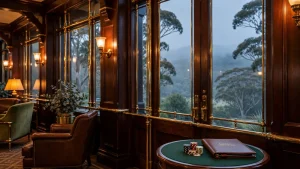 Tasmania Casino Hotels: What the Search Can EstablishThis guide separates venue visits from online gambling and explains why hotel rooms, deals and amenities need confirmation at the source.
This is less dramatic than a resort photograph, but more useful. Accommodation around a casino is a choice among individual properties and terms, not a single product created by the venue’s presence. Perth’s casino name may anchor the search; it cannot, by itself, verify a room, a rate or a deal. A little less gloss. A little more specificity.
A visit to a casino is made of small practical questions before it becomes an evening out: which entrance to use, where a car can be left, whether a particular table game is available, and how formal the room expects people to be. For Perth’s casino, those details should be confirmed through the venue’s current information channels rather than inferred from a search result or another property’s habits. A name shared across the industry is not a map.
The same care applies to contact details. A phone number copied from an old listing may no longer reach the right desk, while a general contact channel may not handle questions about parking, table games or a concert. The useful distinction is between the venue’s own published contact information and third-party directories, which can preserve outdated details long after a change. No invented address or number improves the journey.
Parking is a particularly ordinary detail with an unusually large effect on a night’s timing. A car park listing alone does not establish where its entrance is, whether spaces are available, what charges apply or whether access changes during an event. Those are operational particulars, not things that can be safely borrowed from a map pin. A map can help orient a trip, but it is not a guarantee about entry, parking arrangements or the route through the building.
A map can help orient a trip, but it does not guarantee entry, parking availability, or the specific route through the building.
Questions about baccarat and craps belong to the same category: a game name is not proof that a table is operating, or that it will be available at a particular time. Casino floors are managed spaces, not static catalogues. A current venue channel is the sensible place to establish whether a game is offered and what conditions apply. The distinction matters more than it seems. A familiar game can have different rules, table limits and availability from one venue to another; guessing turns a practical query into an expectation the venue never made.
Concert plans add another layer. A listing may describe an event without answering how arrival, parking or entry works on the night. Those arrangements can be event-specific, so concert information should be read together with the venue’s own instructions for that performance. The wider calendar belongs to the city’s entertainment life; this is the narrower business of getting through the door without relying on assumptions.
Dress codes are also easy to misstate. A general impression of casino formality is not a published policy. Clothing rules, where applicable, should be checked against the venue’s current guidance rather than reconstructed from photographs or from another casino’s standards. Dress expectations are often treated as trivial until someone is turned away. Then they become logistics.
Identification is not merely a courtesy at gaming venues. For Electronic Gaming Machines (EGMs), venues are required to check identification, and non-compliance can carry legal consequences. The quiet administrative ritual is part of how gambling is controlled in public spaces: the door is not only an entrance, but a point where eligibility is established.
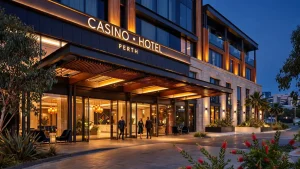 Casino Hotels in Western Australia: Stay or Online?Learn how casino stays, venue facilities and online gambling differ, including why a hotel booking is separate from an online casino account.
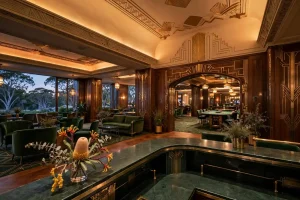 Victoria Casinos: Verified Facts and UnknownsSee what is—and is not—verified about Victoria casino hotels, poker, dining, parking and practical services; state rules cover land-based casinos.
For contact, directions, parking, games and event access, current venue-published details are the reliable starting point. The small print does the travelling.
Breakfast and buffet searches point to practical questions: whether food is served early, whether a buffet is available, and what a meal might involve. The words alone cannot settle those matters. A venue’s name in a search result is not a menu, a timetable or a promise that a particular service is operating.
That distinction matters because food is among the most changeable parts of a large entertainment venue. Service formats can differ by day, season or occasion; a buffet, if offered, would not necessarily be available whenever the building is open. Nor does the phrase “buffet breakfast” establish what is served, whether reservations are needed or what it costs. Without current particulars, filling those gaps with the familiar language of hotel advertising would make certainty out of atmosphere.
The resort label has a similar looseness. It can suggest a self-contained destination, but the word does not by itself confirm which facilities, services or packages belong to the Perth venue. In travel writing, “resort” often works less like an inventory than a mood: everything gathered under one roof, the day arranged so that leaving becomes optional. A search phrase cannot tell whether that description fits in practice.
Rewards programmes vary in how they work, who can join, and what benefits apply. Similarly, general searches for casino jobs do not establish current vacancies, pay, or hiring procedures.
The same caution applies to rewards. The idea is easy to understand: a venue recognises repeat custom, and visitors may wonder what participation brings. But the label does not specify how a programme works, who can join, what benefits apply or whether any particular offer is current. Those are conditions, not decorative details. A rewards name without its terms is a signpost with the destination rubbed off.
Employment searches carry a different human weight. Someone looking for work at a casino may be trying to understand what kinds of roles exist, how recruitment works or whether applications are open. None of those questions can be answered by the phrase “casino jobs” alone. It does not establish current vacancies, job titles, pay, eligibility or hiring procedures. Treating a general search as a live vacancy notice would be particularly unhelpful: an imagined opportunity can cost people time as well as hope.
The venue sits within a wider service economy, where hospitality, food and entertainment depend on workers whose jobs are less visible than the polished public spaces they maintain. That is not a claim about a particular opening or department. It is the ordinary structure of a large venue: the public sees an experience; behind it are shifts, skills and recruitment decisions. The difference between that broad observation and a specific job advertisement should remain clear.
For breakfast, buffet meals, rewards and employment alike, precise details matter more than attractive labels. A current offer needs its conditions; a vacancy needs an actual listing; a meal needs a menu and service information. “Resort” may describe an idea, but only particulars can describe what a visit or a job entails. No label can do that work on its own.
 Canberra Casino Guide: Hotels, Gaming and Practical ChecksLearn what can be confirmed about Canberra casino stays, poker and nearby amenities, and which hotel, food and online-gambling claims need checking.
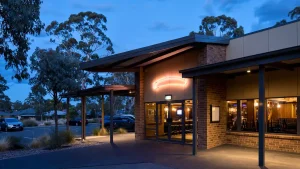 Best Pokies in Canberra: Hours and AccessLearn why a venue listing cannot confirm current opening status, and why checking directly is the soundest way to verify whether it…
A request for rooms at Perth’s casino can mean accommodation within the complex, or simply a room in which a particular activity takes place. The distinction matters. A hotel room, a poker room and a private event space are different things, even when a search term leaves them pressed together. The wording alone does not establish which facilities the venue offers.
The same caution applies to a casino gym. A large entertainment property may prompt assumptions about fitness facilities, but scale is not proof. Nor does a search for a sports bar or coffee shop establish that either is on site. These are practical details, not decorative extras: they shape how long a visit lasts and what kind of outing it becomes. A confirmed venue description is more useful than a plausible picture assembled from the word “casino”.
Poker brings another ambiguity. A poker room refers to a place for the game; a poker tournament refers to a scheduled event with its own arrangements. One does not establish the other. A venue might host an event without maintaining a dedicated room, or have a room without a tournament taking place on a particular date. For Perth, neither a room nor a tournament schedule should be assumed from the search wording alone.
There is also a cultural difference between poker and pokies. Poker is commonly understood as a game in which players compete against one another, while pokies are Electronic Gaming Machines (EGMs). The distinction affects what a visitor is looking for: a table game, a tournament, or a machine-based gambling area. But naming the distinction cannot confirm that any one of those options is available at a specific venue.
A game where players compete against one another, often in dedicated rooms or tournaments.
Electronic Gaming Machines (EGMs) that operate based on random outcomes.
Amenities such as gyms, sports bars, or coffee shops that may or may not be on site.
Searches for a casino sports bar and a coffee shop point to a broader expectation: that gambling, watching sport and taking a break might sit under one roof. That expectation is understandable, but a search phrase is not a venue directory. Names, opening times and facilities need current confirmation before they can be treated as part of a Perth visit.
The most reliable approach is to separate the questions rather than let one answer stand in for another. Accommodation does not prove there is a gym; a poker event does not prove there is a permanent poker room; and a sports bar or café elsewhere in a complex does not establish one at the casino itself. These details can change, and event information is especially time-sensitive.
A venue search can suggest what people hope to find: a place to stay, exercise, play poker, watch sport or pause for coffee. It cannot settle those particulars by itself. Plausibility is not confirmation.
A spa search attached to a casino in Perth can make the venue sound like a complete leisure package: gaming, bars and a place to slow down between them. But a search phrase is not a facilities list. Without confirmed details, it cannot establish that the casino has a day spa, what treatments might be offered, whether appointments are available or how any service operates. The distinction matters: expectation can be assembled from a few adjacent words, while an actual facility needs more than an attractive association.
 Darwin Casino: Venue, Hotel and Practical DetailsReview what the article can establish about Darwin Casino, from accommodation and dining to opening hours, online searches and Australian law.
 Pokies in South Australia: what the odds can tell youLearn how independent RNG outcomes differ from venue opening claims, online legality and gaming oversight in South Australia.
The same caution applies to the venue’s address. A location should come from a current, official listing, not from a guess based on a name or from a map result that may refer to a different entrance or business. That is a practical matter, but it also reflects a larger habit of city life: venues become shorthand for whole precincts, and the shorthand can blur the boundaries between what is inside, nearby and merely imagined.
Bars invite a similar leap. The phrase “casino bars” says what someone hopes to find, not which bars operate at the venue, their hours, menus or entry conditions. Nor does a general reference to games confirm a particular selection or availability. These are details that can change, and a broad label cannot stand in for a current venue notice.
Dress expectations are another small but telling piece of the social contract. A dress code is not simply a question of clothing; it marks how a business wants its public space to feel and who it imagines moving through it. Yet no particular policy should be inferred from the casino setting alone. A visitor relying on an assumed standard could be caught between custom and an actual rule, which is why the venue’s own current guidance is the meaningful reference.
Career searches belong to a different register. They point not to a visitor amenity but to the work behind the public-facing room: the people who serve, maintain and manage a large entertainment business. The existence of interest in casino careers does not establish that vacancies are open, what roles are available or what conditions apply. Those are employment particulars, not something a venue label can answer.
Taken together, these subjects show how much a name can carry. A spa, a bar, a games floor, a workplace and a dress expectation all gather around one place in the imagination. Some may be present; each specific claim still needs confirmation. Search language is good at drawing a map of curiosity. It is less reliable as a map of the building.
A search for the best casino in Perth can point towards a physical venue, but the word *casino* also leads into a different legal question: whether casino games can be offered online to people in Australia. The distinction matters. A local venue search is not an invitation to treat an online gambling service as its digital counterpart.
The Interactive Gambling Act 2001 prohibits operators based in Australia from providing real-money online casino games to people in the country. That restriction covers familiar games such as pokies, blackjack and roulette. It is the operator’s provision of the service that the law addresses; the rule is not a licence for an Australian business to move the same offer onto a website.
Offshore sites sit outside that domestic framework. Australian law does not regulate them, even though it is technically not illegal for an Australian player to use one. That difference can sound reassuring when reduced to a sentence. It is not the same as local oversight: an overseas operator is not made an Australian-regulated provider simply by being reachable from Perth. A search for a casino licence in Perth should therefore not blur the distinction between a venue and an online operator.
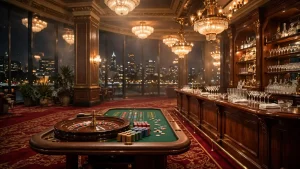 Casino Hotels in Melbourne: Rooms and Visit DetailsLearn how to assess casino hotel listings, compare nearby stays and check practical visit details. A casino label alone does not confirm…
 Keno Online Casinos in Australia: Legal PositionLearn how Australia’s Interactive Gambling Act 2001 treats real-money online keno, why operator responsibility matters, and where offshore disputes complicate play.
Access itself may be restricted by location. Online casinos can use the IP address of a connection to estimate where a player is, then block access from excluded countries. A game may consequently be unavailable or fail to load from an Australian connection. The screen can make a legal boundary look like a technical fault. It is not necessarily one.
A virtual private network can make an internet connection appear to come from somewhere else, but using one to get around a site’s regional restriction breaches that site’s terms and may result in account suspension. Changing the apparent location does not change the player’s physical location or turn an offshore service into one regulated under Australian law.
The wording around “Perth casino online” may also mix entirely different subjects: a physical casino’s public presence, its dining, or online casino games. Those are not interchangeable. Dining information belongs to the venue; online casino play is governed by a separate national prohibition on Australian operators. A page about the city’s casino should not quietly convert one subject into the other.
That boundary reflects a policy choice about who may provide gambling services, rather than a judgement about what a searcher intended. Online access can look borderless; Australian law does not treat it that way.
Dining attached to a casino carries two ideas at once: a meal and a setting built around entertainment. The restaurant may be treated as part of an evening’s itinerary, rather than simply a place to eat. That association can make the label feel more informative than it is. “At the casino” locates a dining search in relation to a venue; it does not, by itself, describe the food, atmosphere or service.
For Perth, that distinction matters. A restaurant connected with the casino is not automatically a particular kind of restaurant, and the word “restaurants” does not establish how many choices there are. Nor does a rooftop-bar search confirm that a rooftop bar forms part of the venue’s dining offer. Those are separate questions, however naturally they gather around the same place-name.
A useful way to think about casino dining is to separate the meal from the occasion. Some diners want a destination in its own right; others want somewhere to eat as one part of a larger night out. These are different expectations, even when both begin with the same address. The first turns on cuisine and the character of the room. The second depends on how dining fits into the evening. A venue name cannot settle either question.
The word “restaurant” also gives no reliable clue to price or formality. It might suggest table service to one person and a casual meal to another. Rooftop, meanwhile, is a description of position, not a menu or a promise of a particular view. The image is easy to supply; the details are another matter.
This is why a list of dining names, stripped of context, can be less useful than it looks. Names alone do not explain what sort of meal is offered, whether a bar is part of a restaurant, or whether a venue suits a quick stop or a planned occasion. The distinction is not fussy. It is the difference between recognising a place and knowing what happens there.
Casino restaurants sit at an intersection of hospitality and spectacle. The setting may lend a meal a sense of occasion, but it cannot substitute for the ordinary particulars by which dining is judged: what is served, how it is presented, and what the experience costs. Those details belong to each individual venue, not to the word “casino”.
The phrase “Perth casino” identifies a destination in broad terms. It does not, alone, make a restaurant recommendation. A meal still has to stand on its own.
Poker machines invite a particular kind of arithmetic: the belief that a run of outcomes must be leaning towards a correction. A sequence of losses can feel like evidence that a win is due; a recent win can seem to promise another. Neither impression changes the machinery.
For online pokies, each outcome is generated by a Random Number Generator, or RNG. A spin stands on its own. The RNG does not keep a record of earlier results and adjust the next one, so previous spins do not make a future win more or less likely. Chance has no memory, though people are very good at supplying one.
RTP, or return to player, describes a different scale. It is a theoretical measure of the share of wagered money a pokie pays back across a very large number of spins. It is not a forecast for a particular session, nor a promise that a player will receive a corresponding share of their own wagers. Short runs can depart sharply from a long-run measure. That is the point of the word “theoretical”.
This distinction matters when interest in poker machines is attached to a specific place, such as Perth casino. General information about online pokies explains how their outcomes and RTP are described; it does not establish what machines a venue has, how they operate on site, or what conditions apply there. Those are separate questions from the mathematics of an online spin.
The same distinction applies to poker. In ordinary conversation, “poker machines” and the card game poker can sit close together, though they describe different forms of play. The mechanics of an online pokie say nothing about a venue’s poker tables, memberships or current opening status.
There is a modest social history in the appeal of these machines: they turn chance into a repeated, legible ritual, with a button, a result and the invitation to try again. The interface is simple. The interpretation is not. A machine’s long-run measure cannot tell anyone what the next spin will do, and no streak changes that.
Australian-run online casinos cannot legally offer online casino games to players in Australia under the Interactive Gambling Act. Australian players are not themselves prohibited from using offshore casinos, but those platforms are not regulated under Australian law.
Examples include progressive jackpot pokies, which add a portion of bets to a growing jackpot, and buy-bonus pokies, which let players pay to enter a bonus round. Pokies may also offer free-spin bonuses.
Yes. Pokies use a Random Number Generator, and each spin is independent, so previous results do not affect the next one.
NSW uses mandatory pre-commitment systems in which players set a loss limit before playing.
You must be 18 or older to gamble on poker machines in NSW.