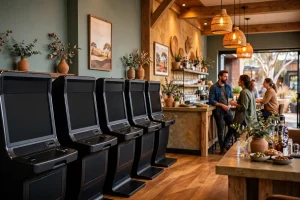
Casino hours, gaming-area access and local venue schedules are different questions, and a broad national pattern cannot confirm a specific place is open.
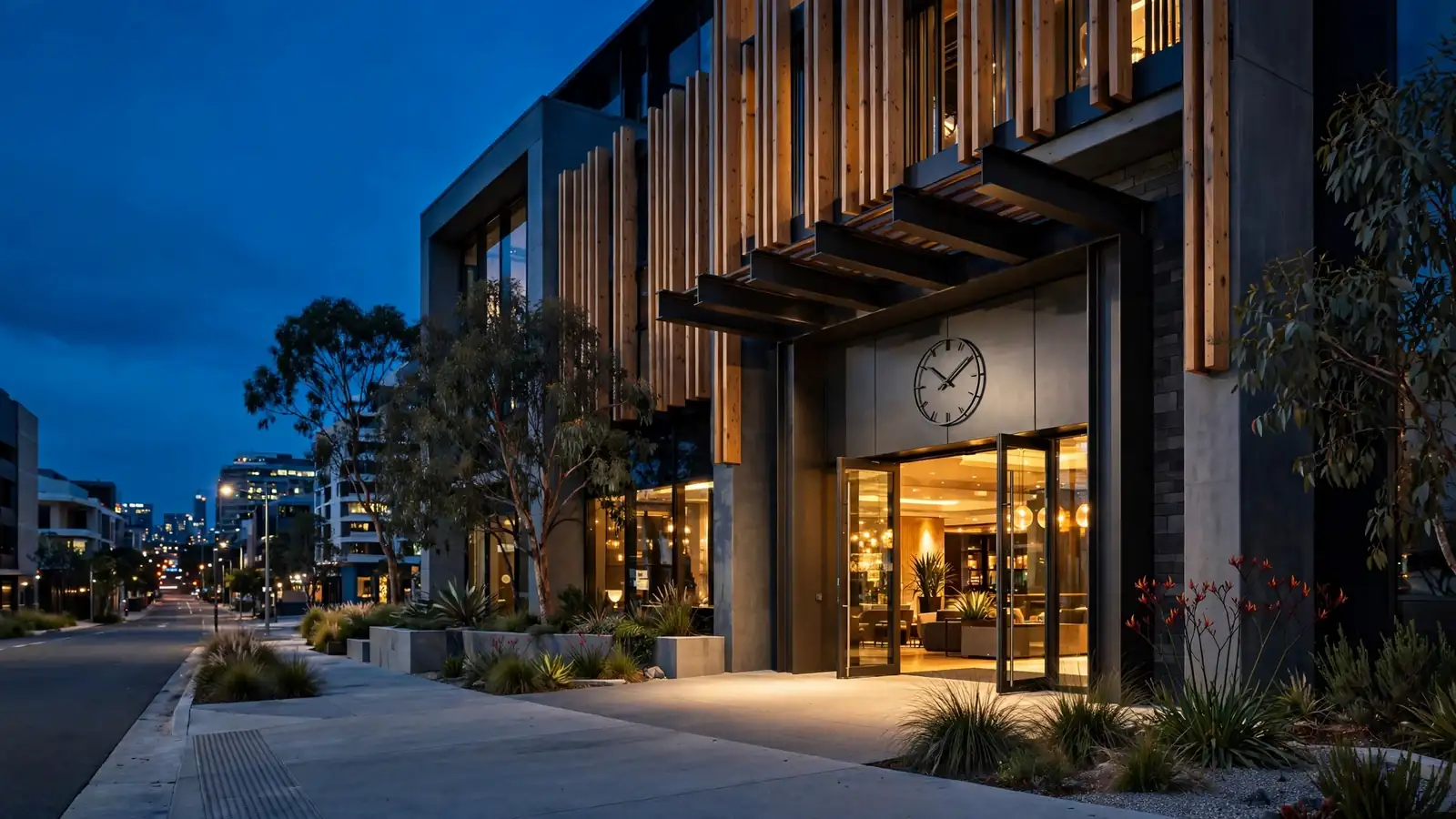
“Open now” sounds like a simple description of a door’s status. In practice, it compresses several questions into one: whether a venue is operating, whether the relevant gaming area is accessible, and whether the particular place in mind is open at that moment. Those questions do not always share an answer.
The broad pattern for major Australian casinos is unusually clear: they operate around the clock. That makes a casino a plausible destination when the hour is late or the day has begun early. But the national pattern is not a live noticeboard. It does not establish the present status of a specific venue, nor does it say that every service or area inside it is available at every hour.
That distinction matters because people use “pokies” as a flexible word. It can mean the machines themselves, a casino where they are found, or a local gaming venue such as a pub. The phrase “pokies near me, open now” therefore carries a practical ambiguity. A major casino and a neighbourhood pub with gaming machines are not interchangeable places, even if a short search phrase treats them as though they were. Their hours depend on the venue.
Finding pokies to play online from Australia can involve more than checking whether a site is available. Use this list as a starting point to review the details provided for each operator before deciding where to play.
Roby Casino
Roby Casino is listed with a Curaçao eGaming license held by Roby Games Ltd. That licensing detail is the available point of reference for this operator.
DragonSlots Casino
DragonSlots Casino is listed with a Curaçao Gaming Authority license held by Jumpman Gaming Ltd. The license and company are its notable details here.
Thor Casino
Thor Casino is listed with a Curaçao–Antillephone N.V. license under Versus Odds B.V. Its stated minimum deposit is EUR 20.
7Bit Casino
7Bit Casino is listed as operated by Dama N.V. in Curaçao. These are the available details to consider for this operator.
Golden Pokies
Golden Pokies is listed with a Curaçao license. No further operator details are provided here.
Rollero Casino
Rollero Casino is listed with a Curaçao Gaming Control Board license, OGL/2023/176/0095, under Hollycorn N.V. The license reference and operator are its stated identifying details.
MrPacho
MrPacho lists crypto payouts of 30–120 minutes and fiat payouts of 24–72 hours. Its stated minimum deposit is A$30.
Kingmaker
Kingmaker lists crypto payouts at around 90 minutes and fiat payouts at 1–5 days. Its stated minimum deposit is A$30.
JustCasino
JustCasino is listed with a Curaçao Gaming Control Board license. No other operator details are provided here.
WinSpirit Casino
WinSpirit Casino is listed with a Curaçao eGaming license, OGL/2024/923/0383, under Antillephone N.V. Its stated minimum deposit is A$30.
The 24-hour pattern belongs to major casinos, not to every place where gaming machines may be present. It gives a useful national baseline without turning into a promise about a particular nearby venue. A late-night result may name a casino that normally operates continuously; it cannot, by itself, confirm that the entrance is open at the moment of arrival or that a particular part of the property is accessible.
There is also a difference between a casino being open and a machine being available for use. An operating venue contains more than its gaming floor: entrances, restaurants, bars and other facilities may have their own arrangements. The fact that the casino operates through the day and night does not establish that every amenity follows the same timetable. “Open” is a broad word carrying a small administrative burden.
The scale of the casino machine market gives the word another dimension. Across Australian casinos, 3,308 gaming machines are endorsed on venue licences and installed. That figure describes a licensed, installed total; it is not a count of machines available at a given moment, a guide to the nearest venue, or an indication of which facilities are operating at any particular time. A national number is good at being national.
 Best Pokies in Adelaide: What Rankings Can Tell YouLearn why machine rankings cannot predict payouts, and how venue hours, location, payment costs and legal limits shape Adelaide pokies searches.
 Adelaide Casino Hotel: Rooms and Stay DetailsLearn how to check whether accommodation is offered by Adelaide Casino or by a nearby property, and what to verify on booking…
For someone looking for the closest place that is open, distance and operating status remain separate pieces of information. A venue can be nearby without being open, and a major casino can operate 24 hours without being the nearest option. The phrase “nearest pokies open now” blends geography with a current-status claim. The first is about where a venue is; the second is about its situation at a particular time. One does not settle the other.
This is why “open now” should be read as a request for current, venue-specific information rather than as a conclusion drawn from the countrywide operating pattern. The fact that major casinos are continuous operations narrows the uncertainty, but it does not erase it. A particular location can have circumstances that are not captured by a general description of Australian casinos. That is true even when the broader pattern is steady.
There is a small social history in the language. The machine is often named before the place: “pokies” first, venue second, opening status last. It reflects how people encounter gaming as part of ordinary local life, not only as a destination in a large casino. Yet the term can flatten important differences between a casino and a pub, and between customary hours and confirmed access. Familiar wording is not precise wording.
So, for major Australian casinos, the baseline is continuous operation. For a specific nearby venue, “open now” remains a question about that venue at that time. Those statements can sit together without contradiction. One describes the broad operating pattern; the other concerns a particular door.
Major Australian casinos generally operate around the clock, but this national pattern does not guarantee that every specific venue or internal facility is open at all times.
A request for access at dawn or near daybreak sounds like a question about a clock. In practice, it also depends on where the venue sits: an address can place a gaming venue on the map, but it cannot settle whether its doors are open at a particular hour. Three locations make that distinction tangible, from an inland town in the Northern Territory to the Gold Coast and a Tasmanian municipality.
Lasseters Casino is at 93 Barrett Drive, Alice Springs, NT 0870, Australia. That address gives a precise point in Alice Springs, rather than an undifferentiated result somewhere in the Northern Territory. It is useful for identifying the venue and its town; it does not establish a daily opening or closing time. Someone looking for a place to visit at six or seven in the morning cannot derive that answer from the street address alone.
The difference matters because early-hour searches often compress two separate needs into one phrase: a place nearby, and confirmation that it is open now. Location information can answer the first only when it identifies a real venue and its position. It cannot, by itself, answer the second. A named address is not a timetable. The distinction may seem plain, but the language of a search result can make proximity and availability look like a single promise.
On the Gold Coast, Jupiters Gold Coast Casino & Hotel is located on Broadbeach Island. The island reference gives the venue a recognisable geographic setting without supplying a street number or an opening schedule. It can narrow down where the venue is in the broader coastal city, but it does not confirm whether a gaming floor is accessible at eight in the morning or remains open through the small hours.
That gap is especially easy to overlook when a place has a familiar name. Names can travel farther than practical details: they recur in directories, maps and remembered plans, while the question of access belongs to a particular day and time. Broadbeach Island locates Jupiters; it does not turn the location into an hour-by-hour assurance.
A third point lies inland from Tasmania’s larger urban centres. Country Club Casino has an address on Country Club Ave in Prospect, within Meander Valley. The municipality and street name provide a geographic frame, but they do not specify when the venue admits visitors. A search for late access—perhaps someone hoping to stay out until five or six—still needs information about the venue’s current schedule, not merely a match between a name and a place.
These locations also show why “nearby” cannot be treated as a national measurement. Alice Springs, Broadbeach Island and Prospect are not interchangeable points on a single local map. Each belongs to a different regional setting, and the usefulness of any result depends on where the person seeking it is located. A venue may be accurately described and still be far from the relevant starting point. A venue may be close and still have no confirmed opening time attached to the location information.
The urge to attach a precise hour to a place is understandable. A person deciding whether to travel wants something more useful than a name. Yet the address and the schedule answer different questions, and joining them without evidence creates false certainty. The three named places establish where these gaming venues are: in Alice Springs, on Broadbeach Island, and in Meander Valley. They do not establish opening at six, seven or eight in the morning, nor a closing time at dawn.
Located at 93 Barrett Drive, Alice Springs, NT 0870, Australia.
Located on Broadbeach Island, Gold Coast.
Located on Country Club Ave in Prospect, Meander Valley, Tasmania.
The map can be exact. The clock remains separate.
A Good Friday opening question sounds local: is a nearby venue admitting guests today? The answer cannot be derived from a single Australian holiday timetable. Casino properties are licensed by the state or territory in which they operate, so the authority governing one venue is not automatically the authority governing another. The national map has no single licensing desk setting one holiday arrangement for every casino.
That division matters most when an ordinary day gives way to a public holiday. A venue’s usual pattern does not, by itself, settle whether its arrangements change on Good Friday. Nor does a general statement about Australian casinos establish what happens at a particular property on that date. Holiday access is a separate, venue-specific question.
The distinction is easy to miss because “open” compresses several matters into one word. It can mean that a building is operating, that particular areas are accessible, or that the casino floor is admitting guests. A holiday can make those distinctions more consequential, but the relevant answer still belongs to the particular venue and its local jurisdiction. A national rule cannot be inferred from the fact that the property is a casino.
There is a broader civic pattern here. Australia has not placed casino regulation under one national licensing authority; responsibility is divided among states and territories. That arrangement reflects the way gambling has been governed: locally licensed properties sit within separate jurisdictions, even when people speak of the industry as a single national market. Holiday calendars may be shared in parts, but licensing is not thereby made uniform.
This is why a search for a nearby casino on Good Friday cannot be answered responsibly with a blanket yes or no. One jurisdiction’s arrangements cannot be borrowed to describe another’s, and a venue’s ordinary operations do not amount to a holiday notice. The same caution applies when the date is another public holiday: the label alone does not establish what is happening at an individual property.
The limits of general information are practical, not merely legalistic. A broad account of casino operations can describe the market’s ordinary pattern, but it cannot serve as live confirmation for a particular holiday. Even a casino operating around the clock in ordinary conditions may have a separate holiday arrangement; the general pattern does not prove one way or the other. Conversely, the existence of local licensing does not prove that a venue will close. It identifies where responsibility sits, not the outcome on a given day.
The most reliable distinction is therefore between national context and local confirmation. National context explains why there is no single holiday timetable to apply across the country. Local confirmation is what establishes whether a specific venue is accessible on Good Friday, and under what arrangements. Without that venue-level information, certainty would be an invention.
Attention Casino properties are licensed by individual states or territories; therefore, there is no single national timetable for public holiday openings.
The phrase “near me” makes the question feel immediate, but proximity does not resolve jurisdiction or establish a holiday schedule. A nearby casino remains a property governed by its own state or territory licence. The date may be common; the answer need not be. That is not a contradiction in the ordinary 24-hour operating pattern. It is the narrower point that ordinary operations and holiday-specific access are different questions.
No national timetable.
“Nearby” is a modest word on a very large continent. In Australia, a venue search can point towards a casino in a capital city, a regional centre or a smaller community; the distance between those possibilities is not captured by a national list. A specialist venue directory reports gambling facilities in 147 Australian cities. That figure gives a sense of spread, not a promise that every town has a casino or that the closest listed facility is accessible from every starting point.
The same directory counts more than 20 full-scale casinos across all eight states. The count is useful as a broad map of the industry, but it should be read as a directory’s snapshot rather than a permanent national inventory. Venues and classifications can change. More importantly, the word “gambling” covers a wider field than casinos alone. A city recorded as having gambling facilities does not thereby have a full-scale casino on its main street.
That distinction matters when someone is trying to find a place close to home. A result for a nearby gaming venue may describe a different kind of facility from a casino, while a casino elsewhere in the same state may be many kilometres away. The map can group them under a broad category; the journey cannot. Geography insists on the difference.
Sydney stands out in the directory’s city comparison. It is identified as Australia’s largest gambling city, with 11 gambling facilities. This is a count of facilities, not a ranking of neighbourhood convenience, nor evidence that all those places serve the same purpose. A city can hold a dense cluster and still leave substantial distances between a person’s starting point and the nearest relevant venue. Numbers organise a map; they do not shorten it.
The regional scale also helps explain why a search for a place near Redcliffe, for instance, cannot be answered by a national count alone. The location name narrows the area of interest, but a count of Australian cities says nothing by itself about what is immediately nearby. A useful local answer depends on the exact starting point and on whether the intended destination is a casino or another gaming venue. Without that distinction, “closest” can quietly change meaning halfway through the journey.
Australia’s spread of facilities reflects more than population distribution. Gambling has been accommodated through local licensing and venue arrangements, so the national picture is assembled from decisions made across different jurisdictions. The result is not one evenly spaced chain of casinos. It is a patchwork: metropolitan concentrations alongside facilities in regional settings, with the particulars varying from place to place. A national total can show scale, but not a uniform level of access.
Sydney is identified as Australia's largest gambling city, featuring 11 gambling facilities.
This is why a broad search for a nearby destination and a precise local answer are different things. The former can establish that facilities exist across the country and that Sydney has the largest recorded cluster in the directory. The latter requires a locality-specific check and a clear idea of what kind of venue is wanted. A dot on a national map is a beginning, not a doorstep.
The figures offer perspective, then, rather than directions. Australia has a wide geographic footprint of gambling facilities, and its largest city has the greatest facility count in the cited comparison. Beyond that, proximity belongs to the local map. Vast country. Close only by definition.
The statement that all major Australian casinos operate around the clock has a defined subject: major casinos. It describes the operating pattern of that group, not every place where gambling is available. A gaming venue can mean a different kind of premises altogether, and the shared word “gaming” does not make its hours interchangeable with those of a major casino.
That distinction matters because everyday language tends to flatten categories. A person may use “casino” loosely for a place with gaming machines, while a venue’s own classification may be narrower. The 24-hour description cannot simply be carried across that boundary. It establishes a broad pattern for major casinos; it does not certify a continuous schedule for every club, hotel or other premises that offers gambling.
Nor does the statement mean that every part of a major casino’s operation must be available at every moment. A building’s operating hours and the availability of each facility within it are separate questions. The general fact concerns the casino as a whole. It should not be stretched into a promise about every service or area on site.
A phrase such as “open 24 hours” sounds wonderfully complete. In practice, it is only as broad as the category it describes.
This is why a claim about round-the-clock operation needs a clear noun attached to it. “Major Australian casinos” is a specific category. “All gaming venues” is a much larger one, and the first statement does not establish the second. The difference is not a technicality for its own sake: it prevents a broad national description from being mistaken for a schedule applying to every local premises.
The same care is needed when describing a particular venue. A general pattern for major casinos does not, by itself, identify which premises count as major casinos or settle how a specific venue describes its operation. The category-level statement should remain category-level; turning it into a guarantee for a named place would add certainty that the statement does not contain.
There is also a difference between an industry’s continuous operating pattern and a promise that any individual facility is continuously available. The first is the stated fact about major casinos. The second would require a more specific claim. Conflating the two makes a useful distinction disappear: the institution may operate around the clock, while the phrase alone says nothing about every component within it.
No universal timetable follows for all premises that offer gambling. Nor does the 24-hour pattern for major casinos establish that every local venue follows the same model. Those are separate propositions, and one cannot stand in for the other.
The careful conclusion is modest. Major Australian casinos operate 24 hours a day. That fact should not be rewritten as “every gambling venue is open all day and night,” or as a guarantee that every facility at a casino is available continuously. The scope is the point. A broad operating pattern is not a universal key.
A nearby result can point towards a physical casino, but it cannot settle every question attached to the word “open”. Australia’s casinos sit within a state and territory system: each property holds a licence issued by the jurisdiction where it operates. The arrangement makes local government the authority over a venue’s status, rather than a single national casino office.
That framework matters because a map pin is not a licence record, and a listing is not an entry decision. Casino entry is restricted to adults aged 18 and over nationwide. Major casinos require valid photo identification at the door, so proximity alone says nothing about whether a person can enter. A venue’s address and its rules are different kinds of information.
The distinction becomes more important when “near me” leads away from a building and towards a website. Australia’s federal regulator, the Australian Communications and Media Authority, enforces the Interactive Gambling Act 2001 and monitors compliance with federal interactive-gambling laws. The Act prohibits operators from providing real-money online casino games to people in Australia. Online blackjack, roulette, poker and slot-style games fall within that prohibited category when offered as interactive gambling services to customers here.
A physical casino and an online gambling service therefore belong to different regulatory questions. A search result that uses familiar casino language does not turn a digital service into a locally licensed venue. Nor does a working website, an account page or an alternate web address establish Australian authorisation. The internet is very good at producing an appearance of continuity; the law is less impressed by appearances.
This is not a claim that every online gambling service is treated alike. Federal rules concern interactive gambling, while the physical casino’s licence belongs to its state or territory. The separation reflects a federal arrangement in which the same word—casino—can refer either to a building governed by a local licence or to an online service governed by national legislation. Similar branding does not erase that boundary.
So a location result can help identify a physical property, while age and identification rules determine a basic condition of entry. It cannot certify a website, confer a licence, or resolve the legal status of a digital offer. Those are separate matters, governed by different authorities. A useful distinction, if an ungainly one.
Late-night access has a different feel from an ordinary daytime visit. The city has thinned out, public transport may be less frequent, and a venue’s lights can look like a promise of uninterrupted activity. For major Australian casinos, the broad operating pattern is unusually simple: they run around the clock. Night, in itself, is not a scheduled closing point.
That does not make every late journey equally straightforward. A national description cannot tell whether a particular property is convenient from a given suburb, whether its entrance is easy to find after dark, or what the surrounding area is like at that hour. Those are practical details, not consequences of a 24-hour operating pattern. They belong to the particular place and the particular journey.
There is also a difference between the casino floor and the wider building around it. A large property may contain several facilities, but round-the-clock operation by a major casino should not be read as a promise that every service, restaurant or other part of the complex follows the same timetable. The distinction is mundane, and useful. A building can remain active without every door serving the same purpose.
The phrase “open late” can therefore point to two different things: a venue that keeps operating through the night, or a nearby place whose current arrangements suit a late visit. The first has a clear national answer for major casinos. The second depends on the location, and cannot be settled by the hour alone.
This is why a late-night plan is best understood as a local matter rather than inferred from a general description of Australian casinos. The country’s major properties do not share a nightly closing hour; that does not turn a broad operating pattern into a live notice for every address. Nor does it establish the conditions of arrival or the availability of every facility.
The practical conclusion is narrow but meaningful: late hours are part of ordinary operation at major Australian casinos. Beyond that, the details are attached to the individual venue. Night is covered. Everything around it is local.
Christmas Day has a way of making ordinary routines look provisional. A city may seem familiar, its streets and buildings unchanged, while the public calendar quietly alters what is available. For casino access, the distinction is between the normal operating pattern and a particular date.
All major Australian casinos operate around the clock. That is a useful baseline for understanding ordinary access, but it does not settle whether a particular venue will admit visitors on Christmas Day. A standard operating pattern is not a holiday timetable. Nor does the existence of a major casino in a city establish that its doors will be open on that date.
The answer to whether pokies are open on Christmas Day nearby therefore belongs to the individual venue, not to a national rule inferred from ordinary hours. A casino may have a schedule or access arrangements specific to the day; those details need to be confirmed for the property and date in question. Without that confirmation, neither a confident yes nor a confident no follows from the general 24-hour pattern.
This is a small but important distinction. “Open all day” describes a regular mode of operation. “Open on Christmas Day” is a calendar-specific claim. Treating the first as proof of the second turns a broad fact into a promise it cannot support. Holiday plans are less accommodating than grammar.
The clearest confirmation is a current notice issued by the venue itself, or direct information from its official contact channels. It should identify Christmas Day rather than merely repeat ordinary opening information. If the notice does not address that date, the status remains uncertain; an address, a map listing or a general description of the casino cannot fill the gap.
Attention A general 24-hour operating pattern does not confirm that a venue will be open on Christmas Day; date-specific confirmation is required.
That uncertainty is not evidence that a casino is closed. It is simply a limit on what ordinary hours can establish. A Christmas Day visit should rest on a date-specific confirmation, rather than on the assumption that a 24-hour operating pattern necessarily applies unchanged to every calendar occasion.
Anzac Day can make a familiar venue feel like a different proposition. A casino’s presence in a town is one fact; whether its doors are open to the public on a particular holiday is another. A regional directory cannot settle the second question merely by showing a pin on a map.
The distinction matters because ordinary operating patterns do not themselves establish a holiday timetable. A venue may be part of a city’s landscape and still have access conditions that change for a particular date. Nothing about its address, name or usual role in local life confirms the arrangements for Anzac Day. Presence is not permission.
The Northern Territory offers a useful sense of scale, though not a holiday answer. A specialist casino review counts three casinos across three cities in the Territory. In that review’s city breakdown, Alice Springs has the largest count: one casino. The figures describe a market snapshot, not an official schedule, and they should be read as geographic context rather than proof of access on a named date.
That distinction can be easy to lose when nearby venues are treated as interchangeable points. They are not. Even within one jurisdiction, an address identifies where a property is; it does not tell whether entry is available on Anzac Day or whether arrangements differ from ordinary days. The map answers “where”. The calendar asks something else.
A sensible account of holiday access therefore stops short of turning a regional listing into a promise. The Territory’s spread of venues may help explain where casino facilities exist, but it cannot confirm that any particular one is open to the public on Anzac Day. That requires information tied to the individual venue and date. Geography is not a timetable.
At a physical gaming venue, cash or cheque arrangements are practical matters tied to that property. A search for a nearby place that accepts either does not establish what the venue offers, just as a high rating does not reveal how that rating was compiled. “Top rated” is a label, not a standard measure of access, service or suitability.
Online claims belong to a different category. An operating website, a page that accepts account details or a newly appearing web address does not show that its casino service is licensed in Australia. The Interactive Gambling Act 2001 prohibits operators from providing real-money online casino games to people in Australia. A familiar-looking domain is no substitute for legal status.
The federal regulator, the Australian Communications and Media Authority (ACMA), can ask internet service providers to block websites that offer prohibited interactive gambling services or advertise them in Australia. Following enforcement action, it has blocked more than 1,455 illegal gambling and affiliate websites since November 2019. Those interventions have consequences for what domains load. They do not turn an accessible address into evidence of Australian authorisation.
There is a discrepancy in reported totals for illegal services that withdrew after ACMA enforcement began in 2017: one account gives a figure above 210, while another says more than 190. The disagreement is worth stating plainly; neither figure should be quietly presented as an uncontested count.
Cash at a venue, cheque facilities, a public rating and an online site’s legal standing are separate questions. Blurring them makes a convenient search result look more conclusive than it is. A domain can move. The law does not.