Random outcomes make machine rankings unreliable; venue hours, location, payment options and online access raise separate practical and legal questions.
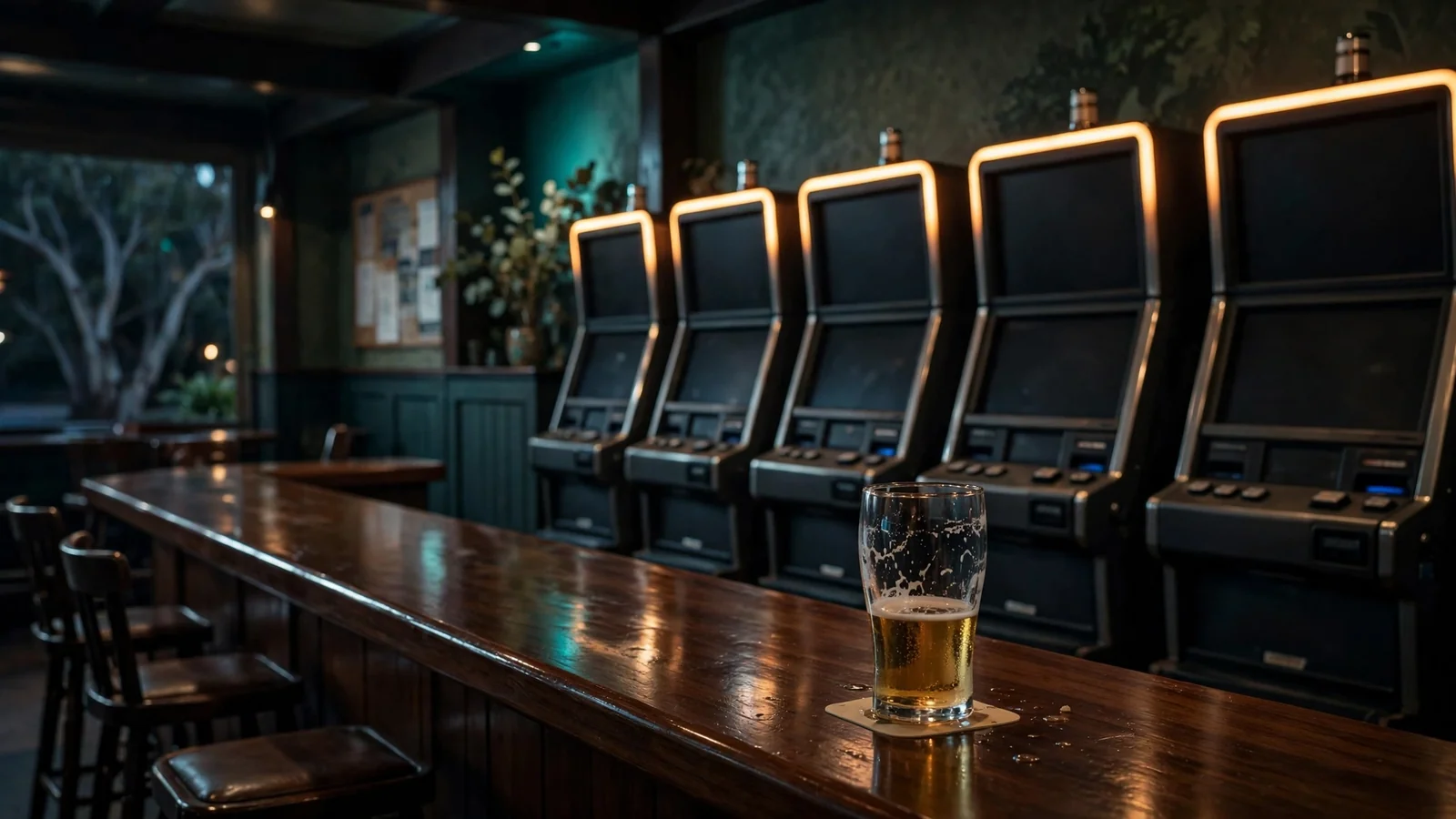
The phrase “best pokies in Adelaide” sounds as though it should lead to a neat table: a row of machines, a measure of quality, then a winner. Pokies resist that arrangement. A spin is an independent event, generated at random; the result of the previous spin does not make a particular outcome more likely on the next one. A run of losses is not a machine “getting ready” to pay, and a recent win does not mean its luck has been used up.
That independence changes what a ranking can honestly promise. Past results may make a machine memorable, but they cannot establish that it will pay better in the next session. Nor does a busy bank of machines, a familiar cabinet or a story about someone’s large win reveal what another player will experience. Anecdote is persuasive because it has a face and a setting. Randomness has neither.
There is another complication behind comparisons of Adelaide casino pokies: the game’s name alone may not tell the whole story. A specialist review reports that some providers allow casinos to choose between different return-to-player settings for the same pokie. In practical terms, an identical game may be configured with different RTP values at different casinos. That makes a comparison based only on the title incomplete. A reader would need reliable information about the setting in use at the particular venue, not simply a list of games with familiar names.
Choosing pokies in Adelaide means weighing what matters to you, including the information available about an operator. This list offers a concise starting point for reviewing options in 2026.
Roby Casino
Roby Casino is listed with a Curacao eGaming licence held by Roby Games Ltd.
DragonSlots Casino
DragonSlots Casino is listed with a Curacao Gaming Authority licence held by Jumpman Gaming Ltd.
Thor Casino
Thor Casino is listed with a Curacao licence from Antillephone N.V., with Versus Odds B.V. identified as the operator. The stated minimum deposit is EUR 20.
7Bit Casino
7Bit Casino is listed as operating under a Curacao licence, with Dama N.V. identified as its operator.
Golden Pokies
Golden Pokies is listed with a Curacao licence.
Rollero Casino
Rollero Casino is listed with a Curacao Gaming Control Board licence, OGL/2023/176/0095, held by Hollycorn N.V.
MrPacho
MrPacho lists crypto payouts of 30–120 minutes and fiat payouts of 24–72 hours. Its stated minimum deposit is A$30.
Kingmaker
Kingmaker lists crypto payouts at approximately 90 minutes and fiat payouts of 1–5 days. Its stated minimum deposit is A$30.
JustCasino
JustCasino is listed with a Curacao Gaming Control Board licence.
WinSpirit Casino
WinSpirit Casino is listed with a Curacao eGaming licence, OGL/2024/923/0383, from Antillephone N.V. Its stated minimum deposit is A$30.
RTP, or return to player, is a statistical measure, not a promise about an individual visit. It describes an expected return across a very large volume of play under the relevant setting. It cannot predict whether a particular session will end in a win or a loss, and it does not make a machine due to pay. The gap between a long-run calculation and a short human evening is substantial. The mathematics can be patient; people are not always offered the same luxury.
This is why “best paying pokies in Adelaide” is harder to answer than it appears. “Paying” might mean a higher stated RTP, the possibility of a large prize, or simply a player’s recent experience. Those are different ideas. A larger possible prize does not by itself show that a game returns more over time, while a favourable RTP setting would still say nothing certain about the next spin. Without comparable information about settings, prize structures and the measure being used, a confident ranking would be theatre.
The same caution applies to machines in the Adelaide CBD or elsewhere in the city. Location can help describe where a venue sits, but it does not establish the game configuration inside it. A machine’s appearance or popularity is not evidence of a better return. Even a published figure, if one is available, needs to be tied to the particular game and setting rather than treated as a permanent feature of every version bearing the same title.
 Best pokies in Brisbane: what rankings can showLearn how Brisbane venue searches and opening-hour checks differ from claims about game quality. Some casinos can choose different RTP settings for…
 Pokies in South Australia: what the odds can tell youLearn how independent RNG outcomes differ from venue opening claims, online legality and gaming oversight in South Australia.
The year in a “best pokies in Adelaide 2026” label does not change the underlying logic. A current-looking list may still compare unlike things, or repeat a figure without making clear which configuration it describes. Names can be ranked neatly; probabilities cannot be turned into personal forecasts by formatting them in a table. A credible comparison would distinguish verified game information from opinion and would avoid presenting randomness as a reliable route to winnings.
“Best,” then, has to be used modestly. It might mean a game whose published information is clear, or one a person finds more enjoyable to play. It cannot mean a machine known to produce a win on demand. Each spin remains separate from the last, and the same game may not carry the same RTP setting everywhere. Those two limits leave room for preference, but not for certainty.
That is the less glamorous answer—and the useful one. A city can have many places to play, and players can have strong favourites. Neither fact makes a machine predictable.
“Open now” is a statement about a venue’s doors and trading hours. It is not, by itself, confirmation that its gaming area is operating, that every service is available, or that a particular pokie can be played. A listing may be useful as a first check, but hours can change and online directories may not be updated at the same time as a venue’s own information.
Attention: A venue's listed opening hours do not guarantee that its gaming area is operating or that specific pokies are available.
That distinction matters when plans depend on a particular time of day. Someone looking for an early opening, a late session or a venue available at the moment is asking a practical question about operating hours. The answer belongs to the venue’s current schedule, not to a general description of Adelaide’s hospitality scene. A hotel, club or other venue may have its own pattern of opening and closing; the presence of gaming machines does not establish that the machines are running whenever the building is open.
Nor does “open” settle the question of access. A venue can be open for food, drinks or other services while a separate part of its operation is unavailable. The reverse may also be possible where a venue’s listed hours are not detailed enough to explain which facilities are operating. A broad label on a map or directory is therefore a starting point, not a precise account of what is happening on the floor.
A search for pokies open now in Adelaide often carries an unspoken assumption: that the venue’s opening time and the machines’ operating time are one thing. They are not necessarily the same. The wording of a listing rarely explains the distinction, and a result that appears current does not guarantee that it reflects a temporary change, a public holiday schedule or a service interruption. Confirmation from the venue is the more direct way to establish its present hours and what is available.
 Best Pokies in Canberra: Hours and AccessLearn why a venue listing cannot confirm current opening status, and why checking directly is the soundest way to verify whether it…
 Big Red Pokies Online in Australia: Free PlayLearn what a free Big Red session can show about its interface—and why simulated outcomes are not evidence of real-money results.
There is also a separate question of oversight while machines are operating. A report published by regionriverina.com.au described a requirement for venues with more than 20 gaming machines to have a dedicated responsible gambling officer (RGO) on duty during machine operation, with the change commencing from 1 July and a grace period for venues to make the transition. That report concerns a staffing condition tied to the machines being in use; it does not function as a directory of Adelaide opening times.
The two clocks should not be confused. A venue’s public opening hours describe when it is open to visitors. The reported RGO condition describes staffing while gaming machines are operating at qualifying venues. It does not say that a venue must open at a particular hour, that machines must be operating whenever the venue is open, or that an RGO’s presence is evidence of a particular pokie’s availability. Each answers a different question.
This is why opening-time searches can produce an answer that feels more definite than it is. A business listing may show a venue as open, but that status cannot reveal whether the gaming area is open at that moment. A sign at the entrance may establish the venue’s hours, but not necessarily the operating schedule of every part of it. And a staffing requirement linked to machine operation cannot be used to infer that a venue is currently operating its machines.
The same separation applies to payout percentage. Opening hours say nothing about a pokie’s return setting. A venue being open, or a machine being in use, does not disclose that figure. It is a different kind of information and should not be inferred from a venue’s schedule.
A venue's public opening hours describe when it is open to visitors, while staffing requirements like the RGO describe conditions while gaming machines are operating.
For anyone comparing places to visit, the useful facts are therefore specific: the venue’s current opening hours, whether the gaming area is operating at the intended time, and whether any temporary change affects access. A general “open” label answers only the first part, and sometimes only imperfectly. Adelaide does not become a single operating timetable simply because several venues appear together on a map.
The phrase “open now” sounds crisp. Its meaning is not. A door can be open while a gaming area is not, and a rule about staffing during machine operation says nothing about when the door opens. Keeping those details separate makes the answer less dramatic, but more accurate.
A request for pokies near Adelaide Airport is first a question of place: does “near” mean inside the airport, in its surrounding area, or somewhere convenient on a journey into the city? Those are different practical needs, though a short phrase can flatten them into one. The same applies to searches for pokies in Adelaide Airport. A location phrase does not, by itself, establish that gaming machines are inside an airport terminal.
 Best Pokies in Tasmania: Hours, Venues and Search LimitsLearn why venue opening hours do not confirm gaming-machine availability, and how to interpret Tasmania searches without treating them as a verified…
 Casino in Queensland: Hotels, Dining and Practical DetailsCompare on-site stays with nearby accommodation, and see what the search can confirm about poker, dining, parking, pool access and online table…
The CBD offers another kind of reference point. Someone looking for pokies near the centre may be thinking of a walk from a workplace, accommodation or a city appointment; someone asking about North Adelaide has named a different part of the urban map. “Near me” is more personal still: its meaning depends on where the person is standing, not on a fixed list of venues.
These distinctions matter because proximity is not a quality rating. A place that is easy to reach may not suit a particular journey, and a map pin cannot tell whether a venue is operating when someone arrives. Nor does a result described as “near” settle the ordinary questions of route, access or the precise location of the machines within a venue. Geography can narrow a choice, but it cannot do all the checking.
There is also a small linguistic trap in the phrase “near Adelaide”. It might point toward the airport, the CBD, North Adelaide or another destination, depending on the journey being planned. The city name is a useful anchor, not a measurement. A location description becomes more meaningful when it is tied to the actual endpoint and the route between them, rather than treated as a promise of convenient access.
Physical venues are also places with operating responsibilities, not simply dots on a map. A report published by regionriverina.com.au describes a requirement taking effect on 1 July: venues operating more than 20 gaming machines are to have a dedicated responsible gambling officer (RGO) present while those machines are running. That condition concerns the venue’s operation, rather than whether it sits by the airport, in the CBD or in North Adelaide. A location search cannot establish whether a particular venue falls within that category.
There is a civic history beneath this distinction. Maps make movement look neutral: one point, then another, with distance doing the explaining. But a gambling venue is not merely a waypoint. Its place in a person’s day can be incidental, planned or tied to a longer stop; the map cannot tell which. Rules about oversight address the activity inside the building, while location helps describe how someone reaches it. Different questions, different kinds of information.
For anyone comparing airport-area, central-city and northern options, the useful order is geographical rather than promotional: identify the intended destination, distinguish the airport itself from its surrounding area, and treat “near” as a relation that needs a precise endpoint. Then consider the venue as a venue, not as a label on a map. A pin is not a judgment.
A venue’s character is not captured by the machines on its floor alone. For anyone comparing places to play in Adelaide, the less visible question is how the venue responds when gambling stops looking like recreation and starts looking like harm. That is a matter of oversight, not décor, and it cannot be answered by calling one venue the best.
A report by regionriverina.com.au describes a requirement taking effect from 1 July: venues with more than 20 gaming machines are to have a dedicated responsible gambling officer (RGO) on duty whenever those machines are operating. The report also says venues have a one-month grace period to introduce the officers. Those details should be understood as the reported change, rather than as a timeless description of every venue’s arrangements.
The role matters because a gaming floor is a social space as well as a commercial one. People may spend long stretches there, often among familiar routines: a seat, a screen, the repeated small ceremony of starting another spin. The RGO requirement places a named responsibility alongside that activity. It does not make the machines less random, nor does an officer’s presence establish that a venue is suitable for every patron. It does make staffing part of the public account of how a larger floor is managed.
The same report describes a gambling incident register. Venues are to record occurrences, including behaviour suggesting that a patron may be at risk of, or affected by, gambling harm. A register turns an encounter that might otherwise disappear into an informal conversation into something capable of being documented. That can help make oversight more than a matter of memory, though a record is only as useful as the attention given to the circumstances it captures.
These measures are more revealing than a sales pitch about atmosphere. They direct attention to whether responsibility has a place in the ordinary operation of a gaming floor: whether someone is assigned to the role when machines are running, and whether warning signs are recorded rather than treated as passing disturbances. The requirements described in the report apply by reference to machine numbers and operating conditions, not to a venue’s reputation or its address.
That is why a claim about the best pokies venue in Adelaide cannot be settled by a list of machines or a confident adjective. A venue’s practices around staff responsibility and incident recording offer a more grounded subject for comparison, but they do not provide a ranking. Nor do they promise that gambling will be harmless. They describe procedures, not outcomes.
For a physical venue, rules are not a footnote to the floor. They shape what happens when play becomes a concern—and whether that concern is noticed, assigned and recorded. The paperwork matters.
Payment methods can make a deposit look routine: a transfer, a card entry, a balance updated on screen. The mechanics are less reassuring than the interface. A payment rail moves money; it does not certify the business receiving it, establish that its games are fair or make an online gambling service lawful in Australia.
Payment Risks
A payment rail moves money but does not certify the business, establish game fairness, or make an online gambling service lawful in Australia.
PayID is an alias system connected to the New Payments Platform (NPP). Instead of entering account details, a transfer can be addressed through an email address, mobile number or Australian Business Number. The NPP is available through all major banks and protects transfers with end-to-end encryption. For real-money use at an online casino, PayID must first be linked to a bank account. That is a description of how the payment works, not a recommendation to use it for gambling.
Availability can be interrupted at the bank’s end. A specialist review has reported that some Australian banks, including members of the Big Four, sometimes stop PayID transfers to gambling merchants they recognise. Such a block is a payment decision, not a verdict on whether a merchant is safe or legitimate. Nor does a transfer going through answer either question.
Cards carry their own uncertainty. A gambling deposit made with a credit or debit card may be classified by the bank or card issuer as a cash advance rather than an ordinary purchase. A specialist review puts the possible fee at 3–5%, with interest potentially starting immediately. The exact treatment depends on the issuer and the transaction; a familiar card logo is not a promise of familiar purchase terms.
Banks and card companies have also been reported to block transactions to gambling sites. A specialist review describes this as an increasing practice, but that should not be read as a universal rule: decisions can vary by provider and merchant. A declined payment may therefore reflect a bank’s controls rather than a technical fault at the checkout.
The small-print cost is not always visible beside the deposit button. Fees, cash-advance treatment and interest can turn a seemingly simple transaction into a more expensive one. Even where the payment method is available, that availability says nothing about the operator’s standing, the game’s return setting or the prospect of recovering money after a dispute.
That distinction matters especially around searches for Adelaide pokies, including requests for real-money play or a no-deposit offer. A payment option cannot convert an offer into a safe or lawful one, and the presence of PayID is not evidence of oversight. Money can move cleanly through a modern system toward a service that remains outside Australian protections.
The rails are not the destination.
A phone or browser can make an online service look like a nearby Adelaide option. The screen, however, does not turn an offshore casino into a local venue, and a location-based phrase does not alter the law. In Australia, the Interactive Gambling Act 2001 prohibits companies from providing real-money online casino games, including pokies, to people in the country. No Australian licence for online casinos has been issued.
That leaves no locally licensed online casino to distinguish as the best-paying choice, whether the game is opened on a mobile or desktop browser. A polished interface, a local-sounding name or an Australian payment option cannot supply the missing domestic licence. Nor does the appearance of a service in an online search establish that it is lawful for the company to offer real-money casino play here.
Caution: If an offshore casino withholds winnings, Australian players have no legal recourse in Australia to compel payment.
The law is aimed at operators, not individual players. Playing on an offshore site that accepts Australians does not expose the player to a fine or prosecution under this law. That distinction is important, but it is not a seal of safety. If an offshore casino withholds winnings, Australian players have no legal recourse in Australia to compel payment. The practical gap is stark: the operator may be outside the local system, while the player has no domestic route to enforce a claim.
The Australian Communications and Media Authority enforces the Act and blocks access to illegal offshore gambling sites; internet service providers must follow its blocklist. A page loading, or failing to load, is therefore not a reliable measure of legitimacy. A block can be part of enforcement, while access through another route would not make the service locally licensed. The legal boundary concerns the operator’s conduct, not the device used to reach the page.
BetStop has a narrower role than its name might suggest. It applies to Australian-licensed operators and does not bind offshore sites. It cannot be treated as a shield against an offshore service or as evidence that such a service will honour a withdrawal. A system built around local obligations cannot impose those obligations on a company beyond its reach.
The legal age for gambling in Australia, including online play, is eighteen. But meeting the age threshold does not change the status of the service: age eligibility and operator legality are separate matters. Mobile access changes convenience, not jurisdiction.
There is a revealing mismatch in the phrase “online pokies near Adelaide”. “Near” belongs to streets, suburbs and travel time; the law follows the person’s location and the operator’s service. A familiar city name can make a distant company seem local. It is not. The decisive distinction is not screen size, game limits or the promise of a larger return, but whether a domestic online-casino licence exists. In Australia, it does not.
A venue’s opening hours and the hours its pokies are operating are related, but they are not the same piece of information. An open door does not, by itself, establish that gaming machines are available; a listing that says a venue is open late does not establish that it runs through the night. The phrase “24-hour pokies” can make those distinctions disappear. A clock is less accommodating.
That leaves a practical limit: a general claim about Adelaide pokies opening hours would suggest a uniform timetable where none has been established. Hours belong to individual venues, and a venue’s posted schedule is not a promise about every service inside it.
There is also a separate question of oversight. A report published by regionriverina.com.au says that, from 1 July, venues operating more than 20 gaming machines are required to have a dedicated responsible gambling officer (RGO) on duty while those machines are running. The trigger described in that report is machine operation, not the hour shown on a venue’s door or website. It is a staffing requirement tied to the gaming floor.
That distinction matters when interpreting “open now.” The phrase can describe a venue’s general trading status; it cannot, on its own, confirm whether pokies are operating at that moment or whether a particular venue meets the report’s machine-count condition. The RGO requirement does not establish a closing time, extend a venue’s hours, or turn a late-night schedule into a 24-hour one.
Venue opening hours describe access to premises, whereas RGO requirements concern oversight specifically during machine operation.
Opening hours are often treated as a simple convenience: a time to arrive, a time to leave. In a venue with gaming machines, they sit beside rules that concern what happens while the machines are in use. Those are different kinds of information. One describes access to premises; the other concerns oversight during machine operation.
So “24-hour pokies in Adelaide” is not a dependable description of a local service. It is a claim that would need support from a specific venue’s current information, and even then, venue hours alone would not settle whether its gaming machines were operating throughout that period. The distinction is modest, but useful. A sign can tell the time. It cannot tell the whole story.
Crown Adelaide is a phrase that can suggest a specific venue, a particular room or a catalogue of pokies. The phrase itself establishes none of those things. It is not a basis for attributing a location, machines, games or operating arrangements to Crown in Adelaide.
The same restraint applies to requests for a “best pokies room”. A room’s reputation, atmosphere or layout would be a different matter from the mechanics of an individual pokie. Nor can a venue label establish how a game is configured. The useful distinction is between what a name suggests and what can be established about the game.
A specialist review reports that some game providers give casinos a choice of RTP settings for the same pokie. RTP, or return to player, describes a game’s theoretical return across play; the setting may differ from one casino to another. That makes the title of a game an incomplete guide to its return percentage. The same named pokie is not necessarily running with the same setting wherever it appears.
This is a configuration point, not a Crown-specific claim. It does not establish which settings a particular venue uses, or whether any particular game is available there. A venue name cannot fill that gap. Nor does a game’s stated RTP predict the result of a single session: each spin remains a separate random event.
The question of a maximum cash payout is separate again. RTP is not a ceiling on what a machine can pay in one result, and it does not specify a venue’s payout arrangements. Without game-specific and venue-specific terms, a maximum cannot responsibly be attached to a Crown-related description. A large-sounding figure would be theatre, not evidence.
That distinction matters because search phrases often compress several different questions into one: whether a venue exists in a place, what it offers, how a game is configured and what it might pay. Those questions do not share one answer. A game’s RTP setting can vary across casinos; that fact cannot identify an Adelaide venue or settle its machines, room or payout limits.
For anyone comparing pokies, the practical point is modest but important: check the published RTP for the exact game and casino where it is offered, where that information is available. A familiar name is not enough. Neither is a venue label.
A club’s gaming floor is often discussed as a place of leisure, but oversight begins with a less visible object: the record of what happens there. For people looking at pokies in Adelaide’s CBD, that distinction matters more than a claim that one club is “best”. A machine’s presence says little about how a venue responds when gambling appears to be causing harm.
A report by regionriverina.com.au describes a requirement for venues to keep a gambling incident register. It says the register is to capture details of occurrences, including situations in which a patron’s behaviour indicates they may be at risk of, or affected by, gambling harm. The record-keeping duty turns an impression into something accountable: an incident is not merely noticed and then lost to the shift change.
That does not make the register a public scorecard of clubs, nor does it establish how any particular Adelaide venue handles an individual situation. Its purpose, as described in the report, is to document incidents. It should not be confused with a list of machines, a measure of a club’s popularity, or evidence that one floor is safer than another. Paperwork can make oversight visible; it cannot, by itself, settle what happens in practice.
Searches about self-exclusion point to a related but separate concern. A gambling incident register records occurrences at a venue; the description of that register does not make it a self-exclusion system or explain how a person can exclude themselves. Those are different questions, and joining them together would give the record a power it has not been shown to have. The distinction is plain. The human circumstances are not.
CBD clubs sit within a larger civic habit of turning private trouble into a matter for rules and records. That habit can protect people when a warning sign might otherwise be treated as someone else’s problem. It also leaves an important limit: a register can preserve an account of an incident, but it cannot tell outsiders which club has the strongest response, or nominate the best pokies venue in the city.
For anyone comparing clubs, the incident-register requirement is therefore a point about oversight, not a ranking. No particular club, machine count or local practice follows from it. The record is a safeguard in design. What it can show depends on what is recorded and how venues act on it.
Cashless play and cashless payment are related ideas, but they are not interchangeable. A search for cashless pokies in Adelaide may refer to how money is handled at a venue: whether a machine accepts a non-cash method or is linked to a digital account. PayID, by contrast, describes a way to transfer money between bank accounts. Its presence in a payment process says nothing about how a physical pokie accepts funds.
PayID works as an alias layer over the New Payments Platform (NPP). Instead of entering bank-account details, a transfer can be addressed to an email, mobile number or ABN linked to the recipient’s account. The NPP is available through all major banks and protects transfers with end-to-end encryption. That describes the payment rail, not the machine at the other end of a venue floor.
Nor does PayID establish that a gambling service is licensed, that a game is fair, or that a venue has cashless machines. Payment infrastructure and gambling oversight answer different questions. A familiar bank transfer method can make a transaction feel ordinary; it cannot settle what the service is allowed to offer.
The Newcastle–Adelaide wording creates a separate kind of confusion. Newcastle and Adelaide are distinct place references, not a combined local area. A venue associated with one does not become an Adelaide venue because both names appear together, and the phrase alone identifies no particular club, machine or operating arrangement. Geography remains stubbornly literal.
For online gambling, the legal boundary matters as well: Australia has no licensed online casino, and BetStop applies only to Australian-licensed operators, not offshore sites. A payment option does not change that boundary. Cashless, in short, is a method—not a verdict.
Yes, Australians can play on offshore sites that accept them, but no Australian-licensed online casino exists. Operators cannot legally offer real-money online pokies to Australian residents without a domestic licence, and players have no legal recourse in Australia if an offshore casino withholds winnings.
Minimum deposits are commonly AU$10–AU$20, though some operators accept AU$5. PayID must be linked to a bank account to use it for real-money play.
Skrill and Neteller are popular e-wallets valued for their speed.
Yes. Some game providers let casinos choose among different RTP settings, so the same pokie can have different return percentages at different casinos.