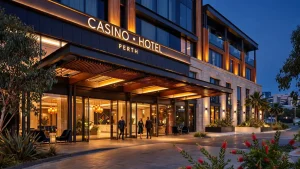
A casino-related hotel listing may describe a nearby property, so the operator, address and booking terms need to be checked.
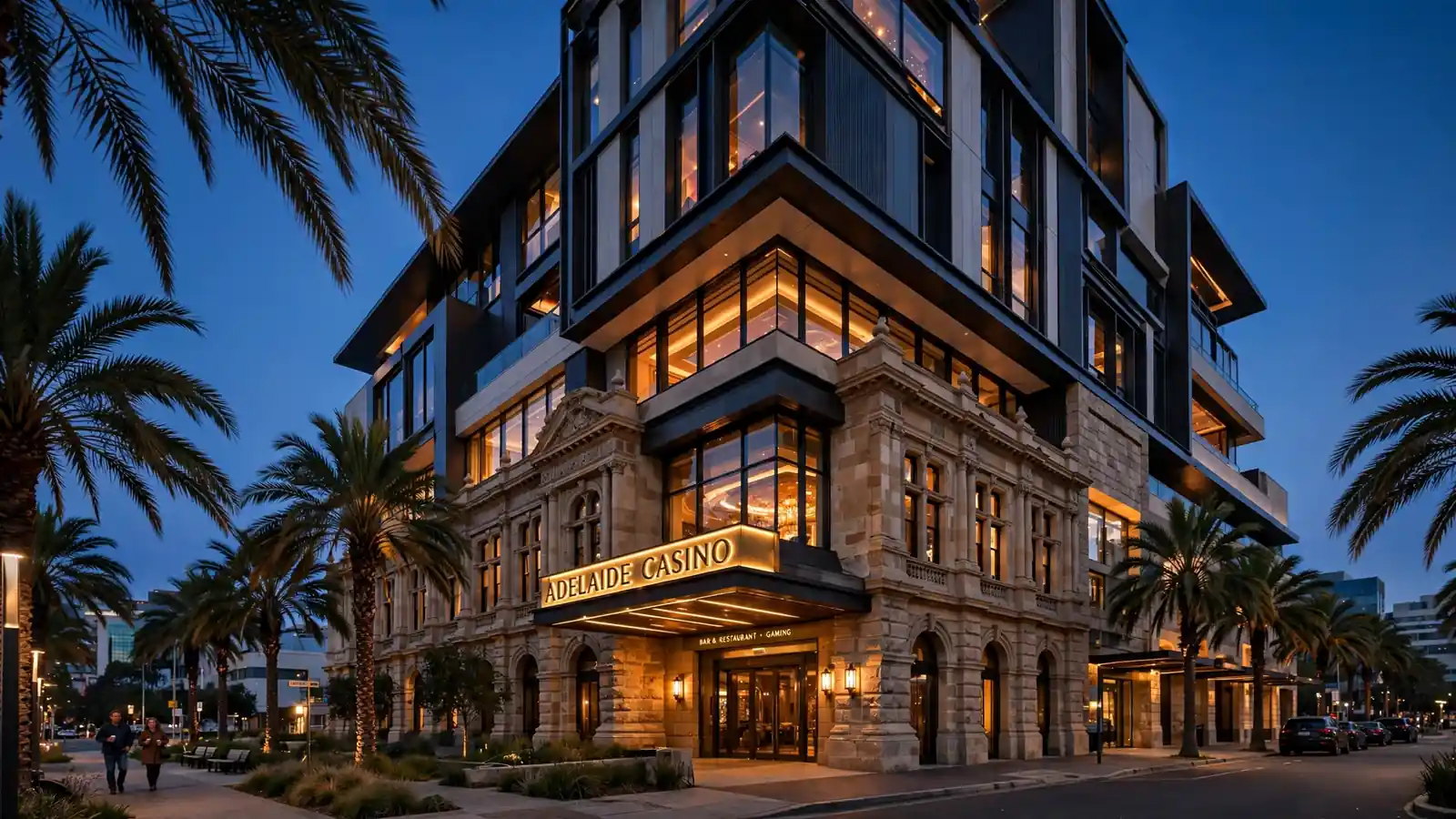
The phrase “Adelaide casino hotel” can suggest a simple arrangement: a room upstairs, gaming downstairs, and a booking that joins the two. But a search phrase is not proof of a hotel, nor does it establish that rooms are sold by the casino itself. Before treating a stay as part of a venue visit, the distinction matters: a property attached to a casino, a hotel operated by the same business, and an independently run hotel nearby are different arrangements, with different booking terms.
For anyone looking specifically for rooms at the casino, the first useful check is whether the venue’s own official information identifies accommodation as one of its services. A third-party booking page may use broad labels such as “casino hotel” to describe a location or nearby attraction; that wording does not, on its own, show who operates the rooms or whether a reservation is made through the casino. The name on the booking confirmation, the property address and the business responsible for the stay should line up clearly.
Choosing an online casino while looking for options in Adelaide means checking the details that matter to you before signing up. This list offers a concise reference to the information available for each operator.
Roby Casino
Roby Casino is listed with a Curacao eGaming licence held by Roby Games Ltd.
DragonSlots Casino
DragonSlots Casino is listed with a Curacao Gaming Authority licence held by Jumpman Gaming Ltd.
Thor Casino
Thor Casino is listed with a Curacao – Antillephone N.V. licence for Versus Odds B.V. The stated minimum deposit is EUR 20.
7Bit Casino
7Bit Casino is operated by Dama N.V. and is listed with a Curacao licence.
Golden Pokies
Golden Pokies is listed with a Curacao licence.
Rollero Casino
Rollero Casino is listed with Curacao Gaming Control Board licence OGL/2023/176/0095, held by Hollycorn N.V.
MrPacho
MrPacho lists crypto payouts at 30–120 minutes and fiat payouts at 24–72 hours. Its minimum deposit is A$30.
Kingmaker
Kingmaker lists crypto payouts at approximately 90 minutes and fiat payouts at 1–5 days. Its minimum deposit is A$30.
JustCasino
JustCasino is listed with a Curacao Gaming Control Board licence.
WinSpirit Casino
WinSpirit Casino is listed with Curacao eGaming licence OGL/2024/923/0383, issued by Antillephone N.V. Its minimum deposit is A$30.
The same care applies to offers described as Adelaide casino hotel deals. A discounted rate may be tied to a separate hotel, a particular booking channel or conditions that are not apparent in a headline. The price alone says little about what is included. Cancellation rules, payment timing, taxes or other charges, and any limits on changing a reservation belong to the terms for the actual property, not to the general idea of a casino visit. If those details are not stated plainly, the offer is not yet a useful basis for comparison.
Room information needs the same source discipline. A listing that mentions “casino hotel rooms” should identify the room category, occupancy conditions and facilities rather than relying on photographs or promotional language. Images can be illustrative, old or attached to a broader property listing. A room description becomes meaningful when it belongs to the named accommodation provider and matches the terms shown at the point of booking.
There is also a practical difference between choosing a room because it is at a casino and choosing one because it is close to one. The first is a question about the venue’s own accommodation; the second belongs to the wider accommodation market. Search results can blur that line, particularly when maps and booking platforms group places by a nearby landmark. Keeping the two questions separate prevents a nearby address from being mistaken for an on-site stay.
 Brisbane Casino Guide to Hotels, Dining and DetailsExplore how casino-hotel listings differ from nearby accommodation, plus what to check on rooms, dining, parking, rewards and venue services.
 Best pokies in Sydney: location, access and legal limitsLearn how location searches differ from recommendations, and why venue hours, local access and offshore sites need separate checks.
Opening hours require a separate check. A hotel’s reception or check-in arrangements, if applicable, are not necessarily the same as a casino’s operating hours. Nor does a general venue listing establish that every part of a property keeps the same schedule. Current hours should come from the venue’s official channel, with the date and the specific service in view. Old directory entries can linger long after a schedule changes. A small distinction, with practical consequences.
For a 2026 visit, the sound approach is therefore not to assume that “casino hotel” names a confirmed package, but to establish exactly what is being booked. The venue’s official accommodation information, if available, can clarify whether rooms are offered directly or through another operator. The booking provider can then confirm the property name, address, room terms and dates before payment. Any promotional rate should be read alongside its restrictions, rather than treated as a promise that the entire stay is bundled.
That is less glamorous than the easy image of a room above the gaming floor. It is also more reliable. Until the operator and booking details are explicit, “hotel at Adelaide Casino” remains a description to verify, not a room category or a guaranteed feature of the visit.
Questions about poker at Adelaide Casino tend to collapse several different things into one phrase: whether poker is played at the venue, whether a dedicated room is operating, and whether a tournament is scheduled. Those are separate details, and one does not establish the others. A poker listing may refer to a particular event rather than a permanent room; a room name, in turn, says little about what is running on a given day.
Attention: Casino information can age quickly; tournament calendars and public schedules change frequently.
The distinction matters because casino information can age quickly. Tournament calendars change, and a venue’s current public schedule is more useful than an old listing or a passing mention on a third-party page. Before making a trip specifically for poker, the sensible check is the casino’s own current information: whether poker is being offered, whether a tournament is listed, and what conditions apply to joining it. A search result can preserve yesterday’s arrangement with admirable confidence.
A tournament entry should be treated as its own proposition, not as proof that regular poker games are available at other times. The relevant details are the event date, registration arrangements, format and any stated eligibility or entry conditions. If those are not clearly set out in current venue information, they should not be inferred from the word “tournament” alone. Poker has its own vocabulary of tables, structures and schedules; a headline is not a schedule.
The phrase “casino rooms” is just as ambiguous. It can mean private or bookable spaces, areas within a gaming venue, or simply be a loose way of referring to the casino’s different rooms. Nothing about that wording, by itself, confirms a particular room, its purpose or whether it is open to the public. For a practical answer, the exact room name and its intended use matter more than the general label. A poker room, a function room and a bar are not interchangeable simply because they share a building.
The same caution applies to a sports bar. The label may suggest a place to watch sport, but it does not confirm that the casino has one, what it screens, or whether it is open at the time someone plans to visit. Nor does it establish that the bar is part of the gaming floor. Current venue information is the appropriate place to check the name of any such space, its access arrangements and its hours. An old photograph or review can show that a room existed at one moment; it cannot settle today’s timetable.
“Open today” and “open now” are especially time-sensitive. A general opening statement may not cover every area inside a venue: the casino floor, poker facilities, tournament registration and a bar can each have different operating arrangements. A venue’s overall status is not a reliable substitute for checking the particular room or activity. Same building, different clocks.
For visitors comparing options, a useful checklist is therefore modest: confirm that poker is currently offered; check whether the event is a tournament or a regular game; verify the date and participation conditions; and confirm the relevant room and hours directly through current casino information. If the question concerns a sports bar or another named room, check that precise facility rather than assuming it follows the casino’s general schedule.
That approach is less dramatic than a confident list of tables and events, but more dependable. Poker rooms, tournaments and other casino spaces are venue-specific details, not promises contained in a search phrase. The detail worth trusting is the one the venue currently states.
A casino’s public life is larger than the games inside it. It is also a building altered over time, a workplace, and a name that may appear in announcements about entertainment or city events. Those subjects invite different kinds of evidence: a development proposal is not proof that work was completed, and an event mention is not confirmation that a programme is still running.
For anyone following Adelaide Casino’s development, the useful distinction is between plans, construction and operation. A proposal describes an intention; a completed project can be established only by a later update or other reliable record. The language of announcements often makes these stages sound interchangeable. They are not. In a city, a venue’s expansion can affect more than its own footprint, touching public access, employment and the surrounding urban life. But the civic significance of a proposal should not be mistaken for evidence that a particular change has taken place.
The same care applies to reports about reopening. “Open” can refer to a venue’s general operating status, while “reopen” may concern a temporary closure or a particular part of its activity. Without a dated announcement that identifies what has changed, the word alone settles little. A reopening headline can linger long after the circumstances behind it have passed. Dates matter.
Events and entertainment need similarly precise reading. A listing should identify its date and organiser, and say whether the casino is the host, a partner or simply a location mentioned in the notice. Those roles are not the same. Nor does the appearance of the venue’s name in a city calendar establish a permanent entertainment programme. What can be said responsibly is narrower: event information belongs to a particular time and should be checked in the announcement that issued it, rather than treated as a standing feature.
Employment is another part of the venue’s broader profile, but general interest in casino employment is not evidence of current vacancies, hiring conditions or career pathways. Those details can change, and a dated recruitment notice is different from an enduring description of the workplace. The distinction matters because an employer’s public presence may be substantial while the particulars of available work remain temporary. No glamour required.
Together, development, employment and entertainment show why the casino is discussed as a civic institution as well as a place of gambling. Yet public prominence is not a substitute for documentation. For a reliable picture, statements should be read according to their date, status and source: a proposal as a proposal, a past event as a past event, and a current notice as current only while its terms remain valid. That approach leaves room for the venue’s wider significance without assigning it facilities, events or changes that an announcement has not established.
Parking is a practical question about reaching a physical venue; it does not establish what facilities are available there. No parking arrangement should be assumed from the venue’s name or from a map result alone. The useful distinction is between information published by the venue and the rules applying to nearby streets or public car parks, which may be set by other operators and can change independently. Current signs and official notices matter more than an old listing.
Legal Restriction
Under the Interactive Gambling Act 2001, operators based in Australia cannot offer real-money online casino games to people within the country.
The same care applies to other practical queries. Searches about bingo, lunch or dining at Adelaide’s casino are not proof that a particular service is offered, or that it operates at a particular time. Those details belong to the venue’s current information, not to an inference drawn from a search result. A physical visit and an online gambling service are also separate things, even when both are described with the word “casino”.
That distinction is especially important in Australia. Under the Interactive Gambling Act 2001, an operator based in Australia cannot offer real-money online casino games to people in the country. The restriction covers games such as pokies, blackjack and roulette. A search for an Adelaide casino online does not turn a local venue into an online provider, and online casino play should not be presented as a service of the Adelaide venue.
Offshore platforms occupy a different, legally unsettled position. Australian players are not regulated by Australian law when using such services, even though it is technically not illegal for them to do so. That does not make an offshore platform an Australian-licensed casino or bring it under local consumer protections. The distinction is less tidy than a simple “legal” or “illegal” label suggests; the law places its principal prohibition on operators offering the service within Australia.
A virtual location does not alter the underlying reality. A VPN can make a connection appear to come from another country, but using one to access region-blocked pokies sites violates the site’s terms and may result in account suspension. It is not a reliable way to turn a prohibited or unavailable service into a local one.
For anyone comparing a physical casino in Adelaide with an online result, the sensible first step is to identify which kind of service is being described. A venue’s parking, dining or other visitor information concerns a place to attend. Online casino games concern a separate regulatory framework, and offshore operators are not governed by Australian law. Similar labels, different rules.
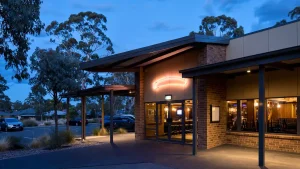
Accommodation near Adelaide Casino is a different question from staying in a hotel that belongs to, or is part of, the venue. The distinction matters: a property can be close on a map without being associated with the casino, while a room advertised for a casino visit may be somewhere else entirely. Names, branding and promotional language do not settle the practical question of where the bed is.
Location is best judged by the route between the accommodation and the venue’s confirmed address, not by a vague claim of being “nearby”. A map pin can suggest closeness while concealing the actual walk, crossings, access points or need for transport. The casino’s location should therefore be checked against a current map and the accommodation’s own address. For anyone planning to arrive late or leave early, the route itself matters more than a line drawn across the screen.
The same care applies to accommodation deals. A headline rate may depend on dates, availability, cancellation rules or conditions that are easy to miss when the offer is viewed as a simple discount. The useful comparison is the full price for the intended stay, alongside what the booking allows if plans change. A casino promotion and a hotel offer are not necessarily the same thing; one should not be taken as proof that lodging is included or discounted.
Opening and trading hours are another separate detail. A venue’s schedule does not establish when nearby accommodation accepts arrivals, whether reception is staffed at a particular time, or how late transport is available. Those arrangements belong to the property and its booking terms. They should be confirmed with the accommodation provider rather than inferred from the casino’s operating hours.
Likewise, questions about gaming machines or poker machines describe the casino, not the character of the surrounding lodging. They say nothing about a hotel’s location, noise conditions or facilities. A sensible accommodation choice rests on the particulars of the property: its address, the room offered, arrival arrangements and the terms attached to the reservation. The casino’s name in a listing can be a useful landmark, but it is not a substitute for those details.
Parking deserves its own check. “Parking available” can mean different things, and a general reference to parking near the casino does not establish that a particular accommodation has a space, that it is included, or that it suits the vehicle and arrival plan. The relevant information is the property’s own parking arrangement, including any conditions stated at booking. Nearby public parking, if considered, should be checked separately for location and current access.
The city’s visitor economy turns proximity into a selling point because it compresses a complicated trip into a reassuring word. Yet “near” has no fixed meaning without an address and a route. For a stay planned around Adelaide Casino, the reliable sequence is plain: establish the venue’s location, compare it with the accommodation’s address, then read the property’s current terms. No slogan can do that work.
A venue contact number is useful only when it belongs to the venue and is current. Search results, directory listings and old event pages can preserve details long after they have changed. For Adelaide Casino, contact information should therefore be checked against a current, official venue channel before it is used. The same applies to opening hours, entry arrangements and any information that could affect a planned visit.
A map can settle the simplest question—where a venue is—while leaving the more practical ones open. A pin does not confirm which entrance is in use, whether access arrangements have changed or where a visitor should go on arrival. Those particulars call for current venue guidance, rather than assumptions drawn from a map label. Addresses and directions are best checked together, especially when travel plans depend on a particular entrance or access route.
Parking merits the same care. A map may show nearby roads or car parks, but that does not establish that parking is operated by the casino, available to visitors or suitable for a particular visit. Nor does a pin explain access, charges or restrictions. The distinction between a car park at a venue and one merely close to it is easy to lose in a listing. It should not be.
The questions about a bar, baccarat and craps also need separate confirmation. A bar listing cannot establish its hours or current service arrangements; a game name in a directory does not prove that the game is offered at the venue. Baccarat and craps are forms of casino table play, but that general description says nothing about Adelaide’s current floor, schedules or access conditions. A current venue source is the sensible place to verify such particulars. A name is not a timetable.
Concert information can become stale even faster. An old listing may describe a past performance, not an upcoming one, and a venue association alone does not confirm that a concert is scheduled there. Dates, ticketing and entry details should be checked against current event information before travel is arranged. That is a practical distinction, not a small-print nicety: an event page is only useful when its date and venue details match the intended visit.
For a direct enquiry, the most reliable route is one that can be traced to the venue itself, rather than a copied number or an undated directory entry. A concise question helps: whether a particular service is available, where to enter, or which current page carries event or access information. If an answer concerns a specific date, it should be confirmed for that date. Venue details are not permanent fixtures.
There is a modest civic lesson in this kind of checking. A casino is both a place people travel to and an organisation that communicates practical rules about access, entertainment and services. The useful contact is not merely a number; it is a route to information that is current enough to act on.
Breakfast and buffet searches concern a practical question: what can be eaten at the venue, and when? A phrase such as “casino resort” can suggest a single destination with dining built into a stay, while “breakfast” narrows the interest to a particular meal. Neither wording, by itself, establishes that breakfast is served, that a buffet operates, or that either is open on a given day. Search language is a request, not a menu.
That distinction matters because food arrangements can change, and broad labels can outlast the service they once described. A buffet may be seasonal, reserved for a particular occasion, or not part of the venue’s current offering at all; the same is true of breakfast. These are possibilities, not claims about Adelaide Casino. Current venue information is the sensible point of reference before making plans, with particular attention to the date, service hours and whether a booking is required. If those details are not stated clearly, an assumption is not a substitute.
“Resort” can also carry more weight than a search phrase deserves. It may be used loosely to describe a destination, but it does not verify the services attached to that label. A hotel, a breakfast room and a buffet are separate matters, even when a phrase makes them sound like one package. The label is easy. The details do the work.
The same caution applies to searches about casino rewards. A rewards programme, if offered, would have its own conditions and scope; the phrase alone says nothing reliable about eligibility, benefits or whether dining forms part of it. Those particulars belong with current programme information, rather than being inferred from a general description of the venue. Rewards are not a menu.
Employment searches point in another direction entirely. Someone looking for work at Adelaide Casino needs recruitment information, not visitor amenities. Job listings should be checked through the venue’s current careers or recruitment channel, where role descriptions, application instructions and availability can be confirmed. A search result, an old vacancy notice or a third-party listing may remain visible after circumstances have changed. The existence of a “casino job” phrase does not establish that a position is open.
There is a small social contrast here. The breakfast search imagines a guest arriving at a table; the jobs search asks who keeps a large public venue running. Both sit under the same name, but they call for different evidence. A menu answers what is served. A vacancy notice answers what work is being recruited for. Neither can answer the other.
For visitors, the useful check is current dining information tied to the intended date and meal. For prospective staff, it is an active listing with a clear application route. If either is unavailable, that uncertainty should remain visible rather than being filled with confident-sounding detail. A polished venue description can make every service seem inevitable. It is not.
A spa attached to a casino is an appealing idea: the old promise that leisure can be arranged as a seamless circuit, from one kind of pleasure to another. But a phrase such as “Adelaide Casino spa” does not establish that a day spa operates at the venue. The same applies to claims about treatments, opening hours, booking arrangements or access for non-guests. Those details need confirmation from the casino’s own current information before they can be treated as real services rather than a suggestive combination of words.
The distinction matters because a spa may be inside a hotel, close to a casino, or merely mentioned alongside it in a directory. None of those descriptions means that the casino itself runs the facility. The practical test is whether an official venue page identifies the spa, explains who operates it and provides current service details. Without that, a spa visit should not be built into an itinerary. A little restraint saves a long walk in search of an amenity that may exist only in the wording.
The address calls for the same care. “Adelaide Casino” and “casino in Adelaide” can point to the same subject, but an address copied from an old listing may not reflect a current entrance, access arrangement or postal destination. The casino’s official contact or location information is the sensible place to confirm the street address before setting out. Map listings can help with orientation, though they should not replace the venue’s own directions when the exact entrance matters.
Dress-code questions are less easily settled by general casino etiquette. Expectations can vary between gaming areas, bars, events and other parts of a venue, and a policy may change. A rule remembered from another casino is not evidence of the rule in Adelaide. Current venue guidance, especially for a particular booking or event, is more useful than assumptions about what “casino dress” means.
The same principle applies to questions about bars or games: a search result, photograph or passing reference does not establish what is open, available or accessible on a given day. The details worth relying on are those confirmed directly by the venue, with dates and conditions attached where relevant. Specificity is not fussiness here; it is the difference between planning a visit and planning around an attractive guess.
A request for an Adelaide Casino restaurant sounds straightforward until “at” begins doing more work than it can bear. It may mean a dining room inside the venue, a place on the same site, or simply a restaurant nearby. Those are different claims, and a map pin alone cannot settle them.
For a restaurant described as part of the casino, the useful evidence is a current venue listing that identifies it as an on-site dining option. A separate business address, even one close by, points to a nearby restaurant instead. The distinction matters when planning a meal around a visit: proximity is not the same as being inside the casino, and a shared location on a map does not prove common management.
Names and menus need the same care. A restaurant’s own current page is a better guide to its menu than an old directory entry or a cached description. Dates matter: a page can remain visible long after its details have changed. Where more than one listing gives different information, the discrepancy is worth resolving before relying on claims about cuisine, bookings, service hours or special dining arrangements. A menu image without a date is a poor calendar.
The phrase “Adelaide Casino restaurants” also invites a plural answer, but a list should not be assembled from businesses merely associated with the surrounding precinct. Each name needs a clear connection to the venue, and the connection should be stated accurately. Otherwise, a neat list disguises a loose definition.
The rooftop-bar question is narrower still. A rooftop bar is a specific facility, not a poetic way of describing a restaurant with a view. Its existence, location, access arrangements and current operation would need to be established independently; a photograph or an uncaptioned reference is not enough to turn it into a confirmed venue feature.
The same standard applies whether the place is called Adelaide Casino or the casino in Adelaide, Australia. A venue name can anchor the search, but it cannot supply the missing particulars. Current, directly attributable information is what makes a dining description useful: the identity of the establishment, its relationship to the casino, and details that remain valid on the date of the proposed visit.
That is less glamorous than a glowing menu description. It is also more honest.
Food and a pool belong to different kinds of expectation. A meal is part of a visit; a food court suggests a particular layout, with several counters gathered around shared seating. A pool, by contrast, implies a leisure facility, often associated with a hotel rather than a gaming floor. Neither follows automatically from the word “casino”.
That distinction matters when planning time around Adelaide Casino. Those details can change, and a broad venue description is not a menu or an operating notice. Current venue information is the sensible basis for any decision about where to eat.
The same care applies to a pool. A hotel connection, where one is mentioned in passing, would not by itself establish that guests or visitors can use a pool, or that such a facility is part of the casino venue. Facilities have boundaries: a nearby amenity and an on-site one are not interchangeable, however neatly they fit a travel plan.
There is also a small civic lesson in these practical questions. Large entertainment venues are often imagined as self-contained worlds, with food, leisure and gambling folded into one address. In reality, each amenity has its own operator, access rules and hours. The label does less work than it appears to.
For Adelaide Casino, food service, a food court and a pool should therefore be treated as separate details to check against the venue’s current published information before making plans. A name is not a floor plan.
Yes. Under the Interactive Gambling Act, operators based in Australia cannot offer online casino games such as pokies, blackjack or roulette to players in Australia. Offshore sites are not regulated under Australian law, and some block access from Australian IP addresses.
It is technically not illegal for Australian players to use offshore online casinos, but those platforms are not regulated under Australian law. In NSW, players must be at least 18 to use poker machines, and mandatory pre-commitment systems require players to set a loss limit before playing.
Club Liverpool has the highest number of operational poker machines among clubs in NSW.