A card logo does not establish that an online casino service is lawful in Australia or guarantee how deposits and withdrawals will work.
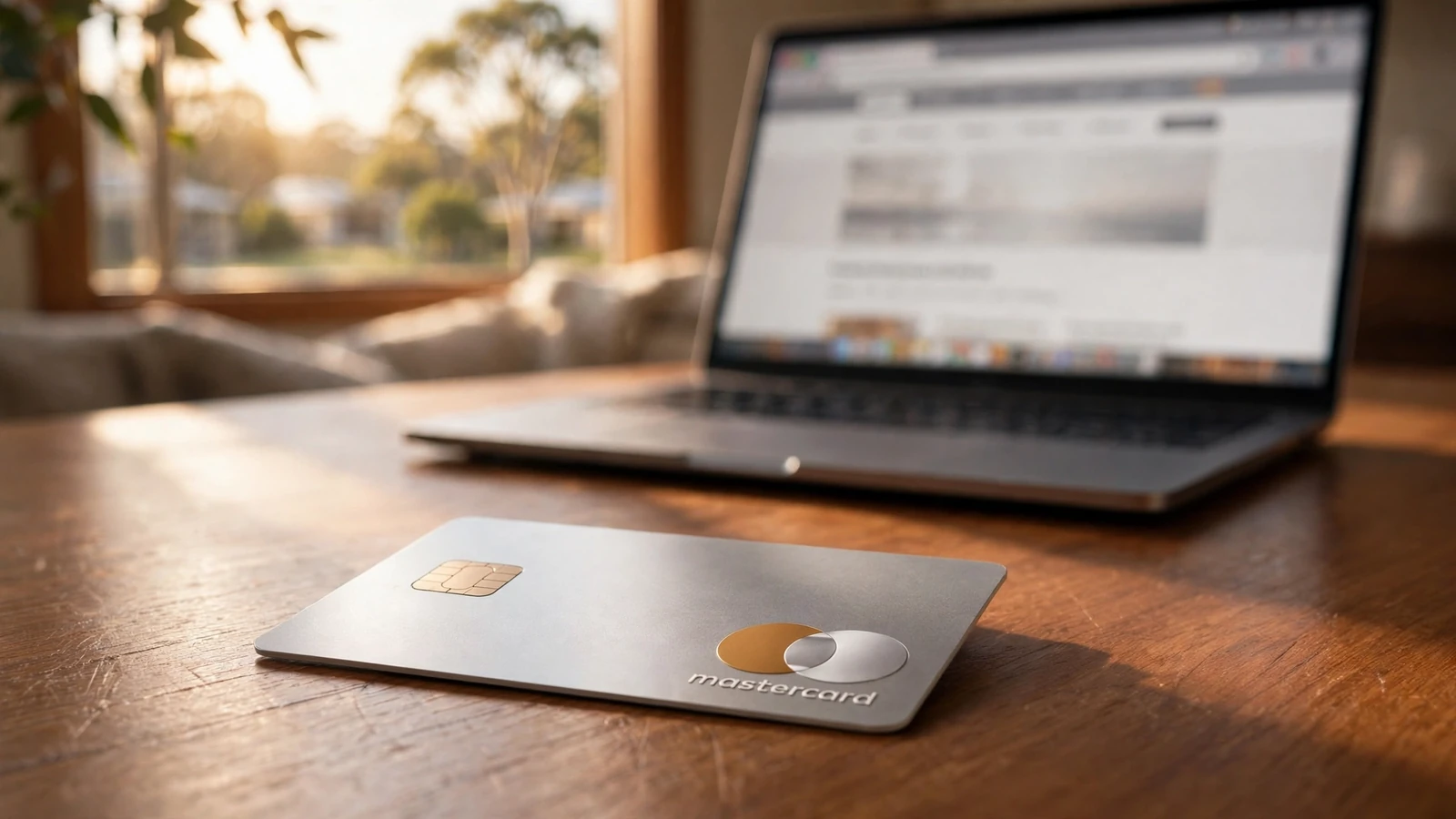
A search for an Australian online casino that accepts Mastercard begins with a legal question, not a cashier’s menu. The Interactive Gambling Act 2001 prohibits operators from providing online casino games to people in Australia. That includes familiar casino formats such as poker and table games, as well as pokies. The restriction concerns the service offered to people physically in the country; a website’s foreign location or branding does not change the basic boundary.
This matters because a payment method can make a service look ordinary. A card logo, a mobile-friendly page and a familiar currency may suggest the kind of retail transaction that takes place every day. But the law does not turn on how recognisable the checkout appears. The relevant issue is whether an operator is providing a prohibited interactive gambling service to people in Australia. Payment is part of the commercial arrangement, not a separate permission slip.
The distinction is easy to lose in the language of online commerce. Casino websites may describe themselves in the vocabulary of accounts, deposits and customer support, while a search for “Australian pokies Mastercard” can make the topic sound like a comparison of payment options. Yet the legal framework comes first. A payment rail does not make an otherwise prohibited service lawful, and the availability of a card logo would not establish that an operator is authorised to provide casino games to Australians.
When choosing a casino that accepts Mastercard in Australia, check the payment options available to you alongside the operator’s other published details. The entries below highlight only the information provided for each operator.
Roby Casino
Roby Casino is listed with a Curacao eGaming license held by Roby Games Ltd.
DragonSlots Casino
DragonSlots Casino is listed with a Curacao Gaming Authority license held by Jumpman Gaming Ltd.
Thor Casino
Thor Casino is listed with a Curacao license from Antillephone N.V. for Versus Odds B.V. Its stated minimum deposit is EUR 20.
7Bit Casino
7Bit Casino is listed as operated by Dama N.V. in Curacao.
Golden Pokies
Golden Pokies is listed with a Curacao license.
Rollero Casino
Rollero Casino is listed with a Curacao Gaming Control Board license, OGL/2023/176/0095, held by Hollycorn N.V.
MrPacho
MrPacho lists crypto payouts of 30–120 minutes and fiat payouts of 24–72 hours. Its stated minimum deposit is A$30.
Kingmaker
Kingmaker lists crypto payouts at around 90 minutes and fiat payouts in 1–5 days. Its stated minimum deposit is A$30.
JustCasino
JustCasino is listed with a Curacao Gaming Control Board license.
WinSpirit Casino
WinSpirit Casino is listed with a Curacao eGaming license, OGL/2024/923/0383, from Antillephone N.V. Its stated minimum deposit is A$30.
The Interactive Gambling Act is directed at providers. It makes it illegal for operators to offer real-money online casino games to people in Australia. The rule applies to online casino-style games rather than only to a particular brand, site design or payment system. An offshore operator does not become an Australian service merely because an Australian customer can reach its pages, nor does a foreign address remove the restriction on offering the service to people here.
That structure reflects a choice about responsibility. The law places the prohibition on the businesses supplying the gambling service, rather than explicitly criminalising players who use offshore sites. This is a distinction, not a declaration that offshore gambling is approved, protected or free of consequences. The absence of an explicit player offence does not reverse the operator-side ban. It means the legal questions should not be collapsed into a single claim that every participant is treated in the same way.
The distinction is also why search language can be misleading. “Best Australian online pokies with Mastercard” sounds as though the central question is which cashier accepts a particular card. In Australia, the more fundamental question is whether the underlying online casino service may be offered to people in the country at all. For real-money casino games, the Act supplies the answer for operators: they are prohibited from providing them to Australians.
 Payments and Crypto for Australian Online CasinosExplore Australian casino payment topics, including the listed card, bank, e-wallet, prepaid and cryptocurrency options.
 Bitcoin Casinos That Accept BTC in AustraliaLearn why accepting BTC does not amount to Australian approval, and how licensing, bonus terms, wallet transfers and withdrawal timing shape the…
A checkout cannot settle that question. Nor can a payment brand, a site’s self-description or a claim that a service is intended for another market. Those details may describe how a business presents itself, but they do not displace the Australian rule. The law is not an accessory to the transaction. It sets the boundary within which the transaction would have to exist.
The Australian Communications and Media Authority, known as ACMA, is responsible for enforcing the Interactive Gambling Act. Its role places online casino services within a national regulatory framework, rather than leaving the matter to payment companies or to the terms shown on an operator’s website. A card issuer’s decision about a transaction is not the same thing as a determination that the gambling service itself complies with Australian law.
That separation matters in discussions of Mastercard. A search for Australian casinos accepting the card can imply that acceptance is the decisive test of legitimacy. It is not. Payment acceptance, if encountered in a cashier, describes a transaction facility; it does not establish that an operator may legally provide online casino games to people in Australia. These are different questions, governed by different actors and rules.
It is tempting to treat the internet as a place where access itself proves permission. The Australian framework resists that assumption. Services can be presented across borders, but the law still addresses the supply of prohibited casino games to people physically in Australia. The location of a server, the nationality of a company and the design of its payment page do not, by themselves, erase that boundary.
Legal Prohibition
The Interactive Gambling Act 2001 prohibits operators from providing real-money online casino games to people physically located in Australia.
The result is a careful distinction rather than a tidy consumer checklist. Operators are prohibited from providing real-money online casino games to Australians; ACMA enforces the Act; and the Act does not explicitly criminalise players for using offshore sites. None of those statements turns a card search into a route around the rule. Nor does the player-side distinction amount to a recommendation to use such services.
Before payment mechanics can be meaningfully discussed, the legal status of the underlying service has to be kept in view. In this market, a Mastercard label cannot answer the prior question of whether the casino itself may be offered. The legal line comes first. Payment comes after.
A payment screen can make a deposit appear to be a simple exchange: choose a card, enter its details and submit. In practice, identity checks may come first. Online casinos commonly require customers to complete a Know Your Customer assessment before they can carry out financial transactions. That places verification ahead of the payment, rather than treating it as an afterthought attached only to a withdrawal.
The distinction matters because a card number does not, by itself, establish who is using the account. A casino’s identity process is a separate part of the transaction, and completion of that process is not the same thing as confirmation that a particular card will be accepted. Nor does the presence of a deposit option establish the amount that can be sent, any charge attached to it or how quickly the payment will be processed. Those are separate terms, not consequences that can be deduced from the word “Mastercard”.
This is where tidy figures become misleading. A minimum deposit is not an inherent Mastercard feature; neither is a maximum, a fee or a processing duration. Such details belong to the rules presented for a particular service and payment route. Without those terms, naming an amount or promising a speed would turn a general discussion of card deposits into a claim about a specific cashier. A plausible number is still a number someone may use to make a financial decision. Plausibility is not evidence.
The same restraint applies to a request for a small deposit. A low figure in a search phrase does not establish that a cashier accepts it, or that the amount is available to every account. A displayed threshold, if one is stated by an operator, may be a condition of that particular service; it cannot be treated as a standing Mastercard rule. The card network and the amount a cashier permits are different things.
Verification also has its own sequence. A customer may be asked to complete identity checks before any financial transaction is allowed. That requirement does not tell the customer which documents a particular service will request, how long assessment will take or whether an account will pass. Those details cannot safely be filled in with a generic checklist. The narrow point is the order: identity assessment commonly precedes the financial activity.
Deposit Sequence
Identity Verification
The customer commonly completes a Know Your Customer assessment to verify their identity.
Financial Transaction
Once verification is complete, the customer can proceed to carry out financial transactions, such as a deposit.
Applying Terms
The transaction is subject to the specific operator's rules regarding deposit thresholds, fees, and processing times.
That order can complicate assumptions about a deposit being immediate simply because a card payment is commonly associated with quick checkout. A cashier’s interface, a card network and an identity review are not one process. A step that looks complete on screen does not prove that every other condition has been met. Conversely, a completed identity check does not show that a Mastercard payment is available. Each part has to be established on its own terms.
There is a broader habit behind the appeal of a named card. People want the means of payment to answer several questions at once: whether a site accepts it, what the smallest deposit might be, whether there is a charge, and when the account will reflect the payment. But a brand name can answer none of those questions without the operator’s specific conditions. The label is not a price list or a timetable.
This is especially important when language about “depositing by Mastercard” is used as if it described a uniform procedure. It may refer to the card as a category, rather than a confirmed option at a given cashier. It says nothing by itself about the account’s verification status or any limits that may apply. A general description should not be mistaken for a transaction instruction.
A careful account of deposits therefore separates what can be stated from what cannot be presumed. Identity assessment commonly comes before financial transactions at online casinos. Beyond that, claims about Mastercard deposit thresholds, charges and processing times need to be tied to actual terms for the specific service. Without those terms, a precise figure would add confidence, not knowledge.
That is the unglamorous part of payment information. The cashier may present a neat sequence of buttons, but the meaningful conditions sit behind them: identity first, then whatever transaction terms apply. A card name alone settles neither.
A specialist review has suggested that Visa may be accepted more broadly at Australian online casinos than American Express. That is a qualified comparison between two payment brands, not a finding about Mastercard. It cannot be stretched into a claim that Mastercard is widely accepted, rarely accepted, or available at any particular casino.
The distinction matters because payment labels are easy to treat as interchangeable. Visa, Mastercard and Amex are all card networks, but a statement about one does not establish the cashier options for another. Nor does a general comparison settle what an individual operator currently permits. The claim is narrower than it may first appear.
It also gives no basis for a list of the best Mastercard casino sites, or for ranking sites by their ability to take Mastercard deposits. Such a list would need evidence tied to the named operators and to the particular transaction being discussed. A broad statement about Visa’s reach compared with Amex supplies neither. Similar branding is not proof of identical acceptance.
“Accepts a card” can itself conceal several different questions. It might refer to a deposit, a withdrawal, or simply a payment method displayed in a cashier. Those are not equivalent claims. A card being available for one transaction would not, by itself, establish that it can be used for another. The Visa comparison says nothing about Mastercard’s role in any of them.
Card Acceptance
A specialist review suggests that Visa may be accepted more broadly at Australian online casinos than American Express; however, this does not establish the acceptance status of Mastercard.
The same caution applies to descriptions such as an instant Mastercard withdrawal casino. “Instant” is a timing claim, while “Mastercard” is a payment-method claim. Evidence for one does not establish the other, and the available comparison concerns neither Mastercard withdrawals nor their speed. A phrase that sounds precise can still bundle together propositions that have not been demonstrated.
There is an equivalent problem with calling a site a Mastercard casino or a Mastercard casino website. The label sounds like a settled feature, but it might be read as a promise of card acceptance across deposits and withdrawals. Without operator-specific support, that impression reaches beyond the narrow Visa-and-Amex comparison. The same is true of claims about Mastercard pokies sites: the name of a payment network does not show that a particular site accepts it.
The comparison does have a limited use. It indicates that a specialist review described Visa as potentially more widely accepted than Amex in the Australian online-casino context. Its wording is cautious, and its scope should remain so. It does not establish a general ordering of every card brand, let alone show where Mastercard belongs in one. Moving from “Visa may be broader than Amex” to “Mastercard is accepted at these sites” would be an unsupported leap.
That restraint can feel unsatisfying beside a request for a clear winner: the best Mastercard casino, the best casino sites that accept Mastercard, or a site that takes Mastercard. But a ranking needs comparable, current information about the same feature across the operators being compared. A single qualified observation about two other brands cannot supply that foundation. A confident list would make the evidence appear more complete than it is.
There is also a difference between a general market description and a usable statement about an individual cashier. The former can suggest a pattern; the latter would need to identify the relevant method and transaction. The available Visa comparison does not resolve whether Mastercard is shown as an option at any specific site, whether it applies to deposits, or whether it supports withdrawals. Those are separate questions, not details that can be inferred from card-network familiarity.
So the careful reading is modest: one specialist review has reported a possible acceptance advantage for Visa over Amex. That may help frame a comparison between those two brands, but it establishes no Mastercard-specific acceptance. It neither identifies a Mastercard casino site nor supports a ranking of sites that take Mastercard. The boundary is plain. A comparison is not a cashier listing.
A withdrawal estimate belongs to the payment method it describes. A specialist review reports that an Amex casino withdrawal can take up to five days to clear. That is a method-specific statement, not a timetable for cards in general. It cannot be carried across to Mastercard merely because both are payment cards.
The distinction matters because “card withdrawal” sounds like one tidy category, while the name on the card is part of the claim. The reported Amex timing concerns Amex. It says nothing about how long a Mastercard withdrawal might take, whether such a withdrawal is available, or what conditions might apply. A familiar logo cannot fill in those blanks.
Nor does the phrase “up to five days” amount to a promise that every Amex withdrawal will clear within that period. It is the upper bound reported in a specialist review, and the review’s statement should remain attached to its source and method. Detached from that context, it can become a misleading generalisation: a number with its label rubbed off.
Attention: A withdrawal estimate for one card brand, such as the reported five-day window for Amex, cannot be used as a guaranteed timetable for Mastercard withdrawals.
This is especially easy to do with searches for instant Mastercard withdrawals or instant payouts at Australian casinos. The word “instant” is an appealing compression of several separate questions: whether a method is accepted, whether withdrawals are allowed to it, and how long a particular transaction takes. The Amex estimate answers only a narrow timing question about Amex. It does not turn the other questions into settled facts, and it offers no basis for describing a Mastercard payout as immediate.
A payment card is not a timetable. The processing description attached to one method should not be used as a proxy for another, even when both appear in the same broad category. The careful reading is less dramatic: a specialist review gives an Amex figure, and that figure stays with Amex.
There is also a difference between a withdrawal being initiated and funds being cleared. The reported wording concerns clearing, so it should not be rewritten as a guarantee about every stage of a payout. Without method-specific information, a claim that a Mastercard withdrawal is instant—or that it follows the Amex estimate—would confuse an attractive label with a substantiated timeline.
That restraint is not a technicality. Payment language often makes separate processes look interchangeable, as though a card brand were merely a different mark on the same clock. It is not. A timing statement has meaning only with its method attached; once the method changes, the statement no longer answers the question.
For Mastercard, the Amex figure supplies no timing assurance. “Up to five days” is not a general card rule, and “instant” cannot be inferred from a search phrase or from another card’s reported experience. The only defensible comparison is that a specialist review reports an Amex withdrawal estimate; Mastercard timing must stand on Mastercard-specific information. No borrowed clock.
That is a narrower answer than a claim that Mastercard never works: payment options can differ between operators and may change. But a casino cannot responsibly be described as a Mastercard option without operator-specific confirmation, such as a current cashier listing the card for Australian accounts.
The distinction matters because a familiar card logo is not proof of a usable payment route. A general statement about card payments, or a comparison with another card brand, does not establish that a particular operator accepts Mastercard. Nor does a payment option being available in another country establish that it is available to someone in Australia.
The available comparison with Amex illustrates how easily broad claims can outrun their basis. A specialist review has described Amex transaction limits as higher than Mastercard and Visa limits, but that is a source-specific comparison, not a dependable rule for every cashier. It says nothing about which casinos accept Mastercard, whether a card would be accepted for a particular Australian account, or what terms would apply.
The same caution applies to debit cards: identifying Mastercard as a card brand does not confirm that a casino permits Mastercard debit payments.
Payment labels are only the beginning. A cashier can distinguish between card types, currencies, and transaction purposes; the card issuer can also affect whether a transaction proceeds. Without specific, current information from the operator, a generic reference to Mastercard cannot settle those details. A logo on a page may be broader than the actual payment conditions.
The sensible wording, then, is limited: Mastercard acceptance at a particular casino for Australian users is unconfirmed. That is not a prediction that acceptance will appear later, nor a claim that every operator rejects the card. It is simply a boundary between what a broad card comparison might suggest and what an operator-specific statement can establish.
In a market where payment language can sound more definite than the underlying arrangements, restraint is useful. A named casino, a debit-card option, or a promise of a particular cashier route would require evidence tied to that operator and its current terms. Without that, a confident answer would be more decorative than informative.
Australian payment habits are not organised around a single object. A plastic card may still come out at a checkout, while a phone handles the next purchase and a bank-linked service the one after that. The shift is less a clean replacement of one method by another than a willingness to move between them.
Contactless credit and debit cards are accepted almost everywhere in Australia. That reach has made tapping an ordinary gesture: payment can happen without much ceremony, and the card remains a familiar fallback even for people who also use newer tools. Convenience, here, is partly a matter of habit. A method that asks little attention tends to become part of the background.
Mobile wallets such as Google Pay and Apple Pay are likewise accepted almost everywhere. They bring a card’s payment function onto a phone, but they do not erase the card itself. People may carry both, choosing according to what is at hand, what a device can do, or what a particular transaction allows. The practical culture is therefore not a contest in which one technology must defeat another.
Bank-linked services such as PayPal add another layer. Australians are comfortable switching among cards, mobile wallets and these services, rather than treating each as a separate financial identity. The route a payment takes can change even when the basic purpose does not. That flexibility is a feature of everyday commerce, not a guarantee that every service will be available in every setting.
This distinction matters whenever familiar payment language travels into an unfamiliar context. A Mastercard used for routine contactless purchases belongs to a broad retail pattern; a phone wallet belongs to another familiar part of it. Neither fact, by itself, says what a particular online service permits. Everyday acceptance describes the surrounding payment culture, not the rules of a specific merchant.
There is something quietly revealing in this mix. Australian consumers have not had to choose between the visible card and the invisible account behind a wallet or bank-linked service. They move among them with little fuss, letting the transaction determine the instrument. The card has not vanished; it has become one option among several.
That ordinary flexibility can make payment systems appear interchangeable. They are not. A card, a wallet and a bank-linked service may feel like neighbouring doors in daily life, while remaining distinct methods with separate conditions. Familiarity is not universal access. Just a habit, not a promise.
The legal distinction in Australia is between the operator and the person at the screen. Under the Interactive Gambling Act 2001, offering real-money online casino games to people in Australia is prohibited. The rule covers casino-style games, whether the site is described as Australian or operates from overseas. A foreign licence does not make the service lawful to offer here.
The Act does not explicitly make players criminally liable merely for using an offshore casino. That distinction can sound reassuring, but it is not a consumer safeguard. The Australian Communications and Media Authority (ACMA) enforces the Act, and offshore services are subject to blocking and enforcement measures. Access may be disrupted; a familiar brand name or a working payment route cannot settle the legal question.
Consumer protection is a separate matter. Australian consumer law does not protect people using offshore casinos. If a dispute arises over an account, funds or the handling of a transaction, the protections available for domestic goods and services cannot simply be assumed to apply. The operator may be outside Australian jurisdiction, and an overseas licence is not a substitute for Australian consumer remedies.
That matters to the question of whether an Australian casino accepts Mastercard. A cashier showing a card option would describe a payment feature, not establish that an operator may lawfully offer online casino games to Australians. Nor would it create local consumer protection. Payment access and lawful availability are different questions, however neatly a website places them beside each other.
The tension is not accidental. The law puts the obligation on operators not to provide prohibited interactive gambling services to people in Australia, while leaving players without the same criminal liability for using offshore sites. But the absence of player prosecution is not endorsement, oversight or a promise of redress. Offshore is not a consumer category. It is a jurisdictional problem.
So the regulatory frame comes before any discussion of cards: the Australian prohibition concerns the service being offered, not which logo appears at checkout. ACMA’s role is enforcement; it does not turn an offshore casino into an Australian-protected business. A payment method cannot do that either.
A card’s role in a casino cashier is not automatically the same for deposits and withdrawals. American Express illustrates the distinction: a specialist review reports that some Australian online casinos do not permit winnings to be withdrawn to Amex. Where an Amex withdrawal is available, the player must first have made a deposit using that card.
That prior-deposit condition makes the payment history relevant. A card may have been accepted when money went in, yet still not be available as the route for money coming back. The cashier’s rules, rather than the card logo alone, determine what transactions an operator permits.
The distinction is easy to overlook because everyday card payments appear to run in both directions: a purchase is charged, and a refund can return to the same account. Casino payments have their own terms. A deposit option does not, by itself, promise a matching withdrawal option.
A Mastercard withdrawal cannot be inferred from the Amex example. The Amex condition describes Amex transactions; it says nothing about whether a casino accepts Mastercard for withdrawals, whether a prior Mastercard deposit would be required, or how a Mastercard payment would be handled. Each method needs its own stated rules.
This is also why a broad label such as “card accepted” can be too blunt. It may describe one part of the cashier’s process while leaving the return route unsettled. For Amex, the available account is specific: some operators may not allow withdrawals to that method, and a prior Amex deposit is required where an Amex withdrawal is offered.
Payment methods are not interchangeable doors. A withdrawal policy belongs to the particular method and operator, not to cards as a single category. Plain enough.
A card logo can suggest a familiar route through a cashier, but it does not establish that every card bearing that logo will work there. Acceptance is a decision made within a specific payment arrangement, and one brand’s presence cannot be treated as evidence for another’s.
A specialist review has reported that some online casinos do not accept American Express. The same kind of review suggests Visa may be accepted more broadly than Amex at Australian online casinos. Those are limited, changeable observations about those two networks, not a dependable map of every cashier. They say nothing decisive about Mastercard.
That distinction matters because card brands are often grouped together in casual descriptions of payment methods. Yet a statement that Visa appears more widely accepted than Amex does not establish that Mastercard is accepted, nor that a Mastercard transaction would be processed under the same conditions. Similar-looking cards can travel through different arrangements, and the cashier’s displayed options are specific to the service and account.
The details needed to make a Mastercard claim are practical rather than cosmetic: whether the cashier lists it, whether the card issuer permits the transaction, and what conditions apply to that payment route. Without operator-specific instructions, there is no sound basis for naming a casino as accepting Mastercard or describing Mastercard as a confirmed casino payment method.
This leaves a narrow but useful comparison. The available Amex and Visa observations show that card acceptance is not uniform across brands. They cannot be stretched into a claim about Mastercard. A reader searching for a way to pay by Mastercard at a casino may encounter broad statements about “cards” that blur this difference; the category is not the evidence.
The phrase “pay by card” sounds settled, almost domestic. In practice, it conceals several separate decisions: the cashier’s supported methods, the payment provider’s rules and the issuer’s response. A logo alone answers none of them. Nor does evidence about another network.
A careful comparison therefore stops where the details stop. Amex and Visa provide a limited point of reference; neither confirms Mastercard acceptance. Claims about Mastercard require direct, current cashier information, not inference by association. No promise can be made from a neighbouring logo.
A payment card and a casino promotion are separate parts of an offer. A bonus may be described as a welcome incentive, a deposit match or another promotional benefit; the mention of Mastercard in a payment context does not, by itself, connect the card to any of those terms.
That distinction matters because promotional language can make a routine payment option sound like a special arrangement. “Mastercard bonus” might suggest a reward for depositing with that card, but the phrase alone says nothing about eligibility, the offer’s conditions or whether the operator actually provides such a benefit. Those details would need to be stated in the promotion itself.
Better not.
Nor should a general casino promotion be relabelled as a Mastercard offer merely because Mastercard appears among possible payment methods. Payment acceptance and promotional eligibility are different questions, and one does not establish the other.
This is a small distinction with a familiar commercial consequence: the more attractive the label, the more carefully its conditions deserve scrutiny. A bonus headline is not a promise on its own. For Mastercard-related promotions, only explicit terms could make the connection meaningful.
Limits are set by each casino and can vary. Check the casino’s cashier or payment terms for its current Amex deposit and withdrawal limits.
Jackpot City Casino, Spin Palace, Ruby Fortune, Ignition Casino, Joe Fortune and PlayAmo are listed as accepting Amex deposits for Australian players. Acceptance can vary, and some Australian banks may block gambling transactions on Amex cards.
Yes, some online casinos accept Amex deposits, but not all do. A deposit may also be declined if Amex or the card issuer blocks payments to the site.
Amex deposits are typically free, but a casino may charge a 1.5% surcharge, and Amex cards can incur a 3% currency conversion fee. Withdrawal fees may also apply.
Amex deposits are processed instantly. Withdrawals can take up to five days to clear.
Deposits are typically fee-free, but a casino may add a 1.5% surcharge and Amex cards can incur a 3% currency conversion fee. Withdrawal fees may apply.