A practical guide to distinguishing accommodation and venue questions from claims about online casino services.
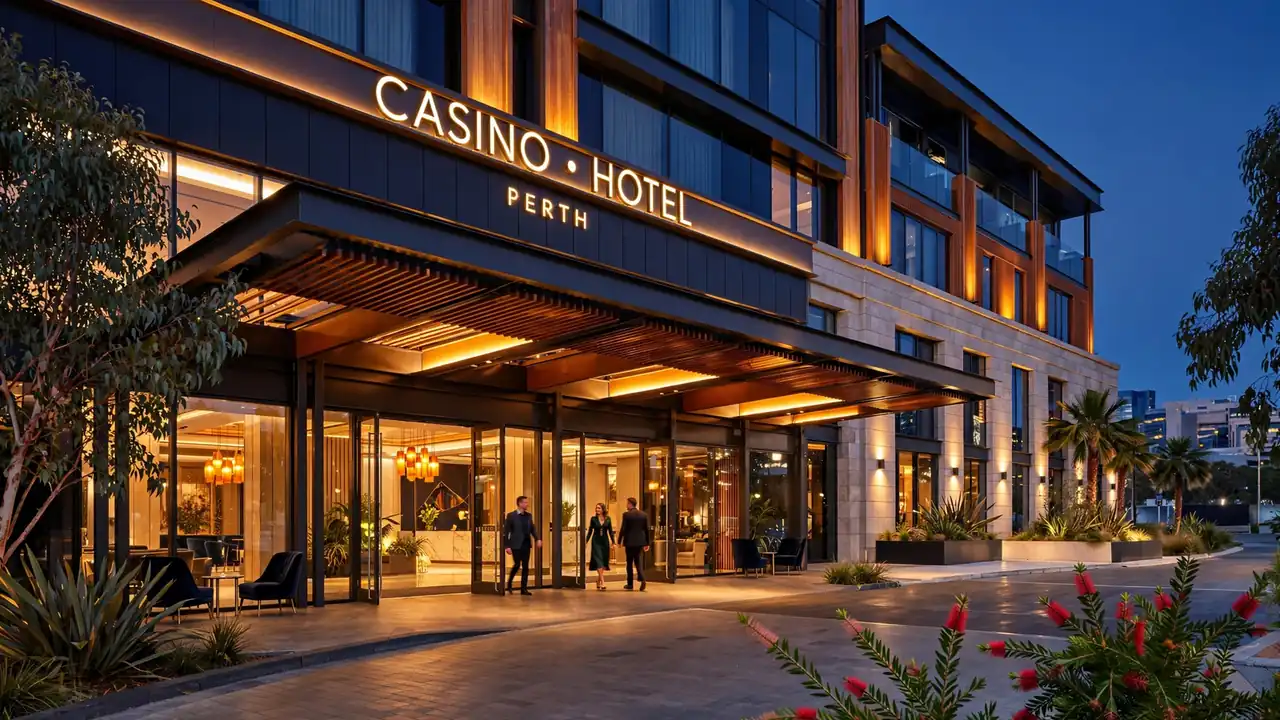
A casino hotel is first an accommodation proposition: a room, a place to sleep and the practical arrangement of staying at or close to a venue. The casino may be part of the setting, but that does not make a hotel booking a gambling service. A room rate, a package and access to a physical building belong to a different category from an account on an online casino platform.
That distinction matters in Western Australia, where the phrase “casino hotel” can blur two separate questions. One is where a person might stay in connection with a visit to a casino. The other is whether casino games can be supplied over the internet to someone in Australia. Shared branding or a shared word does not join those questions together.
Accommodation searches tend to be practical. A room may be wanted for convenience, for a particular trip, or simply because a hotel is associated with a venue. A deal is a price and booking arrangement; a room is a place to stay. Neither, by itself, says anything about the legal status of online gambling. Nor does a hotel label prove that a particular property is attached to a casino, that rooms are available, or that a package includes anything beyond lodging. Those details require property-specific information.
Choosing an online casino from Western Australia calls for a careful look at the details available about each operator. This list offers a concise starting point for checking the options and deciding what matters to you.
Roby Casino
Roby Casino lists a Curaçao eGaming licence held by Roby Games Ltd.
DragonSlots Casino
DragonSlots Casino lists a Curaçao Gaming Authority licence held by Jumpman Gaming Ltd.
Thor Casino
Thor Casino lists a Curaçao licence from Antillephone N.V., with Versus Odds B.V. identified as the operator. Its minimum deposit is EUR 20.
7Bit Casino
7Bit Casino is operated by Dama N.V. and lists Curaçao as its licensing jurisdiction.
Golden Pokies
Golden Pokies lists a Curaçao licence.
Rollero Casino
Rollero Casino lists a Curaçao Gaming Control Board licence, OGL/2023/176/0095, held by Hollycorn N.V.
MrPacho
MrPacho lists crypto payouts in 30–120 minutes and fiat payouts in 24–72 hours. Its minimum deposit is A$30.
Kingmaker
Kingmaker lists crypto payouts at around 90 minutes and fiat payouts in 1–5 days. Its minimum deposit is A$30.
JustCasino
JustCasino lists a Curaçao Gaming Control Board licence.
WinSpirit Casino
WinSpirit Casino lists a Curaçao eGaming licence, OGL/2024/923/0383, from Antillephone N.V. Its minimum deposit is A$30.
The online side has a different legal boundary. Under the Interactive Gambling Act 2001, operators cannot provide real-money online casino games, including pokies and table games, to people physically located in Australia. This applies to the service being supplied, not to the building in which a guest sleeps. A physical casino and an internet platform are not interchangeable simply because both use the word “casino”.
That is a distinction of law, not a distinction in atmosphere. A hotel stay can be ordinary accommodation even when the property is associated with gambling. An online casino account, by contrast, involves a remote service and falls under the rules governing interactive gambling. A booking confirmation cannot authorise an online operator, just as the existence of an online site cannot establish that a particular hotel is operating or that a room is available.
It is also misleading to treat an offshore website as the online equivalent of a local casino hotel. Offshore platforms are not regulated under Australian law, and the fact that a player may not face criminal liability does not turn those operators into lawful Australian providers. The legislation places its central prohibition on supplying the service to people in Australia. That is the important dividing line.
The word “best” therefore needs a modest interpretation when attached to a hotel. It might refer to the fit between a stay and a trip: location, room type, booking conditions, or the details of a package. Those are accommodation considerations. They cannot be settled by online gaming claims, and they should not be inferred from them. A promotional page for an internet casino is not evidence about rooms in Western Australia; a hotel listing is not permission to play online casino games.
 Best Casino in Perth: What Hotel Searches RevealLearn what a casino hotel search can establish—and what still needs checking, from room details and dining to transport and online gambling.
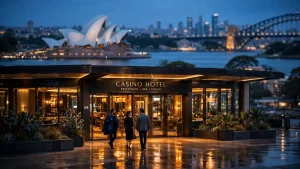 Best Casino in Sydney? What to Check Before BookingLearn how to distinguish accommodation on a casino property from a nearby hotel, and which room and booking details still need confirmation.
The same care applies to phrases such as “casino hotel deals” or “rooms at a casino”. They describe a hoped-for booking, not a uniform product. The connection between a hotel and a venue may vary, while rates and conditions belong to the booking itself. The word “deal” is not a guarantee of value, and a casino association is not a substitute for checking what the accommodation actually includes.
A stay is a stay. Online gambling is another matter entirely. The boundary is plain.
A poker room is a particular kind of casino space: one associated with table play, where participants play poker against one another under the venue’s rules. A tournament is a particular way of organising that play. Neither term is another name for pokies. Electronic Gaming Machines offer individual games driven by a Random Number Generator; poker at a table involves players making decisions against other players. The shared word does not make the activities interchangeable.
That distinction matters when looking for poker rooms or tournaments in Western Australia. A general reference to a casino, or even to casino rooms, does not establish that poker tables are available, that tournaments are scheduled, or that a particular format is offered. Those are specific operational details, not qualities that can safely be inferred from the word “casino”. Nor does a search for a sports bar settle the question: a bar and a poker room serve different purposes, even if both are imagined as parts of one venue.
Legal Restriction
Under the Interactive Gambling Act 2001, operators cannot provide real-money online casino games, including poker and table games, to people physically located in Australia.
The same caution applies to the phrase “poker at a casino”. It might mean a cash game, a tournament, a poker machine, or simply a broad interest in gambling. Those are distinct things. Poker machines are not table poker, and a tournament is not merely a table that happens to be open. Its existence depends on arrangements such as entry conditions, timing and rules, none of which can be assumed for a Western Australian venue without reliable, current venue information.
Online results complicate the picture because the familiar vocabulary travels between physical and digital gambling. Online poker may look like a convenient equivalent to a room in a building, but the legal setting is different. Under the Interactive Gambling Act 2001, operators cannot provide real-money online casino games, including poker and table games, to people physically located in Australia. The prohibition concerns the service offered to people in Australia; it does not turn an online platform into a local poker room or a venue tournament.
The boundary is worth keeping clear. A physical poker event and an online poker service are not interchangeable simply because both involve cards, chips or tournament language. Online casino-style games offered to Australian customers fall within a prohibited category for operators. Sports betting has a different position in Australia, but that does not make online casino poker lawful by association. Different products sit under different rules. The vocabulary is shared; the legal treatment is not.
 Darwin Casino: Venue, Hotel and Practical DetailsReview what the article can establish about Darwin Casino, from accommodation and dining to opening hours, online searches and Australian law.
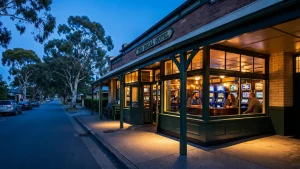 Best Pokies in Geelong: Checking What's OpenLearn why Geelong pokies listings can point to venues but cannot confirm current access, machine availability or temporary closures.
The question of whether a casino is open at a particular time is also separate from whether poker is being dealt or a tournament is running. A venue’s general opening status would not, by itself, confirm that a poker room is operating or that an event is scheduled. Search wording can compress several assumptions into one line; real venue operations do not become simpler because the line is short.
For anyone comparing options, the useful distinction is between a verified venue offering and a general description of casino gaming. A claim about a poker room should identify the physical venue and the nature of the play; a tournament claim should establish that an event is actually planned. Without that specificity, “casino poker” remains a label, not a confirmed room, table or event.
There is little romance in that distinction, but it prevents a familiar category error: treating a machine, a table game, a tournament and an online service as different doors into the same room. They are not.
A visit to a casino begins with ordinary logistics: where a vehicle can be left, which entrance serves the venue, and whether parking arrangements change at busy times. Those details are specific to a place and can change. A general page about Western Australia cannot establish whether a particular casino has a car park, offers valet parking, charges for either, or restricts access during an event. The sensible distinction is between a question worth checking and a facility that can be assumed to exist.
Before travelling, parking information should be confirmed through the venue’s own current channels. If valet service matters, it needs to be checked as a separate arrangement rather than inferred from the word “casino”; the same applies to costs, access conditions and any limits on vehicle entry. A map pin can help locate a venue, but it is not a parking policy. Small distinction. Useful one.
The same care applies to the phrase “best casino in Western Australia”. A search about a physical casino may gather together results about parking, dining, entertainment and online play, though those describe different things. A website offering casino-style games is not a guide to the entrance or parking arrangements of a building. Nor does an online listing establish that a physical venue has a particular facility. For a trip, the relevant evidence is venue-specific and current.
Online casino services also sit within a different legal framework from a visit to a physical venue. The Interactive Gambling Act 2001 prevents operators based in Australia from providing real-money online casino games to people in the country. That restriction covers games such as pokies, blackjack and roulette. A locally operated website therefore cannot lawfully offer those games to Australian players simply because a physical casino exists somewhere in the state.
Offshore platforms are a separate matter, but not a local alternative with Australian regulatory oversight. They operate beyond the Australian licensing framework, and the position for players is legally uncertain: using such a service is not itself treated in the same way as an operator providing prohibited services, yet Australian law does not regulate the platform. That distinction matters. A site’s availability online does not make it an Australian venue, or an Australian-regulated service.
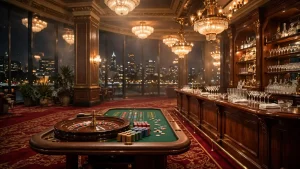 Casino Hotels in Melbourne: Rooms and Visit DetailsLearn how to assess casino hotel listings, compare nearby stays and check practical visit details. A casino label alone does not confirm…
 Brisbane Casino Guide to Hotels, Dining and DetailsExplore how casino-hotel listings differ from nearby accommodation, plus what to check on rooms, dining, parking, rewards and venue services.
This is why “casino online” and “casino parking” should not be allowed to collapse into one answer. The first concerns interactive gambling and its legal setting; the second concerns a physical journey and arrangements controlled by a specific venue. A result that blends the two may be convenient for a search engine, but it is not a substitute for checking the right kind of information.
For anyone planning a visit, the practical questions remain modest and concrete: whether parking is available, whether valet service is offered, how vehicles enter, and whether the arrangements apply on the intended date. Those answers belong to the venue’s current information, not to assumptions drawn from online casino pages. A building has an address and an approach road. A gaming website has neither.
“Accommodation at a casino” and “accommodation near a casino” describe different arrangements. The first suggests that rooms form part of the venue or its wider complex; the second may mean any lodging in the surrounding area. The distinction matters because a casino’s name in a hotel listing does not, by itself, establish that the property is on site, connected to the gaming floor or even within easy walking distance.
For a trip to Western Australia, the phrase “casino accommodation” can therefore be an imprecise starting point. A stay may be chosen for access to a venue, while another may suit a broader itinerary in which the casino is only one stop. Those are different calculations. Distance on a map is not the same as a straightforward journey: roads, public transport, parking and the route between a property and the venue all shape what “nearby” means in practice.
Distance on a map is not the same as a straightforward journey; roads, public transport, and parking all shape what "nearby" means in practice.
The old promise of a hotel beside an attraction is a neat one. It folds travel, rest and entertainment into a single address, as though geography could be tidied by a booking form. In reality, accommodation labels can blur the boundary between a property inside a complex and one merely marketed in relation to it. The useful distinction is not the wording in a headline but the actual location and the arrangements that connect a guest to the venue.
Deals need the same care. A promotion attached to a stay could refer to the room, a package, or a separate offer from the casino; the word “deal” does not explain what is included or what conditions apply. Nor does a casino-related promotion automatically mean that accommodation is discounted. Comparing offers requires attention to the booking terms, dates, inclusions and cancellation conditions, rather than treating a shared brand or location as proof that the benefits travel together.
That caution belongs to hospitality as much as gambling. A room rate can look attractive while leaving transport or other costs outside the headline price. Conversely, a more distant stay might fit a visitor’s plans better if the casino is not the sole purpose of the trip. The right choice depends on the shape of the visit, not on a universal ranking of properties.
For Western Australia, choosing between an on-site stay and somewhere nearby begins with establishing what each description means for the particular booking. A venue’s location and a hotel’s location are separate pieces of information; their names appearing together do not make them interchangeable. The same applies to claims about convenience. “Close” is a relation, not a service.
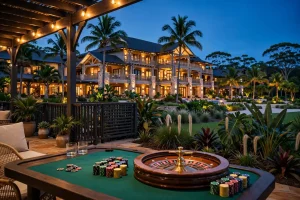 Casino in Queensland: Hotels, Dining and Practical DetailsCompare on-site stays with nearby accommodation, and see what the search can confirm about poker, dining, parking, pool access and online table…
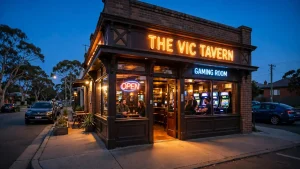 Best Pokies in Perth: Venue Hours and What to CheckLearn why Perth gaming-floor hours need venue-specific confirmation, and how “best-paying” claims differ from what broad searches can verify.
A casino can be the anchor of an overnight visit without dictating where someone sleeps. The surrounding accommodation question is ultimately a matter of distance, access and terms—not an extension of the gaming floor. That is less glamorous than a bundled promise. It is also clearer.
A venue’s contact details are small facts with practical consequences. A working phone number can answer whether a bar is open, whether a car park is accessible, or where an entrance is; an old listing can send someone to the wrong place. For a casino in Western Australia, those details should be checked against the venue’s own current information before travel is planned. Map listings and copied directory entries can be useful starting points, but they are not a substitute for a direct confirmation when the answer matters.
The same care applies to a map. A pin may show a broad site rather than the entrance intended for visitors, and a map does not explain access arrangements or parking conditions. Directions should be read alongside the venue’s own guidance, especially where a visit depends on a particular entrance or a specific car-park route. No assumption about a car park’s location, cost, capacity or hours can safely be made from the word “casino” alone.
A bar raises a different set of questions: whether it is open, what sort of setting it offers, and whether its service is tied to an event or another part of the venue. Those are details to confirm directly, rather than infer from photographs or a general listing. The label “bar” does not establish a particular menu, atmosphere, service schedule or dress code. A dress rule, where one applies, belongs to the venue’s current policy, not to an unwritten idea of what a casino ought to require.
That distinction matters because buildings acquire reputations faster than their operating details remain fixed. A bar may be remembered under an old name; a telephone number may lead to a general switchboard rather than the department needed. The sensible order is to identify the precise venue, use its official contact route, and ask a clear question. For a visit involving parking or a bar, the answer should concern that particular service, not merely the site as a whole.
Questions about baccarat or craps also need a venue-specific answer. A game’s presence online or at casinos elsewhere does not establish that it is offered at a Western Australian venue, nor does a general map or contact directory settle the matter. Physical casino services and online gambling are separate subjects. Under the Interactive Gambling Act 2001, operators based in Australia cannot provide real-money online casino games such as blackjack, roulette and slots to people in Australia. A venue telephone number is therefore a route to information about a physical place, not evidence that equivalent games can be accessed online.
Concerts and other booked events can also affect practical arrangements, but their schedules and associated access details should be checked with the venue rather than assumed from a general entertainment listing. A contact search is most useful when it ends in a current, specific answer: the right department, the relevant service and the date it applies to. That is less glamorous than a promise of effortless planning. It is also how planning works.
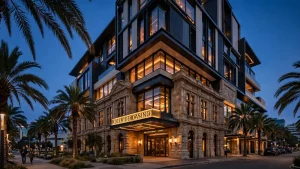 Adelaide Casino Hotel: Rooms and Stay DetailsLearn how to check whether accommodation is offered by Adelaide Casino or by a nearby property, and what to verify on booking…
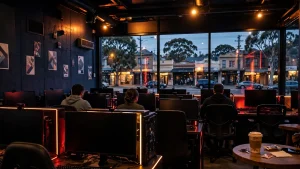 Best Pokies in Melbourne: Venues, Hours and ChecksLearn how to assess Melbourne pokies listings, from airport distance and “open now” claims to venue hours, room rules and what best-paying…
Breakfast and buffet searches concern the physical venue: whether a meal is served, what kind of service is offered and whether it belongs to a wider resort stay. Those details cannot be inferred from the word “casino”. A venue’s name or resort label does not, by itself, establish that breakfast is available, that it is buffet-style or that it is included with accommodation. The distinction matters because a meal attached to a stay is a hospitality arrangement, not a gambling reward.
“Rewards” points in a different direction. At a physical casino, it may refer to a customer programme; online, the same word can describe a promotional offer tied to an account. Neither label explains what a benefit is worth or what conditions apply. A balance of points, a meal offer and free spins are different things, even when presented beneath the same polished heading.
Online promotions require particular care in Australia. The Interactive Gambling Act 2001 prohibits operators from providing real-money online casino games to people in the country. A bonus does not change the legal character of the service, and promotional language should not be mistaken for evidence that an online casino is an Australian-authorised product.
Where free-spin terms are discussed, the condition attached to winnings is more consequential than the headline offer. A report published by psu.com describes wagering requirements for free-spin winnings in a range from 20x to 50x before withdrawal. Separately, a specialist review gives a 30x requirement as one specific example. That is an illustration of a term an operator may set, not a rule applying to every promotion. Fine print can also impose a maximum cashout or allow winnings to be voided when conditions are breached. The small type does the larger work.
Terms for free-spin winnings can vary significantly; for example, requirements may range from 20x to 50x before withdrawal, with some specific reviews citing a 30x requirement.
A casino rewards programme should therefore not be treated as a guaranteed discount or cash equivalent. Its meaning depends on the written conditions: what earns a benefit, what can be redeemed and whether restrictions apply. Online bonus terms deserve the same scrutiny, while remaining a separate matter from a venue’s breakfast or accommodation arrangements. Similar vocabulary does not make the products interchangeable.
Employment searches belong to yet another category. A casino job concerns recruitment, roles and workplace conditions, not a guest reward or resort amenity. The existence of searches for casino jobs in Western Australia cannot establish that a particular venue is hiring, what positions are available or what conditions an employer offers. Hospitality, gaming and administrative work may all sit under the broad label, but each has its own requirements.
The useful dividing line is simple: breakfast belongs to hospitality, rewards to programme terms, and jobs to employment. A resort description cannot settle the first, a promotional banner cannot settle the second, and a job-search phrase cannot confirm the third. Labels are not terms.
Opening hours, event listings and development announcements belong to different kinds of information. A venue’s hours are operational details; a concert or public event is a dated programme; a development plan concerns what may happen later. Treating them as interchangeable makes a search result look more complete than it is.
Hours can change for public holidays, private functions or operational reasons. An old listing may still circulate after the details have changed, while a general description of a venue says little about whether a particular service is available at a particular time. For a planned visit, the useful distinction is between a page that states a current schedule and a page that merely describes the venue. The date attached to the information matters.
The same caution applies to reopening language. “Reopen” can refer to a temporary closure ending, a section of a venue returning to service, or a larger project reaching a new stage. Those are not equivalent announcements. A reopening claim is strongest when it identifies what is reopening and when; without those particulars, the word carries more certainty than the statement can support.
Events also have their own short shelf life. A calendar may describe a one-off performance, a recurring programme or a private booking, and those categories answer different questions. Entertainment listings are not proof that a particular event is happening on a given evening. Nor does a venue’s general capacity to host events establish a current schedule. Dates and event descriptions need to travel together.
Development and employment searches point further into the future, but plans, construction and hiring are separate matters. An announced proposal does not itself establish that work has begun, that a project is complete, or that roles are being recruited. Employment information is clearest when tied to an actual vacancy or an identified stage of a project, rather than inferred from a development headline. The distinction is ordinary, and easily lost.
A casino review has a different job again. It may describe atmosphere or a past visit, but those impressions do not replace current operating details. A review that gives a date and separates observation from expectation is more useful than one that treats a prediction as a settled fact. The same principle applies to mentions of menus: they can indicate what a venue has described, but not necessarily what is being served now. Dining details belong to their own checks.
This is not a matter of distrust for its own sake. Dates are part of the information. A schedule without a date is a memory; a development announcement without a status is a possibility. In a state where a casino visit may be planned around travel, work or an event, those small distinctions do practical work. The calendar is not the promise.
A restaurant associated with a casino can mean several different things: a dining room inside the venue, a separate business on the same site, or an independent restaurant close enough to be grouped with it in a map listing. Those distinctions matter more than the broad label. “At the casino” suggests one relationship; “near the casino” suggests another, and neither describes the menu or the kind of evening on offer.
Dining also has its own timetable and purpose. A restaurant is not merely a place to pick up food between other activities. It may be the main reason for a visit, with the casino forming only the setting around it. In that case, the relevant questions concern cuisine, atmosphere, reservations, accessibility and the way the venue handles service. The casino name alone answers none of them.
The setting can shape expectations. A dining room within a larger entertainment venue may be part of a busy night out, while a nearby independent restaurant may have a separate entrance, identity and booking process. In a search for restaurants in Western Australia associated with a casino, those possibilities can sit side by side. A result’s wording is not a reliable guide to whether it is inside the building, on the same grounds or simply in the surrounding area.
Menus are especially resistant to assumption. A casino association does not establish whether a restaurant serves a particular cuisine, caters for dietary needs, offers a set menu or accepts walk-ins. Nor does it settle the question of price. Those details belong to the restaurant’s own current information, where changes to service and menus can be reflected directly. A familiar venue name is not a menu.
The broader social history is quieter than the casino’s public image. Dining creates a pause in a place often organised around movement, spectacle and decision. A meal has a beginning and an end; the surrounding venue may invite people to linger. That contrast is part of the appeal for some visitors, but it does not turn every dining option into a restaurant experience, or make every restaurant part of the casino itself.
For a Western Australian casino restaurant, the useful distinction is therefore not simply whether food is available, but what kind of establishment is being described and how closely it is connected to the venue. Restaurant listings, official venue pages and booking information can clarify that relationship. A casino’s name may lead to the right neighbourhood. The details of the meal belong to the restaurant.
A casino spa belongs to the world of rooms, appointments and physical access. An online casino belongs to a different system: a website may display games according to a visitor’s location, but that does not make it a place to visit or establish anything about a venue’s facilities. The same distinction matters when an address, dress code or games are being considered. One set of details concerns entry to a building; the other concerns digital access and Australian law.
A spa-related search can signal an interest in combining entertainment with rest, but the word “spa” alone says little about what is on offer. It does not establish that a casino has treatment rooms, a day-spa service or any particular arrangement for guests. Those are venue-specific details, not qualities that can safely be inferred from the presence of casino gaming. The distinction is plain, if not especially glamorous.
Address and dress-code information also belong to the practical life of a physical venue. An address identifies a location; a dress code, where one applies, governs entry there. Neither can be transferred from a website’s terms or a game lobby. Bar searches sit in the same physical category: they concern a place and its services, rather than the software through which a game is reached.
The word “games” is less straightforward. At a venue it may mean activities offered on site; online, it can mean titles presented in a digital lobby. Online operators can restrict particular games or providers according to a player’s country. This restriction can be applied using the IP address, which indicates the device’s apparent geographic location. When a game is blocked for Australian access, it may simply be absent from the lobby. A game that does not load may also reflect a regional restriction, as described in a specialist review; a loading problem alone does not identify its cause.
There is a legal boundary behind that technical one. The Interactive Gambling Act 2001 prohibits operators from providing real-money online casino games, including pokies, blackjack and roulette, to people in Australia. A physical casino address and an online site therefore cannot be treated as interchangeable routes to the same service. A building has a location, entry conditions and on-site amenities; a website has access controls and a legal status shaped by where its user is located.
Keeping those categories separate makes practical information more useful. Spa facilities, an address and a dress code are questions about a particular place. A game lobby is not a directory of Western Australian venues, and its contents do not establish what can be found behind a physical front door.
A food court and a pool belong to different kinds of expectation. One suggests a practical stop between activities; the other turns a casino visit into a resort-style stay. Neither follows automatically from the word “casino”. A building may be known for gaming without offering every amenity associated with a holiday complex.
Food-court information is also distinct from restaurant dining. A food court implies a shared area with several casual choices, while a restaurant has its own format and service. Treating the two as interchangeable can leave a visitor with the wrong picture of what is available on site. For Western Australian venues, those details should be checked against the particular property’s current facilities information rather than inferred from the state or the venue category.
A pool is an even clearer case of assumption doing too much work. It may be part of a hotel or resort, but that does not establish that it is attached to a casino, open to day visitors, or included with a stay. Access arrangements can matter as much as the amenity itself. A pool on a property is not necessarily a pool for every guest.
The distinction is useful when planning a visit: food options concern where to eat; pool access concerns the facilities and conditions attached to a venue or accommodation. Neither should be treated as a standard feature of a Western Australian casino. The reliable detail is the one attached to the specific property and the dates of the visit.
A name can suggest a whole resort. The particulars still matter.
Yes. The Interactive Gambling Act prevents operators based in Australia from supplying real-money online casino games, such as pokies and table games, to people in Australia. Offshore platforms are not regulated under Australian law.
Examples include progressive jackpot pokies, which add a portion of bets to a growing jackpot, and buy-bonus games, which let players pay to enter a bonus round directly.
NetEnt blocked its wide-area progressive jackpot games, including Mega Fortune and Hall of Gods, from Australian players. NYX Gaming/Next Gen titles such as Foxin’ Wins and Doctor Love were also region-blocked.
Each online pokie uses a Random Number Generator, so every spin is independent and previous results do not affect the next one. RTP describes the theoretical share of wagers paid back over a very large number of spins.
Free-spin winnings commonly have wagering requirements of 20x to 50x before withdrawal; the stated requirement for free-spin winnings is 30x. Pokies typically contribute 100% toward wagering requirements.