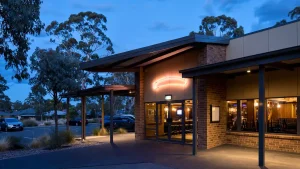
The phrase “casino hotel” can describe different arrangements, so property location and room availability should be verified when booking.
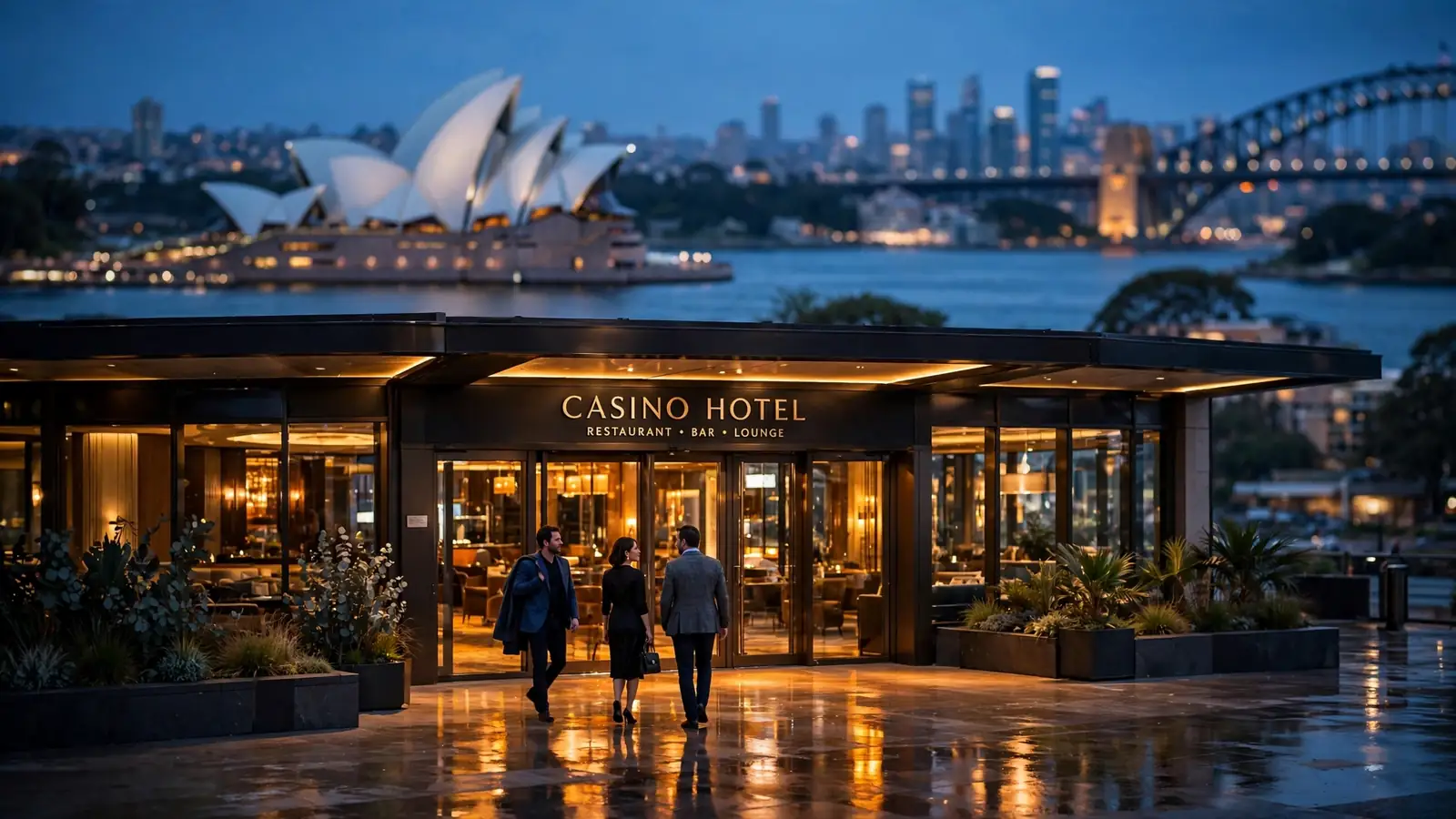
A casino hotel is not simply a hotel with a casino somewhere in the city. The phrase suggests that accommodation and gambling belong to the same property or are presented as parts of one stay. That distinction matters: someone looking for a room wants to know what is being booked, not merely what attraction happens to be close by.
In Sydney, the idea of a casino hotel carries a particular promise of convenience. A room could make a night out into an overnight stay, with less need to plan the journey home at the end of it. But the label alone cannot establish whether a casino operates a hotel, what rooms it has, or whether a booking offer is available. Those are details that need to be confirmed at the point of booking, rather than inferred from the wording.
The room itself is the centre of this kind of decision. Before price or polish, there is a more basic question: is the accommodation actually part of the casino property, or is the casino simply a landmark in the hotel’s description? The difference can be blurred in promotional language. A stay “at” a casino hotel and a stay “near” a casino are not interchangeable arrangements, even if both might suit the same evening.
Choosing a casino for a Sydney-focused search means checking the available operator information before deciding where to play. This list gives a concise reference point for reviewing each option.
Roby Casino
Roby Casino is listed with a Curacao eGaming license held by Roby Games Ltd.
DragonSlots Casino
DragonSlots Casino is listed with a Curacao Gaming Authority license held by Jumpman Gaming Ltd.
Thor Casino
Thor Casino is listed under a Curacao license associated with Antillephone N.V. and Versus Odds B.V. Its minimum deposit is EUR 20.
7Bit Casino
7Bit Casino is operated by Dama N.V. and is listed as licensed in Curacao.
Golden Pokies
Golden Pokies is listed with a Curacao license.
Rollero Casino
Rollero Casino is listed with a Curacao Gaming Control Board license, OGL/2023/176/0095, held by Hollycorn N.V.
MrPacho
MrPacho lists crypto payouts at 30–120 minutes and fiat payouts at 24–72 hours. Its minimum deposit is A$30.
Kingmaker
Kingmaker lists crypto payouts at about 90 minutes and fiat payouts at 1–5 days. Its minimum deposit is A$30.
JustCasino
JustCasino is listed with a Curacao Gaming Control Board license.
WinSpirit Casino
WinSpirit Casino is listed with a Curacao eGaming license, OGL/2024/923/0383, associated with Antillephone N.V. Its minimum deposit is A$30.
That is why a deal deserves to be read as a set of conditions, not as a mood. A lower headline price may depend on dates, room types or booking rules; a package may bundle items that are not relevant to every guest. Without confirmed terms, there is no sound basis for describing a particular Sydney casino hotel deal as good value. The word “deal” is an invitation to compare, not evidence that the comparison has already been won.
Room descriptions need the same plain attention. The room category, cancellation conditions, check-in details and total price are the practical substance of a reservation. A casino setting does not, by itself, establish a view, a room standard, a particular service or any other feature. Those claims belong to the individual listing and its current terms, not to the broad idea of a casino hotel.
There is also a small social history folded into the expression. The hotel once made the casino a destination for a longer visit, while the modern booking page turns that promise into a selectable room and a price. Hospitality and entertainment sit together in the same commercial frame, but they remain different purchases. A room is not automatically included with entry to a venue, nor does a venue’s presence prove that accommodation is available on site.
The sensible way to understand “casino hotel in Sydney” is therefore as a description of the intended kind of stay, not a verified inventory. It signals an interest in rooms connected to a casino experience. It does not settle which property fits, what a room contains, or what a particular date will cost. Those specifics must come from a current, identifiable booking offer.
The distinction is not fussy. A reservation is a commitment with dates, payment terms and consequences if plans change. A vague association between a hotel and a casino cannot answer those questions. And the nearest property is not necessarily the property being sought: accommodation beside a casino is a separate choice, with its own considerations.
For anyone comparing stays, the useful test is simple: does the listing clearly identify the accommodation provider, the room being sold and the terms attached to it? If not, the phrase “casino hotel” has done more atmosphere than work. A room should be judged by its stated particulars, not by the glow of the building next door.
A poker room and a room of poker machines answer different questions, despite the shared word. One points to card games, where players compete against one another; the other to electronic gambling machines, known locally as pokies or Electronic Gaming Machines (EGMs). A search for poker at a Sydney casino may mean a table, a tournament or simply a place to play. It does not, by itself, establish that a particular room or event is available.
In New South Wales, the legal age to gamble on poker machines is 18, and venues are required to check identification to ensure compliance.
That distinction matters in NSW, where the rules for machine gambling are part of the venue’s operating environment. The legal age to gamble on poker machines is 18. Venues must check identification for this gambling, and failure to meet the age requirement can carry legal consequences. The threshold is not a courtesy or a house preference; it marks who may take part.
NSW also has mandatory pre-commitment systems for poker-machine play. Players set a loss limit before beginning. The idea is to place a boundary before the atmosphere of the room takes hold: lights, sounds and repeated opportunities can make a sequence of small decisions feel detached from its total. A limit set in advance gives the session a stopping point chosen before that momentum begins.
It is a modest form of protection, not a promise that gambling becomes harmless. A limit cannot make a loss affordable, and it does not turn a machine into a source of income. The sensible boundary is the one that leaves essential expenses untouched. When a session reaches its limit, increasing bets to recover losses only gives the next decision more weight.
The scale of machine gambling in NSW is visible beyond casinos. Club Liverpool has more operational poker machines than any other club in the state. That fact places machine play within a broader social landscape: clubs are not merely places to eat or meet, but institutions in which gambling has become part of the ordinary commercial mix. The arrangement is familiar enough to feel unremarkable. Familiarity is not the same as neutrality.
Card poker has a different structure. A tournament search suggests a specific event with its own entry conditions, dates and format, while a general poker-room search could mean regular cash games or simply a dedicated playing area. None of those details can be assumed from the phrase alone. Event listings and venue information need to be confirmed directly before plans are made; a broad label does not verify a current tournament or an operating room.
The same caution applies when “casino rooms” appears alongside poker: it may mean accommodation, a card-playing space or machine areas, depending on the context. Here, the distinction is more useful than the label. Poker tournaments are not poker machines, and rules for one should not be casually borrowed to describe the other.
In NSW, the machine-gambling framework makes age and pre-commitment central facts of play. Poker-room details, by contrast, depend on the particular venue and event. One is a question of regulation; the other is a question of what is actually being offered. Dry distinctions, perhaps. Useful ones.
Breakfast can make a casino visit sound like a neatly bundled day: arrive, eat, spend time at the venue, perhaps stay on afterwards. The search for a buffet adds another expectation, that a meal will be served in a particular format rather than ordered from a menu. But those phrases describe what someone hopes to find, not what a particular Sydney venue provides. They do not establish a breakfast service, a buffet, its hours or its terms.
That distinction matters because hospitality language tends to turn a collection of separate decisions into one imagined package. “Resort” suggests somewhere to eat, rest and pass the day without much planning. Yet the word alone does not settle which facilities are available, whether they are part of the casino operation, or whether access depends on a booking or other conditions. A resort-style idea is not an itinerary.
The practical approach is to treat the meal and the wider visit as separate questions. Before making plans around breakfast, a buffet or a long stay, confirm the details directly through current venue information. Menus, service times and access arrangements can change; a phrase circulating in a listing or an old review may preserve an earlier offer long after it has ceased to apply. Specific confirmation is more useful than an attractive label.
A buffet also carries a small social promise. It suggests choice without the ceremony of choosing each dish, a meal shaped around abundance and ease. That promise can influence how people plan a day, especially when dining is expected to be part of the attraction rather than a pause between other activities. Still, the format cannot be inferred from the word “buffet” attached to a venue name in conversation or online. The detail has to be current and explicit.
The same caution applies to rewards. A casino rewards programme may sound like a way to connect dining with a broader visit, but the phrase does not explain what is included, who qualifies, or whether a particular meal earns or uses any benefit. Those are programme terms, not something that can be assumed from the presence of a rewards label. A dining decision made on that assumption may end with an ordinary bill. Less glamorous.
For a visit to feel like a resort day, the useful questions are modest: what is open, what requires a booking, and which parts of the day are actually connected? Those answers belong to the venue’s current information, not to the image conjured by the word “resort.” Without them, the safest plan is flexible: regard breakfast, a buffet and any rewards benefit as possibilities to confirm, rather than guaranteed parts of one package.
That restraint is not a verdict on the venue. It is a way of separating the appeal of an idea from the arrangements that make it real. A meal can anchor a visit, but only when its details are known. Until then, the resort-day picture remains just that: a picture, not a promise.
A search for a casino in Sydney can point towards a physical venue, while “online casino” describes a different and legally distinct activity. The two are easy to blur in a search bar: the same city name can sit beside a venue, a game, or a request to play remotely. But a casino visit and an online gambling service do not operate under the same rules.
The Interactive Gambling Act 2001 prohibits operators from providing real-money online casino games to people physically in Australia. That category includes pokies, blackjack, roulette and poker. The restriction is directed at the service provider; it does not make an Australian player criminally liable merely for using an offshore site. Nor does the presence of a foreign licence make an offshore operator regulated under Australian law. There is no Australian licence that turns an online casino into a lawful local service.
Legal Restriction
The Interactive Gambling Act 2001 prohibits operators from providing real-money online casino games to people physically located in Australia.
That distinction matters more than the word “Sydney” in a site’s branding. A platform may be accessible from Australia without being authorised to serve Australian customers. Offshore services sit outside the local regulatory system, leaving players without the protections that Australian regulation would provide. Access is not approval. A polished lobby cannot alter the law.
A physical casino, meanwhile, is a place rather than a remote gambling service. Searches that combine Sydney with online play should not be read as evidence that a local venue offers internet gambling, or that an online operator is connected to a venue in the city. The setting may look similar on a screen; the legal relationship is not.
The mechanics of online pokies are less theatrical than their design suggests. Each game relies on a Random Number Generator, or RNG, to determine outcomes. A spin stands on its own: earlier results do not make a later win more likely, and a run of losses does not create a debt the machine must repay. The RNG keeps no memory of a player’s hopes.
That independence can be obscured by familiar visual cues: near misses, repeated symbols, a rising soundtrack. They give a sequence the feeling of a story, though each spin is separate. The interface performs suspense. The mathematics does not.
This is one reason an online game should not be confused with a social venue or a physical casino experience. A screen can reproduce a table, a reel or the sound of a room, but it does not reproduce the legal framework attached to an Australian venue. Nor does an offshore platform become locally accountable because it accepts visitors from Australia.
For anyone comparing a city casino with online play, the useful dividing line is therefore not convenience or appearance. It is whether the activity is a physical visit or a prohibited online service supplied to someone in Australia. Sydney can be a location in both descriptions. Legally, that is where the resemblance ends.
Accommodation near a casino is not the same thing as a room inside one. The distinction sounds small until the booking is made: one search concerns a stay provided by the venue, the other concerns independent lodging in the surrounding area. They may serve the same evening out, but they are different arrangements, with different operators and terms.
“Near” is also a slippery word. It can mean close on a map, straightforward to reach, or simply within the area someone has in mind. Those meanings are not interchangeable. A property that appears nearby in a list may still involve a route or journey that matters to the person planning the stay. Distance alone cannot settle that.
That is why the location of the casino and the location of a prospective room belong in the same practical check, but not in the same assumption. The venue’s position should be confirmed through a current, reliable map or its own official information; a lodging listing should be checked separately for its address and the route between the two. A place described as being in the casino district is not, by that phrase alone, attached to the casino.
The wording “Sydney casino accommodation” can blur these categories. It might refer to a hotel room within a casino complex, or to somewhere else chosen for its proximity. The second kind of stay calls for ordinary lodging questions: where the property is, what its booking conditions say, and whether its location suits the plans being made. The casino’s name in a description does not establish that the casino operates the accommodation.
The same caution applies to offers. A search for accommodation deals or casino promotions may bring together hotel pricing, venue marketing and third-party listings, though those are not one offer and need not share the same conditions. A low headline price, where one is advertised, is not a complete account of a stay. Dates, cancellation terms and what the booking includes belong to the accommodation provider’s own details. An association with a casino should not be mistaken for a bundled deal.
Parking deserves its own check rather than an optimistic inference from proximity. A nearby room does not establish that parking is available, included or suitable for an overnight stay. Those details depend on the individual property and any parking arrangement it describes. The same applies to access: a map can show positions, but it cannot promise that a route will be convenient for every traveller.
Casino opening or trading hours do not answer accommodation questions either. A venue’s schedule and a lodging provider’s check-in arrangements are separate matters, even when a visit is planned around both. Keeping them separate is less glamorous than a package label. It is also clearer.
For an overnight plan, the useful distinction is simple: identify the accommodation provider first, then verify its address, terms and any claimed connection to the casino. “Near” is a description, not a booking condition.
A search for a Sydney casino bar, a car park or a map is really a request for logistics: where to go, how to reach the venue and what is available once there. Those details belong to the operator’s current information, not to a general description of casino life. A bar’s name, parking arrangements, a contact number and a map should be checked against the venue’s own published channels before travel; stale directory entries can be more confident than correct.
The same caution applies to table games. Baccarat and craps are distinct games, but a search for either does not establish that a particular Sydney venue offers it, or that a table is open at a given time. The useful distinction is between a game’s general existence and a venue’s present offering. Those are not interchangeable.
Contact details are especially easy to misread. A number copied from an old listing may connect to a different department, or no longer connect at all. For an enquiry about access, parking or a bar, the operator’s official contact page is the more dependable starting point. A map should likewise be checked for the correct entrance and route rather than treated as a promise about parking or on-site facilities. The small administrative facts are often the ones that determine whether an evening begins smoothly.
Online games raise a separate issue. An online casino can use a player’s IP address to estimate the country from which a connection is made, then block access to games or entire providers where its rules or licensing conditions require it. A title missing from a game lobby may therefore reflect a geographic restriction, not a fault with the game or the device.
That distinction matters in Australia, where online casino games offered to people in the country are prohibited under the Interactive Gambling Act 2001. A foreign platform’s catalogue is not a reliable guide to what is accessible from an Australian connection. Availability can depend on the player’s location and on the restrictions imposed by the casino or software provider.
A VPN can make an internet connection appear to come from another country, but using one to reach region-blocked pokies sites breaches the site’s terms and may lead to account suspension. It does not turn a restricted service into a locally authorised one. The technology changes the apparent address; it does not change the law.
For anyone gambling, a session budget should be set in advance and kept within the available bankroll. Losses are not a reason to raise stakes or chase a recovery. The house has no memory, and neither does a map.
A casino’s opening status is a practical question, but it is also unusually easy to answer badly. A map listing, an old article and a venue’s own current notice may describe different moments. “Open” can refer to a building, a particular service or an event taking place inside it; a reopening announcement may likewise describe a past change rather than the present. The sensible distinction is between a dated report and a live notice issued by the venue.
That distinction matters because a casino is not simply a door with one timetable. Entertainment, gaming and other services can have separate schedules, and an event may require its own ticket or entry conditions. A calendar copied into a third-party listing can persist after the event has passed. For a specific night, only a current venue notice can settle whether a performance or public event is scheduled and what its arrangements are.
Development is another word with a long afterlife. Plans, approvals, construction and completed work are different stages, yet headlines often compress them into a single promise of change. A Sydney casino development story should be read for its date and for what actually happened, not only for what was proposed.
Employment searches have a similar problem. A general careers page is not evidence that a particular role is available, while an old vacancy can remain visible after recruitment has ended. Job title, location and closing date matter more than the broad association between a large venue and employment.
The same caution applies to a review. A useful account should make clear when it was written and what it evaluates: a visit, a performance, the venue overall or a single service. These are not interchangeable verdicts. Nor does a review establish today’s opening hours or confirm that an advertised event is still on.
A menu-related search belongs to a different practical question: what food is offered, and when. It cannot establish whether the casino itself is open, just as a venue review cannot stand in for a current menu. Those details change on their own schedules.
This is less satisfying than a neat timetable, but more honest. Opening notices and event calendars are snapshots, not permanent descriptions; employment listings are snapshots too. A date attached to the information is not decorative. It is the difference between a useful answer and a relic.
A spa can turn a casino visit into something that resembles a resort day, at least in the imagination. But a search for a Sydney casino spa does not establish that a spa operates at the venue, what treatments it offers, or whether it accepts day visitors. Those are distinct details, and they can change. A spa name appearing in an old listing or an unrelated accommodation page is not enough to plan around.
The same care applies to the address. “Sydney casino” can refer loosely to a venue, a district, or a broader outing, while directions depend on the actual destination and entrance. An address copied from a third-party listing may be outdated or may point to an office or delivery entrance rather than the public arrival point. The venue’s own current directions are the sensible reference before setting off. This is mundane information, until it is wrong.
Dress codes are another detail that resists assumption. A policy may differ between gaming areas and other parts of a property, or be subject to change. A general idea of what people wear in Sydney does not settle the rules at a particular venue. Where entry depends on meeting a standard, the current venue guidance matters more than old anecdotes or photographs.
Practical searches can also blur separate questions. A request for casino bars concerns places to drink; a request for games concerns what is available to play; neither confirms a spa, an address, or a dress policy. Likewise, a careers page is a separate source of employment information, not an indication that a particular role is open. These details belong to different parts of a visit, and one should not be used as evidence for another.
For anyone planning a visit, the useful distinction is between a confirmed venue detail and a plausible-sounding assumption. Check the exact destination and its current entry guidance through an official venue channel, then confirm any spa service directly before building an itinerary around it. If the information is unclear, a third-party page cannot make it certain.
A casino’s small practical rules often reveal how carefully it manages the boundary between public leisure and controlled entry. Yet the basics—where to arrive, what is permitted, and whether a spa service is actually available—are not details to reconstruct from a general impression. Better to confirm than arrive with the wrong plan.
A request for a restaurant at a Sydney casino sounds more definite than it is. It may reflect a plan to eat before a show, meet someone without leaving the precinct, or simply find out whether a casino visit can include dinner. Those are different intentions compressed into a few words. None, by itself, establishes which restaurants operate at a particular venue, what they serve or when they open.
That distinction matters because a restaurant is not merely a label on a map. Names, menus and service hours can change; a dining room may serve a particular purpose or be available only at certain times. A broad reference to casino restaurants cannot settle any of those practical details. Nor does the phrase “in the casino” tell whether a dining space is inside the gaming area, elsewhere in a larger complex, or even part of the same operator’s offer.
The setting encourages assumptions. Casinos have long gathered different forms of leisure under one roof, making food seem like a natural part of the visit. But the history of the all-in-one entertainment complex is not a current menu. A familiar pattern in the industry cannot stand in for information about an individual Sydney venue.
The rooftop-bar idea calls for a similar separation. A rooftop bar and a restaurant may share a building, but they are not interchangeable categories; a search phrase joining “casino” and “rooftop bar” does not establish that either exists at a given site, much less that it serves meals. It is an appealing picture, not a confirmed booking plan.
For anyone comparing casino dining, useful particulars would include the establishment’s own current description, its menu and its stated service times. Those details should be checked directly with the venue before making plans, especially where a meal is tied to another appointment. General descriptions can help identify the kind of experience being sought, but they cannot answer whether a particular room is open on a particular evening.
The same caution applies to the word “restaurant” in broad descriptions of a casino in Sydney, Australia. It identifies a subject of interest, not a catalogue of facilities. A careful account should not turn a plausible amenity into a promise, or dress an unknown menu in invented culinary detail. In hospitality, specificity is useful only when it belongs to the place being described.
The gap between expectation and information is small on a screen and larger at the door. Better to keep the distinction clear.
Food courts and pools belong to different kinds of plans. One suggests a quick meal between other activities; the other suggests time set aside for swimming or relaxing. Their appearance together in searches for a Sydney casino does not establish that either facility is available at a particular venue.
The distinction matters because a food court is not simply another name for a restaurant. It usually describes a shared dining area with multiple counters, where visitors choose different kinds of food and eat in a common space. A pool, meanwhile, may be part of a hotel or leisure facility rather than the casino itself. Those are separate amenities, and neither follows automatically from a venue’s casino status.
A food-related search can also mean something less specific: a person may be trying to work out whether a visit can include a convenient meal. That practical interest is understandable, but it cannot settle the format, location or availability of dining facilities. The same goes for a pool. A photograph, a resort-style impression or a nearby hotel’s facilities would not, by itself, show that the casino provides pool access.
For a visit being planned around either amenity, the useful distinction is between a general impression and a confirmed facility. Details can change, and access may depend on the venue or the particular service involved. A direct check with the relevant operator is the soundest way to establish what is currently available.
There is no need to turn an unknown into a promise. Food and pools may shape the imagined day at a casino, but they remain separate practical questions—not guaranteed parts of the experience.