This overview distinguishes Victoria’s land-based casino rules from unconfirmed details about hotels, dining, poker and other venue services.
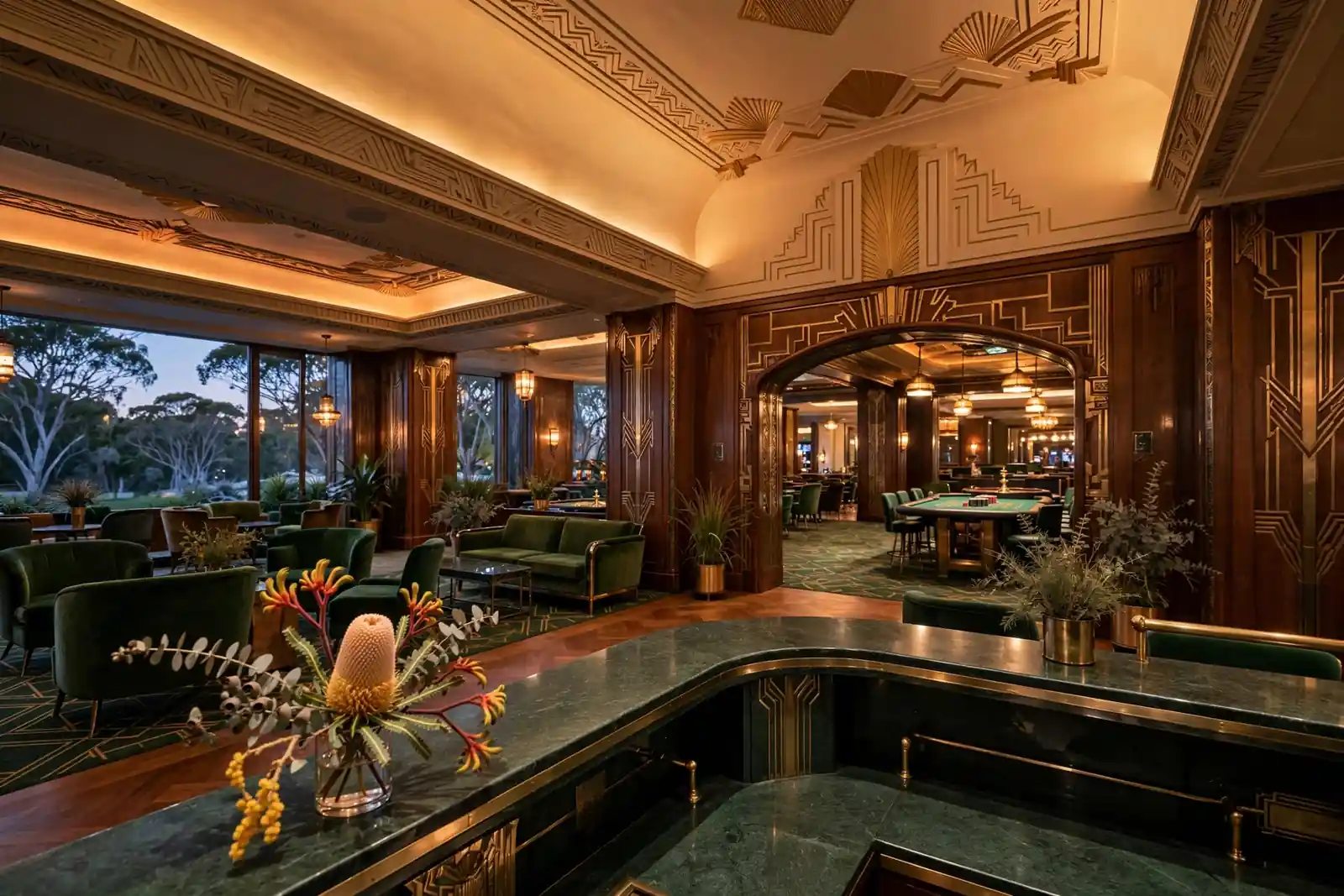
A casino hotel sounds like a single destination, but the phrase joins two different promises. A casino is a gambling venue; a hotel sells accommodation. They may share a building, a brand or a broader complex, yet none of those arrangements follows automatically from the words “casino hotel”. In Victoria, the distinction matters: state rules cover land-based casinos, but that does not establish what rooms, packages or hotel services sit beside any particular venue.
The practical meaning of a hotel stay depends on details that cannot be inferred from the casino’s legal status. A room listing would need to identify the property, its location, the type of accommodation and the conditions attached to a booking. A deal would need its own terms. Without those particulars, “casino hotel” remains a useful description of a type of trip, not proof of a particular room or price.
There is also a difference between accommodation inside a casino complex and a hotel elsewhere in the same city. The first suggests a direct connection between lodging and the gambling venue; the second may mean only that a property is in the broader area. Distance, transport and the character of the neighbourhood would shape the stay, but none can be responsibly supplied without a named property and reliable location details. Proximity is not a service.
Choosing a casino for play in Victoria calls for attention to the details that are actually available about each operator. This list offers a concise reference to the stated licensing, deposit and payout information.
Roby Casino
Roby Casino is listed with a Curacao eGaming licence held by Roby Games Ltd.
DragonSlots Casino
DragonSlots Casino is listed with a Curacao Gaming Authority licence held by Jumpman Gaming Ltd.
Thor Casino
Thor Casino is listed with a Curacao licence through Antillephone N.V. for Versus Odds B.V. Its minimum deposit is EUR 20.
7Bit Casino
7Bit Casino is listed as operated by Dama N.V. under a Curacao licence.
Golden Pokies
Golden Pokies is listed with a Curacao licence.
Rollero Casino
Rollero Casino is listed with a Curacao Gaming Control Board licence, OGL/2023/176/0095, held by Hollycorn N.V.
MrPacho
MrPacho lists crypto payouts of 30–120 minutes and fiat payouts of 24–72 hours. The minimum deposit is A$30.
Kingmaker
Kingmaker lists crypto payouts at around 90 minutes and fiat payouts in 1–5 days. The minimum deposit is A$30.
JustCasino
JustCasino is listed with a Curacao Gaming Control Board licence.
WinSpirit Casino
WinSpirit Casino is listed with a Curacao eGaming licence, OGL/2024/923/0383, held by Antillephone N.V. Its minimum deposit is A$30.
That distinction is easy to lose in travel language. “Victoria casino hotel rooms” can sound as if it names a settled inventory, when it may simply describe what someone hopes to find: a room, a casino nearby, perhaps both under one roof. Search wording does not settle the arrangement. Nor does the existence of regulated land-based gambling establish that a casino operates a hotel, that a hotel is affiliated with it, or that accommodation is currently bookable.
The legal frame is narrower and firmer. Gambling in Victoria is subject to state oversight, and the minimum age for gambling is eighteen. Those rules describe who may take part and how live gambling is regulated; they do not describe hotel access, guest facilities or booking conditions. A hotel stay and a visit to a casino are separate transactions, even when a traveller imagines them as one itinerary.
The same care applies to offers. A “casino hotel deal” could refer to a room rate, a bundled stay or some other promotion, but the label alone cannot show what is included or what restrictions apply. It should not be treated as evidence of a current offer. Travel promotions are made of conditions as much as prices: dates, cancellation terms and inclusions determine what a deal actually means. Without those terms, the word is mostly decoration.
For a trip planned around gambling, this separation has a small but useful consequence. Accommodation should be assessed as accommodation, and a casino as a separately established venue. A booking confirmation can identify the property and stay; venue information can establish the casino’s location and operating status. One should not be used as a substitute for the other. The neatness of a combined label does not make the underlying arrangements equally clear.
Victoria’s live gambling system is regulated by the Victorian Commission for Gambling and Liquor Regulation. That provides a regulatory setting for casinos on the ground, not a catalogue of hotel rooms. The state’s rules also sit within a wider national approach to gambling, but online casino services are not a lawful replacement for a physical venue. A hotel search cannot quietly turn into a claim that online casino play is an equivalent option.
The phrase “casino hotel in Victoria” therefore works best as a travel category, not a confirmed itinerary. It points toward questions about location, affiliation, accommodation and terms; it answers none of them by itself. The distinction may seem fussy. Travel tends to make it expensive.
A poker room and a bank of pokies may share a casino floor, but they are not the same facility. That distinction matters when a venue search turns up a figure for gaming machines and leaves the question of poker tables unanswered. A specialist review reports that Crown Casino has over 3,500 poker machines. The figure concerns pokies; it does not establish that Crown has a dedicated poker room, nor does it confirm a schedule of poker tournaments.
A count of electronic poker machines does not establish the availability of a dedicated poker room or a schedule of live poker tournaments.
The word “poker” can describe very different things: a live table game, a tournament with set entry conditions, or an online game. Evidence for one is not evidence for the others. A count of electronic machines says nothing about whether live poker is available, what format it takes, or when an event might be held. It would be a small linguistic accident with a large practical effect to treat them as interchangeable.
A dedicated poker room is a specific amenity, not a synonym for a casino’s gaming floor. Establishing that one exists would require venue information that identifies the room and explains its availability. The same applies to tournaments: a current event listing would need to set out the event itself, rather than leave players to infer a schedule from the word “poker” in a general casino description.
Searches that combine casino rooms with poker, or ask about poker tournaments in Victoria, express a clear interest. They do not, by themselves, verify a room, event calendar, registration process, format or entry terms. Nor does a reference to “rooms” establish that the phrase means poker facilities rather than hotel accommodation. Those are separate questions, and a shared noun does not make their answers interchangeable.
The same caution applies to a sports bar associated with a casino. Its presence, location and services would need to be confirmed independently; a poker-room reference cannot establish them. Details about bars and events belong to a different part of planning a venue visit.
Live poker and online poker also sit on different sides of Australia’s gambling framework. The Interactive Gambling Act 2001 prohibits operators from providing online casino-style games, including poker, to customers in Australia. The law is directed at providers and facilitators; it does not create a general criminal offence for an individual merely for accessing an offshore online casino service. That distinction does not turn an online offer into a locally licensed service. Australia has no domestic licences for real-money online casinos, and the Australian Communications and Media Authority enforces the federal law.
The minimum gambling age is 18 for both online and live gambling. For a physical venue, that age rule does not establish that a particular poker room is open or that a tournament is running. Legality and availability are different questions. A permitted category of activity is not a timetable.
This is where careful wording matters. “Poker at a casino” might refer to live tables, a tournament, or a machine with poker-themed imagery; each claim requires its own evidence. A machine count cannot supply the missing details. Neither can a venue name alone.
For anyone comparing Victoria casino poker rooms or events, the useful distinctions are therefore modest but firm: pokies are not proof of live poker; a poker reference is not a tournament notice; and online poker offered to Australian customers is not a lawful local casino service. Beyond those boundaries, specific claims about rooms, events or a sports bar need direct venue confirmation. The category is not the itinerary.
Breakfast, a buffet and a resort stay are often bundled together in the imagination of a casino visit. They are not the same offer. Breakfast may be a meal service, a buffet describes a way food is served, and “resort” can suggest a broader mix of accommodation and leisure facilities. The words alone do not establish that any of these things are available at a particular Victorian casino.
That distinction matters before plans are built around a morning meal or an overnight stay. A breakfast listing would need to make clear where it is served, whether it is open to visitors who are not staying on site, and what conditions apply. A buffet description would need its own particulars: service times, menu, price and whether booking is required. None can be safely inferred from a venue’s name or from the fact that it is a casino.
The compound idea of a casino resort is just as slippery. It can describe a single integrated property, or it can be used loosely to evoke hotels, dining and entertainment in the surrounding area. Without details identifying the facilities and their relationship to the casino, the label does little practical work. It is atmosphere pretending to be a floor plan.
Rewards programmes need similar care. The word may refer to a membership scheme, but it says nothing by itself about eligibility, points, benefits, exclusions or how those benefits are redeemed. Nor does it show whether a programme applies to dining, accommodation or casino activity. Those distinctions belong in the programme’s terms, not in an assumption formed from a promotional label.
In Victoria, live casinos operate within a regulated gambling environment, with the Victorian Commission for Gambling and Liquor Regulation overseeing the state’s casino and gambling framework. That context does not verify a breakfast service, buffet, resort package or rewards offer. Regulation and hospitality are separate questions; one does not supply the missing details of the other.
Employment searches also sit apart from visitor offers. A role at a casino is not evidence that a buffet or membership scheme exists, and a venue’s public-facing amenities do not describe its recruitment. Any job listing should identify the employer, role and application process clearly. A general reference to casino work cannot establish that a particular vacancy is open.
There is a small social history in the way these terms collect around a casino. “Resort” promises an escape; “rewards” makes loyalty sound like a private economy; “buffet” suggests abundance made orderly. Each word carries an expectation, but expectations are not operating details. A useful description has to say what is offered and under what conditions.
For anyone comparing a casino breakfast in Victoria, a buffet meal, a resort-style visit or a rewards scheme, the meaningful evidence is specific and current: named facilities, clear terms and applicable dates. Where those particulars are absent, the sensible account stops short of calling an offer available. No grand claim is needed. Just the terms.
Parking and online play belong to different kinds of planning. One concerns arrival at a physical venue; the other concerns what gambling services may legally be supplied to people in Victoria. The word “casino” can sit in both searches, but it does not make the answers interchangeable.
Parking terms are tied to a particular property and can include questions about vehicle access, fees, valet service or complimentary spaces. Those are practical details to establish directly with the venue before setting out, rather than assumptions to draw from its name or its status as a casino. “Free parking” is not a general feature of casino gambling; it is a specific condition of a particular car park.
Legal Warning
Under the Interactive Gambling Act 2001, providing online casino-style games to customers in Australia is prohibited; there are no Victorian-licensed online casinos.
The distinction matters because the broad phrase “best casino in Victoria” can bundle together very different expectations: a physical destination, its facilities, or a website offering casino games. The legal position changes at that boundary. Victoria regulates land-based casinos and online betting and wagering services, but that does not mean online casino games are an authorised extension of a local venue.
Under the Interactive Gambling Act 2001, operators cannot offer online casino-style games to customers in Australia. The prohibition covers familiar forms such as slots, roulette, blackjack and online poker. There are no Victorian-licensed online casinos offering slots, roulette or blackjack. A website’s use of a Victorian place name, or its presentation as a digital counterpart to a physical casino, does not alter that position.
This is a distinction between types of service, not a distinction between screens and buildings bearing similar branding. A land-based casino is part of Victoria’s regulated physical gambling sector. Online casino games remain prohibited for Australian customers under federal law. Online betting and wagering are a separate category; their regulation should not be taken as permission for online casino play.
The law places its central restriction on the provision of these services. A search for a “Victoria casino online” therefore does not lead to a locally licensed version of the physical venue. Nor does the existence of a real-world casino imply that its parking arrangements, dining facilities or other physical amenities are available through an online gambling service. Place names do not travel that far.
For a visit, the useful question is what the specific physical venue says about vehicle access and parking conditions. For online casino-style games, the relevant point is not which site looks local or which games it displays: such games cannot legally be provided to Australian players. Mixing the two questions can make a routine parking search sound like an invitation to an online alternative. It is not.
“Near” is a deceptively elastic word in accommodation planning. It can mean a short walk, a brief drive, or simply somewhere in the same city. A listing described as close to a casino may satisfy one meaning and frustrate another; without a specific venue address and a clearly stated distance, the label does little work.
That distinction matters in Victoria, where a search for accommodation near a casino is not the same as a search for rooms inside one. Nearby lodging belongs to the wider city’s supply of hotels and other stays. Its price, facilities and availability are set by each property, not established by the casino’s name. A casino brand, by itself, does not identify a neighbouring hotel or create a package between the two.
Crown Melbourne is an operator name, but the name alone cannot establish which accommodation is nearby, how far away it is, or whether a particular property is connected to the venue. Those are separate claims. A useful comparison would need to make the location legible: the property’s address, the venue being used as the reference point, and the stated way of measuring distance. Without those, “near” remains more atmosphere than information.
The same care applies to accommodation deals. A promotional label may suggest a special rate or a bundled stay, but the label is not the offer itself. The meaningful details would be the property providing it, what the price covers, the dates it applies to and any conditions attached. A casino-themed promotion and a deal officially linked to a casino are not interchangeable descriptions. The difference is commercial, not merely grammatical.
There is also a practical reason to keep the categories apart. A room at a casino hotel, a room at an independent property nearby, and a travel package that mentions a casino answer different needs. They may be grouped together in casual conversation, but they involve different providers and different terms. The venue’s identity cannot stand in for the lodging provider’s identity.
Victoria’s gambling framework provides a wider context, though not a hotel directory. Live casinos in the state are regulated by the Victorian Commission for Gambling and Liquor Regulation, while the legal minimum age for gambling is eighteen. Neither point says anything about accommodation, room access or a visitor package. Regulation of gambling and the business of lodging sit on different tracks. The border is ordinary, but important.
A sound accommodation description therefore needs more than proximity language or a casino reference. It needs to identify the property and spell out the relationship being claimed: whether the stay is simply in the surrounding area, directly associated with a casino, or part of a named offer. Until those distinctions are made, a “Victoria casino accommodation deal” is a phrase, not a dependable description of what is being sold.
The city does not fit inside a search label. A property’s location, terms and connection to a venue have to be understood on their own. That is less glamorous than a package headline. It is also more useful.
A telephone number is useful only when it belongs to the venue it claims to represent. For anyone trying to reach a casino in Victoria, that means confirming the operator’s identity before relying on a contact number, email address or map listing. A number copied across directories can look authoritative without proving who answers it; a map pin can locate a building without explaining which business, entrance or service it represents.
That distinction matters in a state where “casino” is not merely a label for an evening out. Victoria’s live casinos sit within a regulated gambling system overseen by the Victorian Commission for Gambling and Liquor Regulation. A regulator’s role, however, is not the same as a venue’s switchboard. Rules about gambling do not supply a direct line for bookings, lost property or general enquiries. The civic machinery is not a concierge.
Bars invite a different sort of assumption. The phrase suggests a place to meet before or after gambling, perhaps with its own hours, menu or booking arrangements. None of those details follows from the existence of a casino, and they should not be inferred from photographs, directory descriptions or a business name alone. A venue’s bar service is a practical matter, not a feature that can be established by the legal status of gambling in Victoria.
Concerts raise a similar problem. A search for a casino concert can point towards a particular performer, date, ticketing arrangement or room, but those are separate claims. Without a confirmed programme, no event, schedule or ticket channel can be named responsibly. Entertainment listings can change; a stale page may preserve the appearance of an event long after its useful life has ended. The calendar is a poor place for guesswork.
The same caution applies to games named in venue searches. Baccarat and craps are familiar casino table games, but a general description of gambling law does not establish which games a particular Victorian venue offers, where they are played or whether they are available at a given time. Live gambling is regulated in Victoria; that broad fact should not be mistaken for a current floor plan or a promise about a particular table.
A map can settle geography only after the place itself is identified. It cannot confirm a bar, concert, contact desk or game offering. Nor does the word “Victoria” necessarily identify one specific venue: it may refer to the state, a district or a business using the name. Search results compress those distinctions into a few lines. Real places are less obliging.
For contact details, event notices and venue services, the useful standard is direct attribution: the information should clearly come from the operator responsible for the place or event, rather than from an unconnected listing. Until then, a phone number, map marker or concert notice is a lead, not confirmation. Small distinction.
“Open” can describe a building, a gaming floor, a restaurant or a particular event, and those are not interchangeable states. A casino’s general operating status would not, by itself, establish that every activity inside it is available at the same time. For anyone trying to decide whether a visit is possible, the practical question is narrower: what is operating now, and on what schedule?
Nor is there a confirmed reopening date or a basis for saying that a Victorian casino has closed and is preparing to resume operations. Reopening language often carries an assumption of a specific interruption; without reliable detail about such an interruption, it is better not to turn a possibility into a report. “Open” and “reopened” are not synonyms.
The same care applies to entertainment. A venue may be associated in the public imagination with performances, celebrations or other attractions, but that association does not establish a programme, a date or even that an event is currently taking place. No current entertainment schedule is confirmed. A search for events can therefore express a wish to know what is on, without proving that anything has been announced.
Development is another word that can point in several directions. It may mean construction, renovation, a proposed expansion or a change in how a venue is run. Those are materially different stories, and none can be inferred from the word alone. In a city where large venues become part of the skyline and the civic argument, rumour can acquire the tone of a project notice remarkably quickly. It remains rumour until established.
Employment searches likewise do not establish that vacancies are available or that recruitment is under way. Casino work can attract interest because a large venue suggests many kinds of jobs, but a general impression is not a current job listing. The distinction is plain, if not always satisfying: a sector may employ people without a particular employer advertising a position.
A review is useful only when it concerns an identifiable experience and makes clear what was assessed. A general label such as “best casino in Victoria” cannot settle opening status, current entertainment or recent operational changes. Those are facts that can change; a broad reputation cannot substitute for a live update.
That is not a claim that nothing is happening. It is a refusal to treat expectation as evidence. In practical matters, restraint is less exciting than a calendar full of promises. It is also more useful.
A spa can turn a casino visit into something broader than an evening of gambling: a place to slow down, change clothes and let the public spectacle recede. But the phrase “casino spa” does not identify a particular facility. Without a named venue, claims about treatments, facilities or booking arrangements would be guesswork dressed as travel advice.
The same restraint applies to an address. Victoria is a state, not a single venue, and a search for a casino address does not establish which property is meant. A usable location needs the casino’s full name and a current street address; otherwise, directions may lead to the wrong place or no useful destination at all. The distinction is mundane, but practical planning depends on it.
Dress codes invite a different sort of uncertainty. Casino buildings can contain spaces with different expectations, and a policy for one area cannot safely be assumed to apply throughout a property. A general claim that a casino is formal, casual or relaxed would say little about entry requirements for a spa, gaming floor or bar. Those details belong to the venue and the specific space, not to the word “casino.”
There is also a useful boundary between live venues and online play. Victoria regulates land-based casinos, while the Interactive Gambling Act 2001 prohibits operators from offering online casino-style games to people in Australia. That distinction matters when a search for casino facilities drifts towards digital services: a spa, address or dress policy is a matter of visiting a physical venue, not evidence that an online casino is a lawful substitute. The law is more specific than the search box.
For a planned visit, the reliable sequence is ordinary: identify the property, confirm its address through its own current information, then check any relevant entry and dress requirements for the particular facility. Spa access, opening arrangements and treatment details are venue-specific; one casino’s policy cannot stand in for another’s. Bars and career opportunities are similarly tied to individual operators and locations, rather than being features that can be inferred from the state name alone.
This may seem less satisfying than a neat answer with a map pin and a dress code. Yet a confident invention is a poor concierge. The address should lead somewhere, and the policy should belong to the door in question. For Victoria’s casino spas, those practical details have to come from an identified venue. No shortcut.
A casino and a restaurant belong to different kinds of public life. The first is defined by gambling activity and regulation; the second by a kitchen, a menu and the terms on which people are served. One does not establish the other. A venue’s casino identity, by itself, cannot tell a visitor what dining options it has, what they cost, or whether a particular meal is available.
That distinction matters in Victoria, where land-based casinos sit within a regulated gambling system. The Victorian Commission for Gambling and Liquor Regulation oversees casinos and other gambling activity in the state. Its role does not turn a gambling venue into a guide to its food service. Nor does the legality of casino gambling confirm that any particular restaurant operates inside a casino.
Restaurant planning depends on details that are specific and changeable: the venue’s name, its location, the menu, service arrangements and current availability. A polished menu invented from the general image of a casino would still be invented. Less glamorous, but more useful.
The same caution applies to searches for a rooftop restaurant or a view-facing dining room. “Rooftop” is an architectural description, not evidence of a restaurant, and a casino’s address does not establish what is on its upper floors. Restaurant, bar and event information may overlap in a real venue, but they are not interchangeable claims. A bar is not necessarily a restaurant; a dining room is not necessarily open for every service.
This is also why broad labels such as “Victoria casino restaurants” can blur important differences. Victoria is a state, not a single dining room, and a venue’s branding cannot substitute for a current listing. A meaningful account would need to connect a named place with its actual menu and operating information. Otherwise, even a confident description risks sending people toward a meal that may not be offered.
The legal boundary around online gambling adds no evidence about physical dining. Australian law prohibits operators from providing real-money online casino games, including slots, poker and table games, to people in Australia. That rule concerns gambling services; it neither confirms nor describes a restaurant at a land-based casino.
For dining decisions, the honest line is narrow: casino status establishes a gambling context, not a menu. Restaurant names, dishes, rooftop settings and service details should stand on their own evidence. No borrowed glamour required.
Food courts and pools belong to a different kind of casino itinerary from restaurant bookings. One suggests a cluster of casual counters and a choice made on the spot; the other, a place to pause between the noise and movement of a larger venue. Neither description, however, identifies a facility at any particular casino in Victoria.
The distinction matters because a food court is not simply another name for a restaurant. It implies several food options gathered in one area, often with shared seating. A general reference to food could mean almost anything, from a café to a takeaway counter, and does not establish that such an area exists. Without a named venue and dependable details, there is no sound basis for describing its range, layout, prices or service.
The same restraint applies to a pool. A pool may be part of a hotel, a leisure complex or a separate club; its presence cannot be inferred from the word “casino”. Nor does a photograph, an old listing or a broad description of a property settle whether a facility is currently operating. Those distinctions matter to anyone planning a visit, but they cannot be filled with plausible-sounding assumptions.
Victoria’s casino landscape sits within a tightly defined gambling framework: live casinos are regulated in the state, while Australian law prohibits operators from providing online casino-style games to people in the country. That legal setting says nothing about whether a venue has a food court or swimming pool. Regulation is not an amenity guide.
So a request for casino food in Victoria cannot responsibly be answered with an invented outlet, and a pool listing cannot be supplied by implication. The useful standard is modest: a specific facility needs a specific, current description from the venue itself. Until then, food courts and pools remain separate practical questions, not features that can be presumed from a casino’s name. No borrowed certainty.
Australian-based operators cannot legally offer online casino games to Victorian residents under the Interactive Gambling Act 2001. Individuals are not generally committing a criminal offence by playing at offshore casinos, but those sites are outside Victoria’s gambling regulatory system.
Players are not generally subject to a criminal offence for accessing offshore online casino services. The main legal restrictions apply to operators and facilitators.
You must be at least 18 to gamble in Victoria, whether online or at a live venue.
The minimum age for gambling in Victoria is 18.
Yes. Victoria’s land-based casinos are monitored by the Victorian Commission for Gambling and Liquor Regulation, while the Australian Communications and Media Authority enforces the federal Interactive Gambling Act 2001.
You must be 18 or older to gamble in Victoria.