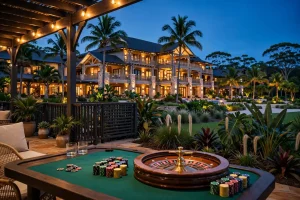
Poker rooms, tournaments and pokies are distinct, while searches for accommodation, dining and facilities do not establish what a venue offers.
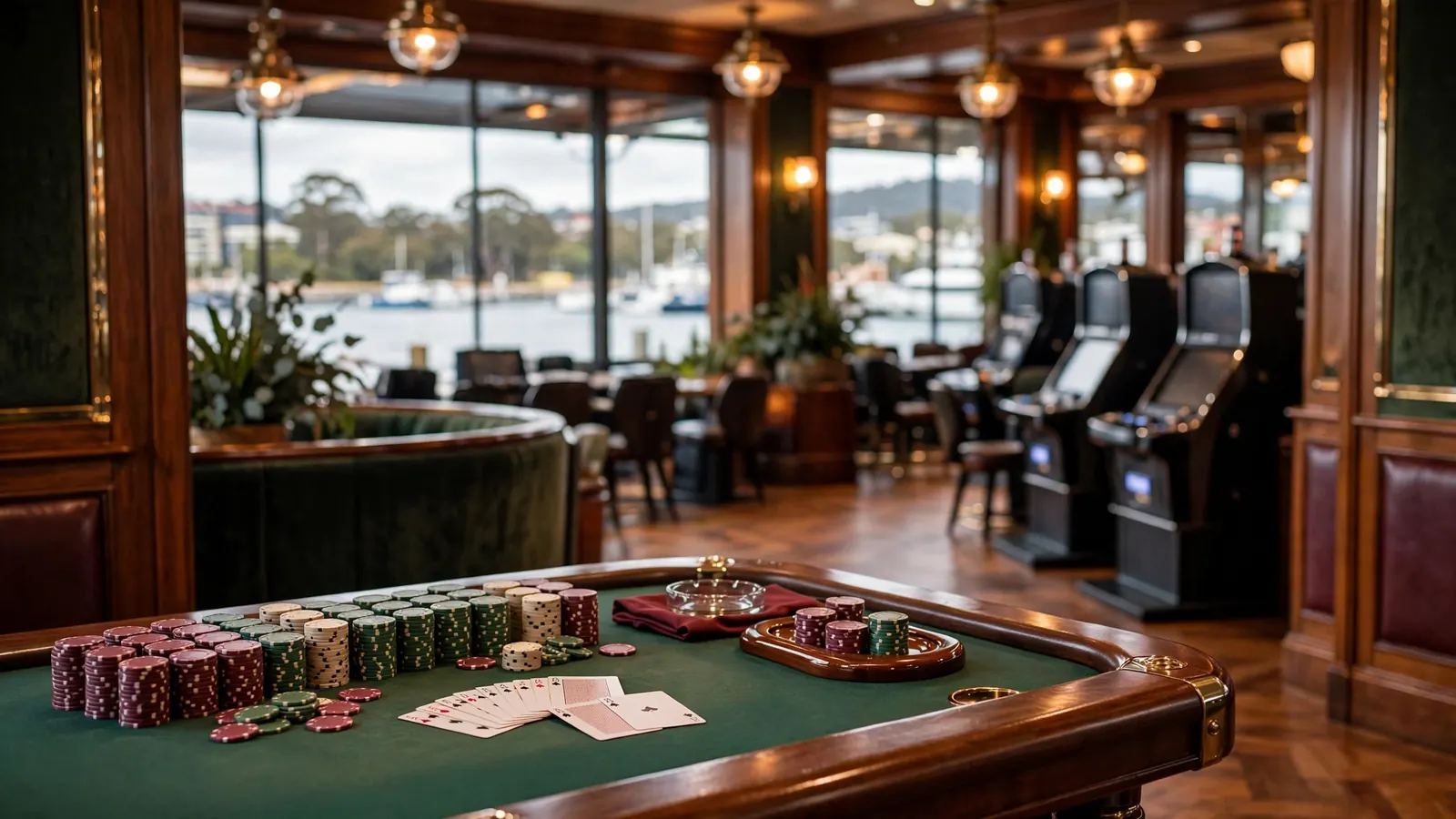
Poker has a particular talent for borrowing its surroundings. A room, a tournament, a table in a casino: each phrase suggests a recognisable scene, but none establishes that the scene exists in Hobart. The distinction matters because a search for poker at a casino can refer to a live card game, a scheduled competition, or, through the word “poker” alone, the electronic gaming machines commonly called pokies. These are different activities, with different formats and different questions to answer.
A poker room is a space where people play card games against one another, typically under rules that determine how betting proceeds and how a winning hand is decided. A tournament is an organised competition in which players enter a structured event and play until its rules determine who advances or wins. Neither term, by itself, tells anyone which games are offered, whether a venue runs regular events, or whether a particular room is open to the public. Those details have to come from current venue information, not from the familiar shape of the words.
Choosing an online casino while in Hobart means checking the available information carefully before deciding where to play. This list offers a concise starting point for considering the operators featured for 2026.
Roby Casino
Roby Casino is listed with a Curaçao eGaming licence held by Roby Games Ltd.
DragonSlots Casino
DragonSlots Casino is listed with a Curaçao Gaming Authority licence held by Jumpman Gaming Ltd.
Thor Casino
Thor Casino is listed with a Curaçao licence from Antillephone N.V., with Versus Odds B.V. identified as the operator. The stated minimum deposit is EUR 20.
7Bit Casino
7Bit Casino is listed as operating under a Curaçao licence, with Dama N.V. identified as the operator.
Golden Pokies
Golden Pokies is listed with a Curaçao licence.
Rollero Casino
Rollero Casino is listed with Curaçao Gaming Control Board licence OGL/2023/176/0095, held by Hollycorn N.V.
MrPacho
MrPacho lists crypto payouts at 30–120 minutes and fiat payouts at 24–72 hours. Its minimum deposit is A$30.
Kingmaker
Kingmaker lists crypto payouts at around 90 minutes and fiat payouts at 1–5 days. Its minimum deposit is A$30.
JustCasino
JustCasino is listed with a Curaçao Gaming Control Board licence.
WinSpirit Casino
WinSpirit Casino is listed with Curaçao eGaming licence OGL/2024/923/0383, from Antillephone N.V. The stated minimum deposit is A$30.
Pokies are another matter. Each online pokie is driven by a Random Number Generator, and one spin does not influence the next. That mechanical independence has nothing to do with a live poker table, where players make decisions in response to the game and to one another. The shared word “poker” can blur the distinction in casual language, but the games are not interchangeable. A listing for electronic gaming machines would not establish a poker room; a poker tournament announcement would not establish anything about pokies.
That difference also changes what a useful confirmation would look like. A poker-room listing should identify the card games and the conditions under which they are played. A tournament notice should make clear that an event is actually scheduled and explain its format. A venue page might distinguish cash games from tournaments, if both are offered. Without such detail, the label “poker” is too broad to settle what a visitor would find on arrival.
There is a social history in the room implied by poker searches. The game is often presented as leisure, but its rituals are unusually legible: a table, a hand, a wager, a decision made in public and concealed at once. Tournaments add ceremony to that arrangement, turning ordinary play into a contest with a beginning, rules and an ending. Casinos have long made such rituals part of their appeal. Still, atmosphere is not evidence of a particular facility in a particular city.
The word “rooms” can also create an ambiguity of its own. In a poker context it may mean a dedicated card-playing area; elsewhere it can suggest guest accommodation. Here, only the first meaning belongs to the question of poker. The existence of a hotel room, a private gaming area or any other casino facility cannot be inferred from the idea of a poker room. Similar vocabulary is not a floor plan.
Nor does a general casino label confirm the details of poker operations. A venue could offer other forms of gambling without hosting live poker; it could host a special event without maintaining a regular room; or it could use “poker” in connection with electronic games rather than card play. These are ordinary possibilities, not claims about Hobart. The point is narrower: a name or category cannot substitute for a current, specific description.
For anyone trying to establish whether a live game or competition is available, the meaningful evidence would be a direct, up-to-date venue announcement that names the game, event and relevant arrangements. An old listing or a broad promotional phrase may describe a past programme, a different property or a product that is not a live card game. Dates matter. So does the distinction between an advertised event and a standing facility.
The same restraint applies to assumptions about regularity. “Tournament” does not necessarily mean a recurring series, and “poker room” does not promise that tables are running at every hour. An event may depend on a schedule; a room may have separate operating arrangements. General casino opening information, even if available, would not on its own establish poker availability at that moment.
Poker and pokies share a word, not a format. A room and a tournament share a subject, not a guarantee of local provision. The difference is small in a search box and decisive at the door.
Accommodation described as being “near a casino” and accommodation provided by a casino are different propositions. The first concerns a separate place to stay and its relationship to a destination; the second implies that the venue itself operates rooms. Search results can blur that distinction, especially when a place name and the word “casino” appear together in a listing or headline.
For a stay in Hobart, the wording alone does not settle which arrangement is being offered. “Casino accommodation” may be shorthand for lodging associated with a planned visit, rather than a property owned or run by a casino. “Near” is also a relationship that needs a concrete location to mean much: without one, it cannot establish walking distance, transport convenience or even which part of the city is meant. A phrase can sound precise while leaving the essential geography out.
That distinction matters before any comparison of rates or packages. A room sold by an independent accommodation provider is not transformed into casino accommodation merely because the listing mentions a casino as a landmark. Nor does a casino-related promotion, if encountered, necessarily include a room; it could refer to something else entirely. The practical question is who supplies the stay and what the offer actually covers. Labels do less work than they suggest.
The same care applies to claims about a Hobart casino location. A map pin, a venue name and a lodging listing need to refer to the same identifiable place before proximity can be judged. If the location is unclear, a booking description cannot reliably answer whether the accommodation is nearby. Broad phrases such as “city stay” or “close to entertainment” are not substitutes for a stated address and a route that can be checked.
Prices and deals deserve similar scrutiny. A headline promising a casino accommodation deal may combine a room rate with conditions that are not visible in the phrase itself, or may simply be promotional language attached to an unrelated stay. The word “deal” is not evidence of a saving. Any comparison depends on the dates, inclusions, cancellation terms and the identity of the provider. Without those particulars, a headline is an invitation to inspect, not a basis for budgeting.
There is also a difference between booking somewhere for a casino visit and choosing a destination because it offers accommodation on site. The former leaves transport and the surrounding area in the calculation; the latter would depend on the venue actually providing rooms. These are separate travel decisions, even when a short search phrase folds them together. One concerns a bed in the vicinity; the other, a bed belonging to the destination.
That is why accommodation language should be read literally. “Near” should point to a location and a measurable route. “At” should identify the operator of the accommodation. “Package” should specify what is included. A casino reference in a listing can be useful as a clue, but it does not establish ownership, distance, availability or a special rate.
For Hobart, those distinctions are more dependable than assumptions drawn from wording alone. The useful comparison is not between a supposed casino room and a nearby room until both are identified; it is between clearly described places to stay, with their locations and terms made plain. A name is not a map.
A casino hotel is a particular promise: a room upstairs, gaming downstairs, and no need to turn an evening out into a separate journey home. The phrase can sound like a simple description of a building. In practice, it joins two questions that should be kept apart: whether a casino operates in Hobart, and whether that venue provides accommodation.
That distinction matters when looking for a Hobart casino hotel or rooms on the same site. A hotel near a casino is not necessarily part of it, and a casino’s name attached to a hotel search does not establish that the venue has guest rooms. Nor does the word “hotel” settle the question; in Australia it can describe a pub or licensed venue rather than a place offering overnight stays. Familiar wording can conceal quite different arrangements.
Room descriptions are even more specific. Searches may suggest suites, accessible rooms, views, family options or packages, but those details belong to an identifiable property, not to the general idea of a casino hotel. They should not be inferred from the existence of gaming, a city’s visitor economy or a hotel’s proximity to an entertainment district. Accommodation is a practical service, not a decorative extension of a brand.
The same caution applies to hours. A casino’s operating schedule, if one is published, would not automatically describe a hotel’s reception, check-in arrangements or restaurant service. These are separate operations, with separate reasons to open and close. A late gaming session does not prove that a front desk is staffed through the night; a hotel’s round-the-clock reception would not prove that gaming is available at the same time.
Shows introduce another layer. A hotel may host performances without being a casino, while a casino may have no regular stage programme. A listing for a concert in Hobart does not establish that it is held at a casino hotel, and an event venue does not become accommodation merely because visitors might stay nearby. The city’s cultural calendar and the lodging attached to a gaming venue are not interchangeable facts.
There is a broader social history in the way the phrase “casino hotel” carries its own miniature itinerary. It imagines leisure as a contained circuit: entertainment, a place to sleep, perhaps another service in the same building. That arrangement can be convenient where it exists, but the expectation travels more easily than the evidence. A search result can make a category feel local before a specific property has been identified.
For Hobart, the useful distinction is therefore between a casino hotel, a hotel with rooms, and a hotel located near a casino. Each describes a different relationship. The first requires a venue that combines gaming and accommodation; the second requires a lodging business; the third requires two independently located places and a meaningful distance between them. A name or phrase alone cannot do the work of confirming all three.
Anyone comparing stays should look for the property’s own description of its rooms and services, then verify the venue and location independently. Published opening times and event listings also need to refer to the relevant operation, rather than to a nearby business or an old listing. The language of hospitality is generous with compound nouns. Buildings are less obliging.
Parking, bingo and dining belong to the ordinary geography of a night out: where a car can be left, what activity is available, where a meal might fit into an evening. The words “free” and “valet” make parking searches more specific, but they do not establish that either service exists at a particular Hobart venue. Nor does a casino label, by itself, confirm bingo or dining facilities. Those are separate venue details, not automatic parts of the name.
Legal Warning
Under the Interactive Gambling Act 2001, operators based in Australia are prohibited from providing real-money online casino games to people within Australia.
That distinction matters because practical searches and online-play searches ask different questions. A request about parking concerns access to a physical place. A request about bingo or dining concerns what might happen there. “Online casino” changes the subject from local amenities to Australian gambling law.
Under the Interactive Gambling Act 2001, operators based in Australia cannot provide real-money online casino games to people in Australia. The restriction covers games such as pokies, blackjack and roulette. A Hobart location does not create an exception: the relevant issue is that the player is physically in Australia, not whether the search includes a city name.
Offshore platforms occupy a different position, but not a reassuringly simple one. Australian players are not criminally liable merely for using an offshore casino, yet those services are not regulated under Australian law. That means the familiar protections and oversight associated with a local regulatory framework cannot be assumed. “Available online” and “lawfully regulated here” are not interchangeable descriptions.
The distinction is easy to blur because a screen has no obvious front door. A venue’s parking arrangements can be checked against its own current information; an online casino’s presence on a website does not make it an Australian-authorised service. All lawful gambling providers operating in Australia must hold the relevant state or territory approval, while online casino games remain prohibited for operators serving people here. The legal line is less picturesque than a casino entrance, but more consequential.
Region blocks add another complication. Online casinos can use an internet connection’s IP address to estimate a player’s location and restrict access accordingly. A game may therefore be absent from a lobby or fail to load because of a geographic restriction. A specialist review has described some providers blocking Australian access in anticipation of possible future legal reform; that is a report about particular provider behaviour, not a universal rule.
Using a VPN to reach a region-blocked pokies site is against the site’s terms of service and may result in account suspension. It does not change the Australian legal status of the service, and it can complicate account access or a dispute. A changed digital location is not a changed legal location.
The useful boundary is plain: parking, bingo and dining are questions about a physical venue and its actual services; online casino play is governed by a separate national prohibition on operators providing those games to Australians. A Hobart name in a search does not collapse the two. One is a question of local arrangements. The other is a question of law.
A telephone number is a small thing with an unusually large claim attached: that there is a particular place at the other end of the line. The same is true of an address pinned to a map. A number should not be guessed, and a map pin should not be treated as proof of a venue.
That distinction matters because venue information travels easily once it has been published. A directory can preserve an old listing; a map can reproduce it; a passing mention can make both look current. None of those appearances, by itself, establishes that a casino is operating in Hobart or that a contact channel belongs to it. For anything as basic as a call or a journey, an official, current venue channel would be the appropriate source—if one can be identified.
The questions about bars and table games carry a similar assumption. A casino bar sounds like a natural part of a familiar picture of casino life: a place to pause between games, meet someone, or wait for an evening to begin. But the phrase does not establish that a Hobart casino has a bar, still less its name, opening arrangements or character. Those are not decorative details. They are particulars of a real venue.
Baccarat and craps also belong to the world of casino table games, but their presence in a search does not establish that either is available in Hobart. The games have their own rules and rhythms; a reader seeking them is asking about a specific offering, not simply about the idea of a casino.
A request for a casino map sits at the meeting point of these assumptions. It could mean a street map showing where a venue stands, or a floor plan indicating what is inside. Neither can be supplied as a Hobart-specific guide without an established venue to map. A generic diagram might look helpful while quietly substituting an imagined building for a real one.
Concert searches invite a further leap: from casino to entertainment programme. Yet a concert calendar is not a standard feature that can be inferred from the word “casino”. Dates, performers and ticket arrangements would all depend on a particular venue and a published programme. Without those, naming an event would turn possibility into apparent fact.
There is a dry lesson in the way these details cluster. Contact numbers, bar names, game tables, maps and concert listings make a venue feel tangible, even when each item is only a fragment. Together they can create the outline of a place before the place itself has been established. In Hobart, none of those fragments should be mistaken for confirmation. A plausible listing is still not an address.
Breakfast, buffet and resort language can make a venue sound like a small world with its own daily rhythm: a meal before the tables, a long service laid out for a crowd, perhaps a rewards scheme connecting one visit to another. But those words describe different things. A breakfast service is a time of day; a buffet is a style of food service; a resort suggests a broader hospitality operation. None, by itself, establishes that the others are part of the same place.
That distinction matters when a Hobart venue is described with casino and resort language. The label may be used loosely, while a search for breakfast or a buffet points to a specific service. A name that suggests a resort should not be read as proof of a particular dining offer, nor does the idea of a casino buffet confirm breakfast hours, menus or access arrangements. The wording can be inviting. It is not a menu.
Rewards carry a different implication. In hospitality, the term can refer to benefits linked to repeat custom, but the name alone says nothing about eligibility, how benefits are earned or what they can be used for. A rewards programme is not the same thing as a general promise of value. Without its terms, the label describes an idea, not a practical entitlement.
The employment searches belong to another part of the same imagined operation. Casino jobs might sound like work at gaming tables, but a large hospitality business can involve many kinds of labour: food preparation, service, cleaning, administration and management, among others. Those are broad occupational categories, not evidence of particular vacancies in Hobart. The word “casino” in a job title can also obscure which employer is actually hiring and where the work takes place.
That is why an employment listing needs to be read as a document, not as an atmosphere. The employer’s name, workplace, duties and conditions tell more than a headline suggesting work at a casino. A breakfast role and a gaming role would have different responsibilities, even if both sat within the same wider business. A resort label, meanwhile, does not establish that resort departments or jobs exist locally.
Hospitality often turns a collection of services into a single story: stay, eat, play, return. The story is familiar because hotels, restaurants and entertainment businesses have long benefited from making separate transactions feel like one experience. Rewards schemes extend that logic, encouraging repeat visits by attaching future benefits to present spending. The mechanics vary, and the word itself cannot explain them.
For Hobart, these terms should therefore be kept in their proper compartments. Breakfast concerns a meal service; buffet concerns how food is presented; resort describes a kind of hospitality operation; rewards refers to a programme with conditions; jobs concern actual employers and vacancies. Treating them as interchangeable can turn a handful of suggestive labels into an imagined venue.
Useful distinctions, not a brochure.
A casino’s opening status is not established by the words attached to it. “Open,” “reopening” and “development” can describe very different stages: a proposal, construction, a licensed operation, a temporary closure or a return after refurbishment. Search wording alone cannot distinguish among them, and a confident-sounding review may blur those stages further.
For Hobart, claims about a casino opening or reopening need to be tied to an identifiable venue and a dated announcement from an accountable source. Without that, there is no sound basis for treating a planned project as an operating casino, or an old reference as evidence that a venue has resumed business. The distinction matters because development language can circulate long after plans change. A headline is not a building; a listing is not an opening notice.
Development also has a public dimension beyond the gaming floor. It can affect planning decisions, employment expectations and the shape of nearby entertainment. Those consequences are easy to imply and harder to substantiate. A proposed project may prompt talk of future jobs, but that is not the same as confirmed recruitment. A venue’s name appearing in promotional copy does not establish that its entertainment programme exists, either.
The same caution applies to reviews. A useful review should identify what was visited, when, and what was actually available at that time. Without dates, a description of a performance, event or general atmosphere may be stale or refer to another venue altogether. Hobart-specific commentary should not be treated as current simply because it appears in a fresh-looking page.
There is a further distinction between a physical venue and online casino play. Under the Interactive Gambling Act 2001, operators based in Australia cannot provide real-money online casino games, including slots and table games, to people in Australia. That rule concerns online services; it does not establish whether a land-based casino in Hobart is open, under development or presenting entertainment. The two questions should not be folded together.
A careful account of a local opening would therefore need to establish the venue’s identity, its operating status and the date of the information. Development claims need to be attributed to a responsible public announcement, while employment claims require actual recruitment information rather than forecasts. Entertainment listings need a current programme, not a generic promise of things to do.
This is less dramatic than a reopening rumour, but more useful. In a city where a project’s status can be mistaken for a destination’s status, the small distinctions carry the weight: proposed is not built, announced is not open, and anticipated employment is not a vacancy. Until those stages are clearly documented, a Hobart casino review cannot reliably describe a live venue or its current entertainment.
An address is the simplest venue detail to state and one of the easiest to get wrong. A result labelled “Hobart casino” does not, by itself, establish that a casino operates at the address shown. Business listings can preserve old names or point to a different kind of venue; a map pin is not proof of what happens behind the doors. The distinction matters before planning a trip, applying for work or treating a spa listing as part of a casino complex.
Spa searches carry their own small leap of logic. A day spa in Hobart, if one appears in a directory, is not automatically a casino spa, and a hotel or leisure facility is not evidence of casino ownership. “Near” and “at” are different claims, though listings often compress them into the same neat little label. A reliable description should identify the business itself and make clear whether it is part of a casino, independent, or simply nearby.
The same care applies to dress. Casinos do not share one universal dress code, and expectations can differ between gaming areas, restaurants and private functions. Without a confirmed venue and its published policy, advice about acceptable clothing would be guesswork dressed as etiquette. Any policy worth relying on belongs to the specific operator, not to a general idea of what a casino ought to require.
Searches for bars raise a related problem: a bar may be a separate business, a feature of another venue or an assumption attached to the word “casino.” Its name and opening arrangements need to be tied to a real, current listing before they can guide a visit. This is less glamorous than the imagined itinerary. It is also more useful.
Career searches need similar precision. A result about hospitality work in Hobart does not necessarily concern a casino, while a casino-branded vacancy should be traceable to the employer’s own recruitment channel. Job titles, locations and application details can change; an old listing is not an open position.
Nor does the phrase “casino games” settle what is available at a local venue. It can refer to table games, Electronic Gaming Machines (EGMs), or online play—different settings with different rules. In Australia, the Interactive Gambling Act 2001 prohibits operators from providing real-money online casino games to people physically in the country. Online casino-style services are not a substitute for establishing what, if anything, a Hobart venue offers in person. The name alone proves little.
A restaurant inside a casino and a restaurant near one are different propositions. The first implies a dining room operated by, or located within, a particular venue. The second may mean any independent restaurant in the surrounding area. Search results can blur the distinction, while the practical details—entrance, opening arrangements, menu and responsibility for service—depend on which kind of place is meant.
That difference matters in Hobart as it would in any city. A casino-themed label is not evidence that a restaurant belongs to a casino, and a restaurant’s proximity to a gaming venue does not make it part of that venue. The words “at” and “near” carry more weight than they appear to. One describes an affiliation or shared premises; the other describes geography.
The phrase “Hobart casino restaurant” also assumes a specific physical destination. Before menus, reservations or dining reviews can be meaningfully compared, the venue itself must be identifiable. Otherwise, a polished description of food risks acquiring a false address simply because it appears beside casino-related language. Search engines are good at adjacency. They are not especially troubled by its ambiguity.
A rooftop dining room raises another distinction: height and view are features of a building, not proof of a casino connection. The same applies to claims about an elegant interior, a special occasion menu or a convenient meal before an evening out. Such descriptions may fit a real restaurant somewhere, but they do not establish where it is or who operates it. Specificity without a traceable venue is decoration.
For anyone assembling a dining plan, the useful questions are ordinary ones: what establishment is named, whether it is actually inside the casino, and whether the menu and service details belong to that establishment. Reviews should be read with the same care. A review of a nearby restaurant cannot confirm the dining facilities of a casino, while a venue page may describe facilities without establishing that they are open at the time of a planned visit.
This is not a minor distinction for people travelling across town or arranging an evening around dinner. A meal can be the centrepiece or merely the pause between other plans; either way, its location matters. Hobart’s restaurants should be judged as restaurants, not folded into a casino’s imagined amenities by association. The name comes first. Then the menu.
Food and a pool can turn a casino visit into something broader than time spent around gaming, but those amenities should not be inferred from the word “casino.” A food court is a particular kind of facility: a shared area with multiple food counters and common seating. It is not simply another name for dining, and a venue’s general hospitality offering would not establish that one exists.
The same distinction matters for a pool. A pool may belong to a hotel, a leisure complex or a separate neighbouring property; its presence nearby would not make it a casino facility. Even a venue described as a resort would need to identify its own facilities before that label could answer a practical question.
For Hobart, claims about casino food, a dedicated food court or an on-site pool cannot be treated as established. That leaves a modest but useful standard for checking any listing: look for the facility named specifically, its location within the property, and whether access is available to casino visitors or only to hotel guests. A photograph of a building, a broad hospitality description or a map pin does not settle those details.
There is a small social history in the distinction. Casinos often gather several kinds of leisure under one roof, encouraging the impression that every convenience follows automatically from the name. But buildings are less obliging than branding. A meal option is not necessarily a food court; a pool in the district is not necessarily part of the casino.
Until a venue’s own current information identifies these facilities, the sensible description is not that Hobart has a casino food court or casino pool, but that those amenities remain unconfirmed. That is less vivid than a glossy brochure. It is also more useful than decorating an unverified address with imagined comforts.