A practical overview of live dealing, what Australian law says, and the payment and strategy questions that matter when assessing a blackjack site.
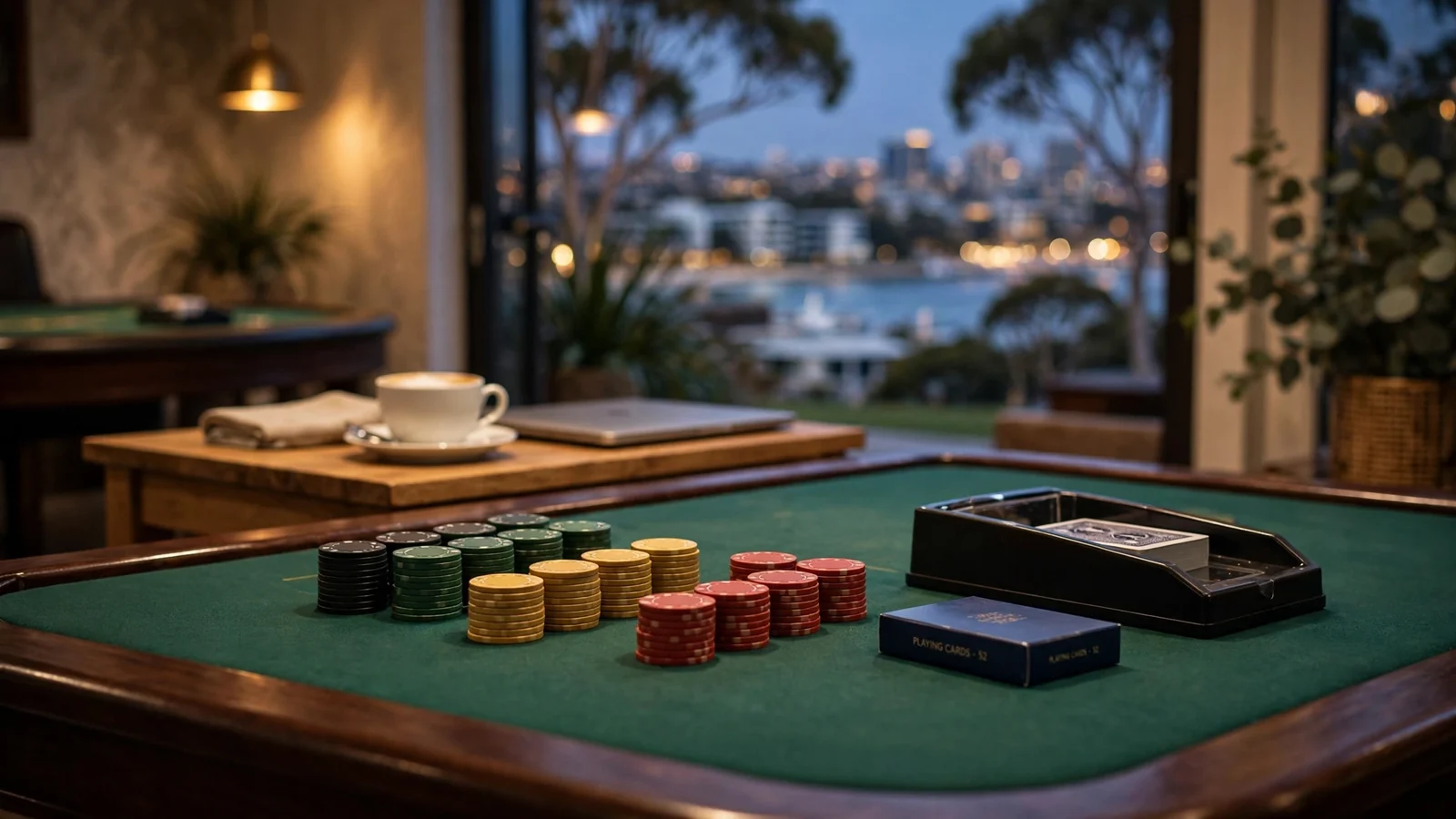
The phrase “live blackjack online casino Australia” brings together a familiar game, a particular way of presenting it, and a legal setting that changes what can be offered. In Australia, the key boundary is not whether a table is streamed or dealt by a person. It is whether an operator may provide an online casino game to someone in the country.
The Interactive Gambling Act 2001 does not permit Australian-licensed operators to offer online casino games. Blackjack is among the games covered by that prohibition. As a result, there are no locally licensed online casinos officially operating in Australia, and locally licensed online blackjack is not an available service.
That distinction can get lost in the language of casino advertising. A site may describe a live blackjack casino, an online casino blackjack table or a blackjack game online, but those phrases do not establish that the service is licensed to operate in Australia. Nor does the presence of a dealer on screen change the legal character of the offer. The law concerns the provision of online casino games, not merely the technology used to display them.
Choosing a live blackjack casino means checking the operator details available to you, as well as confirming that live blackjack is offered in your region. This list gives a concise reference point for reviewing the operators featured on this page.
Roby Casino
Roby Casino is listed with a Curacao eGaming license held by Roby Games Ltd.
DragonSlots Casino
DragonSlots Casino is listed with a Curacao Gaming Authority license held by Jumpman Gaming Ltd.
Thor Casino
Thor Casino is listed with a Curacao license from Antillephone N.V., with Versus Odds B.V. named as the operator. Its stated minimum deposit is EUR 20.
7Bit Casino
7Bit Casino is listed as operating under a Curacao license, with Dama N.V. named as its operator.
Golden Pokies
Golden Pokies is listed with a Curacao license.
Rollero Casino
Rollero Casino is listed with a Curacao Gaming Control Board license, OGL/2023/176/0095, held by Hollycorn N.V.
MrPacho
MrPacho lists crypto payouts at 30–120 minutes and fiat payouts at 24–72 hours. Its stated minimum deposit is A$30.
Kingmaker
Kingmaker lists crypto payouts at approximately 90 minutes and fiat payouts at 1–5 days. Its stated minimum deposit is A$30.
JustCasino
JustCasino is listed with a Curacao Gaming Control Board license.
WinSpirit Casino
WinSpirit Casino is listed with a Curacao eGaming license, OGL/2024/923/0383, from Antillephone N.V. Its stated minimum deposit is A$30.
The Australian framework places its restriction on operators. It does not create a local licensing route through which a company can lawfully provide real-money online blackjack to people in Australia. In practical terms, a page cannot accurately present an Australian-licensed online casino as the source of a live blackjack table.
This is more than a technical distinction between one kind of website and another. Licensing normally tells a player which authority supervises an operator and what rules apply to its conduct. Here, the relevant domestic position is different: online casino games cannot be offered by Australian-licensed operators under the Interactive Gambling Act. A claim that an online blackjack casino is “locally licensed” would therefore misstate the market.
The law’s focus on the operator also explains why the setting can feel counterintuitive. The game itself is recognised and widely understood as a casino table game; the restriction concerns its provision online to people in Australia. A familiar game does not acquire a permitted online status simply because it has moved from a physical table to a screen. The screen is not a loophole.
“Live” describes a mode of presentation. It may suggest immediacy, a human presence and the atmosphere of a casino table, but it does not name a separate legal category that escapes the general rule. Online casino live blackjack remains online casino blackjack for the purpose of this market boundary.
 Pokies & Games: Slots and Casino GamesExplore guides to reel counts, volatility, bonus buys, RTP, jackpots, and games including baccarat, blackjack, roulette, dice, crash, mines and plinko.
 Low Volatility Slots in Australia: How They PlayLearn how hit frequency, payout size and volatility shape a session, and why frequent small wins are not a forecast of future…
That matters because the phrase can sound reassuringly concrete. A visible dealer and a streamed table may seem closer to a conventional venue than software-generated play. Yet, under the Australian rule, that difference does not make the service something an Australian-licensed operator may provide. The legal question is not whether the game looks like a real table. It is whether the operator is allowed to offer the online casino game here.
The same reasoning applies to variations in wording: blackjack live casino, live blackjack casino online, or simply online blackjack casinos. Search language can make the landscape appear crowded and settled. It cannot supply a local licence where the law provides no route for one. The vocabulary is abundant; the domestic permission is not.
A page about live blackjack in Australia therefore has to begin with the difference between interest in a game and lawful local provision of that game. People may look for the atmosphere of a casino table, the presence of a dealer or the convenience of playing online. Those interests explain the subject; they do not make it appropriate to portray an Australian-licensed online casino as available.
This is why a description of “the best” local live blackjack casino would be misleading at the outset. There is no locally licensed online casino market in which such a description could be grounded. Treating an offshore service as though it were a domestic licensed option would blur precisely the boundary that matters. A location label is not a regulatory status.
The point is narrow, but consequential: Australian-licensed operators cannot offer online casino games under the Interactive Gambling Act 2001, and no locally licensed online casinos officially operate in Australia. So a live blackjack casino cannot be presented as a locally licensed online service. That is the starting line, not fine print.
Legal Prohibition
Under the Interactive Gambling Act 2001, Australian-licensed operators are prohibited from offering online casino games, including live blackjack, to people in Australia.
A live-dealer blackjack table is presented as a streamed, human-hosted game rather than a hand rendered entirely by software. The distinction is not that one format is “real” and the other merely pretend: both are digital services viewed through a screen. It is that the live format places a person and a physical table within the game’s visible setting, while software-based blackjack represents play through an interface and algorithmic outcomes.
That change in presentation affects the pace and feel of a session. A streamed table has the cadence of a hosted event: the dealer’s actions are part of what is watched, not simply a transition between buttons and displayed results. Software-generated play, by contrast, can present decisions and outcomes without a visible human host. Neither description establishes which format is more enjoyable or suitable; that is a matter of preference, not a property guaranteed by the technology.
The live image also makes the table a small performance space. A dealer’s presence gives the screen a social centre, even when the player is alone at home. The format borrows from the visual language of a casino floor, where attention is gathered around a table and a person oversees its proceedings. Online, that atmosphere is mediated by a stream. The room itself remains elsewhere.
There is a useful limit to what that comparison can imply. A live blackjack table should not be assumed to follow the procedures, card handling or pace of a different table game simply because both are streamed. The live-dealer label describes the mode of presentation; it does not, by itself, establish the rules of a particular blackjack table. Those belong to the game and its stated terms. A familiar setting is not a rulebook.
 Live Roulette in Australia: English-Speaking DealersLearn what can be verified about English-speaking live dealers and why the Interactive Gambling Act 2001 bars real-money online casino games for…
 High-volatility slots in Australia: how they workLearn how volatility differs from RTP, why long dry spells happen and what RNG independence means: the previous spin does not change…
Software-based blackjack presents a different kind of distance. Its interface can make the game feel immediate, but the visual elements are generated rather than a view of a dealer handling cards at a table. The player interacts with the software’s display; there is no hosted scene to observe. That can make the experience more compact and less dependent on a stream, but claims about speed, fairness or quality require evidence about the specific product. The distinction in format alone proves none of them.
A streamed table also depends on the stream being usable. If the image or connection falters, the quality of the presentation is affected; that is a basic consequence of relying on video rather than a purely software-rendered display. It does not establish how any particular service performs, nor does it tell how a table handles interruptions. Those details belong to the relevant service terms and technical information, not to the phrase “live dealer”.
The visible dealer can create a sense of company, but it is not the same as being in a shared physical room. The player sees a mediated scene, shaped by a camera and an interface. Any interaction offered through the screen remains part of that service’s design; it should not be assumed from the word “live” alone. The label promises a mode of presentation, not a particular degree of conversation or personal attention.
A live-dealer blackjack table is a streamed, human-hosted game, whereas software-based blackjack is rendered via an interface and algorithmic outcomes.
There is a financial distinction as well. A specialist review describes live-dealer games as often being offered only for real-money play, which means a player may need a real-money bankroll rather than a free-play option. That is a report about the format’s availability in some settings, not a universal condition and not a reason to deposit. Where real money is involved, losses are possible, and Fairgoslots-hubau.com is not liable for them. Gambling is for adults aged 18 and over; it can pose a financial risk.
For people physically located in Australia, this remains a description of a format, not an invitation to use it. The Interactive Gambling Act 2001 prohibits operators from providing real-money online casino games to people in Australia, including blackjack. The streamed table may resemble a familiar casino ritual, but resemblance does not change the legal boundary. The image travels easily. The service does not thereby become lawful to provide here.
A “best” label sounds like a verdict, but it often conceals the question that matters: best by what standard, and for whom? In Australia, that distinction is especially important. The Interactive Gambling Act 2001 prohibits operators from providing real-money online casino games to people in the country, and there are no locally licensed online casinos. A comparison should not turn into an invitation to use an offshore service.
That leaves room for a more useful kind of assessment: examining what a site claims, how clearly it explains its offer, and whether the information allows an informed judgement. It is not a league table. Without substantiated, comparable details, naming winners would amount to decoration presented as research.
 Lightning Link Online Pokies in Australia: Legal LimitsLearn how the Interactive Gambling Act 2001 draws the boundary for online casino-style games, and why Lightning Link is discussed as a…
 3-Reel Slots in Australia: Bonuses, Odds and RulesLearn how bonus features differ from reel layouts, why return figures are not predictions, and what the article says about offshore play.…
A site describing blackjack should make the format identifiable. Is the table presented as live dealer play, or as software-generated play? Are rules, payouts and any variations explained in accessible language? These are basic questions of transparency, not proof that a service is suitable or lawful for Australians.
Information should be consistent across the game description, help pages and terms. If a headline promises one thing while the detailed conditions qualify it, the qualification is part of the offer, not fine print to be mentally erased. A trustworthy assessment reads the whole claim.
The same care applies to bonuses. The phrase “blackjack bonus” can make a promotion sound like a feature of the game, when it is a separate offer with conditions attached. Those conditions may affect which games count, how a bonus can be used, and whether funds can be withdrawn. If the terms are difficult to find or unclear, the uncertainty itself is relevant. No bonus headline can establish that a site is the best casino for blackjack.
A polished blackjack screen tells little about the surrounding service. Assessment can consider whether the operator identifies who runs the site, provides usable terms, explains its complaint process, and describes account and privacy practices in plain language. These are questions to investigate, not badges that settle the matter. A foreign licence, where displayed, does not make an online casino locally licensed in Australia.
The distinction between live and software-based games also matters when reading a site’s descriptions. A product label should match the format being offered; “live” should not be used as vague praise for an interface. A table’s presentation may be engaging, but visual polish is not evidence about the operator’s obligations or the terms governing play.
Nor does a generous-looking selection establish quality. A long lobby can obscure missing details just as easily as it can suggest variety. Clear descriptions and accessible rules are more meaningful measures of information quality than the number of tiles on a page.
A ranked list of online blackjack casinos would imply that the options had been compared on a sound, consistent basis. It would also risk presenting prohibited services as recommendations to Australians. The responsible answer is not to invent a “best” site, nor to dress an unsupported preference in the language of a review.
Age matters: this material is for adults aged 18 and over. Gambling can cause financial harm, and the website is not liable for losses. Those statements do not make participation safe, and they do not turn an offshore casino into a locally authorised service. The boundary remains.
A careful assessment is therefore less glamorous than a winner’s podium. It asks whether claims are specific, terms are visible, and descriptions agree with the service being presented. Where those questions cannot be answered, confidence should not be supplied by a ranking. No ranking is better than a false one.
Bitcoin and Litecoin can look like a way around the familiar currency question: whether a balance is held in Australian dollars or converted from another currency. They do not answer the more important question of whether an online casino may lawfully provide real-money games to someone in Australia. A cryptocurrency payment does not alter the legal status of the service.
 Progressive Jackpot Slots: How Shared Pots WorkLearn how progressive pots build, why casinos are not necessarily the jackpot bank, and how contribution-rate estimates vary from about 1–3% to…
 Five-Reel Slots in Australia: Features and RTPExplore how five-reel slots handle free spins, tumbling wins and RTP, including a reported Sweet Bonanza trigger of four or more scatters…
That distinction matters because a payment method is not an endorsement, a licence or a guarantee that funds can be withdrawn. A site displaying a coin symbol does not, by that fact alone, establish that the payment route is available to Australians, how a deposit would be credited, or what conditions would apply when funds were returned. Those details belong to the particular service and its terms; they cannot be inferred from the word “crypto”.
The same caution applies to blackjack bonuses. A promotional balance may be described in a currency or token, but the label does not explain the conditions attached to it. A bonus can carry restrictions on use or withdrawal, and the presence of a cryptocurrency option says nothing about those terms. “No deposit” is not a synonym for no conditions, either. In Australia, promotional language cannot turn a prohibited online casino service into a lawful one.
There is a separate currency consideration. An AUD-denominated wallet avoids the 2.5–4% conversion margin that applies to USD or EUR balances. That is a point about currency conversion, not a claim that a particular casino offers an AUD wallet or accepts any coin. Crypto balances introduce their own question: the amount shown in a chosen currency may not tell the whole story if the value of the coin changes between funding and use. The useful comparison is therefore not simply “coin versus card”, but what the balance represents and how it is handled.
Blackjack chips are another source of possible confusion. A chip shown at a virtual table is a unit for placing a wager within the game; it is not necessarily a token that can be transferred or redeemed outside it. The displayed denomination and the account’s cash balance are related only according to the game’s stated terms. A digital table can make that distinction look almost decorative. It is not.
Attention: The use of cryptocurrency for payments does not alter the legal status of the service or create an exception to the Interactive Gambling Act 2001.
Crypto searches often sit beside questions about the best odds or a bonus, but payment choice cannot establish either. Nor can it make a winning result more likely. The financial risk remains real-money gambling risk, regardless of whether the account is funded with Bitcoin, Litecoin, or another method.
For Australians, the central boundary remains unchanged: the Interactive Gambling Act 2001 prohibits operators from providing real-money online casino games to people in Australia. Cryptocurrency does not create an exception. This page does not offer or endorse casino services, and Fairgoslots-hubau.com is not liable for gambling losses.
18+ only. Gambling can cause financial harm. Responsible gambling means recognising that losses are possible and stopping rather than chasing them.
Strategy is often presented as a set of decisions that can be made consistently, rather than a charm against chance. That distinction matters. A plan may organise choices; it cannot make a hand predictable or turn gambling into a dependable source of income.
The phrase “basic strategy” can suggest a universal chart, ready to be carried from one table to another. In practice, any specific recommendation depends on the rules and options in force. Without those details, a list of moves would be more performance than guidance. A neat table is not evidence merely because it looks authoritative.
This is where casino blackjack advice can become slippery. A page may call its guidance a strategy while leaving unstated which game conditions it assumes. Readers then face a choice between rules that may not match their table, and confident claims that have no visible foundation. Restraint is less glamorous, but more useful: sound advice should make its assumptions plain.
 Pokie Machines in Australia: Games, Odds and RulesLearn how Australian law treats offshore real-money pokies, alongside game features, odds, bonuses and mobile play; the Interactive Gambling Act places the…
 7-Reel Slots in Australia: How to Assess ThemLearn how reel count, paytables, bonus terms and legal context shape slot choices. A specialist review reports 10 free spins for four…
Online play adds no magic to the decision. A streamed dealer, a digital interface or a software-generated game may change the setting, but none makes a decision certain to produce a favourable result. The label “online casino strategy” describes where a person is playing, not a special method that overrides the game’s uncertainty.
A sensible approach begins before any hand: decide whether gambling is affordable, set a personal spending boundary, and treat that boundary as a limit rather than a target. This is not a blackjack system. It is a way to keep entertainment from quietly claiming the status of a financial plan. Losses remain possible, and the website is not liable for them.
The same caution applies to systems advertised as a route to recovery after a poor run. A sequence of bets cannot guarantee that previous losses will be won back. Nor does a memorable streak establish that a method works. People are excellent at finding patterns in events that offer no promise of repeating them.
The physical vocabulary of the game can make strategy sound more concrete than it is. A table layout and a shoe belong to the setting and equipment of play; their presence does not, by itself, tell anyone which decision is correct. Likewise, the word “strategy” should not be mistaken for a rulebook. Mechanics explain what the game permits; strategic advice interprets choices under particular conditions. Confusing the two gives a general slogan the authority of a specific calculation.
For Australian audiences, there is a further distinction between discussing blackjack and promoting access to a real-money online casino. Online casino games are prohibited services when offered to people in Australia, and this discussion is not an invitation to use one. The legal boundary does not turn a strategy claim into a safer bet.
Gambling is for adults aged 18 and over. It can cause financial harm. A strategy may offer a framework for thought; it cannot promise a result. The difference is small in wording, and large in consequence.
The sequence behind a blackjack session is easy to describe in general terms: a player enters a game interface, chooses a table, selects a stake and joins a hand. In a live format, the table is presented as a stream rather than as a sequence generated entirely by software. That outline explains the shape of the activity; it does not make real-money online blackjack a locally licensed service in Australia.
Payment choices sit before the game, not inside it. A specialist market review lists PayID, bank transfers, Visa and Mastercard, e-wallets and cryptocurrency among payment methods used in Australia. That is a snapshot of a broad payment landscape, not a promise that any particular casino accepts those methods or that every method is lawful for every gambling service. In particular, listing a card brand should not be read as an invitation to fund online gambling by credit card.
 Casino Dice Games in Australia: Rules and LawLearn how craps and online dice formats work, and why Australia’s Interactive Gambling Act 2001 targets the casino service, not its dice…
 Mines Casino Game in Australia: Legal and RTP ContextExplore how Mines differs from familiar pokies and what Australian access rules mean. KA Gaming slot RTPs typically range from 94% to…
AUD matters because the currency displayed in a wallet can affect the amount available after conversion. An AUD-denominated balance avoids the 2.5–4% conversion margin applied to balances held in USD or EUR. That distinction is about currency handling, not a guarantee of a favourable payout or a statement about any named operator. A blackjack casino payout is also not a payment-processing term: it refers to the result of a game, while a withdrawal is a separate transaction governed by the service’s own conditions.
For someone asking how to play blackjack at a casino, the useful distinction is between understanding a general sequence and being offered a place to play. The first can be discussed without directing anyone to a gambling service. The second is not something this page provides. No operator, payment route or account-creation step is being recommended here.
Real-money gambling can result in financial loss. Fairgoslots-hubau.com is not liable for losses arising from gambling activity. The material is for adults aged 18 and over; gambling should not be treated as a way to earn income or recover money. A deposit may be easy to initiate, while the consequences of losing it remain decidedly less abstract.
That difference is worth keeping in view when payment terms make the process sound like ordinary online shopping. A transfer method can move funds; it cannot make a gambling service locally authorised, ensure access, or settle what happens if a withdrawal is disputed. Payment convenience is not a substitute for legal availability, and an account balance is not a promise of return.
The practical outline, then, ends before a real-money table begins: payment methods describe mechanisms, not permission or safety. An AUD wallet can reduce a stated currency-conversion margin, but it cannot remove the financial risk of gambling. The distinction matters.
General Play Sequence
Access
The player enters the game interface.
Selection
The player chooses a table and selects a stake.
Participation
The player joins a hand, which is presented as a stream in live formats.
The promise of learning how to win at blackjack has an appealing neatness: observe a system, follow it, collect a result. Gambling resists that kind of arrangement. A decision may be deliberate and still end in a loss; a lucky run may flatter a poor decision. Neither outcome turns chance into a dependable income.
The casino’s edge is not a personal adversary waiting across the table. It is the structural advantage built into the terms of a game. In blackjack, the exact balance depends on the rules and the choices available, so no single claim about the size of that edge applies to every table. The broader point is less dramatic and more useful: the game is not designed as a reliable way for players to make money.
That is why advice presented as the best way to play should be treated with care. A system cannot promise a win, and a streak does not prove that a pattern has emerged. Confidence is not a mathematical property. It is simply what a run of results can produce in the mind.
For someone approaching a casino table for the first time, expectations matter more than bravado. A session can end without a win, even when every choice feels considered. Money set aside for gambling carries a financial risk; losses remain losses, not investments awaiting recovery. The house does not owe a player a reversal.
Online play adds another complication in Australia. The Interactive Gambling Act 2001 prohibits operators from providing real-money online casino games to people physically in the country. That boundary matters when a search for online blackjack begins to sound like a practical route to a result. It is not an assurance of access, legitimacy or profit.
The phrase “how to win” makes a tidy promise. The reality is untidier: no method guarantees success, and a casino game should not be treated as a dependable source of income. Gambling is for adults aged 18 and over. It can cause financial harm, and Fairgoslots-hubau.com is not liable for losses. A win is possible. Reliability is another matter.
In a casino lobby, blackjack is a game category, not a single table with one fixed presentation. A menu may place it beside other table games, then separate live-dealer tables from software-based games. Those labels describe how play is presented; they do not establish that a service is lawful or available to people in Australia.
That distinction matters here. The Interactive Gambling Act 2001 prohibits operators from providing real-money online casino games to people physically in Australia. A page may therefore explain how lobby categories are organised without inviting Australians to use an offshore casino or suggesting that a local online blackjack service is available. A familiar menu is not a permission slip.
The word “live” generally signals a streamed table with a human dealer, while software-based play is generated by a program. Those are different formats, and a lobby’s filter or tile can help identify which is being described. A title alone, however, says little about the full conditions of a game; the rules and terms attached to a table matter more than its position in a menu.
Variant names can complicate the sorting. “Blackjack Switch,” for instance, is a distinct label that may appear alongside standard blackjack rather than in a separate family. Its presence does not explain how its rules differ, and the name should not be treated as a substitute for a clear rules page. Categories are filing systems, not explanations.
Variant names like "Blackjack Switch" identify distinct games that may appear in the lobby. These labels indicate a different version of the game but do not replace the need to consult a clear rules page for specific mechanics.
The practical point is modest: game menus help distinguish formats, but they cannot settle legality, access or suitability. Online casino games, including blackjack, are prohibited interactive gambling services when offered to customers in Australia. Gambling can cause financial loss, and Fairgoslots-hubau.com is not liable for losses. 18+ only. If gambling is causing harm, support is available through local gambling-help services.
Blackjack belongs to the family of casino table games, but the label alone says little about the setting in which a game is presented. A digital version may use software to determine outcomes; a live-dealer version places a human dealer and a streamed table at the centre of the experience. Those are different forms of presentation, not interchangeable descriptions of the same thing.
The distinction matters because a game title can conceal how play is produced. In software-based casino games, the action is generated on screen rather than shown through a live table. A live format, by contrast, is built around a dealer and a video feed. The familiar table setting may look more social, but a stream does not make the service local, nor does a human presence change the legal status of online casino games in Australia.
There is a temptation to treat every live table as though details from one game apply to another. They do not. Baccarat conventions, such as its betting choices and card totals, describe baccarat; they are not a guide to blackjack. Even within blackjack, the word “live” identifies a broad format rather than establishing the rules, table conditions or features of any particular game.
That leaves a useful distinction without pretending to settle the mechanics. “Blackjack” names the game category; “live” or software-based describes how the game is presented. Neither phrase, on its own, establishes the terms of play. The rules belong to the specific game, and the setting belongs to the format.
Online casino services are not lawfully offered to people in Australia by locally licensed operators. This page does not promote or provide access to them. A game’s digital appearance should not be mistaken for a change in that boundary.
18+ only. Gambling can cause financial harm. Any gambling involves a risk of loss; Fairgoslots-hubau.com is not liable for losses. If gambling is causing harm, seek support.
A useful account of blackjack rules has to do more than name the game. It must explain what counts as a hand, how a round proceeds, what choices are available at each point, and how the final result is settled. Without those mechanics, a description risks sounding complete while leaving the decisive questions unanswered.
Casino blackjack rules can differ in details that shape play. A table’s information panel is therefore more than decoration: it should set out the rules applying to that particular game. Terms such as hand value, dealer action and payout are worth understanding before any money is involved. If those explanations are unclear or incomplete, the rules remain unclear too.
That distinction matters especially in a live setting. A dealer and physical cards may make the game feel legible at a glance, but seeing a hand unfold is not the same as knowing how every decision is governed. The appearance of a familiar table cannot stand in for an explicit rule set.
The phrase “rules of blackjack” often suggests one settled script. In practice, the useful question is narrower: what does this table say happens, and how does that affect each hand? A careful explanation would need to answer those questions directly rather than borrow mechanics from another casino game or assume that every version works alike.
Until the applicable rules are clear, no precise account of play should be treated as complete. Gambling involves financial risk, and Fairgoslots-hubau.com is not liable for losses. 18+ only. Gambling can be harmful; help is available through local support services.
Australians can play live baccarat through international platforms that accept Australian players, but there are no locally licensed online casinos operating in Australia.
Yes. Live baccarat is streamed from a casino studio, where a dealer handles physical cards at a virtual table.
Players bet on the Banker, Player or a tie, and the hand closest to nine wins. A live dealer deals physical cards that players watch through a stream.
Some live baccarat schedules impose time restrictions, so check the schedule for the table you choose.
Yes. Live baccarat can be played on Android and iOS devices.
The Banker bet has the lower house edge: 1.06%, compared with 1.24% for the Player bet and 14.36% for the tie bet.