Accommodation, gaming and amenities are treated as questions to verify, not as confirmed features of a Tasmanian venue.
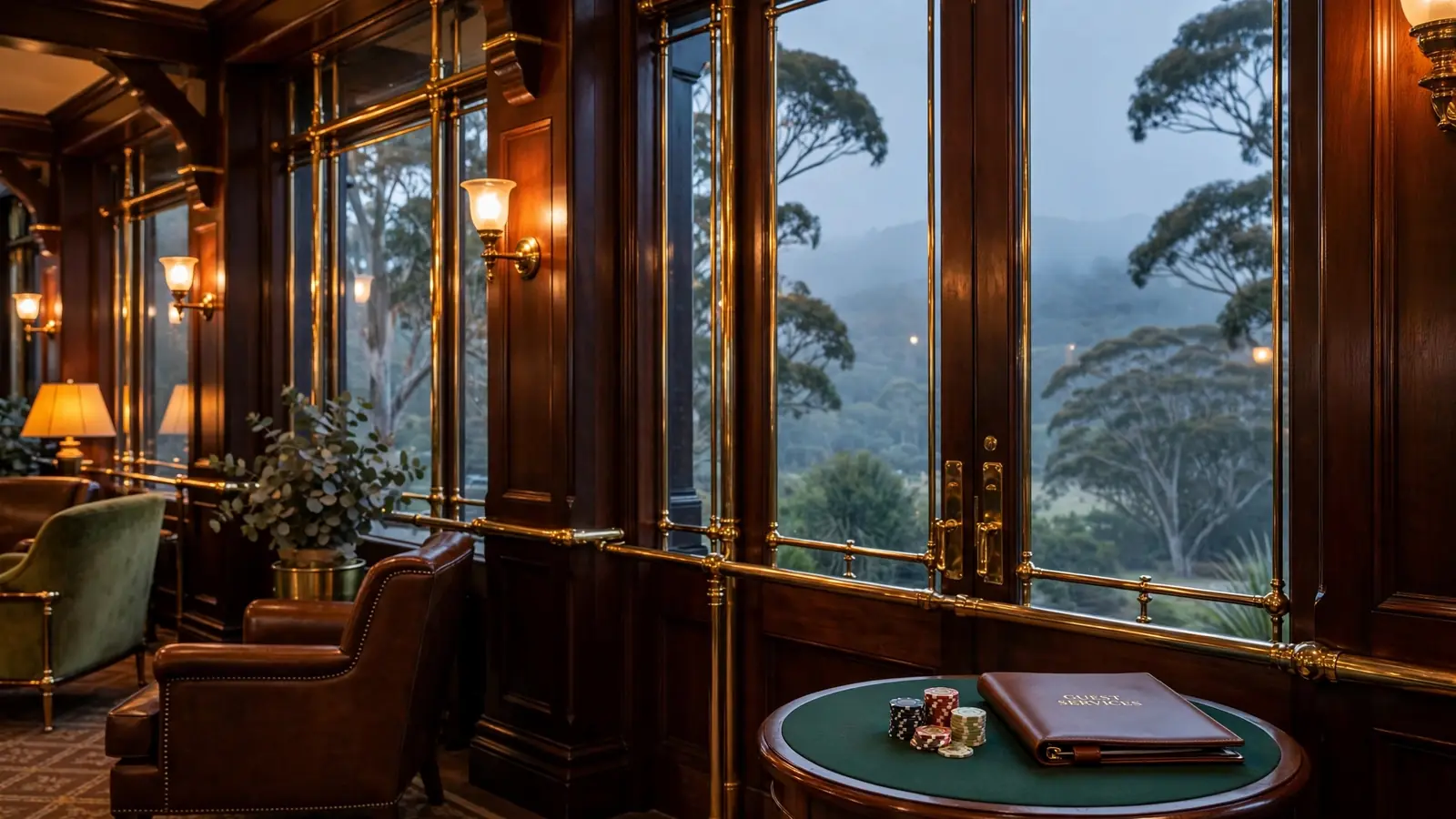
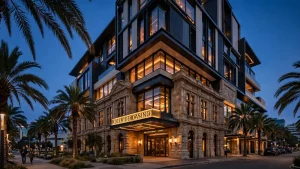
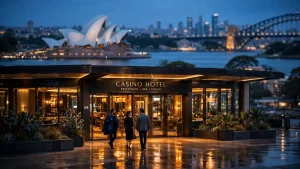
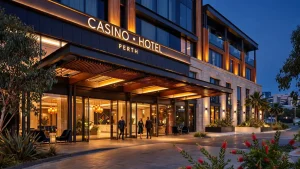
A casino hotel suggests a particular kind of trip: accommodation and gaming presented as parts of one venue, with the possibility of moving between them without making separate plans. That is a useful idea to investigate, but it is not proof that a Tasmanian casino operates a hotel. The distinction matters: a familiar label can describe an expectation as easily as an actual arrangement.
The same caution applies to the word “deal”. A hotel offer might refer to a room rate, a package or a promotion with conditions attached. A price seen elsewhere, or a package attached to a venue in another state, would not establish an offer in Tasmania. The promise of a bargain is easy to print; its details are the point.
Rooms also have particulars that a broad label cannot supply. A booking needs a property, dates, room type and conditions. The phrase “casino hotel rooms” does not establish that rooms exist at a casino, what they contain or whether they can be booked for a given visit. Nor does it confirm that a casino and a hotel share ownership or are connected within the same complex. Those are separate claims, and each needs an identifiable venue behind it.
Choosing a casino in Tasmania calls for checking the details that matter to you, such as licensing and payment terms. Use this list as a starting point and review each operator’s current terms before signing up.
Roby Casino
Roby Casino is listed with a Curacao eGaming license held by Roby Games Ltd.
DragonSlots Casino
DragonSlots Casino is listed with a Curacao Gaming Authority license held by Jumpman Gaming Ltd.
Thor Casino
Thor Casino is listed with a Curacao license from Antillephone N.V. (Versus Odds B.V.). Its minimum deposit is EUR 20.
7Bit Casino
7Bit Casino is listed as operated by Dama N.V. under a Curacao license.
Golden Pokies
Golden Pokies is listed with a Curacao license.
Rollero Casino
Rollero Casino is listed with a Curacao Gaming Control Board license, OGL/2023/176/0095, held by Hollycorn N.V.
MrPacho
MrPacho lists crypto payouts at 30–120 minutes and fiat payouts at 24–72 hours. Its minimum deposit is A$30.
Kingmaker
Kingmaker lists crypto payouts at approximately 90 minutes and fiat payouts at 1–5 days. Its minimum deposit is A$30.
JustCasino
JustCasino is listed with a Curacao Gaming Control Board license.
WinSpirit Casino
WinSpirit Casino is listed with a Curacao eGaming license, OGL/2024/923/0383, from Antillephone N.V. Its minimum deposit is A$30.
This is where the wording of a destination can quietly do too much work. “Casino hotel in Tasmania” sounds like a settled category, as though a building and its rooms are already understood. But a place name beside a business type is not a directory entry. In a small market, the difference between a casino, a hotel and a combined resort is especially important: one cannot be substituted for another simply because the trip would be easier if they were together.
Hours add another layer. A hotel’s reception, a casino’s gaming floor and any other part of a venue may not share one schedule. A general statement that a place is open would not, by itself, establish when each service operates. Even a building that welcomes guests does not necessarily have every facility available at the same time. A small distinction, until it becomes the evening’s main event.
The hotel question is therefore narrower than it first appears. It is not enough to find a name associated with gaming; the relationship between the accommodation and casino must be clear. It is not enough to see a room category; its availability and conditions must be current. And it is not enough to encounter an advertised deal; the dates and inclusions must be stated by the venue responsible for it.
For a 2026 visit, the sensible standard is documentary rather than atmospheric: an identifiable Tasmanian property, room details published by that property, and an offer whose conditions can be read before booking.
 Victoria Casinos: Verified Facts and UnknownsSee what is—and is not—verified about Victoria casino hotels, poker, dining, parking and practical services; state rules cover land-based casinos.
 Best Pokies in Canberra: Hours and AccessLearn why a venue listing cannot confirm current opening status, and why checking directly is the soundest way to verify whether it…
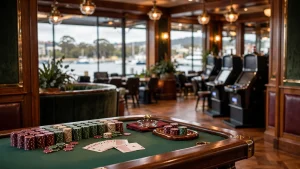
A poker room and a poker tournament are related ideas, but they are not interchangeable. A room suggests a place set aside for poker; a tournament describes a particular format of play, with its own entry conditions, schedule and rules. A venue might offer one without the other, offer neither, or change its arrangements over time. The words alone establish none of these things about a Tasmanian casino.
That distinction matters because poker carries a social promise that other casino games do not quite make. Players sit opposite one another, watch for tells and measure patience as well as luck. The table becomes a small theatre of manners: silence, bravado, calculation. It is easy to imagine a regular room and a calendar of tournaments from a brief listing. Imagination, however, is not a venue notice.
A claim that poker is available at a Tasmanian casino needs current, venue-specific confirmation. A dated event listing or an old discussion may describe something that has ended; a general casino page may use “poker” broadly without confirming a live table or organised competition. The useful details are concrete: whether poker is currently offered, what format is played, whether a tournament is actually scheduled, and where its conditions are published. Without those particulars, a confident answer would be guesswork dressed as local knowledge.
Attention: A claim that poker is available needs current, venue-specific confirmation, as dated listings or general pages may not confirm a live table or scheduled competition.
Tournament details deserve particular care. An event name on a calendar does not, by itself, settle whether registration is open, whether the event is recurring or one-off, or what rules apply. Those are operational details, not decorative fine print. They shape the experience and can change between events. Any notice should therefore be read for its date and conditions, rather than treated as a permanent description of the casino.
The phrase “poker room” can also mislead when it is encountered beside hotel-related material. In this context, it means a gaming area, not a guest room. But the distinction does not verify that such an area exists at any particular property. A page that confirms accommodation, dining or general gaming would still not automatically confirm poker tables or tournaments. Each claim needs its own evidence.
There is a wider habit at work here. Search results often compress a venue into a catalogue of anticipated amenities, as if every casino were assembled from the same checklist. Poker is especially vulnerable to that shorthand because the word can refer to a game, a room, a tournament or simply a category on a website. These meanings are close enough to blur, and different enough to matter.
For a Tasmania-focused page, the careful answer is narrower than the hopeful one: the existence of poker rooms or tournaments cannot be inferred from the wording of a listing or from the general idea of a casino. Confirmation belongs to the venue’s current official information, where dates, formats and participation conditions can be checked together. If those details are not stated, the absence of a clear answer is not an invitation to fill in the blanks.
The distinction is modest. It is also the point.
A casino visit and an online casino are different subjects, even when the same place name appears beside both. A land-based venue is a physical destination. An online casino is a gambling service accessed over the internet, and its legal position in Australia turns on who provides it and where the player is located. The distinction matters more than the shared label.
The Interactive Gambling Act 2001 prohibits operators based in Australia from providing real-money online casino games to people in Australia. That includes pokies, blackjack and roulette. A Tasmanian venue’s existence, or a search for casino dining, bingo or parking, does not establish that it also operates an online casino. Nor does an online page bearing a familiar place name make the service a local, land-based venue.
Offshore platforms sit in a different and often misunderstood position. Australian players are not themselves criminally liable merely for using an offshore gambling service, but those platforms are not regulated under Australian law. The distinction is not a local endorsement by another route: the operator is outside the Australian regulatory framework, and Australian rules do not provide the protections associated with a locally regulated casino. For people seeking a remedy in a dispute, that absence can matter.
The wording “online casino in Tasmania” can therefore point to several different things: a physical casino with a website, information about a venue, or an offshore service available over the internet. Those are not interchangeable. A physical casino’s online presence may publish practical information without offering gambling online; an offshore site may use Australian place names without being connected to a Tasmanian venue at all.
Legal Risk
The Interactive Gambling Act 2001 prohibits Australian-based operators from providing real-money online casino games to people in Australia.
The same distinction applies to searches that combine online gambling with familiar venue features. Dining, bingo and parking belong to questions about a physical visit unless a specific online service is being discussed. A parking page cannot establish online gambling is lawful, and an offshore platform’s branding cannot establish that it operates a casino in Tasmania. The digital label travels cheaply. The legal status does not.
Australia’s framework also differs from the rules governing sports betting, which remains widely accessible and legal. That contrast can make the boundary seem arbitrary, but it reflects a deliberate distinction in the law between types of gambling services. Online casino-style games are prohibited when supplied to customers in Australia by operators, even as other forms of wagering remain available.
For a Tasmanian venue, the useful question is whether the information concerns a physical place or an online gambling service. For the latter, an offshore licence is not an Australian licence, and an offshore operator is not regulated here. This is not a recommendation to use such a service; it is a description of the legal divide. A familiar name on a screen is not a local safeguard.
A stay near a casino is a different proposition from booking a room inside one. The distinction matters: nearby accommodation is chosen across a wider local area, where the practical questions are how far a property is from the venue, how that journey is made and whether the arrangement suits the rest of the trip. None of those answers can be supplied by the word “nearby” alone.
Tasmania is not a single venue address. A property’s location has to be established before accommodation can sensibly be described as close to a casino. Without that starting point, a named hotel, a claimed walking distance or an assurance of convenient access would be guesswork dressed as travel advice. The map cannot be inferred from the category.
The same restraint applies to availability. Accommodation changes with dates, demand and the conditions attached to each booking. A listing that appears suitable at one point may not be available for another stay; its cancellation terms, room arrangements and total price also belong to the booking itself, not to a general description of casino-side travel. “Accommodation near a casino” is a useful planning idea, not a promise that a particular room can be secured.
The phrase “casino accommodation deals” can also blur two separate things: a rate offered by a lodging business and an offer associated with a venue. Neither should be assumed to include the other. Before treating a package as one booking, the terms would need to show what is included, who supplies each part and which conditions apply. A promotional label, by itself, settles none of that.
Parking is another deceptively small word in a travel plan. “Parking near the casino” might mean a space at the accommodation, a separate public facility, or no convenient parking arrangement at all. Those are materially different situations. A sensible comparison would establish where parking is provided, whether it is available for the dates concerned, and whether the journey between the place to stay and the venue depends on a car. Without confirmed local details, no parking facility or access route should be implied.
The more reliable way to assess nearby lodging is therefore procedural rather than promotional: establish the venue’s exact location, compare accommodation against that point, and check the route and booking conditions for the intended dates. Distance on a screen is not the whole journey; transport options, arrival time and the reason for travelling all shape what “near” means in practice.
This is ordinary travel planning, but casino searches can make it sound like a single product. A venue, a place to sleep and a way between them remain separate decisions unless a confirmed arrangement explicitly joins them. That modest distinction protects against a familiar mistake: treating a convenient phrase as evidence of a convenient stay.
For a Tasmania casino visit, nearby accommodation should be described only when its location, availability and relevant terms have been checked against the particular venue and travel dates. Until then, the useful answer is not a fabricated shortlist but a clear boundary between what a lodging search suggests and what a booking can actually establish. No map by implication.
A telephone number, a map pin and a car-park entrance belong to the unglamorous machinery of a night out. They are also the details most likely to frustrate when stale: a search result can preserve an old number or location long after a venue page has changed. For a Tasmanian casino visit, contact information should therefore be taken from the venue’s current official channels, not inferred from a map listing or copied from an undated directory.
That distinction matters before setting off. A map may mark a general site entrance without showing which door serves the casino, where a vehicle can enter, or whether parking is available to visitors. A request for a car park is not proof that a particular facility exists, nor does a pin establish access arrangements. The practical details need to be checked together: the correct destination, the entrance, any parking information and the route from there to the venue.
Contact pages have a similar limitation. A number can connect to a central switchboard rather than the department relevant to a visit; a form may be intended for general enquiries, not same-day changes. The useful information is not merely a contact point but what it handles and how current it is. If plans depend on a particular event or service, confirmation from the venue itself is more dependable than an old listing repeated elsewhere.
Bars and concerts raise a different set of questions. A venue’s general identity does not establish that it has a bar, that a particular bar is open on a given date, or that a concert is scheduled. Event calendars can change; listings may refer to a past performance, a separate room or an event that requires its own booking. A date, venue space and ticketing route need to align before a listing becomes a plan. The word “casino” does not make every entertainment detail permanent.
The same care applies to games named in searches. Baccarat and craps are recognisable casino table games, but their appearance in a search phrase cannot establish that either is offered at a Tasmanian venue, or that a table is operating during a particular visit. Availability, format and schedules are operational details, not things to infer from the name of a game. They belong to current venue information.
This is not fussiness for its own sake. A casino is both a place of leisure and a regulated business, and its public-facing details are part of how that place is reached and used. Contact channels, parking instructions, bar information and event listings each answer a separate practical question; one cannot stand in for the others. A single map marker cannot confirm a concert, and a concert listing cannot confirm parking.
The sensible order is plain: establish the venue’s official contact route, then verify the specific facility or event through that channel before relying on it. An address can get a journey started. It cannot promise what will be waiting at the other end.
Breakfast and buffet searches are practical in a way that can make them seem easy to answer. A phrase about breakfast at a Tasmanian casino might refer to a meal served on site, a buffet, or a package connected with a wider resort stay. Those are different arrangements, and one does not establish the others. A venue page would need to identify what is actually offered before a breakfast plan could be treated as part of a visit.
The same distinction applies to a buffet. The word describes a style of service, not a guarantee that a casino has one, or that it serves breakfast. Even where a venue has food available, the format, service period and access conditions are separate details. Without venue-specific information, “casino buffet in Tasmania” remains a description of what someone hopes to find, not a dependable description of a particular property.
“Resort” carries a larger promise. It can suggest a destination with several services gathered under one name, but the label alone says little about which facilities belong to the venue, what is available to guests, or how separate services are arranged. A casino resort search should therefore be read as a request for a package of information, not proof that a Tasmanian casino operates as a resort. The word does a great deal of work. Sometimes too much.
Rewards programmes belong to another category altogether. A programme’s name, eligibility, benefits and conditions would need to be stated by the operator and kept current. The mere presence of a rewards page would not establish that every visitor qualifies, or that the terms are unchanged. Points and privileges are not self-explanatory; their value depends on rules that should be visible rather than inferred from the word “rewards”.
Employment searches raise a different question: not what a venue offers its guests, but whether it is recruiting. A job title, employer and location matter, as do the role’s duties and application route. A general page about casino jobs cannot establish that there is a vacancy in Tasmania, and an old listing may no longer describe an available position. Recruitment information belongs to a particular employer and time, not to the broad category of casino work.
These subjects are easily bundled together because they all sit near the idea of a casino resort. Yet breakfast is a service, a buffet is a dining format, a rewards programme is a set of terms, and a job listing is a time-sensitive employment notice. Each needs its own confirmation. None can be inferred from the others.
For a Tasmanian venue, the useful standard is plain: the relevant operator should identify the service, programme or vacancy and provide the details that define it. Until then, breakfast, buffet access, resort status, rewards and jobs remain separate questions—not a single package that can safely be assumed.
Whether a casino is open is a practical question, but the answer depends on a particular venue and the date in question. Hours can change; a temporary closure is not the same as a permanent one, and a reopening is an event with its own timing, not a detail that can be inferred from a general description of Tasmania. An old listing may survive long after the circumstances it described have changed. The distinction matters.
Development raises a different set of questions: whether a proposal has been made, approved, funded or built. Those are separate stages, often blurred in casual reporting. Employment follows its own timetable, too. A development announcement does not establish that roles are available, while a past vacancy says little about present recruitment. A review, meanwhile, records someone’s assessment at a particular moment; it is not a dependable substitute for current operating information.
Entertainment and events are similarly time-bound. A venue may host performances or gatherings, but that does not establish a present programme, a recurring schedule or an event on a particular date. The word “events” can describe anything from a one-off performance to a private function. Treating those possibilities as a standing offer turns a broad category into a promise.
Menus sit close to this subject because they can make a venue seem open and active, yet they answer a narrower question: what food is served, and when? A menu can be seasonal or attached to one outlet rather than the casino as a whole. It should not be read as evidence of operating hours, entertainment or a wider development plan.
For anyone comparing information, the useful distinction is between a dated announcement and a current operational notice. The former may explain a proposal or past event; the latter is needed to establish what is happening now. A reopening claim deserves the same care as an opening claim: the phrase alone does not say whether a venue has resumed operations, when it did so, or what services are available.
This is not a peculiarity of Tasmania. Public-facing venues gather several kinds of information under one name, while each changes on a different clock: construction, recruitment, daily operations and entertainment do not move in step. A polished review may preserve a snapshot, but snapshots age.
So the question of a Tasmanian casino’s status cannot be settled by treating “open,” “reopening,” development, jobs and events as interchangeable. Each calls for its own current confirmation from the venue or a responsible public authority. Until then, the careful account is the smaller one: no assumed hours, no imagined programme, no job prospect smuggled in through an announcement. Facts have their own opening times.
A restaurant can change the shape of a casino visit. It gives the evening a pause that is not organised around a game: a table, a meal, conversation, and a reason to arrive or leave at a particular time. For some visitors, dining is the point of the outing; for others, it is a practical part of a longer visit. That is why restaurant details matter more than a glossy phrase about “dining options”.
For Tasmania, however, the words “casino restaurant” do not by themselves identify a particular restaurant or establish that one is operating at a casino. Nor does a broad reference to a casino in Tasmania settle which venue is meant. A name, menu, booking arrangement or opening time cannot safely be inferred from the search wording alone. The distinction is a small one, but it is the difference between useful planning and an imagined evening.
A reliable venue page would make the basics plain: the restaurant’s name, what kind of food it serves, whether bookings are accepted, and when the dining room is open. Those details are separate from the casino’s general operating status. A venue may have its own schedule for food service, and a casino’s presence in a town does not establish that a restaurant is available at every hour the gaming floor may be open. Dining plans depend on specifics, not atmosphere.
Menus also carry a quiet social history. A restaurant attached to a casino is not merely a convenience beside a gaming floor; it can signal who the venue expects to welcome and how it wants an evening to unfold. Formal dining, casual meals and quick food each suggest a different pace. But without confirmed venue information, assigning any of those identities to a Tasmanian casino would turn a general observation into a claim about a real place. The setting may invite assumptions. It does not verify them.
The practical questions are ordinary and therefore easy to overlook. Is the restaurant open on the intended day? Does it take bookings? Are menu and service details current? Can the venue confirm any accessibility or dietary information needed for the visit? These are best answered through the casino or restaurant’s own current information, rather than copied descriptions whose dates and context are unclear.
A restaurant search can also be confused with a general food search. A dining room is not necessarily a food court, buffet or breakfast service; each describes a different offer and needs its own confirmation. Here the narrower question is whether a named restaurant exists and what it actually provides. Until that is established, the sensible description remains modest: casino dining in Tasmania is a topic to verify at the venue, not a menu to reconstruct from expectation.
A meal deserves better than guesswork.
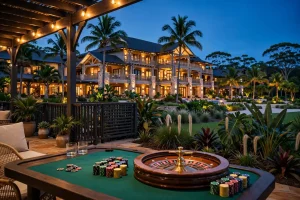
A spa attached to a casino belongs to a familiar picture of the resort: games below, quiet rooms and warm water somewhere beyond the lobby. The picture is persuasive because hotels and casinos often share a vocabulary of leisure. It is not evidence that a Tasmanian casino has a day spa, treatment rooms or any other spa facility. Those are separate services, each requiring its own confirmation.
The distinction matters. A venue may be described as a casino without being a resort; a resort may offer amenities that are not part of the casino itself. Even the phrase “casino spa” can mean a facility on the same site, a service in a neighbouring hotel or simply a hoped-for combination. Without a confirmed property and current amenity details, none of those interpretations can safely be attached to Tasmania.
Addresses seem more straightforward, but a broad label is not a postal address. It does not settle which venue is meant, where its public entrance lies, or whether a gaming floor, hotel and event space share one location. The last detail can matter in practice: a destination’s general address may not identify the entrance or building a visitor needs. Precision begins with the named venue, not with a phrase that could describe several things.
Dress codes have a similar gap between general expectation and actual policy. A casino’s rules may distinguish between areas or occasions; an instruction suited to a dining room or event need not apply everywhere on the property. Nor does the word “casino” establish whether casual clothing is accepted, whether particular garments are excluded, or whether a special event brings stricter expectations. Those are decisions for the venue’s published policy, not a rule that can be inferred from the state in which it operates.
There is a social history in the way these questions gather around a casino. The venue is imagined not merely as a place to gamble, but as a complete evening out: a destination with a treatment, an entrance, a standard of dress and a sequence of activities. That image says something about the expectations attached to leisure. It says nothing reliable about the facilities of a particular Tasmanian property.
A practical check therefore needs a specific venue and information current enough to describe its present arrangements. Spa services, location details and dress rules can change independently. Until identified by the venue itself, they remain possibilities rather than features. The brochure can wait.
Food and a pool belong to different kinds of expectation. Food is part of the practical rhythm of an outing; a pool suggests leisure that may extend beyond the gaming floor. Their appearance together in a search for a Tasmanian casino does not establish that either facility exists at a particular venue.
The broad question of food can mean anything from a place to buy a quick meal to a dedicated food court. Those are not interchangeable arrangements. A food court implies a particular style of shared dining space, while food provision in general says little about format, choice or access. Without current venue information, none of those details can safely be attached to a Tasmanian casino.
A pool is a separate matter. It may be imagined as part of a resort-style stay, but that association is not evidence of a facility on site. Nor does the word alone settle whether access would be available to day visitors, hotel guests or anyone else. These distinctions matter: an amenity can be present in a wider complex without being a public casino facility.
The sensible point of reference is the venue’s own current information, where facility descriptions and access conditions can be checked before plans are made. Third-party summaries can blur the boundary between a casino, a hotel and a larger property, turning proximity into an implied promise. A pool beside a casino is not necessarily a casino pool.
That is a small distinction with practical consequences. A meal stop and a swim can shape the length and character of a visit, but neither should be built into an itinerary on assumption alone. The phrase “casino food in Tasmania” is broad enough to cover several possible arrangements; it cannot, by itself, identify what is available. Likewise, a pool-related expectation needs confirmation from the venue, not inference from the setting. No amenity should be conjured by a search phrase.
Check the pokie’s RTP and whether it is available to Australian players, since some games are region-blocked. Each spin uses an RNG and is independent of previous spins.
Club Liverpool has the highest number of operational poker machines among clubs in NSW.
Online pokies are subject to geographic restrictions, and offshore platforms are not regulated under Australian law. In NSW, club poker machines are subject to mandatory pre-commitment, and players must be at least 18.
Offshore online casinos are not regulated under Australian law, so Australian players do not have that local regulatory oversight. Bonus winnings may also carry wagering requirements before withdrawal, commonly 20x to 50x for free spins.