A clear look at the legal distinction, the limits of available provider evidence, and Australian access and payment constraints.
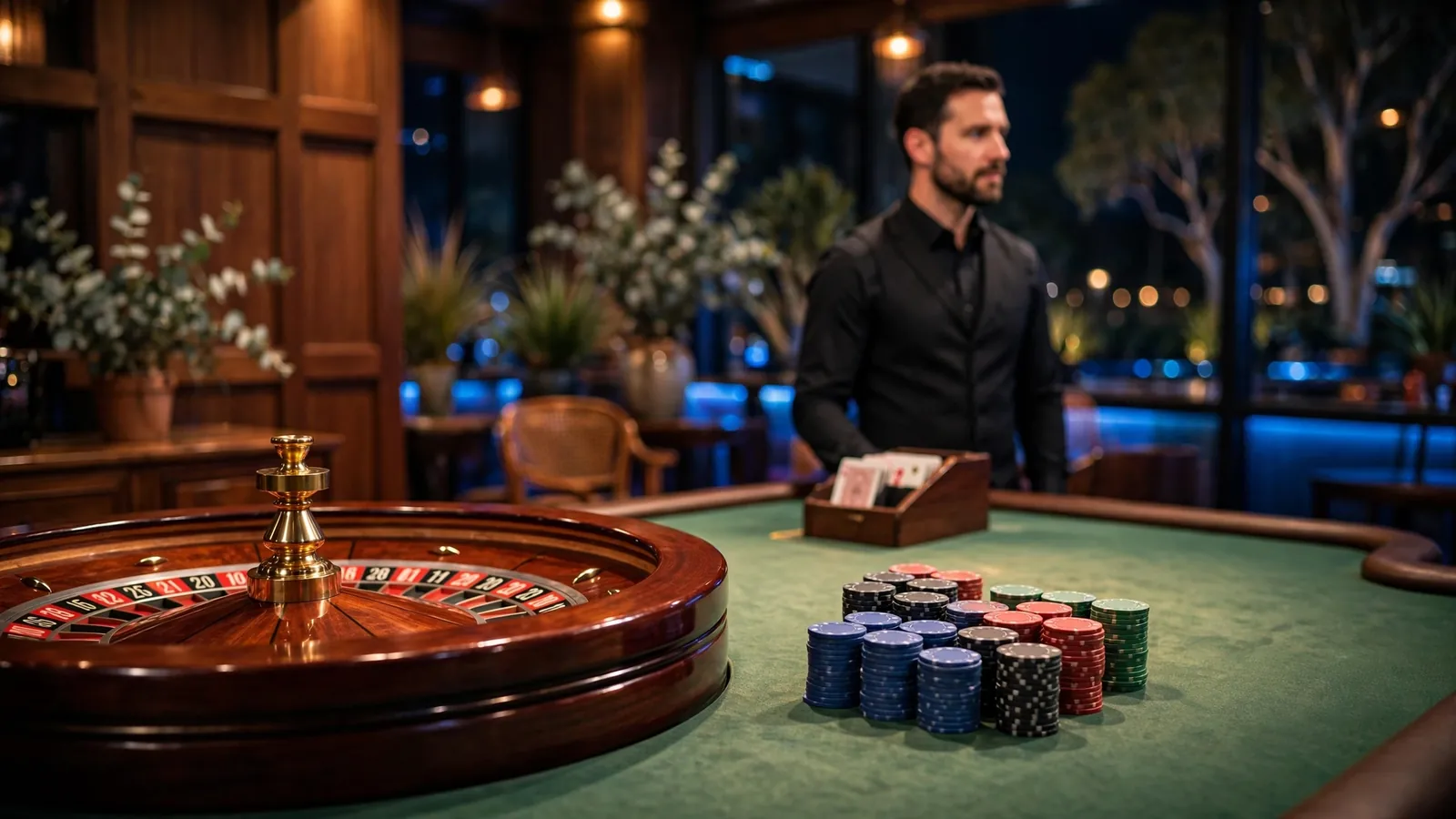
“Live casino” sounds like a description of what happens on screen: a table, a dealer and a game transmitted in real time. In Australia, however, the phrase carries a harder question beneath its surface. A site may present itself as available, use familiar language and invite Australian visitors in; that appearance does not make it an Australian-licensed casino. There is no Australian-licensed online casino.
That distinction matters because the internet makes presence look deceptively simple. A page can load, an account form can appear, and a company can describe its service as intended for Australians. None of those things establishes that the service is authorised under Australian law or that the protections associated with a domestic licence exist. A search result is not a licence. A polished interface is not one either.
The language of “best” can obscure this. It implies a field of comparable services, as if Australian players were choosing among local establishments with common standards and a shared system of redress. That is not the position. The phrase “best live casino online Australia 2026” may name a consumer’s wish for a clear comparison, but it cannot turn offshore offers into a domestic market. Any list that treats them as ordinary local options leaves out the central fact.
Choosing a live casino online in Australia means weighing what is known about each operator before deciding where to play. This list provides a concise reference, while specific live-casino features are not detailed here.
Roby Casino
Roby Casino is listed with a Curaçao eGaming license held by Roby Games Ltd. No specific live-casino features are provided.
DragonSlots Casino
DragonSlots Casino is listed with a Curaçao Gaming Authority license held by Jumpman Gaming Ltd. The available information does not detail its live-casino offering.
Thor Casino
Thor Casino is listed with a Curaçao license from Antillephone N.V. for Versus Odds B.V., and its minimum deposit is EUR 20. No live-casino features are specified.
7Bit Casino
7Bit Casino is listed as operated by Dama N.V. in Curaçao. Specific details about its live-casino games are not provided.
Golden Pokies
Golden Pokies is listed with a Curaçao license. The available information does not describe its live-casino offering.
Rollero Casino
Rollero Casino is listed with a Curaçao Gaming Control Board license, OGL/2023/176/0095, held by Hollycorn N.V. No live-casino details are provided.
MrPacho
MrPacho lists crypto payouts at 30–120 minutes and fiat payouts at 24–72 hours, with a minimum deposit of A$30. No specific live-casino features are given.
Kingmaker
Kingmaker lists crypto payouts at approximately 90 minutes and fiat payouts at 1–5 days, with a minimum deposit of A$30. Its live-casino offering is not detailed here.
JustCasino
JustCasino is listed with a Curaçao Gaming Control Board license. No specific information about its live-casino games is available.
WinSpirit Casino
WinSpirit Casino is listed with a Curaçao eGaming license, OGL/2024/923/0383, held by Antillephone N.V.; its minimum deposit is A$30. No live-casino features are specified.
This is not a question of whether offshore casino pages exist. They do. The internet has never been especially good at making geography feel consequential. A service can be operated from elsewhere and still be visible to someone in Australia; visibility, in turn, is easily mistaken for permission. Yet Australian law does not recognise an Australian-licensed online casino sitting alongside those offshore offerings. The gap between a site’s availability as a webpage and its legal standing is where much of the confusion begins.
The distinction is also important for the person who might lose money. If an offshore casino refuses to pay winnings, an Australian player has no legal recourse in Australia. That is not a minor qualification to an otherwise familiar consumer transaction. It changes the character of the risk. In a domestic market, complaints and disputes can be addressed within local regulatory structures. An offshore operator does not become part of those structures simply because its website accepts Australian visitors or presents its terms in accessible language.
The result is an unusual kind of online familiarity. The interface may borrow the visual grammar of a regulated entertainment service: menus, account screens, payment prompts and the reassuring vocabulary of customer support. But a familiar appearance cannot supply local oversight. Nor does an operator’s own description of its service settle the matter. The burden of understanding the boundary falls heavily on the player, while the practical protection that might be expected from a licensed local business is absent.
There is a further public-policy tension here. Australia’s rules draw a line around real-money online casino services, while the technology that carries them crosses borders with little ceremony. This leaves regulators working against a medium built for frictionless reach. The law’s existence is not proof that every offshore page disappears, just as a page remaining visible is not proof that it has been approved. Both statements can be true at once. The internet is not a jurisdiction.
That tension can make “live casino Australia” sound like a category of locally supplied entertainment when it is better understood as a location attached to a search for an offshore service. The location matters not because it changes the operator’s status, but because it shapes the player’s protections. A person physically in Australia is not entering a domestic online casino merely by using a service that has been designed to attract international customers.
The word “live” can also lend the experience an air of immediacy and social presence. Yet those qualities have no bearing on licensing. A dealer appearing on screen, a table presented as active, or a game described as live does not alter the legal line. The surface may feel more like a room than a software product; the underlying question remains who is providing the service, under what authority, and what recourse exists if something goes wrong.
So the Australian context is not a ranking problem waiting for a clever answer. It is a mismatch between a consumer-facing label and the country’s legal position. Offshore casino sites may be encountered online, but no Australian-licensed online casino stands behind them, and local recourse is unavailable if an offshore operator withholds winnings. That is the point from which any discussion of live casino in Australia has to begin. The distinction is stark.
No Local Recourse
If an offshore casino refuses to pay winnings, an Australian player has no legal recourse within Australian regulatory structures.
The Interactive Gambling Act 2001 draws the legal line around the operator. It prohibits companies from providing real-money online casino games to people in Australia, including pokies and table games. No Australian licence has been issued for an online casino, so a foreign licence does not turn an offshore service into a locally licensed one.
That distinction matters when a site presents itself as serving Australia from overseas. Its location, branding or claimed authorisation elsewhere does not alter the Australian rule. The Act’s penalties are directed at operators, not individual players; Australians do not incur a fine or criminal prosecution simply for playing on an offshore site that accepts them. The gap is not a domestic system of casino oversight waiting to be found. It is the absence of one.
The Australian Communications and Media Authority (ACMA) enforces the Act. It can block access to offshore gambling sites deemed illegal, with internet service providers required to comply with its blocklist. A blocked site may still be discussed or encountered online; that does not make it lawful to provide casino services to people in Australia, nor does it bring the service within Australian consumer protections.
Searches that name British live casinos raise a separate jurisdictional point. A site’s connection to the United Kingdom does not transplant its rules or protections into Australia. The relevant question is where the customer is located, not which country appears in a site’s name or licence claims.
The legal age for gambling in Australia is eighteen, but meeting that age threshold does not make a prohibited service locally licensed. Nor does it supply a route to Australian recourse if an offshore operator withholds winnings. Access and protection are different things. A narrow distinction, with consequences.
“Live casino software” sounds like a single product with a spec sheet waiting to be compared. In practice, the phrase can point to several different things: the screen through which a game is presented, the systems that connect a table to that screen, or the software a business might use to organise an online gambling service. Those are not interchangeable claims. A polished interface, if one is shown, says little by itself about what sits behind it.
That distinction matters in Australia because the software language can make an unavailable service sound like an ordinary technical purchase. Real-money online casino games, including table games, are prohibited when provided to people in Australia. A technical description does not change that position. Nor does calling a product a platform, a solution or a service make the underlying activity something else.
The word “best” introduces another difficulty. A meaningful comparison would need a defined field of products and evidence about what each one does. It would also need criteria: whether the comparison concerns stability, accessibility, transparency, or some other measurable feature. Without evidence for named live-casino products or comparable technical details, a ranking would be decoration. The adjective would carry the argument; the facts would not.
Software vs Licensing
A technical description of a platform or software does not change the legal status of the service or make a prohibited real-money activity lawful in Australia.
This is not the same as saying that software has no role in a live table. It plainly has a role in the general sense that an online presentation depends on technology. But that observation cannot establish which software a particular site uses, how it performs, whether its operation is independently checked, or whether a claim made about it is accurate. A label is not an audit. A screenshot is not a technical assessment.
The same caution applies to claims about a “live casino solution.” The phrase may be used to describe an arrangement offered to a business, but the phrase alone does not disclose its components or prove that a particular arrangement exists. It cannot establish who controls the service, how its different parts interact, or what rules govern it. Those questions require specific documentation, not the agreeable confidence of a broad product name.
Nor should software claims about pokies be carried across to live dealer tables. A pokie’s outcome is determined by a random number generator; that fact concerns the mechanics of that kind of game. It does not describe a live table, its presentation, or the systems associated with it. Similar words on a website do not make different forms of gambling technically identical. The distinction is less glamorous than a provider logo, but more useful.
Technical vocabulary can also blur responsibility. A site may present itself as the visible doorway while another company is said to supply part of the underlying service. That arrangement, where it is claimed, does not by itself establish who is responsible for each function, what evidence supports the claim, or whether the service may lawfully be offered in Australia. Software supply and permission to provide gambling are separate matters. One cannot be inferred from the other.
A free demonstration, if described by a service, would need the same care in interpretation. The word “free” might refer to a presentation that does not involve real-money play, but it does not verify the software, establish the terms of access, or make the service a lawful real-money casino. A demonstration can show an interface; it cannot prove what lies behind it. And the absence of a real-money stake does not turn a promotional claim into independent evidence.
Regional labels require similar restraint. A reference to Singapore, or to any other place, may describe intended audience, business location or marketing language. Without supporting detail, it cannot establish where a service is available or which rules apply to people in Australia. Geography in a product description is not a licence, and a cross-border label cannot settle a domestic question.
The sensible limit is therefore plain: software terminology can help identify what a claim is about, but it cannot stand in for product verification, technical comparison or legal status. No named live-casino software can responsibly be crowned the best on the basis of a generic label. That would turn uncertainty into a recommendation, and a recommendation into an invitation. Better left unsaid.
A provider name can look like a shortcut to certainty. In live casino, it may suggest that a company supplies the table, the stream, the game rules or the connection between an operator and its games. Those are different roles, though, and a label alone does not establish which one applies. Nor does a familiar name prove that a particular service is available to people in Australia.
The distinction matters because a search for live poker can lead into the same territory as searches for providers and platform connections, but it does not change the legal position. Under the Interactive Gambling Act 2001, operators may not provide real-money online casino games, including poker and table games, to people physically in Australia. The law targets the operator, not the individual player. That is a boundary, not a stamp of approval for an offshore service.
Poker also carries a cultural weight that other casino terms do not. It is often described as a contest of judgement, patience and nerve, and those qualities have helped it travel far beyond gambling halls. But a screen does not turn a real-money online poker service into something outside the law simply because the game involves decisions as well as chance. The relevant question is what is being offered, to whom, and where the customer is located.
A provider list would imply more than names. It would suggest that each company has been linked to a particular live product, that the product is available through a particular operator, and that the arrangement is relevant to Australian users. A company’s presence in the wider gambling industry cannot establish those links. Neither can a logo, a mention in a review or a page describing an operator’s platform.
The same caution applies to claims about an API or an integration. In ordinary technology language, an API allows software systems to communicate, while an integration describes how components are connected. Those terms explain a possible technical arrangement; they do not verify that one exists for a particular live-poker service. They also say nothing by themselves about whether a service is lawful, accessible, fair or secure. Technical vocabulary can make a claim sound precise without supplying the evidence that precision requires.
Reviews can be useful when they identify what they actually checked: the operator, the product, the relevant terms and the date of the assessment. A general review of an online casino cannot automatically support a specific claim about its live-poker provider or mobile platform. And a login screen, where one is visible, proves only that an account interface exists; it does not establish who supplies the games or whether Australian users may lawfully be offered them.
That leaves a narrower, more honest account of provider language. It can describe the kinds of businesses and connections people mean when they talk about live-casino platforms, but it cannot responsibly become a catalogue of verified suppliers or integrations without evidence tying each name to a specific service. The gap is not a technicality. It is the difference between industry vocabulary and a substantiated claim.
For Australia, that distinction sits beneath the poker question. A provider’s reputation or a polished platform cannot override the prohibition on supplying real-money online casino games to people in the country. Familiar names are not a local licence. And poker is not an exception.
“Live casino” is a broad label, not the name of a single kind of game. It gathers different expectations under one phrase: a table presented in real time, a host on screen, or a format designed to feel closer to a shared room than to solitary play. The label can suggest a coherent catalogue. It cannot, by itself, establish what any particular service offers.
That distinction matters in Australia, where real-money online casino games are prohibited services under the Interactive Gambling Act 2001. The law concerns what operators may provide to people in the country; a game’s polished presentation does not alter that setting. The screen may borrow the manners of a club, but the legal character of the service is not decided by its manners.
There is also a linguistic problem. “Live games” may mean games streamed from a table, while “game shows” can signal a more theatrical format. A shared adjective does not make these formats interchangeable. Nor does the word “live” explain rules, pace, stakes, or the role of a host. It is an invitation to imagine a format, not a description precise enough to support a comparison.
The phrase “live casino slot games” is especially easy to misread. Pokies and live table formats belong to different categories, even when a page places them side by side. A live presentation does not turn a pokie into a table game, and a reference to a casino does not make every game on a casino-branded page part of one uniform product. The distinctions are more useful than the umbrella term.
This is where lists can do quiet damage. A catalogue of named games carries an implied claim: that each title belongs to the service being discussed, that its format is known, and that the description is current. Without those foundations, a list is not guidance. It is decoration with consequences, particularly in a market where the underlying offer is unlawful for operators to provide.
The more reliable way to read game language is to ask what the words actually establish. “Live” describes a mode of presentation only if the product details support that reading. “Show” suggests an entertainment-led format, but does not disclose its mechanics. “Table” points toward a familiar family of games, yet says nothing about a particular table or its rules. Each label has limits.
A catalogue may look like the natural answer to curiosity about online games. In Australia, however, the broader question cannot be separated from the rule governing real-money services. A vivid interface, a familiar game name, or a human face on screen is not evidence of local authorisation. The distinction is plain. Presentation is not permission.
Roulette has an unusually clean image: a wheel, a small ball, a table divided into choices. On a screen, that familiar arrangement can be described as live, online or casino-based with little effort. The wording suggests a specific service. It does not, by itself, establish that a particular service is available to people in Australia, or that its claims can be checked.
That distinction matters here. Under the Interactive Gambling Act 2001, roulette offered online for real money to people in Australia falls within prohibited interactive gambling services. There is no Australian-licensed online casino. A polished table view, a live label or an Australian-facing page cannot change that legal position.
The words “live roulette” also carry more than one expectation. Some people may be looking for a table that appears to operate in real time; others may mean a particular style of play or simply want to know whether roulette is offered at all. A site’s description can blur those meanings.
That is a poor basis for comparison. A page can call itself one of the best live casino sites without showing what that phrase rests on. A bonus headline is no substitute: it says nothing by itself about the legality of the underlying service, the terms attached to an offer, or whether a displayed roulette table is accessible from Australia. Advertising language is designed to make choice feel simple. The legal and practical picture is not.
Attention: The existence of a website or an Australian-facing page does not amount to local approval or a domestic licence.
The familiar casino vocabulary can make offshore offers seem like ordinary extensions of local entertainment. They are not domestic, licensed alternatives. The law addresses operators that provide prohibited online casino games to people in Australia; the existence of a website does not amount to local approval. ACMA can also block access to illegal offshore gambling sites, so a page appearing in one place or at one time is no assurance of continued access.
There is a social history in the neatness of roulette’s presentation. A wheel turns chance into a visible ritual, with a result that appears to arrive in an instant. Digital presentation can preserve that ritual while removing the room around it: the people, the setting, the local rules that once made a casino legible as a physical place. What remains is an image and a set of promises, not proof of protection.
For an Australian audience, the central question is therefore not which online roulette table looks most convincing. It is whether the service is lawful and what recourse exists if something goes wrong. Offshore operators may accept Australians, but players have no legal recourse in Australia if such a casino refuses to pay winnings. The bright interface cannot supply that missing safeguard.
A roulette search can point toward a category of entertainment; it cannot certify the operator behind it. In this market, that difference is the whole table.
A live dealer changes the imagined room around a game. Instead of symbols turning over in isolation, there is a person on screen, a table in view and a sequence of actions that appears to unfold in shared time. That human presence is the distinct appeal of live-dealer formats: not necessarily a different game, but a more social way of presenting one.
The distinction matters because “live” can suggest more than it establishes. A dealer’s presence does not, by itself, show that a service is lawful in Australia, that its games are fair or that a player would have recourse if something went wrong. The screen supplies a visible person; it does not supply a local licence or legal protection. Nor does the word “live” settle what happens behind the image. Those are separate questions.
Australia’s legal boundary applies to the service, not to whether a human dealer appears in the frame. The Interactive Gambling Act 2001 prohibits operators from providing real-money online casino games, including table games, to people physically in Australia. A live presentation does not create an exception. The camera may make a table feel nearer; it cannot move the service outside the law.
That boundary is easy to lose sight of when the format borrows the gestures of an ordinary venue. A person seated at a table, cards handled in view, a measured pace: these details draw on familiar social habits. Gambling has long been arranged as a public ritual, even when the stakes and rules are tightly controlled. The online version compresses that ritual into a screen, preserving its outward signs while removing the shared physical setting.
Searches for blackjack with a live dealer or for other named table formats often carry the same hope: that a visible human presence makes the experience clearer, less abstract, perhaps more trustworthy. But visibility has limits. It can show what the camera shows. It cannot establish how a service is regulated, what terms govern a player’s account, or whether a disputed outcome would be addressed fairly. A face is not an audit.
The phrase “casino with live dealers” therefore describes a presentation, not a guarantee. It says nothing reliable on its own about the operator, the dealer’s working conditions, the studio, or the protections available to someone in Australia. Those claims require evidence of their own, and none should be inferred from the human figure on screen.
There is also a social difference between watching a person deal and being in a room with other people. Online play may reproduce some visual cues of company, but a screen cannot establish the mutual presence of a venue. The familiar ritual remains; the public room does not.
A human face can make a digital table feel less mechanical. It cannot make a prohibited service lawful.
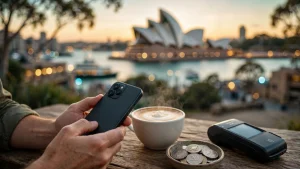
A payment screen can make an offshore gambling service appear ordinary: familiar bank details, a transfer option, perhaps a card logo. The transaction itself is less settled. Australian banks and card companies may block payments to gambling merchants they recognise. A specialist review reports that such blocking is becoming more common, but that is a changeable account of payment practice, not a guarantee about what any particular bank will do.
PayID is not a separate bank account or a sign of a site’s standing. It is an alias service within the New Payments Platform, which major Australian banks support and which encrypts transfers from end to end. An alias can be an email address, mobile number or ABN; using PayID for gambling deposits requires first connecting it to a bank account. Its presence says nothing about a site’s licensing, fairness or disclosure of return rates.
Cards bring a different uncertainty. A specialist review warns that a gambling deposit made with a credit or debit card may be classified as a cash advance. In that case, a fee of 3–5% and interest from the outset may apply. The treatment depends on the bank or card issuer, so the card’s familiar appearance does not reveal the eventual cost. A declined payment is not the only possible complication.
Specialist reviews also describe Skrill and Neteller as popular choices, citing speed and relative anonymity. Those are descriptions of their appeal, not assurances that either is accepted by a particular service or that a transfer will be private in every practical sense. Payment routes can change, and bank controls can interrupt them.
Before a first withdrawal, identity and address documents need to be verified. That requirement matters because a deposit route that worked does not settle what will be needed to receive money later. Nor does a successful payment establish a right to recover funds if an offshore operator disputes a withdrawal.
BetStop applies to Australian-licensed operators; it does not bind offshore sites. A payment method cannot fill that gap. The machinery of transfer is not the machinery of protection.
A casino app can make a gambling service feel like an ordinary part of a phone: an icon beside messages, maps and banking. A browser tab can create much the same impression, with the added suggestion that nothing has been installed. Neither interface changes what the service is. In Australia, real-money online casino games offered to people in the country are prohibited, and offshore services are subject to access blocking. A familiar screen is not a local licence.
That distinction matters because an app download is easy to mistake for a kind of approval. It is only a means of access. Its presence on a device, or the ability to open a site in a mobile browser, does not establish that a service is lawful in Australia, that its games are fair, or that a player has protection if a dispute arises. The polished surface says little about the arrangement behind it.
The same caution applies to rankings of casino websites. A prominent position in a list cannot turn an offshore operator into an Australian-licensed one; there is no Australian-licensed online casino. If an offshore casino refuses to pay winnings, Australian players have no legal recourse in Australia. The distinction between visibility and accountability is not a technicality. It is the substance.
Technical language can make the gap look smaller than it is. An application programming interface, or API, is a way for software systems to communicate. The phrase does not certify a casino, its games or its treatment of customers. Nor does a mobile-friendly page establish that an operator has been examined by an Australian regulator.
Account checks belong to the same practical picture. Identity and address documents should be verified before a first withdrawal; a smooth registration screen is not a substitute for knowing what verification a service requires. And BetStop, Australia’s self-exclusion register, applies to Australian-licensed operators. It does not bind offshore casino sites. That limit matters precisely because an interface can suggest that every safeguard travels with the account.
The phone is neutral. The legal and financial consequences are not. An app can shorten the path to a service, while offering no answer to the harder questions of jurisdiction, recourse and protection. A small icon carries very little weight.
A page built around American live-casino terminology can look relevant from a distance: the same tables, streaming images and promotional vocabulary appear to travel easily across borders. But a result written for a United States audience is evidence only of what that page says to that audience. It does not establish that a service is available in Australia, lawful here, or covered by Australian protections.
The distinction is not merely a matter of currency or spelling. Australian law prohibits operators from providing real-money online casino games to people physically in Australia. There is no Australian-licensed online casino, and the Australian Communications and Media Authority (ACMA) can block access to illegal offshore gambling sites. A foreign-facing page, even one that loads or describes a familiar format, does not change those conditions.
The phrase “live casino bonus” belongs to a different kind of promise. A promotion presented for another market says nothing reliable about eligibility, local availability or the conditions attached to an offer in Australia. Promotional language can make distance seem like a small technicality. It is not. Nor does an attractive page establish a route to Australian legal recourse if an offshore operator withholds winnings.
The same caution applies to claims about safeguards. A label or logo on an overseas page is not proof that Australian rules govern the service. BetStop applies to Australian-licensed operators; it does not bind offshore sites. That boundary matters because a protection with a limited reach cannot be treated as a general seal of safety.
American results may still explain why a format has become familiar, or how another audience describes it. They cannot answer the Australian question by themselves. Local context has to come first; imported promotional language is a poor substitute for it. Geography is not decoration.
For an Australian audience, the useful distinction is therefore between a page’s intended market and the place where a person is located. Those are not interchangeable categories, and a search result cannot make them so. An overseas offer may be visible without being locally lawful or locally protected. Familiarity is not permission.
You must be 18 or older to gamble online in Australia.
Australian law prohibits companies from offering real-money online pokies to people in Australia, and no Australian online-casino licences have been issued. The law targets operators, not individual players; Australians can legally play on offshore sites that accept them.
It is the amount you must bet before bonus winnings can be withdrawn, usually expressed as a multiple of the bonus. For example, a $500 bonus with a 40x requirement means $20,000 in bets; if the requirement applies to a $500 deposit plus a $500 bonus at 35x, it means $35,000 in bets.