Opening hours, machine availability and venue details depend on current information that a search result may not provide.
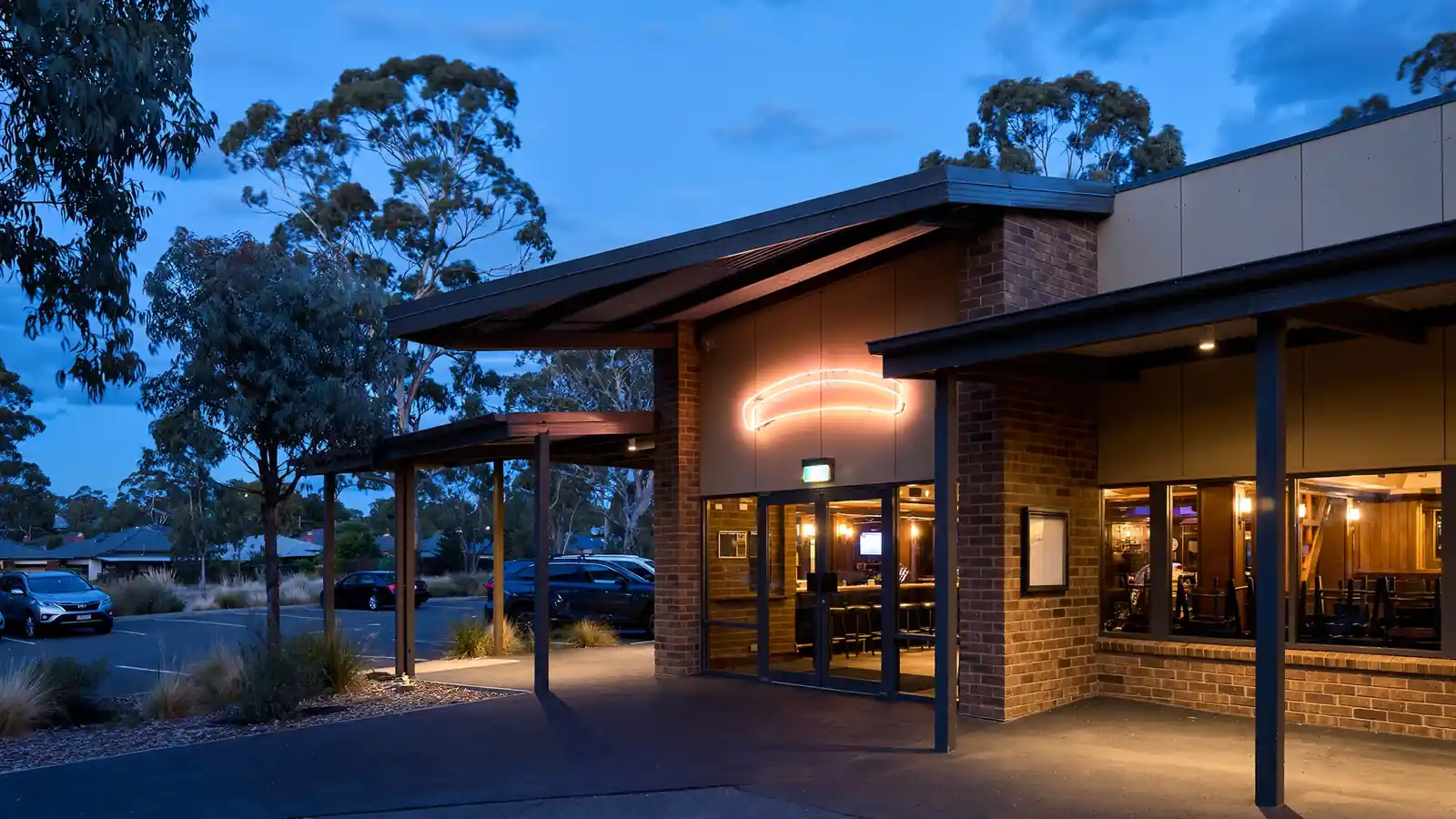
A venue’s opening status is a small fact with a short shelf life. A listing can show ordinary trading hours, but it cannot establish that a particular Canberra venue is open at this moment. A public holiday, a private function, a temporary closure or a change to the day’s schedule can make a familiar timetable wrong. The distinction is practical rather than mysterious: a search result is a record of information, not a person at the door.
That matters when someone wants to know whether pokies are available in Canberra now, rather than whether a venue has ever offered them. The wording may be brief; the answer depends on a specific place and a specific time. If a listing has not been updated, its neat hours can carry the authority of a timetable without the freshness of one. The internet is very good at preserving yesterday.
A venue’s own current information is a better starting point, and direct confirmation is the soundest way to settle an immediate question. A call can clarify whether the venue is open to patrons, whether its public hours have changed, and whether the relevant area is operating. A social media post or website notice may help, but it can still lag behind events on the day. The closer the decision is to the present, the less useful an old listing becomes.
“Open” also has more than one practical meaning. A building may be open while a particular service or room is unavailable; a venue may have several areas with different arrangements. None of that can be settled by treating the word “open” as a complete description. The useful question is not merely whether a name appears beside a set of hours, but whether the venue confirms the access being sought at the time in question.
Early starts and late finishes make the same point. A general result may suggest that a place opens in the morning or stays open into the evening, yet that does not prove today’s schedule or establish that pokies are operating throughout every hour the venue admits patrons. Nor does a request about a particular morning time become more certain because it is phrased precisely. A precise question still needs a current answer.
There is a further distinction between a venue’s public opening hours and the hours when its machines operate. They are related, but they are not interchangeable. A published door-opening time does not, by itself, describe the operating schedule of every facility inside. Conversely, a rule about machines does not tell a visitor whether a venue is currently open. These questions belong to different layers of the same place: one concerns access; the other concerns what is available after entry.
A report published by regionriverina.com.au describes a requirement taking effect from 1 July: venues with more than 20 gaming machines are to have a dedicated responsible gambling officer, or RGO, on duty for the periods when those machines are operating. That condition is about oversight during machine operation. It is not a timetable for Canberra venues, and it cannot be used to infer that any particular place is open at a particular hour. A safeguard attached to operation is not a promise of access.
This is where quick answers can become misleading. Opening hours, machine availability and the conditions attached to operation may appear together in a venue listing, but each answers a different question. A displayed schedule may describe the venue’s usual public hours; it need not confirm a temporary change, the status of a specific area or the operation of machines. Careful wording matters because “open” can sound more complete than it is.
The same restraint applies to nearby information about payouts. A figure attached to a game or venue would not answer whether the place is open, and an opening-hours listing cannot establish a payout percentage. Those are separate matters, requiring separate evidence. Folding them together would make a single search result seem to certify more than it actually says.
For anyone trying to establish whether Canberra pokies are open now, the sensible sequence is plain: identify the venue, check its own current notice, then confirm directly if the timing matters. A result that says “open” may be useful as a clue, but it is not the final word. The venue is the source best placed to confirm its present arrangements.
No live certainty by implication.
Choosing pokies in Canberra for 2026 means checking the details that matter before you play. This reference card highlights the available information for each listed operator.
Roby Casino
Roby Casino is listed with a Curacao eGaming license held by Roby Games Ltd.
DragonSlots Casino
DragonSlots Casino is listed with a Curacao Gaming Authority license held by Jumpman Gaming Ltd.
Thor Casino
Thor Casino is listed under a Curacao – Antillephone N.V. license, with Versus Odds B.V. named as the operator. Its minimum deposit is EUR 20.
7Bit Casino
7Bit Casino is listed as operating under a Curacao license, with Dama N.V. as its operator.
Golden Pokies
Golden Pokies is listed with a Curacao license.
Rollero Casino
Rollero Casino is listed with a Curacao Gaming Control Board license, OGL/2023/176/0095, held by Hollycorn N.V.
MrPacho
MrPacho lists a minimum deposit of A$30. Payouts are stated as taking 30–120 minutes for crypto and 24–72 hours for fiat.
Kingmaker
Kingmaker lists a minimum deposit of A$30. Payouts are stated as taking around 90 minutes for crypto and 1–5 days for fiat.
JustCasino
JustCasino is listed with a Curacao Gaming Control Board license.
WinSpirit Casino
WinSpirit Casino is listed with a Curacao eGaming license, OGL/2024/923/0383, held by Antillephone N.V. Its minimum deposit is A$30.
“Best” sounds like a verdict, but for pokies in Canberra it can mean several different things: a game someone enjoys, one with a published return setting, or a venue whose offering suits a particular occasion. Those are not interchangeable measures. Without comparable information about individual games and their settings, a confident local ranking would be decoration rather than evidence.
The return setting, often described as return to player or RTP, is one possible point of comparison. A specialist review has reported that some game providers let casinos choose between different RTP settings for the same pokie. If that arrangement applies, identical games at different casinos may not share the same stated return percentage. The title alone, therefore, cannot settle which version offers the higher setting.
That distinction matters to anyone looking for the best-paying pokies around Canberra or in the city centre. A familiar game name does not establish its configuration at a particular venue, and a setting reported elsewhere cannot simply be carried across to a local machine. Nor does a higher published RTP promise a better result for an individual player. It describes a return setting, not a personal forecast.
The arithmetic has little interest in a winning story. Each spin is an independent random event generated by a Random Number Generator. Previous outcomes do not make a particular result due, and a run of losses does not alter the next spin. The same is true after a win. A machine does not remember the sequence in the way a person watching it may feel that it should.
That independence makes short stretches of play especially poor material for a ranking. One person’s memorable win says what happened in that instance; it does not identify a machine that will repeat the outcome. A run of losing spins offers no better evidence that a reversal is approaching. People naturally build patterns from sequences. The machine supplies sequences without a story.
“Best pokies in Canberra” can still be a useful description of a preference, provided the preference is made clear. Someone may mean a game they recognise, a setting they can verify, or an experience at a venue they already know. But these criteria answer different questions. Popularity does not establish return; a published setting does not predict a session; and a game’s reputation does not verify the configuration of a particular machine.
CBD searches do not change that logic. A cluster of venue names, anecdotes or game titles would not by itself create a defensible comparison. To compare Canberra pokies on return, the relevant setting would need to be known for the specific game and machine being discussed. Without it, a ranked list would make the numbers look firmer than they are.
The phrase “best” also tends to smuggle in a promise. In ordinary conversation, it may mean “the one someone likes most”; in gambling, it can be heard as “the one most likely to pay.” Those meanings should not be collapsed. Independent randomness gives no basis for predicting the next result, while a return setting is not a guarantee of what one player will receive.
Each spin is an independent random event generated by a Random Number Generator, meaning previous outcomes do not influence the next result.
A sound account of Canberra casino pokies can therefore be modest without being evasive: game settings may differ, and each spin remains random. The first point makes the exact configuration relevant; the second prevents that configuration from becoming a prediction. Neither supports a local winner’s podium when comparable machine-level details are unavailable.
The useful question is not which name sounds luckiest, but what “best” is being asked to measure. If it means a return setting, the setting itself matters. If it means a personal favourite, taste is doing the work. If it means a reliable way to win, no game title or previous sequence can supply one. The distinction is less exciting than a ranking. It is also the honest one.
A request for online pokies in Canberra can sound like a local version of a familiar venue search: the same games, moved onto a screen. The legal distinction is substantial. Under the Interactive Gambling Act 2001, companies cannot provide real-money online casino games to people in Australia without a domestic licence. No Australian licences for online casinos have been issued, so there is no Australian-licensed online casino.
The rule is directed at operators, not individual players. That does not turn an offshore site into a locally regulated service, or give its customers the protections associated with an Australian licence. The law draws a boundary around the business being offered, not a reassuring label that can be attached to a website because it accepts Australian customers.
That matters when a page promises real-money play, a welcome offer or a way to claim winnings. The appearance of a Canberra-specific promotion does not establish that the service is licensed here. Nor does a site’s willingness to accept a deposit establish that it must honour a withdrawal under Australian law. A local place-name is easy to add to a banner. Legal protection is not.
The gap becomes clearest when a payment dispute arises. If an offshore casino refuses to pay winnings, an Australian player has no legal recourse in Australia against that refusal. This is not a small-print inconvenience comparable to a delayed transaction. It is a basic difference in where the service sits and which legal system can offer a remedy. A balance displayed on a screen and a sum recoverable through Australian channels are not necessarily the same thing.
Bonus language can obscure that difference. “No deposit” describes how an offer is advertised, not whether the operator is licensed in Australia or whether winnings can be withdrawn on terms a player expects. Free spins may also come with a cap on cashable winnings. A specialist review may discuss wagering conditions or such caps, but its account is commentary about offer terms, not an endorsement or a substitute for legal protection. The offer remains subordinate to the larger question: who is providing the service, and what recourse exists if the terms are disputed?
Terms can also make a headline figure less meaningful than it first appears. Wagering conditions specify how much play is required before bonus-related winnings can be withdrawn; restrictions may apply to eligible games, time periods or cash-out amounts. Those details are relevant to understanding an offer, but they cannot repair the absence of Australian licensing. A generous-looking promotion does not change the legal position of the operator.
Legal Risk
Under the Interactive Gambling Act 2001, there are no Australian-licensed online casinos, and players have no legal recourse in Australia if an offshore operator refuses to pay winnings.
The same caution applies to searches framed around high stakes or maximum bets. A number shown on an offshore site is not proof of a locally authorised product, a guaranteed payout or an enforceable promise. In the online setting, the words “near Canberra” may describe the person searching, not the location or legal status of the company taking the bet. Geography on a screen is often decorative.
The Interactive Gambling Act also sits within an enforcement system: the Australian Communications and Media Authority can block access to illegal offshore gambling sites, and internet service providers must comply with its blocklist. A blocked address is not evidence that the underlying service has become lawful or that another address carries Australian oversight. It is evidence of a boundary being enforced.
So the legal answer to a search for real-money online pokies in Canberra is not a shortlist of suitable websites. Australia has no licensed online casino, and an offshore operator’s refusal to pay cannot be pursued through Australian legal recourse. The promotional language may be bright. The remedy is not.
Airport, central-city and northern-suburb labels make a search feel more precise than it is. They describe different parts of a map, but they do not establish that a particular pokie venue sits beside the airport, within the CBD or in North Canberra. A useful location comparison needs a named venue and a dependable address; without those, neither a nearby option nor a meaningful distance can be identified.
The airport is an especially tempting anchor. It is a clear destination, and “near” sounds like a practical measure. Yet proximity is not a quality that can be inferred from a venue’s association with Canberra. A recommendation would need to say which venue it means and what “near” amounts to in actual travel. Without that foundation, airport-related wording offers atmosphere rather than directions.
The same problem applies to the CBD. The phrase can refer to a central area in ordinary conversation, but it does not identify a specific club or establish where its machines are. Nor does “near me” settle the matter: it depends on the starting point, and a location label by itself cannot supply one. A precise-sounding phrase can still leave the basic geography unresolved.
“North Canberra” and “Canberra, Vic” add another layer of ambiguity. The former points broadly towards a part of the city, not a named destination. The latter can be read as a place cue, but it should not be treated as proof that a Canberra venue is located there. Small differences in wording can send a search in different directions; they cannot substitute for an address.
This is a modest distinction, but an important one. A venue’s location is a geographic claim. Its opening status is a separate question, as is the question of what happens inside it. Combining them into a single promise—close by, available, and suitable—makes the map do more work than it can. Geography first. Everything else has its own answer.
For a location-based recommendation to mean anything, the venue must be identifiable and its position must be clear enough to compare with the airport, the CBD or another landmark. Otherwise, claims about convenient access or short journeys are simply ungrounded. No sensible ranking can be built from labels alone.
Canberra is a city on a map, not a guarantee of proximity. A mention of the airport does not establish an airport venue; a CBD reference does not locate a club; and a broad northern label does not identify a particular set of machines. Those distinctions keep a practical geography question separate from claims about venues themselves. “Nearby” is not an address.
A Canberra venue can look simple in a directory: a club, a place to eat, perhaps a room with pokies. But a venue name alone says little about how gambling risk is noticed or handled. Nor does it establish how many machines are on site.
There is, however, a specific oversight measure to understand. A report by regionriverina.com.au describes a requirement taking effect from 1 July: venues operating more than 20 gaming machines must have a dedicated responsible gambling officer (RGO) on duty while those machines are running. The threshold matters. It does not mean that every venue has an RGO, or that the presence of one tells anything about a venue’s size beyond whether it falls within that stated rule.
The role places a person, rather than only a sign or policy, within the venue’s response to gambling harm. That distinction is practical. Risk can appear as behaviour in the room; a written rule cannot observe it. An RGO requirement is intended to make oversight part of the operating environment, not merely a statement kept elsewhere.
The same report says venues will be required to maintain a gambling incident register. The register is to capture occurrences that include a patron showing signs of being at risk of gambling harm or already affected by it. Such a record turns an episode that might otherwise pass unnoticed into something the venue is expected to document. It does not, by itself, demonstrate that harm has been prevented. Paperwork is evidence of a process, not proof of its success.
That is a modest but important distinction when considering Canberra pokies venues. A listing may establish that a business exists; it cannot, by itself, establish the machine count, staffing arrangements or operation of an incident register. Those details belong to venue oversight and need to be confirmed with the venue or the relevant authority rather than inferred from a name, a photograph or a general description.
The requirement also changes the meaning of “best” in a quiet way. A venue cannot be responsibly judged only by its facilities or atmosphere if the question is how it recognises gambling risk. Yet the rules described in the report do not supply a league table of Canberra clubs, and they do not identify one venue as preferable. They set expectations for particular circumstances.
There is no glamour in a threshold or a register. Their value lies elsewhere: in making responsibility visible enough to be assigned, and incidents formal enough not to vanish into memory. That is the work behind the room.
“24-hour pokies” describes an unusually broad promise: access to machines at every hour, not simply a late finish or an early opening. The phrase can blur two separate things. A venue has its own opening hours; machines can be used only within the venue’s operating arrangements. A claim about one does not, by itself, establish the other.
That distinction matters in Canberra, where a round-the-clock label can sound like a settled feature of a particular venue. It is not a substitute for a venue’s own current information. Nor does the phrase tell anything about how many machines are available, whether all areas remain open, or whether access is uninterrupted. Those details belong to the premises and its operating conditions, not to the phrase on a page.
“Open now” is narrower still. It refers to a moment, and a listing that was accurate earlier may not answer whether a venue is open at the time someone checks. Opening schedules can also be described differently across listings and venue communications. The practical question remains the same: what does the venue itself say about its hours today?
Machine access and venue access are not interchangeable. A building might remain open while a particular area is unavailable; conversely, a machine’s presence does not establish that it can be used at all hours. The wording should not be stretched beyond what it actually says. A continuous-access claim needs to be about continuous access.
There is also a separate matter of venue oversight. Region Riverina reported a one-month grace period for venues to remove signage and introduce responsible gambling officers. That period concerns the transition to those requirements. It does not establish that any venue has extended its opening hours, or that machines operate around the clock.
A new sign, an officer on duty, and longer machine access are different matters. Treating one as proof of another would make a compliance change carry a meaning it does not have.
So the phrase “24-hour pokies in Canberra” should be read as a claim requiring precise support, not as a reliable description of the city’s venues. The same applies to broad references to Canberra pokies opening hours: they cannot settle whether a specific place is currently open or whether its machines are available throughout the day and night. The venue’s stated schedule is the relevant detail.
The clock is not the venue.
A name can travel farther than the place it is meant to identify. A search for Crown and Canberra pokies may bring together a familiar casino brand, a city and the expectation of a local gaming room. That combination, by itself, does not establish that a Crown casino or pokies venue operates in Canberra. Without a confirmed local venue, directions or claims about its machines would turn an association into an address.
The distinction matters because venue information is concrete: it concerns a physical place, its facilities and what is available there. A name appearing in a search result, discussion or travel plan is not equivalent to confirmation of those details. Nor does it support a comparison with other Canberra rooms. Calling one the “best” would require evidence about the venues being compared and a clear account of what best means. Neither can be supplied by the name alone.
The same caution applies to questions about maximum cash payouts. A general search for that figure cannot establish a payout limit for a Canberra venue that has not been confirmed. Payout conditions, where relevant, belong to a specific operator and its stated rules; they should not be inferred from the size of a prize, the reputation of a brand or the wording of a search. A number attached to the wrong place is not useful precision.
There is also a separate meaning of “Crown casino”: an online casino bearing, or appearing to bear, that name. It should not be folded into a local venue question. Australia has no online casino licensed domestically. An online brand, even if recognisable elsewhere, therefore does not establish that a corresponding physical pokies room exists in Canberra, or that online play is a local substitute for one.
This is where names acquire an inconvenient power. They suggest continuity between a place, a brand and a service, when each claim needs its own evidence. A Canberra venue would need to be confirmed as a Canberra venue. A room’s facilities would need to be confirmed as its facilities. An online casino is a different matter again.
The useful boundary is plain: Crown-related language does not verify a Crown pokies venue in Canberra, identify a “best” room or supply a local cash-payout ceiling. Until a physical venue is established, those details remain ungrounded. A confident-sounding answer would only make the uncertainty harder to see.
A search for pokies in Canberra’s central business district can suggest a simple comparison: clubs on a map, machines inside, perhaps a clear winner. But a club name alone says little about the conditions under which gambling takes place, and no local ranking follows from the phrase “best pokies”. The more useful question is how play can be bounded, whether in a club or elsewhere.
Responsible-gambling tools include deposit limits, loss limits and session time limits. Each marks a different boundary: money put into play, money lost, or time spent playing. They are not interchangeable, and none turns a random game into a predictable one. Their value lies in making a chosen boundary explicit rather than leaving the pace of play to the moment.
Self-exclusion is another standard tool. It is a way of placing distance between a person and gambling, rather than merely setting a smaller allowance for it. That distinction matters. Limits manage exposure; exclusion is intended to interrupt access. These tools belong to the broader vocabulary of responsible gambling, not to a claim that any particular Canberra club offers a particular facility or procedure. Local details need to be established with the venue or relevant service, not inferred from a CBD address.
The language of “best” can obscure this human part of the subject. It invites a contest between machines or venues, while responsible play is less glamorous: a boundary decided before the atmosphere of a club, the run of a session or the hope of a win begins to exert its pull. Rules do not remove that tension. They give it a form.
Standard tools include deposit limits, loss limits, and session time limits to manage exposure, as well as self-exclusion to interrupt access entirely.
There is also a firm legal threshold. In Australia, the minimum age for gambling, including online pokies, is eighteen. That rule defines who may take part; it is separate from the personal safeguards that can shape how an adult chooses to gamble. One is a condition of access, the others are tools for setting limits.
For CBD clubs, then, responsible play cannot be read from a machine count or a prominent location. It is better understood through the boundaries available in gambling generally, and through the recognition that a boundary is useful only when it is clear and respected. No ranking can do that work.
Adding Parkes to a search for Canberra pokies makes the request more precise in wording, but not necessarily in what it establishes. A place name can narrow an intended area; it cannot, by itself, confirm that a particular venue there operates pokies, identify what machines it has, or show that an offering is current.
That distinction matters because “best” depends on details that are not available for a Parkes-specific comparison. A venue name or a machine listing, even if repeated across pages, would not establish the terms under which a game is configured or whether the listing still reflects what is on site. No local ranking follows from a location label alone.
The same caution applies to the broader phrase “Canberra pokies”. It can describe a general hunt for local play, while “pokies in Parkes” suggests a more exact destination. Those are different levels of geographic intent, not evidence of a confirmed venue. Treating a narrower phrase as proof would turn a map reference into a recommendation.
There is also a small but consequential gap between finding a place and finding a usable fact about it. A proper venue detail would need to be attributable to that venue and relevant to the present question. Without that, naming a club, describing its machines or calling it the best in the area would be guesswork dressed as local knowledge.
Parkes, then, is best understood here as a location-specific point of uncertainty, not as a verified pokies destination. The distinction is less satisfying than a list of names, but more useful than one built on assumptions. Local precision has to be earned.
PayID belongs to the bank-transfer system, not to a particular pokie venue. It works as an alias layer on Australia’s New Payments Platform (NPP): a transfer can be directed using an email address, mobile number or Australian Business Number rather than bank account details. The NPP is used by all major banks and protects transfers with end-to-end encryption.
That describes how money can move between accounts. It does not establish that a Canberra venue accepts PayID for cashless play, or that any particular local pokie option exists. Payment infrastructure and venue facilities are separate questions. Nor does a PayID logo or payment reference certify a venue’s licensing, the fairness of its machines or the terms of play. A familiar transfer method is not a seal of approval.
The distinction matters because “cashless” can describe several different arrangements: paying a venue, moving money between bank accounts, or funding an online account. These are not interchangeable. PayID’s function is the transfer; the receiving service determines whether it accepts that method and what the payment is for. The name alone settles none of that.
Canberra and Newcastle are separate place references. Mentioning both may indicate interest in either city or a comparison between them, but it does not establish a shared venue, a local cashless arrangement or a particular pokie offering. Geography cannot be inferred from a payment method.
The useful boundary is simple: PayID explains a way to identify a bank transfer. Whether a venue offers cashless play is a venue-specific matter, and should not be inferred from the presence of PayID elsewhere in the payment chain. Infrastructure is not a location.
Australian players are not targeted by the law and can legally play on offshore sites that accept them. However, no Australian-licensed online casino exists, and players have no legal recourse in Australia if an offshore casino refuses to pay.
From 1 July, venues with more than 20 gaming machines must have a responsible gambling officer on duty while the machines are operating and keep a register of gambling incidents. Venues have a one-month grace period to remove signage and introduce the officers.
It is the amount you must bet, calculated as a multiplier of the bonus or deposit-plus-bonus, before you can withdraw winnings. For example, a $500 bonus with a 40x requirement means $20,000 in bets.