Venue listings can identify gaming locations, but present access and operating status may differ from what appears online.
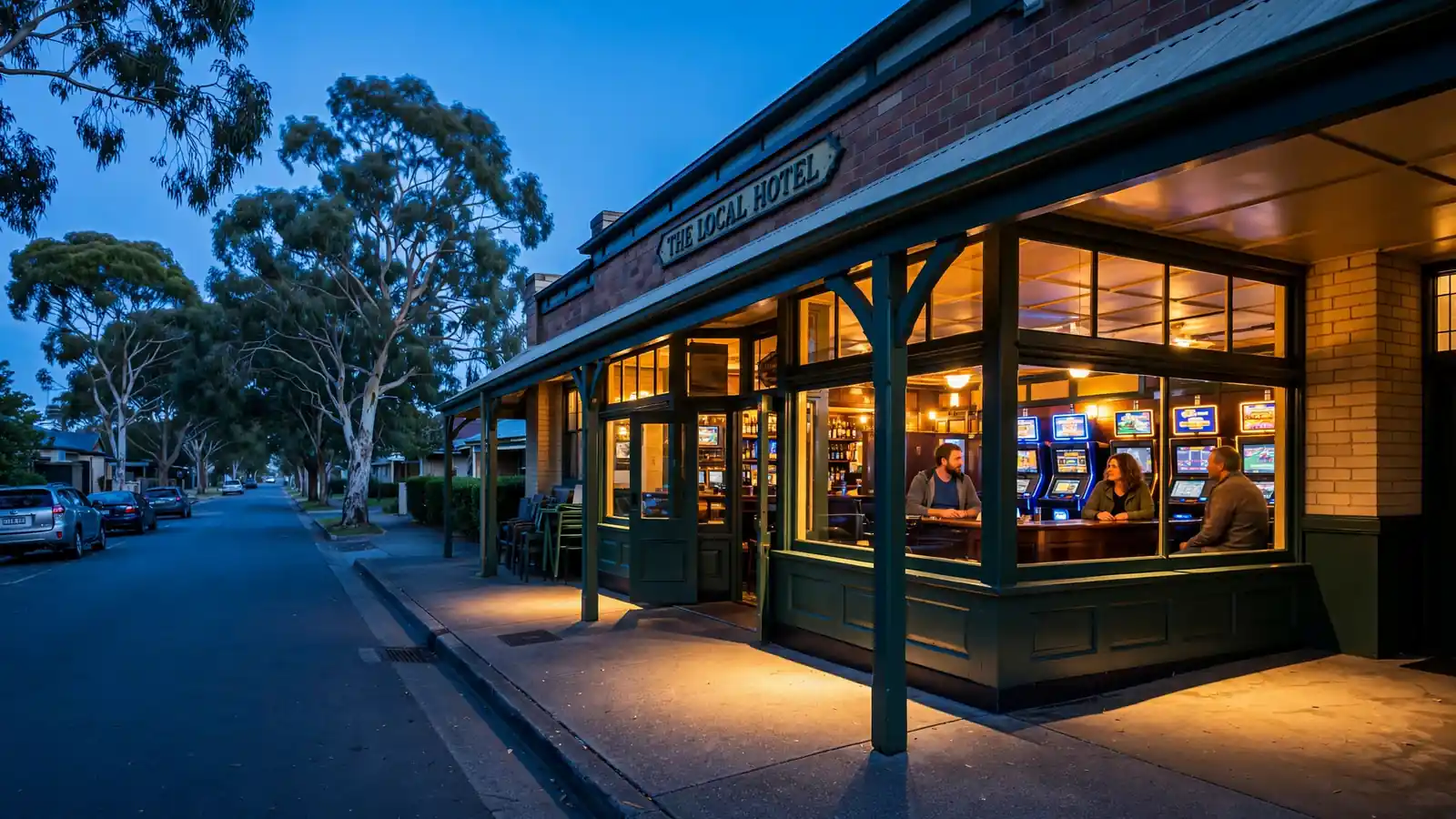
A listing that says a venue is open is a useful lead, not proof that its doors are open at that moment. Local information can be incomplete, out of date or disconnected from a change made by the venue. A search for pokies in Geelong that are open now therefore has a practical limit: it can point towards somewhere to check, but it cannot settle the question on its own.
That distinction matters most when the decision depends on timing. A result may show a venue’s usual schedule while failing to reflect a temporary closure, a change to service or an interruption that has not yet been entered online. A map marker can remain visible regardless. The screen offers certainty in the neat grammar of a business listing; the actual door has the final word.
For someone trying to establish whether pokies are available locally, the first task is separating a venue’s existence from its present operating status. A listing may identify a place associated with gaming, without confirming that the relevant area is accessible or that machines are operating at the time shown. Even an apparently current page can answer only the question it was designed to answer. “Open” is not always a complete description of what is happening inside.
A current check through the venue’s own information is more useful than relying on an old directory entry. If the status remains unclear, direct confirmation is the plainest route. This is not a grand investigative method. It is simply the difference between treating an online label as a report and treating it as a guarantee. The former is sensible; the latter asks a small rectangle of glass to know more than it can.
The wording of local searches often compresses several questions into one. “Open” might mean that the building is operating, that a gaming area is available, or that the particular service being sought can be used at that time. Those are not necessarily interchangeable. A venue can have one operating arrangement and another for a particular part of its premises. Without confirmation from the venue, a broad status label may leave that distinction unresolved.
This is why the phrase “open now” can feel more definite than the information behind it. It describes a present-tense need, but the details feeding an online result may have been supplied earlier and may not change at the same moment as circumstances do. The closer the planned visit is to the present, the less helpful a stale schedule becomes. A current source matters because the question is current.
There is also a difference between finding a venue and confirming a visit is worthwhile. An address or category listing may establish that a place is associated with gaming, but it does not necessarily establish current access, machine availability or the conditions applying at the time. Those are separate pieces of information. A result that supplies one should not be asked to stand in for all of them.
For Geelong, the careful answer to “are pokies open?” is therefore not a confident yes based on a generic listing. It is that local status needs to be checked against information maintained by the venue, particularly when a visit depends on a specific time. That answer is less satisfying than a clean green symbol. It is also more honest.
The same caution applies when results appear to offer a simple answer to a more specific question. An opening label cannot establish every detail of the experience, and it cannot make an unconfirmed local claim reliable merely by repeating it across several pages. Repetition can look like corroboration while all the entries trace back to the same old information. Search visibility is not the same thing as independent confirmation.
The phrase “best pokies in Geelong” can also carry an assumption that a current local listing settles what is available. It does not. Before comparing anything, the basic matter is whether the relevant venue and service are actually operating. That is a question about the present state of a place, not a quality judgment about a game. Mixing those two questions produces confident answers in the wrong order.
A sensible check is modest: use a venue-controlled source where possible, look for an update that plainly applies to the intended visit, and confirm directly if the status is still ambiguous. That approach does not require guessing at opening times or treating a directory’s wording as definitive. It recognises that local information has a shelf life, and that the person maintaining it may not be the person standing at the entrance.
For anyone weighing up whether to head out, uncertainty should remain visible rather than being polished away by an answer that sounds convenient. A listing can narrow the search; only a current confirmation can resolve the immediate question. Sometimes the most useful result is not a promise that a place is open, but a clear indication of what still needs checking.
Small distinction. Big difference.
Choosing pokies in Geelong for 2026 is easier when you check the details that matter to you before signing up. Use these short verdicts as a starting point, and review each casino’s terms and availability for Australian players.
Roby Casino
Roby Casino is listed with a Curacao eGaming licence held by Roby Games Ltd.
DragonSlots Casino
DragonSlots Casino is listed with a Curacao Gaming Authority licence held by Jumpman Gaming Ltd.
Thor Casino
Thor Casino is listed with a Curacao licence from Antillephone N.V., with Versus Odds B.V. as the operator. Its minimum deposit is EUR 20.
7Bit Casino
7Bit Casino is listed as operating under a Curacao licence, with Dama N.V. as its operator.
Golden Pokies
Golden Pokies is listed with a Curacao licence.
Rollero Casino
Rollero Casino is listed with a Curacao Gaming Control Board licence, OGL/2023/176/0095, held by Hollycorn N.V.
MrPacho
MrPacho lists crypto payouts at 30–120 minutes and fiat payouts at 24–72 hours. Its minimum deposit is A$30.
Kingmaker
Kingmaker lists crypto payouts at approximately 90 minutes and fiat payouts at 1–5 days. Its minimum deposit is A$30.
JustCasino
JustCasino is listed with a Curacao Gaming Control Board licence.
WinSpirit Casino
WinSpirit Casino is listed with a Curacao eGaming licence, OGL/2024/923/0383, from Antillephone N.V. Its minimum deposit is A$30.
“Best” sounds like a single quality that can be found, compared and carried home. With pokies, it is often a bundle of different preferences: a particular style of play, a theme, or a return setting. Those are not interchangeable measures. A game someone enjoys may not have the return setting they favour; a higher stated return, where that information is available, does not promise a better result in any individual session.
The distinction matters when people talk about the best-paying pokies in Geelong. A game’s name alone may not tell the whole story. A specialist review reports that some providers let casinos choose between more than one return-to-player (RTP) setting for the same pokie. If that applies, the identical game can be configured with different return percentages at different casinos. The title on the screen, then, is not necessarily enough to identify the setting behind it.
That point needs careful handling. The report concerns some providers, not every game or every casino. It does not establish that a particular Geelong machine uses a particular setting. Nor does a general figure attached to a game settle what applies wherever that game is played. The published number may describe a possible configuration rather than the one in front of a player. The small print matters more than the familiar artwork.
RTP is a statistical measure, not a forecast for the next visit. It describes an expected return across play under the relevant setting, rather than an amount that must come back to a person after a set number of spins. A machine does not keep a personal account of what it has paid out and adjust the next result to balance the books. The machine has no memory. That is the uncomfortable part of the arithmetic.
Each spin is generated as a separate random outcome. Its result does not become more likely because the previous spin lost, and a run of wins does not make a loss “due” next. The sequence can look meaningful to a person watching it: repeated symbols, near misses, a streak that seems to gather force. But the Random Number Generator determines each result independently. A pattern in the last few outcomes is not a reliable map of the next one.
That independence also limits what a brief session can reveal about a game’s return setting. A handful of outcomes can be strikingly different from the long-run expectation without disproving it. Conversely, a short winning run cannot establish that a game is generous. Human beings are excellent at finding a story in a sequence; chance is under no obligation to respect the plot.
Random Number Generators ensure each spin is a separate random outcome, meaning previous results do not influence the likelihood of future wins or losses.
There is, therefore, no universal meaning to “best” unless the measure is stated. It might mean a game whose theme or pace suits a player. It might refer to a published RTP setting, if the applicable setting can be confirmed. It cannot responsibly mean a guarantee of winning, a prediction based on recent results, or proof that one game will pay a particular person more than another.
Geelong in a phrase does not change the underlying mathematics. Descriptions such as “casino pokies” or “pokies in the CBD” identify a place or category in ordinary language; they do not tell what return configuration a machine uses. Nor does calling a game one of the best pokies in Geelong establish a measurable advantage. A location label is not a setting.
The clearest comparison is consequently a narrow one: the game’s stated configuration, where disclosed, and the limits of what that figure means. Anything beyond that—especially claims built from a short run of outcomes—turns probability into folklore. A familiar ritual, perhaps. Not evidence.
A request for online pokies around Geelong can sound like a local version of a familiar venue search. The legal position is less familiar. The Interactive Gambling Act 2001 prohibits companies from providing real-money online casino games, including pokies, to people in Australia. No Australian licence has been issued for an online casino, so there is no domestically licensed service offering real-money online pokies.
The distinction between operator and player matters. The Act places the prohibition on the company providing the service, not on the individual who plays. An Australian player does not face a fine or criminal prosecution merely for using an offshore site that accepts them. That does not make the operator’s service lawful in Australia, or turn the site into an Australian-regulated casino.
Two different ideas are often folded into the word “legal”: whether a player is personally liable, and whether a company may lawfully offer a service here. In this case, the operator faces the legal boundary; the player does not acquire the same liability simply by playing. The distinction is real, but it is not a seal of safety. Dry comfort.
For someone looking for Geelong pokies online, the phrase “near Geelong” does not establish that a local online casino exists. Nor does a page offering real-money play become Australian-licensed because it mentions the city, displays Australian currency or accepts local customers. A website’s language and audience are not a domestic licence.
The practical consequence is that an offshore operator sits outside the Australian licensing system. If it refuses to pay winnings, an Australian player has no legal recourse in Australia against that casino. The absence of player liability should therefore not be mistaken for a reliable route to resolving a dispute. The operator may accept a customer, but acceptance does not provide the customer with a local remedy.
Australia’s enforcement framework is directed at prohibited services. The Australian Communications and Media Authority (ACMA) enforces the Interactive Gambling Act 2001 and blocks access to illegal offshore gambling sites; internet service providers must comply with its blocklist. Blocking is an attempt to restrict access, not evidence that every offshore site is unreachable at every moment. It also does not change the underlying position: a site that offers real-money online casino games to people in Australia remains on the wrong side of the operator rules.
Legal Warning
Offshore operators sit outside the Australian licensing system, meaning players have no legal recourse in Australia if a site refuses to pay winnings.
This is why phrases about no-deposit offers, high limits or paying pokies do not answer the central legal question. They describe possible features of a website, not its standing under Australian law, and they say nothing about whether winnings would be paid or a dispute could be pursued locally. A Geelong label cannot supply the protection that an Australian online-casino licence would provide; no such licence exists.
The contrast with physical pokies is easy to miss because both are discussed in the same everyday vocabulary. But an online casino is not simply a venue moved onto a screen. The law treats online casino-style games offered to people in Australia as prohibited interactive gambling services, while the player’s personal position remains separate from the operator’s breach. That boundary is not a recommendation to play offshore. It is the reason claims about “online pokies in Geelong” need to be read as claims about a site’s offer, not proof of a lawful local service or an Australian avenue for recovering withheld winnings.
A request for pokies near Geelong Airport sounds precise. It has a landmark, a town and a direction of travel. But the word “near” does more work than it admits. A map can display a result because its listing includes a broad area, because a location has been tagged loosely, or because the map is estimating from an incomplete address. None of those signals, by itself, establishes how far a place is from the airport—or even whether the listing describes a pokie venue.
That distinction matters most when the landmark is treated as a shortcut. “At the airport” and “near the airport” are not interchangeable claims. The former suggests a site within the airport setting; the latter might mean somewhere in a wider surrounding area. A label alone cannot settle which meaning is intended. Nor does a pin prove that the details attached to it are current or that the place offers what the label implies.
The same looseness follows a person from the airport towards Geelong. A result may be described as being in Geelong, close to the CBD, or in North Geelong, while those phrases refer to different kinds of location. One may describe a broad municipal or commercial area; another may be a neighbourhood label; a third may be promotional shorthand. Without a reliable address and a clear basis for the distance claim, the wording can sound more exact than the information behind it.
There is a familiar modern faith in the map pin: a small dot appears, and uncertainty seems to have been reduced to geography. Yet the dot is only as useful as its underlying listing. A business name, category and position can be supplied by different systems, and a neat display does not make them independently confirmed. The map is a guide to where someone says something is, not a certificate of what happens there.
“Near me” adds another complication. It depends on the location being used by the device or service, and on the radius chosen to sort results. Two people looking from different points may see different places promoted as nearby. Even from the same point, a broad radius can fold distant suburbs into one convenient list. Convenience is not a measurement.
The CBD wording carries its own ambiguity. It may be used to mean the central business area, a nearby street, or simply Geelong in a general sense. That is not enough to identify a particular venue or establish its relation to the centre. Likewise, a North Geelong label should not be treated as proof that a listing is a verified local pokie venue. The name narrows the geography; it does not verify the activity.
A useful location check therefore begins with ordinary particulars: a full street address, a map position that agrees with that address, and a venue’s own current information. If those details are missing or inconsistent, a nearby label should remain just that—a label. The geography may be suggestive. It is not evidence.
A venue’s character is not measured only by the room, the machines or the service at the bar. It is also shaped by the people required to notice when gambling stops looking like recreation and begins to look like harm. Responsible gambling officers (RGOs) place that responsibility inside the venue, rather than leaving it entirely to a patron to name a problem.
A report by regionriverina.com.au describes a requirement taking effect from 1 July: venues operating more than 20 gaming machines must have a dedicated RGO on duty while those machines are running. The threshold matters. It does not describe every venue, and it does not establish which Geelong venues meet it. It does, however, set out a model of oversight in which the scale of machine operations brings a specific staffing obligation.
The RGO is not simply another title on a roster. A dedicated officer’s presence makes responsibility more visible: someone on duty is assigned to the task while the machines are operating. That changes the setting in a modest but meaningful way. Gambling harm is often treated as a private failure of judgement, but a venue’s rules acknowledge that surroundings and commercial routines are part of the story too. Recognition is not prevention by itself. Still, it gives the concern a place to go.
The same report describes a one-month grace period for venues to introduce RGOs and remove signage. The transition period suggests that changes to venue practice are not instantaneous; staffing arrangements and the messages displayed on site both need attention. Signage can make a venue’s priorities plain, though its removal is only one part of a broader shift. A rule on paper and a change in daily conduct are not the same thing.
Venues are also to keep a gambling incident register. It is intended to record occurrences, including situations in which a patron’s behaviour indicates they may be at risk of gambling harm or already affected by it. The register turns an episode that might otherwise be treated as an isolated awkward moment into something capable of being recorded. That does not tell the whole story of a person’s circumstances, nor does recording an incident resolve it. It does create an institutional memory.
This is the less visible side of a venue: staffing, records and the signage that frames the room. For anyone comparing places to play in Geelong, these obligations are more useful as questions about oversight than as a badge of quality. They do not rank a venue or promise that every warning sign will be recognised. Their significance lies in making responsibility harder to dismiss as nobody’s job.
Paperwork has a purpose.
A request for pokies that operate around the clock is more specific than a request for a venue’s opening hours. One concerns whether gaming is available at every hour; the other may describe the premises generally. The two can be easy to collapse in a short listing, where a single set of hours appears to answer both. It may not.
A venue’s published opening time, if one is shown, does not by itself establish when its gaming area is operating. Nor does a claim that a venue is open late demonstrate continuous access to pokies. Those distinctions matter because the phrase “open now” describes a moment, while opening hours describe a schedule. Neither wording proves round-the-clock operation.
That is a small difference with a practical consequence. A person planning around a late visit needs information about the relevant gaming area and the time in question, not merely a general statement about the premises. Listings can also become stale as businesses change their schedules. A result that once reflected a current timetable may continue to circulate after circumstances have shifted.
It would therefore be misleading to turn broad claims about local opening times into a definite timetable, or to treat an “open now” label as proof that pokies are available throughout the night. Search wording can express a hope; it cannot supply the schedule.
The sensible distinction is between three claims: a venue is open, pokies are operating, and pokies operate continuously. Each requires its own support. The first may refer to the business as a whole; the second concerns gaming availability at a particular time; the third makes a much stronger statement about ongoing access. A page that blurs them leaves the most useful detail unresolved.
There is also a social oddity in the demand for an all-hours answer. Modern listings encourage the idea that every service has a neat timetable, visible at a glance. Yet a venue’s schedule is not a permanent feature of a place. It is an arrangement maintained by people, and it can change. The clock on a listing is not the clock on the floor.
For a current visit, the relevant information is the latest schedule issued by the venue, with the gaming hours distinguished from general opening hours. Where that distinction is absent, a broad opening-time label should not be read as confirmation of pokies access. Clear wording matters. So does the date attached to it.
The words “Crown” and “Geelong” can sit together in a phrase without establishing that Crown operates a venue in Geelong. A familiar name is not a local address, and its presence beside a place name does not confirm a connection between them. The distinction is easy to lose when a short string of words is treated as a complete description.
That matters for anyone trying to identify a Crown venue in the area, or to find out whether it has a Geelong-specific pokie room. A name in a heading, result or copied listing may reflect what someone wants to know rather than what exists. It cannot, by itself, establish a venue’s location, its machines or the arrangements inside it.
Nor does the phrase “best pokies room” settle the question. “Best” might mean a particular atmosphere, a preferred game, or some other personal measure, but none of those meanings identifies a Crown room in Geelong. Without a confirmed local setting, comparisons would be comparisons without a subject. A confident ranking can make an uncertain association look settled; confidence is not evidence.
The same restraint applies to a request for the maximum cash payout on pokies in Geelong. The wording does not identify a particular machine, venue or payout rule. A maximum cannot be inferred from the name Crown, or from the fact that a question combines it with Geelong. Any figure attached to that combination would need to belong to a clearly identified game and setting. Otherwise, it is only a number wearing a local label.
There is a wider habit at work here. People often use a recognised brand as a shortcut for a whole experience: the room, the machines, the service and the money that might come back. But a name does not carry all those details with it. In a local context, each part still needs its own confirmation. The connection first; the particulars after.
This is not a reason to treat every Crown-related mention as false. It is a reason not to turn an unconfirmed association into a recommendation or a claim about a Geelong venue. The distinction is modest, but useful: a phrase can describe an interest without proving a location. No grand mystery. Just a name and a place, still waiting for a reliable link.
A search for pokies in Geelong’s central business district can sound more precise than it is. “CBD” narrows the intended area; it does not, by itself, identify a particular venue, establish that gaming machines are present, or say whether a place is open. The same distinction applies to searches for clubs. The word may describe the kind of venue being sought, but it is not evidence that a named club offers pokies.
That matters because a club is more than a machine room. It is a local institution, with its own membership, hospitality and community role. Gaming may sit alongside those functions, but the word “club” cannot settle what is available at any particular address. A polished listing or a cluster of map results may make the category feel settled. It is not the same thing as a confirmed venue detail.
The phrase “best pokies” adds another ambiguity. In a CBD context, it might mean a preferred game, a convenient location or simply a place someone has heard about. Those are different questions, and a location label cannot answer them all. Nor does the presence of a venue category establish anything about the machines inside it. The word “best” is doing a great deal of work.
Self-exclusion searches belong to a separate, more personal concern. Self-exclusion is among the responsible-gambling tools used to limit access to gambling, alongside deposit, loss and session-time limits. But a general reference to self-exclusion does not explain how a particular Geelong club administers it, what access it covers, or how a request is handled. Those details depend on the relevant arrangement, not on the suburb or venue label attached to a search.
There is also a distinction between a tool and its reach. BetStop applies to Australian-licensed operators; it does not bind offshore sites. That boundary should not be blurred into a claim that one exclusion arrangement automatically covers every form of gambling or every venue. A measure is only useful when its scope is clear.
CBD and club wording can help describe the kind of place being sought, but it cannot substitute for venue-specific confirmation. Central, familiar, and club-based are useful categories. They are not proof.
The words “Parkes” and “Geelong” placed together do not settle what place is meant. Parkes might be a place-name, part of a venue’s name, or a reference whose connection depends on context. The wording alone cannot distinguish among those readings. Treating it as a clear local address would turn an ambiguity into a claim.
That matters because “pokies in Parkes, Geelong” can sound more precise than it is. A comma may suggest a suburb or district; without one, the phrase may look like a venue name or a loose association between two places. Neither reading establishes that a particular gaming room exists in Geelong, or that “Parkes” identifies one. Familiarity with a name is not evidence of its local meaning.
Geelong pokies searches can gather several kinds of information under one broad phrase: venues, machines, opening status, or descriptions of games. Adding an unclear place-name narrows the wording, but not necessarily the facts. The result can be a small grammatical puzzle dressed as a location. A map pin, a business listing and a phrase copied from elsewhere would each need to be understood on their own terms; one does not automatically explain the others.
There is a social habit behind this sort of shorthand. People compress places into a few words because they expect local knowledge to fill the gap. Sometimes it does. Sometimes the same name belongs to more than one place, or the connection is simply not stated. In a search for the best pokies in Geelong, that compression can make an uncertain association appear like a recommendation or a verified destination. It is neither.
The cautious reading is plain: “Parkes” remains unresolved unless further context identifies what it refers to. No venue, suburb or relationship should be inferred from the phrase alone. That leaves the Geelong part of the wording intact, but it does not turn the Parkes reference into useful directions. A name is not a location check.
Cashless play can mean several different things: a venue accepting electronic payment, a machine operating without notes or coins, or a bank transfer being used somewhere in the payment chain. Those are not interchangeable arrangements. The presence of a bank-transfer service says nothing by itself about how a pokie in Geelong accepts funds.
PayID is a way to address a bank transfer, using an email address, mobile number or ABN instead of account details. It operates through Australia’s New Payments Platform (NPP), a system supported by all major banks and protected with end-to-end encryption. That describes the transfer infrastructure, not a venue’s machines, payment facilities or policies.
The distinction matters because a familiar payment label can look like evidence of a whole service. It is not. PayID’s role is to route a transfer to a bank account; it does not establish that a Geelong venue offers cashless play, nor that a pokie can be funded directly through it. Payment technology and venue practice sit on separate layers.
The Newcastle–Geelong wording creates a different kind of uncertainty. It joins two place names but does not, on its own, identify a particular venue, connection between venues, or local arrangement. Newcastle information cannot simply be carried across to Geelong. Geographic proximity in a phrase is not evidence of shared facilities.
This is a small example of how modern convenience is often described: one smooth word, “cashless”, covering several distinct steps and institutions. The machinery behind a bank transfer may be national; the rules and facilities of a local venue remain local. A payment network can be well established without telling anything about a particular pokie room.
So the Newcastle reference does not clarify what is available in Geelong, and PayID does not settle whether local play is cashless. The label is not the facility.
Yes, Australian players can legally play on offshore sites that accept them, but offering real-money online pokies to Australians without a domestic licence is illegal for operators. No Australian online casino licences have been issued, and players have no legal recourse in Australia if an offshore site refuses to pay.
Most operators set minimum deposits at AU$10 to AU$20, while some accept AU$5. PayID must be linked to a bank account before you can use it.
There is no Australian-licensed online casino, and Australian players have no legal recourse in Australia if an offshore casino refuses to pay winnings. PayID uses end-to-end encryption, but that does not guarantee an offshore casino is trustworthy.
It is the amount you must bet before bonus winnings can be withdrawn, calculated as a multiple of the bonus or, in some offers, the deposit plus bonus. For example, a $500 bonus with a 40x requirement means $20,000 in bets before withdrawal.