Gaming-floor access, payout claims and venue listings can vary, so broad search results do not confirm current conditions.
A search for pokies open in Perth sounds like a request for a simple status: doors open or shut. In practice, “open” can refer to different things. A venue may be operating while its gaming floor is not accessible, or a listed schedule may describe the building rather than the availability of its machines. Without a current, venue-specific confirmation, neither distinction can be settled from a broad claim about Perth.
That matters most for searches made in the moment. “Open now” depends on the time the information was checked, and an answer that was accurate earlier may no longer be useful. A general statement that pokies are open in Perth cannot establish that a particular gaming floor is operating at the time someone plans to visit. It would be tidier to supply a citywide answer. It would also be less trustworthy.
Early opening searches carry the same problem in a more precise form. Someone looking for play before the ordinary working day begins needs an answer about a particular venue and its current gaming-floor hours, not a guess based on the venue’s broader trading schedule. The same applies to late-night plans: a building remaining open does not, by itself, prove that its pokies remain available. “Open early” and “open late” are not properties of a city. They are details of an individual operation, liable to change.
The useful distinction is between a general listing and a direct, current confirmation. A map result or an older directory entry can help identify a place, but it should not be treated as a live notice that machines are available. Before setting out, the most dependable route is to check the venue’s own current information or contact it directly and ask specifically about the gaming floor. A published schedule should also be read for what it covers: venue access, hospitality services and gaming operations are not necessarily interchangeable.
This is less satisfying than a neat list of places open at a glance. But a list without verified operating times would turn uncertainty into apparent fact. Even a confident label such as “open now” has a short shelf life, and a page that does not show when its status was checked may preserve yesterday’s answer as though it were today’s.
Opening hours also cannot be inferred from the word “pokies” alone. The machines are part of a venue’s operation, not a citywide service with one shared timetable. Perth has no single opening status that answers every request, and a search result that treats the whole city as one location obscures the detail that matters: which gaming floor, on which day, at what time, and whether the information is current.
That is why an answer about opening should be kept separate from an answer about whether a game is likely to pay. A venue’s hours describe access; they say nothing about a machine’s return or the outcome of a spin. Likewise, a payout figure cannot establish that a gaming floor is open. These are different questions, although they can appear side by side when someone is planning a visit.
There is a small social history in the demand for a reliable “open now” answer. Leisure is often organised around work shifts, travel and the hours left at the end of a day. A search for an early or late opening time is not merely a request for a timetable; it reflects the attempt to fit a venue around the rest of life. Yet convenience is precisely where a plausible guess can do the most harm. It can send someone across town for a service that is not available.
So the honest answer to whether Perth pokies are open at this moment is not a citywide yes. It is that the status must be checked at the venue, against current information, with the gaming floor named rather than the building assumed. Where that confirmation cannot be obtained, the opening time remains unknown. No flourish improves it.
Choosing pokies sites in Perth is easier when you can quickly check the details available for each operator. Use this list as a starting point and review the current terms and suitability for your needs before signing up.
Roby Casino
Roby Casino is listed as licensed by Curacao eGaming under Roby Games Ltd.
DragonSlots Casino
DragonSlots Casino is listed with a Curacao Gaming Authority licence under Jumpman Gaming Ltd.
Thor Casino
Thor Casino is listed under a Curacao licence issued to Versus Odds B.V. by Antillephone N.V. Its minimum deposit is EUR 20.
7Bit Casino
7Bit Casino is listed as operating under a Curacao licence, with Dama N.V. as its operator.
Golden Pokies
Golden Pokies is listed with a Curacao licence. No further operator details are available here.
Rollero Casino
Rollero Casino is listed with Curacao Gaming Control Board licence OGL/2023/176/0095, held by Hollycorn N.V.
MrPacho
MrPacho lists crypto payouts at 30–120 minutes and fiat payouts at 24–72 hours. The minimum deposit is A$30.
Kingmaker
Kingmaker lists crypto payouts at around 90 minutes and fiat payouts at 1–5 days. The minimum deposit is A$30.
JustCasino
JustCasino is listed with a Curacao Gaming Control Board licence. No additional operator details are available here.
WinSpirit Casino
WinSpirit Casino is listed with Curacao eGaming licence OGL/2024/923/0383, issued by Antillephone N.V. Its minimum deposit is A$30.
“Best-paying” sounds like a property a pokie carries with it, as if a machine could be judged by a dependable generosity. The phrase is less solid than it appears. A game’s published return setting may describe one feature of its design, but it cannot tell anyone what the next spin will do, or establish that a particular machine in Perth will produce a better result.
Each spin is an independent event determined by a Random Number Generator. A previous run of wins does not make a loss due, and a string of losses does not oblige the machine to pay. The sequence has no memory. This can be an awkward idea in a room organised around patterns: lights, sounds and near-misses invite the eye to make a story from events that do not know they are being watched.
RTP, or return to player, is a theoretical measure associated with a game’s setting. It is not a forecast for an individual session and does not promise that the amount played will be returned to a particular person. A high RTP label, even where one is stated, cannot turn chance into a schedule. Nor does it mean that wins arrive steadily enough to offset losses as they happen.
A theoretical measure associated with a game’s setting that describes its return to player; it is not a forecast for an individual session.
There is another complication. A specialist review reports that some game providers give casinos a choice of RTP settings for the same pokie. If that account applies to a particular game, its title alone would not establish which setting is in use at a particular casino. The same familiar artwork and features could sit alongside different return settings in different places. That is a reason to treat a game name as incomplete information, not a reason to infer a particular setting at a Perth venue.
The distinction matters when a game is called one of the best-paying pokies in Perth. That description can suggest a local comparison backed by results, when the phrase may instead rest on a general game reputation or a stated theoretical figure. Neither tells a player what will happen on a given spin. Without reliable information about the setting at the venue in question, a ranking can sound more precise than its basis.
The same caution applies to claims about popular games in Perth casino floors or the CBD. A title’s reputation elsewhere does not establish its local availability or its local configuration. Even if the game is present, its name does not reveal the setting selected for it. A confident list of winners would require more than a familiar title and a number detached from the specific installation.
The phrase “paying well” also blurs two different things: a game’s theoretical design and a person’s actual experience. The first concerns a setting over the operation of the game; the second is shaped by independent random outcomes. A short session can depart sharply from any theoretical expectation. A lucky result is real for the person who receives it, but it does not prove that the game was more generous, or that the next player should expect the same.
That is why “best” is difficult to verify as a claim about outcomes. It might mean a particular return setting, a preferred style of play, or simply a game someone remembers fondly. Those are not interchangeable measures. A game can be appealing without being more likely to pay in the next session, and an advertised return figure cannot be read as a personal promise.
For anyone comparing pokie claims, the useful distinction is between what is stated about a game and what can be inferred from it. A published setting may help describe the game’s theoretical return, if it is tied to the version being played. It cannot identify a winning machine. It cannot make one spin depend on the last.
Chance keeps its own books.
A venue’s gaming floor is more than a collection of machines. It is also a workplace with duties around how gambling is managed and how signs of harm are handled. Those duties tell something about the conditions under which pokies operate; they do not reveal which Perth venue has the best games, the most generous outcomes or the strongest claim to being “best”.
A report published by regionriverina.com.au describes a requirement for venues operating more than 20 gaming machines to have a dedicated responsible gambling officer (RGO) present while those machines are running, with the change taking effect from 1 July. The report also describes a one-month transition period for venues to appoint officers and remove specified signage. It is a reported operating change, not a directory of Perth venues or evidence that a particular local gaming floor meets a particular standard.
The distinction matters. A rule can define what a venue is expected to do without making its performance visible from the outside. A responsible gambling officer has a defined role in a venue’s response to risk; the title alone cannot establish how a particular venue carries out that role. Nor does the existence of a duty offer a shortcut to comparing one floor with another.
The same report says venues will be required to keep a gambling incident register. It is intended to record events, including cases where a patron’s behaviour suggests they may be at risk of gambling harm or already affected by it. The register makes the response to harm an operational matter rather than a private impression: an incident is something to document, not simply something to notice and forget.
That is a modest but significant shift in emphasis. Gambling has long been presented as entertainment chosen by individuals, while its consequences can unfold in public spaces and affect families, staff and other patrons. Recording incidents gives venues a formal way to account for what happens on their floors. Paperwork is not care by itself. Still, it makes responsibility harder to treat as a matter of atmosphere.
Responsible gambling measures also include tools such as deposit limits, loss limits, session time limits and self-exclusion. These are safeguards, not measures of game quality, and they do not turn a venue into a recommendation. A list of Perth pokies venues, even if it were available, would not become a ranking simply because some venues have duties or procedures attached to their gaming floors.
The legal age for gambling in Australia is 18. That boundary is one of the clearest rules around participation, but the less visible work takes place after a person is inside: staff noticing concerning behaviour, procedures for responding, and records that make incidents accountable. The rules describe responsibilities; they do not certify that gambling is harmless.
Responsible Gambling Tools
Safeguards include deposit limits, loss limits, session time limits, and self-exclusion to manage gambling risk.
For anyone comparing venues, the useful distinction is between what a rule requires and what it proves. A reported staffing threshold, a transition period and an incident register describe a framework. They do not identify a “best pokies venue in Perth”, confirm how any named venue operates, or say anything about the likelihood of a winning spin. Those are separate claims, and they need separate evidence.
Regulation can set a floor. It cannot supply a verdict.
“Near Perth” sounds like a place, but it is a moving boundary. Someone travelling from the airport may mean a short detour before reaching the city; someone staying centrally may mean a walk from a hotel. The same venue could seem close on a map and inconvenient by road, or sit within a broad metropolitan area while being nowhere near the point that matters to a particular journey.
That makes proximity a claim requiring two things: a confirmed venue address and a stated point of comparison. Without both, a list of nearby pokies would be an arrangement of names rather than useful local information. A pin on a map is not a measure of practical access, and the word “near” cannot supply the missing distance.
The airport illustrates the problem. “Near Perth Airport” might refer to the terminals, the airport precinct or a route taken after landing. Those are not interchangeable starting points. A venue described as close to the airport should be tied to an actual address and a clear basis for the comparison; otherwise, the description offers atmosphere in place of geography. The phrase “at the airport” makes an even stronger claim, suggesting a location within the airport itself. That should not be inferred from a broad regional label.
The same distinction applies to the CBD and central Perth. These expressions overlap in ordinary use, but neither names a particular street corner or hotel. A person looking for pokies within walking distance of a central address needs more than a venue said to be “in Perth”. A metropolitan label can cover a much larger area than that everyday expectation allows.
North Perth narrows the map, but it does not solve the problem by itself. A suburb name is not proof that a particular venue operates there, nor does it establish how far that venue might be from a particular home, station or other destination. The word “near” still depends on the point from which the journey begins.
Some place names create a different kind of uncertainty. “Perth, Victoria” combines a city name with a state that does not identify Perth in Western Australia. Parkes, too, can point away from the intended Perth-area search. Such combinations are easy to produce when place names are entered quickly, but they cannot safely be treated as evidence of a local venue or a Perth address.
This is why a dependable location guide would separate confirmed addresses from broad regional descriptions, then compare each address with a named landmark or starting point. It would also distinguish a venue inside a location from one merely somewhere in the surrounding area. Those distinctions are modest on paper. On a journey, they decide whether “nearby” means a useful stop or a long diversion.
Without a dependable location basis, naming venues against the airport, central Perth, North Perth or another landmark would give a false impression of precision. The geography should do more than decorate a list. It should let a person understand where a place is in relation to the destination they actually have in mind. Otherwise, “near Perth” remains a label with no dependable scale.
A local search can be specific; a local claim has to be, too.
Crown Perth is a specific venue, but its name does not establish what its gaming floor currently offers. Those are separate claims, and each needs current, venue-specific evidence.
That distinction matters because a familiar name can make an uncertain detail sound settled. A listing may describe a room, a game or a payout from an earlier period; a page may repeat the wording without checking whether it still applies. Repetition is not confirmation. Nor does a general description of the venue establish what is available on a particular visit.
The idea of a “best pokies room” is especially slippery when attached to one place. “Best” might mean a larger selection, a particular atmosphere or a preference for certain games. None of those qualities follows from the venue name alone.
The same restraint applies to maximum cash payouts. A figure attached to a pokie might refer to a prize feature, a game’s stated limit or a particular machine configuration. It cannot safely be treated as a ceiling that applies to every machine at Crown Perth.
This is not a reason to turn every venue description into a warning label. It is simply a matter of keeping claims in their proper scale. The existence of a named venue does not verify its current floor layout, its machines or the terms attached to an individual game. A specific claim needs a specific basis.
That caution is also useful when older pages appear precise. A title, payout figure or room description may have been accurate when published and still fail to describe present conditions. In a setting where details can change, an undated statement is a poor substitute for a current one. The number may look exact. Its relevance may not be.
For anyone comparing information about Crown Perth, the useful distinction is between a venue-level statement and a machine-level one. A venue-level statement concerns the place itself; a machine-level statement concerns a particular pokie and its terms. Neither can be inferred from the other. A claim about a maximum payout, in particular, should identify exactly what it describes rather than letting a single figure stand in for the whole floor.
Crown Perth can therefore be named without dressing uncertainty as a review. Its pokie selection, operating hours and maximum cash payout remain unestablished as venue-wide particulars. The name is clear. The details are another matter.
The phrase “online pokies in Perth” can suggest a local version of a familiar venue: a place with an address, an operator answerable to Australian authorities and a clear path for resolving a dispute. Offshore websites may present themselves in similarly polished terms, but the legal position is different. The Interactive Gambling Act 2001 prohibits companies from offering real-money online pokies to people in Australia without a domestic licence. No such licences have been issued, and there is no Australian-licensed online casino.
No Legal Recourse
Australian players have no legal recourse in Australia against offshore casino operators if winnings are refused.
That distinction matters before a deposit is made. A website accepting Australian customers is not thereby authorised to offer them real-money online casino games. Nor does a Perth-facing name, local currency display or claim of easy access establish that the operator is accountable under Australian law. The law’s target is the provider, not the individual player: an Australian player is not criminally liable simply for using an offshore site that accepts them. The gap is not a secret permission slip. It is a lack of local protection.
The practical risk becomes plain when money is involved. If an offshore casino refuses to pay winnings, Australian players have no legal recourse in Australia against that operator. A balance shown on a screen may look definite; recovering it across borders, from a company outside the domestic licensing system, is another matter. A deposit therefore carries more than the ordinary uncertainty of gambling. It also depends on a business relationship for which Australian legal remedies are absent.
This is why “real money” and “no deposit” offers deserve different scrutiny from their casual wording. A no-deposit promotion is still an offer from an operator, and any conditions attached to it do not change the legal status of the service. Likewise, searches for high-limit or maximum-bet play describe a preferred style of gambling, not evidence that a site is safe, locally licensed or obliged to honour a withdrawal. The tempting arithmetic is often easier to display than the means of enforcing it.
BetStop requires particular care in this context. It applies to Australian-licensed operators; it does not bind offshore gambling sites. Self-exclusion through that service cannot be assumed to block access to an offshore casino or prevent its marketing. That limitation is not a reason to treat such sites as alternatives. It is a reminder that a safeguard built for the domestic system cannot govern a business operating beyond it.
Deposits can make a website feel like a service already tested: money has moved, an account is open, and the screen appears to recognise the transaction. None of those events grants the operator a domestic licence or creates a local route for recovering withheld winnings. The interface is not a regulator. And a payment confirmation is not a remedy.
The Australian legal position is unusual in its division of responsibility: companies are prohibited from supplying these services without a licence, while players are not punished merely for playing offshore. That leaves the individual exposed to the consequences of dealing with an operator that has no Australian casino licence and may not answer to Australian authorities. For Perth residents weighing online play, the central question is therefore not which site promises the most, but what protection remains if the promise is disputed. In this market, little remains.
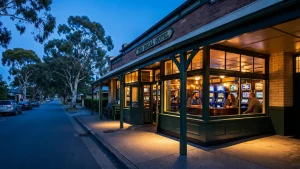
A claim that a Perth venue offers pokies around the clock is more specific than a general promise of late-night access. It describes continuous availability, not simply a room that stays open late or a venue whose doors remain accessible. The distinction matters: a search result, directory entry or old listing can repeat a label without establishing what is operating now.
Opening hours belong to the venue, not to the idea of pokies in Perth. A city-wide phrase cannot confirm that any particular gaming floor runs through the night. Nor does a venue’s general trading schedule, by itself, settle whether its pokies are available for the same hours. Those are separate claims, and each needs current confirmation from the venue responsible for the premises.
The word “open” can also blur several things. A building may admit patrons while parts of it are closed; a dining area may trade on a different schedule from other facilities. Without a direct, current statement about the gaming floor, “24-hour” remains an assertion rather than a dependable description. Search snippets are especially poor substitutes: they compress information, may carry old wording and rarely explain precisely what is open.
For a genuine all-hours claim, the useful check is narrow. The venue’s own current information should explicitly cover the gaming floor, not merely the property as a whole. If that wording is absent, a direct enquiry to the venue is more meaningful than treating a repeated listing as confirmation. The date matters too: opening information can change, and a page that once described one schedule may not describe the present one.
This does not establish that a Perth venue operates pokies continuously, or that none does. It means the claim needs to be tied to a named venue and current operating information before it can guide a late-night plan. A broad label cannot do that work on its own.
There is a cultural oddity in the phrase: “24-hour” sounds like a feature of the game, when it is actually a promise about staffing, access and a venue’s decision to keep a gaming floor running. The reels have no timetable. The people and premises around them do. A search can suggest a possibility; it cannot keep the doors open.
A club name is not evidence of a pokie room. Nor does a venue’s location in central Perth establish that it has gaming machines, that they are operating, or that access is available to the public. Those details need to be checked with the venue itself; without them, a list of Perth CBD clubs with pokies would turn guesswork into a directory.
That distinction matters because “club” can describe very different places: a members’ association, a hospitality venue, a sporting organisation or simply a name that suggests local belonging. The word alone says nothing about gaming facilities. A short walk through the city’s commercial streets cannot settle the question either. The CBD is a map label, not a guarantee of what happens behind each door.
The same caution applies to claims about the best pokies in central Perth. “Best” might mean a preferred atmosphere, a particular game or a player’s own experience, but none of those makes a venue’s machines or their terms independently established. A confident ranking can look useful while resting on details that have not been checked. A polished list is still only as sound as its evidence.
Attention: A venue's location in central Perth or its status as a club does not guarantee it has operating gaming machines available to the public.
Self-exclusion belongs to a different question: how a person can limit their own gambling, rather than which club has machines. Deposit, loss and session-time limits, alongside self-exclusion, are recognised responsible-gambling tools. Their existence does not establish that a particular Perth club offers a particular process or how it works there. Venue-specific arrangements need confirmation from that venue.
BetStop is not a universal switch for every gambling service: it applies to Australian-licensed operators and does not bind offshore sites. That boundary is important when self-exclusion is being considered across different forms of gambling. The word “self-exclusion” can sound comprehensive; its reach depends on the service involved.
A sound account of CBD pokies would therefore need current, direct confirmation of the venue, its gaming facilities and the relevant access or exclusion arrangements. Without that, naming clubs would imply more than can responsibly be said. Central Perth may be easy to locate. Its gaming-room details are another matter.
Perth belongs to Western Australia. South Australia is a separate state, not another name for the region around the city. The distinction matters because a request for pokies in Perth concerns a different place from one about South Australian venues, even when the two ideas are folded into the same phrase.
Place names carry practical weight. State boundaries shape which local rules and authorities apply, while a city name points to a particular part of that state. “Perth, Australia” is therefore not a loose reference to any Australian gaming floor: it identifies Perth in Western Australia. South Australia cannot be treated as a nearby extension of that description.
The confusion is easy to understand. Australia’s states share a national setting, and people often use a familiar city or state as shorthand for a broader area. But that shorthand can blur the difference between jurisdictions. A venue associated with South Australia would not, by that association alone, answer a question about Perth. Nor does the word “open” resolve the location: it describes availability, not which state a venue is in.
For a Perth-focused account of pokies, the geographic frame stays with Western Australia. South Australian venues and their operating arrangements belong to a separate discussion. Mixing the two would create a broader-looking answer at the cost of a clearer one.
That is the boundary. Not a technicality, but the map.
“Cashless” can describe different things: a payment sent between bank accounts, or a system for accessing funds on a gaming floor. They are not interchangeable. A transfer method used online says nothing, by itself, about whether a pokie at a Perth venue accepts cashless play.
PayID is part of Australia’s New Payments Platform, which is supported by all major banks and uses end-to-end encryption. It lets people direct a transfer using an email address, mobile number or ABN rather than entering account details. That describes how money can move between accounts. It does not describe a venue’s machines, account cards or payment arrangements.
The distinction matters because a familiar payment name can lend an air of local certainty to a claim it cannot support. PayID being available through a bank does not establish that a Perth gaming floor uses it, nor that a particular machine can be funded without cash. For real-money play on an online casino, PayID would first have to be linked to a bank account; that is still an online transfer, not evidence of cashless pokies in Perth venues.
The phrase “cashless play” therefore needs a setting attached to it. Online banking infrastructure belongs to one setting; a venue’s gaming-floor equipment belongs to another. Treating the first as proof of the second turns a payment feature into a claim about local machines.
The same caution applies when Perth is grouped with Newcastle. A shared phrase does not make information about one city evidence about the other, and a payment method does not establish what either city’s venues offer. Cashless technology may sound like a simple matter of tapping or transferring. The underlying arrangements are not.
Yes, Australians can play on offshore sites that accept them, but operators cannot legally offer real-money online pokies to Australians without a domestic licence, and none have been issued. Players have no legal recourse in Australia if an offshore casino refuses to pay.
You must be at least 18 years old to gamble online in Australia.
Check the wagering requirement and any cash-out cap before accepting an offer. For example, a $500 bonus with a 40x requirement means $20,000 in bets before winnings can be withdrawn; a 35x requirement on a $500 deposit plus a $500 bonus means $35,000 in bets.
Some game providers let casinos choose between different RTP settings for the same game, so its return percentage may vary between casinos.