A nearby listing does not verify a venue, its access or suitability, and local gaming rooms and offshore sites operate under different rules.
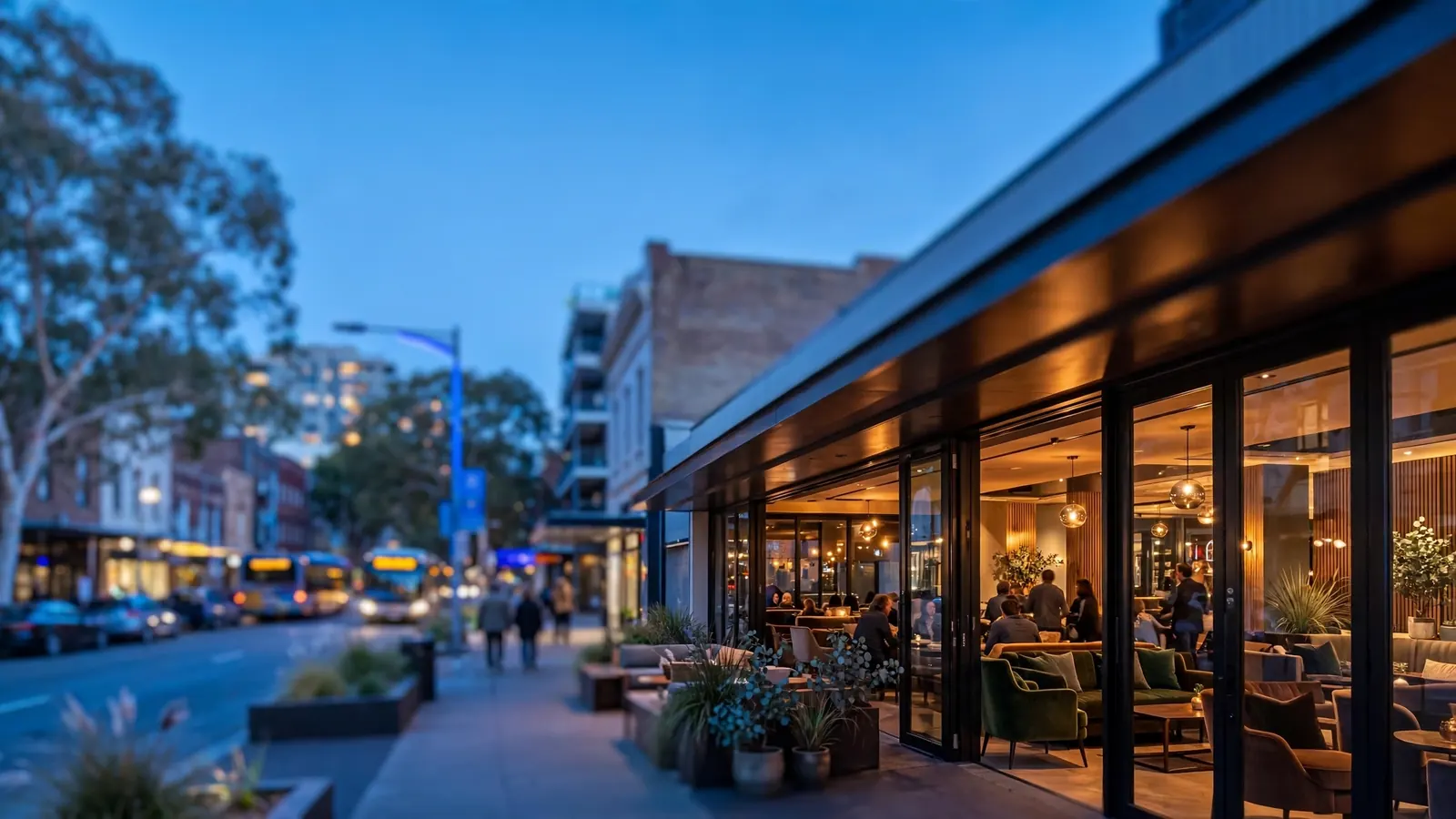
A request for pokies near Sydney can sound like a request for a shortlist. It may mean something narrower: a place within reach of a suburb, a station, the central business district or an airport. Geography is useful for narrowing a map. It says nothing, by itself, about the quality of a venue, the machines available there or whether the venue suits the person looking.
That distinction matters because “near” is a blunt measure. A place may appear close on a map while being awkward to reach; another may be farther away but easier to get to. Search terms such as “pokies near me” depend on the location being used to make the search, while a reference to Sydney can cover a much wider area. Neither phrase establishes that a particular venue has been checked.
Sydney Airport brings the same issue into sharper focus. A person may want to know what is near the airport, perhaps while planning a stop or a journey. The wording expresses a geographic interest, not confirmation that gaming machines are available inside the airport or at any particular nearby business. Airport searches are especially prone to making a pin on a map feel like a practical recommendation. It is only a pin.
The same caution applies to requests involving the CBD, Central or another familiar point in the city. A neighbourhood name can give a search some direction, but it does not settle the questions that make a venue choice meaningful. Distance is not quality; proximity does not certify what is inside a building. Without reliable details about a specific place, a confident-sounding recommendation would be little more than geography dressed for the occasion.
There is also a difference between looking for a physical venue and looking for online play. The phrase “online pokies near Sydney” combines two ideas that do not fit neatly together: online access is not made local simply by attaching a city name to it. That distinction matters before any comparison begins. The rules governing online services are a separate question from where a physical venue might be found, and they should not be blurred into a single list of nearby options.
Time-sensitive wording can blur things further. “Open now” describes a moment, not a lasting feature of a venue. A place’s location does not establish its current operating status, and a map result cannot stand in for confirmed information about access. The phrase may be convenient shorthand, but it is not evidence. A search can point; it cannot keep the doors open.
Sydney itself is not a single point. It is a large urban area with neighbourhoods and transport corridors that give “near Sydney” different meanings depending on where someone starts. Even the repeated phrase “near Sydney” can hide that uncertainty: near the city centre, near a particular suburb, or simply within the broader region? Adding a landmark helps define the intended area, but it still does not turn proximity into a judgement about a venue.
There is a small social history in the convenience of these searches. A map reduces a city to reachable dots, just as transport networks reduce it to connections. That compression is useful, but it strips away context: who operates a place, what it offers, and what conditions surround a visit. Those are not details that distance can answer. The city remains more complicated than its pins.
Eligibility is one point that is clear across gambling in Australia: the legal age is 18. That threshold applies to pokies whether the setting is physical or online. It does not establish that a particular venue exists at a named location, that it is accessible at a given time or that it is a good choice. Age answers who may legally take part, not where a suitable place can be found.
A useful way to read a location-based result, then, is as a lead to investigate rather than a verdict. The more specific the place name, the clearer the geography may become; the quality claim still needs its own support. “Nearby” is a measurement. “Best” is a different argument.
A Sydney address can mean a physical venue, but “online” changes the question. Real-money pokies played over the internet are not simply local gaming-room machines viewed on a screen. In Australia, the law draws a line around who may provide them: the Interactive Gambling Act 2001 prohibits companies from offering real-money online pokies to people in Australia without a domestic licence, and no such licences have been issued. There is no Australian-licensed online casino.
That distinction matters when searches for Sydney casino pokies move from a venue’s name to a website. A site may accept Australian players, describe itself as international, or present a familiar city as part of its branding. None of that gives it an Australian licence. Nor does an offshore licence amount to domestic authorisation. The legal issue is the operator’s provision of the service to people in Australia, not whether a page can be opened or a deposit method is displayed.
The law targets operators rather than individual players. That is not the same as a local approval for offshore gambling. Australian players are not the target of the Act’s operator prohibition merely for playing, but a company offering prohibited online casino games to people here remains on the other side of the legal line. ACMA, the Australian Communications and Media Authority, enforces the Act and blocks access to illegal offshore gambling sites; internet service providers must comply with its blocklist. Access, where it occurs, is not proof of legality or permanence.
The distinction is easy to lose in the language of convenience. A search for online pokies near Sydney may sound like a request for a nearby room, while a request for real-money play concerns an online service with a different legal status. Cashless play does not change that status either. Nor do labels such as “high limit” or “no deposit”: a promotion or a payment feature cannot turn an offshore casino into an Australian-licensed one. The vocabulary changes; the legal position does not.
The same applies when a search attaches a familiar Sydney casino name to online pokies. A name in a phrase does not establish that a venue operates an online casino, or that an online service bearing a related label is authorised in Australia. Physical premises and internet gambling are separate categories. Blurring them is useful to marketing and unhelpful to anyone trying to understand what is being offered.
There is a further practical consequence. If an offshore casino refuses to pay winnings, Australian players have no legal recourse in Australia to compel payment through the protections available for a locally licensed online casino. There is no such local licence. That leaves a sharp imbalance: the operator may take a customer’s money while the customer lacks an Australian licensing authority capable of resolving a payment dispute on the basis of domestic casino regulation. A website’s terms or an offshore licence do not fill that gap.
Searches for the best-paying pokies in Sydney, or for a no-deposit offer, can therefore carry an assumption that the internet provides a regulated local equivalent to a gaming venue. It does not. An advertised payout, bonus, or maximum stake cannot answer the prior question of whether the service is legally available to Australians. Ranking claims are not legal status.
The line is not between a reputable-looking site and an unattractive one. It is between a local physical venue and an online service that Australian law does not license. Familiar names, Sydney references and Australian-facing pages do not erase it. A screen can make distance look irrelevant. The law does not.
Legal Risk
There are no Australian-licensed online casinos. Offshore sites operating without a domestic licence may leave players with no legal recourse in Australia for payment disputes.
A venue’s opening hours answer a practical question: when can people enter? They do not, by themselves, describe the responsibilities that apply once gaming machines are operating. For Sydney venues, that distinction matters. A room may be open early, late or for a shorter daily window; operating rules are a separate matter from the timetable on the door.
A report published by regionriverina.com.au describes a requirement for venues with more than 20 gaming machines to have a dedicated responsible gambling officer (RGO) on duty while those machines are operating, from 1 July. The detail is operational rather than decorative: the officer’s presence is linked to the period in which machines are running, not simply to the building being open. The report also describes a one-month grace period for venues to remove signage and introduce the officers.
That account does not establish the opening hours of any particular Sydney hotel or gaming room. Nor does a request about pokies open early or late establish that a venue is available at a particular hour. A search for a dawn opening, or for machines running into the night, expresses a desired timetable; it is not evidence of one. The RGO requirement concerns oversight during operation, not a promise that a room will operate around the clock.
The same report says venues will be required to keep a gambling incident register. It is intended to record occurrences, including cases in which a patron’s behaviour indicates possible exposure to, or effects from, gambling harm. This makes the record more than a tally of unusual events. It gives the venue an institutional way to note what happened, rather than leaving every concerning encounter to memory or informal conversation.
There is something revealing in that shift from observation to record. Gambling rooms have long been treated as ordinary parts of hospitality: attached to hotels, clubs and the routines of a night out. Yet the machine room is not just another corner of a venue when play is under way. The rules described in the report place a named officer and a written register inside that ordinary setting. Administration enters the room with the machines.
Venue Requirements
From 1 July, venues with more than 20 gaming machines must have a dedicated responsible gambling officer (RGO) on duty and maintain a gambling incident register.
The reported grace period also shows how regulation meets existing practice. Removing signage and putting new staffing arrangements in place are tasks for venues, not instant changes in the way a room feels to patrons. A transition period recognises that institutions have to alter their routines. It does not turn the underlying responsibility into a matter of choice.
Questions about Sydney pokies opening times can therefore be separated from questions about what applies during operation. The first calls for reliable venue-specific information; the second concerns the obligations described in the report. One cannot stand in for the other. An open door is not a full account of what is happening inside.
Nor does the phrase “hotel pokies” settle the matter. A hotel may be a familiar kind of venue, but that label alone says nothing about its machine count, its hours or the arrangements it has made. The reported officer requirement applies above a stated machine threshold, and the register concerns incidents in venues; neither detail identifies a particular hotel or confirms its operating schedule.
The timetable remains venue-specific. The duty of oversight, as reported, follows the machines while they are operating. Not the clock alone.
Choosing pokies sites in Sydney means checking the details that matter to you before signing up. This list offers a starting point, with the available operator information to help you assess each option.
Roby Casino
Roby Casino is listed with a Curacao eGaming licence held by Roby Games Ltd. This provides a specific licensing detail to check when considering the operator.
DragonSlots Casino
DragonSlots Casino is listed under the Curacao Gaming Authority, with Jumpman Gaming Ltd named as the licensee. Its listed licensing details are a point to review before deciding whether it suits you.
Thor Casino
Thor Casino lists a Curacao licence from Antillephone N.V., with Versus Odds B.V. identified, and a minimum deposit of EUR 20. Those are the available specifics for assessing this option.
7Bit Casino
7Bit Casino is listed as operated by Dama N.V. under a Curacao licence. The operator and jurisdiction are the key details provided here.
Golden Pokies
Golden Pokies is listed with a Curacao licence. No further operator details are provided, so check the terms directly if you are considering it.
Rollero Casino
Rollero Casino lists a Curacao Gaming Control Board licence, OGL/2023/176/0095, and names Hollycorn N.V. as operator. These licensing details make up the available information for this listing.
MrPacho
MrPacho lists crypto payouts at 30–120 minutes and fiat payouts at 24–72 hours, with a minimum deposit of A$30. These stated payment details are the main points to consider.
Kingmaker
Kingmaker lists crypto payouts at about 90 minutes and fiat payouts at 1–5 days, with a minimum deposit of A$30. Review these stated payment details against your preferences.
JustCasino
JustCasino is listed with a Curacao Gaming Control Board licence. This is the only operator detail provided, so further checks may be useful before signing up.
WinSpirit Casino
WinSpirit Casino lists a Curacao eGaming licence, OGL/2024/923/0383, from Antillephone N.V., and a minimum deposit of A$30. These are the available details to factor into your decision.
“Best” sounds like a verdict, but in a city-sized search for pokies it can conceal several different judgments. One person may mean a game with a particular theme; another may care about its pace, its features or how it looks on a screen. A claim about the best-paying option is different again: it concerns a measurable feature, not a matter of taste.
The important boundary is randomness. A pokie’s Random Number Generator determines the result of each spin, and one spin does not depend on the one before it. A run of losses does not make a win due; a recent win does not make another more likely. The machine has no memory in the human sense. It does not notice a player’s patience, nor does it repay it.
That distinction unsettles a familiar way of reading a gaming room. People watch screens, hear the rhythms around them and make a story from sequences: a machine has been quiet, one nearby has paid, a particular pattern must mean something. The story is understandable. Human beings are excellent at detecting patterns, including patterns that chance does not promise to repeat. The next result remains a separate event.
So a list of “best pokies in Sydney” can only be useful if its basis is clear. A list based on verified game information could describe those details; one based on preferences could say what kind of experience its choices suit. But the word “best” alone says neither. Nor does attaching Sydney, the CBD or a casino to the label establish how a game behaves. A place-name is geography, not evidence of a winning advantage.
The phrase “best paying” demands particular care. It can sound like a forecast of what will happen in a session, although an independent random outcome offers no such promise. A past result, whether seen on a screen or recalled from another visit, cannot tell what the next spin will produce. Ranking a game by an imagined hot streak would turn coincidence into advice.
There is also a difference between a game’s design and a player’s outcome. A feature may make a pokie feel more engaging, while a theme may make it more appealing; neither impression establishes what the next spin will pay. Sometimes dressed up.
The word “best” can still serve a modest purpose: it can describe what someone enjoys, provided that preference is not confused with a prediction. Sydney’s venues and machines may invite comparison, but the mathematics of one spin does not become local. A result in the CBD is not more legible than one elsewhere, and a sequence does not become a signal merely because it happened in a familiar room.
That is the limit of any honest ranking built around chance. It may sort preferences or verified attributes; it cannot identify a machine that owes a win, or disclose what the next spin will do. The spin arrives without consulting the story told about the last one.
Sydney Airport and North Sydney are distinct location labels, not evidence that a particular pokie venue is inside either area. A listing, map pin or phrase attached to a place name can suggest proximity, but it does not establish where gaming machines are installed, whether a venue admits the public, or what conditions apply. Those details belong to an identified venue, not to a broad geographic label.
The distinction matters especially at an airport, where “at the airport” can be read loosely. It might mean within a terminal, somewhere on airport grounds, or simply in the surrounding area. Those are not interchangeable descriptions. Without a clearly identified venue and reliable details about it, the phrase cannot support a claim that pokies are available inside the airport or at any particular point nearby.
North Sydney presents a different kind of ambiguity. The name can refer to a wider district as well as to a more immediate locality. A result attached to North Sydney does not, by itself, tell anyone how close a venue is, what kind of premises it is, or whether it has gaming machines. The same caution applies to references to Sydney city: a city-wide label is too broad to serve as a description of one venue.
This is not merely a matter of tidy wording. Location carries an implied promise. When a venue is described as being “at” a landmark, people may infer that access is straightforward and the relationship precise. If that relationship has not been established, repeating the label more confidently does not make it more accurate. Geography is not a licence to fill in the blanks.
The question of a maximum cash payout has the same problem in another form. A place name cannot establish a payout amount. Nor does the word “pokies” identify a particular machine or its rules. Without details tied to a specific machine and venue, a single maximum would be a guess dressed as a local fact. No neat number.
The useful distinction, then, is between a geographic association and a confirmed venue detail. Sydney Airport, North Sydney and Sydney city may help describe areas people have in mind, but they do not verify facilities, machine availability or access. Any statement about those matters needs to refer to an actual venue and information that supports the claim; otherwise, the location should remain a location, not become an implied recommendation.
Eligibility is separate again. The legal age for gambling in Australia, including online pokies, is 18. Meeting that age requirement does not establish that a venue exists at a named location, that it offers pokies, or that access is available. Age and place answer different questions.
For anyone comparing these named areas, precision is more useful than a confident-sounding label. A specific venue description can be assessed on its own terms. A broad reference to the airport, North Sydney or the city cannot do that work for it.
Crown Sydney belongs to the vocabulary of a city’s physical places: a named casino, associated with a particular address and the public life around it. An online licence is a different kind of thing. It is a legal authorisation for a service delivered over the internet, not a quality bestowed on every product or website that shares a venue’s name.
That distinction matters when the word *pokies* is attached to Crown. The phrase may suggest a particular room, a set of machines or a comparison with other Sydney venues. But a name alone cannot establish what games are present, how they operate or what conditions apply to them. Nor does the word *best* settle such questions. It turns a place into a ranking before the criteria have even been named.
The online question has a clear answer: Australia has no licensed online casino. A physical casino in Sydney and a licensed online casino are not interchangeable categories. One refers to a venue; the other would refer to an online gambling service holding a domestic authorisation. Familiar branding cannot bridge that gap.
This is more than a technical distinction. Cities have long gathered gambling into visible places, where entrances, rooms and local rules give an activity a recognisable setting. The internet removes that geography from view. A screen can carry the name of a city or a venue without becoming part of that place, and a familiar name does not by itself explain who operates a service or what legal status it has.
The result is a common slippage in language: “casino” can mean a building, a brand, or an online product, while “pokies” can refer broadly to the machines people associate with gambling venues. Those meanings overlap in conversation, but they do not answer the same practical question. A search for Crown Sydney’s pokies concerns a venue and its games; the question of an online licence concerns the legal status of an internet service. One cannot be used as evidence for the other.
That boundary also keeps a venue’s reputation from doing work it cannot do. A well-known name may make a place easy to identify, but recognition is not a licence, and a licence for one kind of activity would not automatically establish permission for another. The distinction is plain, if not always convenient.
Crown Sydney can be discussed as a named casino without turning that discussion into a claim about its machines or an online offering. The useful point is narrower: a physical casino’s name does not create an Australian-licensed online casino. Place and permission remain separate matters.
A venue is more than a room containing pokies. It is a public space in which gambling is made ordinary: placed among meals, social visits and familiar routines, rather than set apart as an exceptional act. That ordinariness is precisely why safeguards matter. They do not make gambling harmless; they provide ways to limit exposure and recognise when play is becoming difficult to control.
Responsible-gambling tools include deposit limits, loss limits and session time limits, as well as self-exclusion. Each addresses a different part of the experience. A deposit limit restricts what can be put in; a loss limit sets a boundary around losses; a time limit constrains how long a session continues. Self-exclusion is different again: it is a means of stepping away rather than adjusting the terms of continued play.
These measures are useful as categories, not as proof that every Sydney pokies venue offers the same arrangements or applies them in the same way. A general description of safeguards cannot establish the policy of a particular club, hotel or gaming room. Nor does the presence of a limit or exclusion option amount to a recommendation. “Best” is a poor word for a venue when the meaningful question is whether its protections are clear, accessible and suited to the person using them.
Self-exclusion also has boundaries. BetStop applies to Australian-licensed operators; it does not bind offshore sites. That distinction matters because a tool can sound comprehensive while operating only within a defined system. It should not be treated as a universal barrier to gambling.
The public character of venues brings another tension into view. Gambling safeguards are often framed as individual choices—set a limit, stop for the day, exclude yourself—but the setting is organised by institutions, not by individuals alone. Rules and tools can help make boundaries possible; they cannot turn a commercial environment into a neutral one. A limit is still a limit within a room designed for play.
For anyone comparing Sydney pokies venues, venue-level protections are a more grounded point of attention than a vague claim of being “best”. The existence of recognised tools tells little about how a specific venue presents them or whether they fit a particular need. That calls for care in interpreting general claims, not an invented league table.
Safeguards are not guarantees. They are boundaries, and boundaries only matter when they are understood and respected.
A request for pokies at any hour can sound like a simple matter of convenience. In practice, it bundles together two different questions: whether a person is legally old enough to gamble, and whether a particular venue admits patrons at a particular time. One does not answer the other.
Across Australia, the legal gambling age is 18. That threshold applies to gambling generally, including online pokies. It establishes an age requirement, not a promise of entry, an assurance that machines are operating, or a timetable for a Sydney venue. Eligibility is not access.
The phrase “open now” carries a special kind of urgency. It asks for a live fact, changing with the clock and the decisions of an individual venue. A general description of Sydney pokies cannot reliably turn that request into a confirmed door status. Nor does the idea of a twenty-four-hour venue, repeated often enough, become evidence that one is available at the moment in question.
Opening hours also resist neat city-wide answers. Sydney is not a single gaming room with one switch and one schedule. A broad label such as “Sydney pokies hours” may appear to promise a useful summary, but a city-level phrase cannot stand in for the operating arrangements of a specific place. A venue’s name and its current hours would need to be treated as separate pieces of information.
There is a small social history inside the demand for access at any hour. Cities are organised around shifts, late transport, hospitality and work that does not end when office lights go out. Leisure follows those rhythms too. But the existence of a night-time economy is not proof that every kind of entertainment remains available through the night. Search language compresses a wish into a location and a time; it cannot make the two coincide.
The distinction matters most when the wording implies certainty. “Twenty-four-hour pokies in Sydney” may describe what someone hopes to find, not a confirmed operating condition. Even a venue known by name would not settle whether its gaming room is accessible at a particular hour. The age rule remains clear; access remains a separate, venue-specific matter.
Attention: A search for "24-hour" or "open now" describes a desired timetable, not a confirmed operating status of a specific venue.
Age is a threshold. Not a timetable.
A club in Sydney’s central business district carries a familiar promise of convenience: a place to meet, eat, or spend an evening under one roof. That description says little about whether a particular club has pokies, how many machines it operates, or what a room feels like in practice. A CBD address is geography, not a quality mark.
Venue safeguards offer a different kind of information. A report by regionriverina.com.au described a requirement taking effect from 1 July: venues operating more than 20 gaming machines must have a dedicated responsible gambling officer (RGO) present while those machines are running. The threshold matters. It does not establish that every club has an RGO, nor that a club below it has no other responsibilities. It is a rule tied to machine numbers and operating time, not a ranking of venues.
The same report described a requirement for venues to keep a gambling incident register. It is intended to capture events, including occasions when a patron’s behaviour suggests they may be at risk of, or experiencing, gambling harm. Such a record makes harm legible to an institution: something observed, noted and handled rather than left entirely to the private conscience of a room. It cannot, by itself, show how attentively any particular venue responds.
That distinction is useful when comparing CBD clubs. A policy, officer or register describes a framework; none proves that a specific club offers pokies, is safer than another, or deserves to be called the best. Nor does the presence of safeguards turn a gambling room into a neutral setting. The machinery remains designed for repeated play, while the rules attempt to place human attention around it.
Self-exclusion is another phrase that can sound more comprehensive than it is. The responsible conclusion is modest: venue-level rules identify duties and procedures, not a personal guarantee.
Paperwork has a place. It is not the place itself.
Parkes and Sydney in the same phrase do not settle where a person intends to go. Parkes may be the place being sought, a point of reference, or part of a broader search area. The wording alone cannot show whether the interest is in Sydney, Parkes, or a connection between them. A place-name is not a venue listing.
That distinction matters when “best” is attached to pokies. A polished result can make an uncertain location sound settled, while saying nothing reliable about where a gaming room is, whether it has pokies, or whether it is accessible. Those details need to be established independently. Without them, a ranking built around Parkes would turn an ambiguous phrase into a recommendation by sheer confidence of tone.
Sydney has its own pull as a familiar city label; Parkes brings a different geographic reference. Put together, they may reflect shorthand rather than a precise itinerary. The human mind is generous with missing links. Search results, less so: they can place unrelated terms side by side and leave the reader to supply the geography.
For anyone comparing pokies in Sydney, the useful first distinction is whether Parkes is actually the intended destination. If it is, Sydney-centred descriptions may not answer the practical question. If Sydney is the destination, a mention of Parkes should not be treated as confirmation of a local option. Neither reading can be chosen from the phrase alone.
The wider rules do not resolve that map question. In Australia, gambling is restricted to adults aged eighteen and over, but eligibility does not establish that a particular venue or machine exists in a particular place. Geography remains geography.
There is no honest shortcut from a place-name to a “best” choice. Until the intended location is clear and the venue itself is confirmed, Parkes is a clue with more than one possible meaning—not a verified pokie destination.
You must be 18 or older to gamble online in Australia.
Australians can legally play on offshore sites that accept them, but no Australian-licensed online casino exists. Companies offering real-money online pokies to people in Australia without a domestic licence are prohibited from doing so, and players have no legal recourse in Australia if an offshore casino refuses to pay.
It is the amount you must bet before you can withdraw bonus-related winnings. For example, a $500 bonus with a 40x requirement means $20,000 in bets; if the requirement applies to a $500 deposit plus a $500 bonus at 35x, it means $35,000 in bets.
Compare the bonus with the required turnover and any cash-out cap on winnings. For example, a $500 bonus at 40x requires $20,000 in bets, while a 35x requirement on a $500 deposit plus a $500 bonus requires $35,000.