BPAY availability is not established by other payment options; casino terms and cashier details can vary by operator.
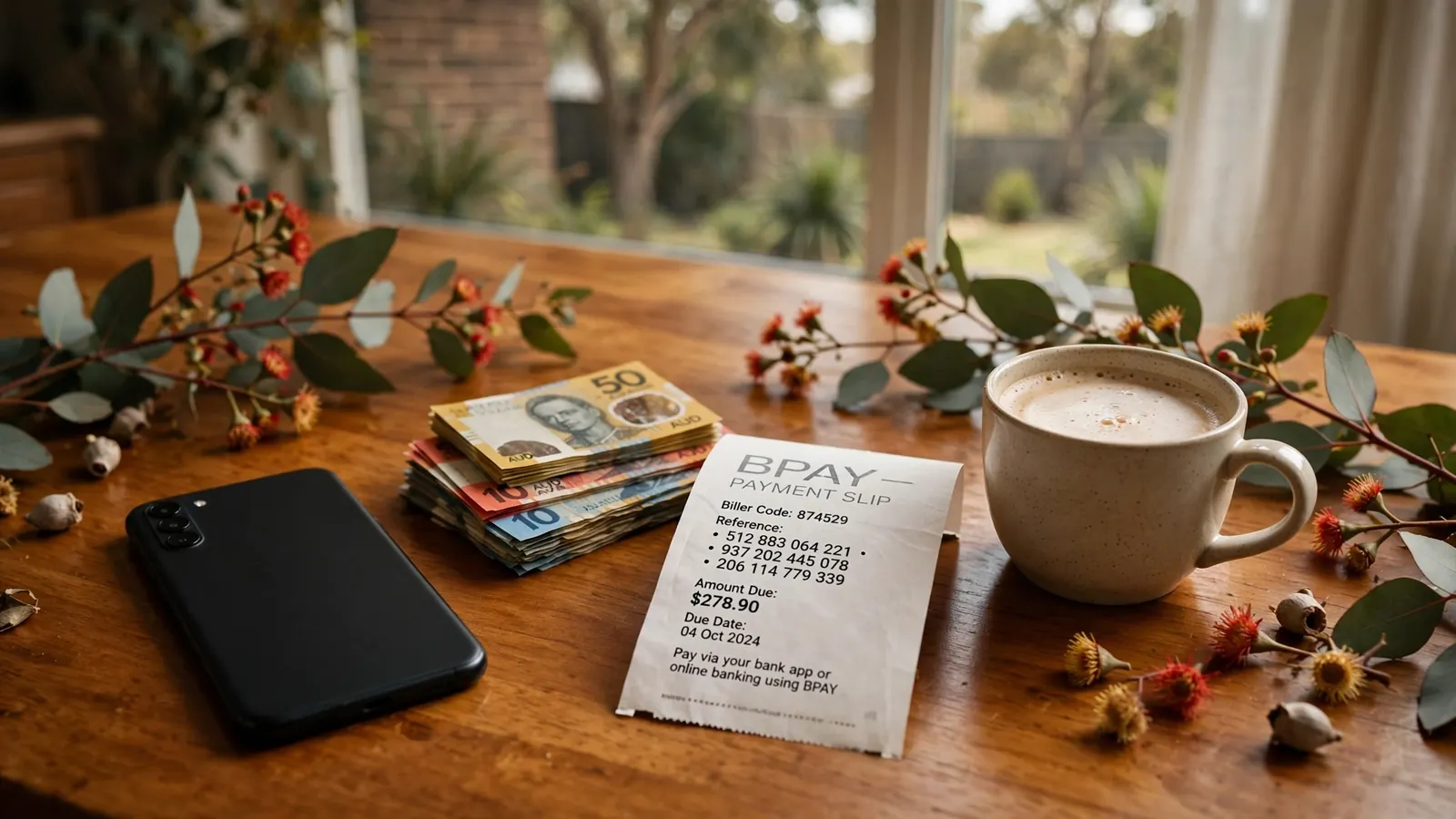
BPAY is the specific point at issue, not a label that can be attached to a casino merely because it offers online payments. That distinction matters: a familiar payment name and a confirmed cashier option are different things, and treating them as interchangeable would turn a question into an unsupported claim.
Payment methods are not universal features of an operator. Their availability can depend on the individual casino and may change. Even information about another method cannot establish that BPAY is accepted. American Express provides a useful contrast: a specialist review has reported deposits by Amex at some Australian online casinos, but that does not make the same claim true of BPAY, nor does it establish a fixed list of operators. The method has to be considered on its own terms.
The limits attached to Amex deposits and withdrawals are also set by individual casinos and can vary, according to that specialist review. That is a reminder that payment information has more than one layer: a method might be mentioned in a general description, while its actual availability and conditions remain operator-specific. Familiarity with a payment brand settles none of those details.
BPAY availability can vary between casino sites, so check the cashier’s current payment options before signing up. This list offers a concise reference to the operators and the specific details available for each.
Roby Casino
Roby Casino is listed with a Curaçao eGaming licence held by Roby Games Ltd.
DragonSlots Casino
DragonSlots Casino is listed with a Curaçao Gaming Authority licence held by Jumpman Gaming Ltd.
Thor Casino
Thor Casino is licensed in Curaçao by Antillephone N.V. for Versus Odds B.V. Its minimum deposit is EUR 20.
7Bit Casino
7Bit Casino is operated by Dama N.V. in Curaçao.
Golden Pokies
Golden Pokies is listed with a Curaçao licence.
Rollero Casino
Rollero Casino is licensed by the Curaçao Gaming Control Board under OGL/2023/176/0095, with Hollycorn N.V. as operator.
MrPacho
MrPacho lists crypto payouts in 30–120 minutes and fiat payouts in 24–72 hours. Its minimum deposit is A$30.
Kingmaker
Kingmaker lists crypto payouts at around 90 minutes and fiat payouts in 1–5 days. Its minimum deposit is A$30.
JustCasino
JustCasino is listed with a Curaçao Gaming Control Board licence.
WinSpirit Casino
WinSpirit Casino is listed with a Curaçao eGaming licence, OGL/2024/923/0383, issued by Antillephone N.V. Its minimum deposit is A$30.
BPAY should therefore not be presented as a working cashier option without a basis for saying so. A casino’s general payment page, a reference to bank-linked services, or a discussion of another card does not by itself establish BPAY acceptance. Nor does an answer about deposits automatically answer questions about other transaction types. The name of a payment method is not a complete account of how it is used.
This is a small distinction with practical weight. Payment claims can sound definite while quietly shifting from “this method exists” to “this operator accepts it”. The first proposition does not prove the second. A page about casinos that accept BPAY would need to make the operator-level connection explicit; without it, naming casinos would suggest a certainty the claim cannot carry.
It concerns a particular card method and acknowledges variation between individual casinos. The same restraint applies in reverse: the absence of a BPAY claim says nothing about what a casino may accept through other methods. One method cannot stand in for another.
That leaves the BPAY question distinct from the broader subject of casino payments. The reported Amex information can be described with its limits intact; BPAY cannot be treated as confirmed merely by association. In payment matters, precision is less glamorous than a list. More useful, too.
Payment habits are shaped less by a national affection for one instrument than by the quiet ease of moving between them. In Australia, contactless credit and debit cards are accepted almost everywhere. A small purchase can be settled with a tap, without turning the payment into a ceremony. The card remains present, but the gesture has become nearly invisible.
Mobile wallets have followed a similar path. Google Pay and Apple Pay are accepted almost everywhere too, putting a card’s credentials behind a phone or other compatible device. The object used to pay changes; the underlying comfort with familiar, bank-linked payment routes does not. Convenience here is not a novelty but a habit repeated until it stops attracting attention.
Consumers are also comfortable switching among cards, mobile wallets and services linked to banks, including PayPal. That flexibility is ordinary rather than contradictory. People may use one method for a daily purchase and another for a different kind of transaction, guided by what is available and what feels familiar. A payment culture can be varied without being especially adventurous.
That broader pattern matters when a cashier presents a payment choice, but it cannot settle the question of what a particular service accepts. Everyday contactless use does not mean that every online business offers cards or wallets, and familiarity with bank-linked services does not establish that a casino supports BPAY. A method’s place in ordinary Australian life and its availability at an individual cashier are separate things.
BPAY belongs in that distinction: a name associated with payment does not, by itself, show that it can be used for a casino transaction. The relevant detail is not whether Australians can move between payment types in general, but whether a specific operator lists a method for the transaction in question. Broad habits provide context, not a cashier’s menu.
There is a small social history in the shift from cards to phones and back again: payment methods change their clothes, while the expectation of a familiar route remains. That expectation can make a method seem universally available when it is not. Familiarity is not acceptance.
The phrase “Australian online casino” can sound like a description of a local service. Legally, it is not that simple. Under the Interactive Gambling Act 2001, operators are prohibited from offering real-money online casino games to people physically located in Australia. That includes casino-style games such as poker, blackjack, roulette and pokies. The law draws its principal line around the provider’s conduct, rather than treating an offshore website’s availability as evidence that the service is lawful.
The distinction matters because a website can be accessible without being authorised to provide its service in Australia. An operator’s overseas location, foreign licence or Australian-facing language does not displace the domestic rule. Nor does a payment option, mobile layout or label such as “Australian casino” settle the question. Those details describe how a service presents itself; they do not alter the prohibition on supplying real-money online casino games to people in Australia.
The boundary is not always intuitive. The internet gives a service the appearance of being everywhere and nowhere at once, while the law still asks who is providing what, and to whom. In this case, the Interactive Gambling Act places the obligation on operators not to offer the prohibited service to Australians. It does not explicitly make an individual player’s use of an offshore casino a criminal offence. That is a difference in legal responsibility, not a declaration that the service is approved or protected.
The Australian Communications and Media Authority, or ACMA, is responsible for enforcing the Act. Its role is not to certify that an offshore casino is safe for Australian customers. Enforcement concerns the law’s restrictions on prohibited services, and access to offshore services may be subject to blocking. A site remaining visible, or a transaction appearing possible, is therefore no reliable measure of compliance. Online access is a poor substitute for legal status.
That point also limits what can be inferred from claims about casino sites that accept BPAY. A payment brand, if displayed by an offshore operator, would not make that operator’s casino service lawful in Australia. Equally, the presence or absence of a particular payment route says nothing by itself about whether a player has recourse if a dispute arises. Payment convenience and legal protection belong to different questions; blending them makes both harder to answer.
For a player using an offshore casino, Australian consumer law does not provide protection. This is a significant gap, not a technical footnote. Domestic consumer protections cannot simply be assumed to travel with an Australian customer onto a service operating outside the local regulatory framework. If a dispute develops over an account, funds or a promised service, the familiar expectation that Australian consumer law will resolve it may not apply. The operator’s location and the legal status of its service matter.
Legal Protection
Under the Interactive Gambling Act 2001, Australian consumer law does not provide protection for players using offshore casinos.
That leaves a practical asymmetry. The operator is prohibited from offering the service to people in Australia, while the Act does not explicitly criminalise the player for using an offshore site. But the absence of player criminal liability is not a consumer guarantee, nor does it turn an offshore casino into a locally supervised business. It is possible for a person not to face a particular legal penalty and still have little meaningful protection in a commercial dispute. Those are separate propositions.
Australian rules also resist a common shortcut: treating a foreign licence as if it were an Australian licence. A licence issued elsewhere may describe the operator’s position under another jurisdiction’s law, but it does not override the Australian prohibition. The relevant question is not whether a website can display regulatory language, but whether it may lawfully provide real-money casino games to people physically in Australia. Under the Act, it may not.
The result is a narrow but important legal picture. ACMA enforces the Interactive Gambling Act; operators are prohibited from providing real-money online casino games to Australians; and players using offshore casinos are not protected by Australian consumer law. The player’s position under the Act is not the same as the operator’s, but neither should be mistaken for an endorsement. A site’s availability, branding or cashier options cannot supply the protection that domestic consumer law withholds. The border remains.
An Amex deposit, where a cashier offers that option, follows a simple sequence: the card is selected as the payment method, its details are entered, the amount is stated in Australian dollars, and the transaction is submitted. The displayed currency matters. An amount entered in AUD does not by itself establish that the card account will be charged in AUD; the account’s currency and the payment’s processing currency can differ.
Descriptions of Amex casino deposits say that funds are credited instantly after a successful payment. That refers to the deposit being processed, not to every part of a transaction being immediate: a card issuer may still need to authorise it, and the amount shown on a casino balance is not the same thing as a settled card statement. “Instant” is a narrow promise about processing, not a synonym for cost-free or unconditional.
Charges are less uniform. A specialist review describes Amex deposits as generally fee-free, while also noting that charges depend on the casino and that fees may arise on withdrawals. That is not a standing rule for every operator or card. A separate specialist review reports a possible casino surcharge of 1.5% on Amex transfers. The figure should be treated as a specific reported charge, not a market-wide tariff: payment terms can differ, and a charge may be presented by the casino rather than by the card issuer.
Potential Amex Charges
Reported costs include a possible 1.5% casino surcharge and a 3% currency conversion fee.
Currency conversion introduces another layer. A specialist review reports a 3% conversion fee for Amex cards. Such a cost is relevant when the transaction is converted between currencies, rather than merely because a deposit amount is displayed in AUD. The cashier’s currency label and the card account’s billing currency therefore answer different questions. A payment can be entered in Australian dollars yet still involve conversion elsewhere in the chain, depending on how it is processed and how the card account is denominated. The reported percentage is not a universal charge applicable to every Amex transaction.
The distinction between a casino surcharge and a conversion fee is easy to lose in the small print. One may be attached to the operator’s handling of a transfer; the other relates to currency exchange. If both apply to a particular payment, they are separate costs, not two descriptions of the same fee. Conversely, neither should be assumed simply because Amex is the method selected. The relevant terms are those attached to the actual transaction and card account.
This is why the word “free” can mislead when detached from its setting. A deposit may carry no stated casino fee while still being exposed to a conversion charge, or an operator may set a surcharge of its own. The available descriptions do not establish one fee structure shared by all casinos. They point instead to conditions that vary: the payment method, the currencies involved and the operator’s own terms. A single headline about fee-free deposits cannot settle those details.
The cashier is where the payment path becomes concrete: method, card information, amount and currency are brought together before submission. But the amount entered is only one part of the eventual cost. Authorisation, currency conversion and any operator-imposed surcharge can sit at different points in the process, and the labels used for them are not interchangeable. A displayed AUD amount is useful information; it is not, by itself, a guarantee about the final card-account debit.
For Australian residents, this payment description should not be mistaken for an endorsement or an invitation to use an offshore casino. The legal boundary remains the one applying to operators providing real-money online casino services in Australia. Financial mechanics do not alter that boundary. Nor does a familiar card brand settle whether a particular transaction is available or what it will cost.
The practical distinction is modest but important: an Amex deposit can be described as a cashier transaction entered in AUD and processed instantly when successful, while its total cost remains conditional. Reported charges include a possible casino surcharge and a currency-conversion fee, but those figures belong to particular source accounts, not to a universal schedule. Speed is the easy part. Fees are not.
A comparison between Visa and American Express is a comparison of reported reach, not a stable league table. A specialist review suggests Visa may be accepted by more Australian-facing online casinos than Amex. That is a qualified observation, not a universal rule: a casino’s cashier can support one card network and exclude another, and its available methods can change.
Reported by specialist reviews to be accepted by more Australian-facing online casinos.
Acceptance is reported as less consistent, with some online casinos excluding the method.
A separate specialist review reports that some online casinos do not accept Amex. Taken together, those accounts point to a practical distinction: Visa may have wider reported availability, while Amex acceptance is less consistent. Neither statement establishes that every casino takes Visa, or that Amex is absent from most of them. The evidence is too limited for either conclusion.
That modest comparison can matter more than a grand ranking. A payment logo shown on a general information page does not establish that the method is enabled for every customer or transaction. The cashier is the relevant place to see which options an individual operator presents, though the appearance of a card network there is not a promise that a payment will succeed.
Nor does a broader footprint make one card inherently preferable. Acceptance is only one part of a payment arrangement, and the same brand can be treated differently by separate casinos. The operator sets its own available methods; the card issuer may also have its own restrictions. A familiar name is not a universal pass.
There is a further boundary to keep clear. Comparing the reported acceptance of card networks does not turn an offshore casino into a lawful local service, nor does it amount to a recommendation to use one. Australian law prohibits operators from providing real-money online casino games to people in Australia, and Australian consumer law does not protect people who use offshore casinos. Payment availability and legal status are separate questions.
For that reason, a claim that a site accepts Visa or Amex should be read narrowly: it concerns a reported payment option, not the site’s standing, reliability or suitability. It also says nothing about BPAY. A card comparison cannot fill gaps in evidence about another payment method, however familiar that method may be in everyday banking.
No ranking follows. The most that can responsibly be said is that specialist reviews describe Visa as potentially more widely accepted than Amex, while also reporting casinos that exclude Amex. The operator-by-operator picture remains variable. Less certainty, more precision.
Payment and game selection belong to different parts of an online gambling service. A cashier handles the movement of funds; a catalogue is assembled and presented by the operator. The presence of a payment brand in one part of an interface would not, by itself, show that particular games can be accessed through that method. Money does not carry a menu.
That distinction matters when BPAY is mentioned alongside casino games. The phrase can make it sound as though a payment method unlocks a special set of titles, or that individual games have their own payment routes. Those are separate ideas. A payment channel concerns how an account is funded; the catalogue concerns what the operator makes available. Neither function logically determines the other.
Nor does a cashier entry settle every question about a financial transaction. Before handling financial activity, online casinos commonly ask customers to complete identity checks known as Know Your Customer, or KYC, assessments. That step concerns a customer’s identity and account, not the contents of a game catalogue. Payment access, identity verification and game availability are distinct layers, even when an interface places them close together.
The wording of a payment option can therefore carry more weight than it deserves. A method may be discussed as a way to move money, but that does not imply that it applies to every part of a service, or that it is tied to any particular form of entertainment. The same care is needed in reverse: a catalogue entry says nothing about the cashier’s available methods.
This is a small distinction with practical consequences. Searching for a payment label beside a game name can blur a financial question into a content claim. Yet a game title cannot establish how deposits work, and a payment label cannot establish what is offered. They answer different questions.
In Australia, that separation also sits within a wider legal boundary: online casino services are prohibited for operators when provided to people in the country. A discussion of payment terminology should not be mistaken for an invitation to access such services. The interface may make its parts look like one seamless product. The rules, and the functions behind the buttons, are not seamless at all.
A payment option appearing in a cashier does not mean every transaction will pass. With Amex, a decline may occur at more than one point: the card issuer may block gambling-related payments, or Amex may block payments to a particular website. The first is a decision at the bank level; the second is tied to the destination.
Australian banks may block gambling transactions made with Amex cards. That can leave a cardholder facing a refusal even where the payment method is displayed as available. The cashier’s menu describes what the site can present, not necessarily what the issuing bank will authorise. Familiarity is not permission.
A specialist review also reports that Amex may block payments to a particular website. That account concerns a specific provider-level restriction, not a universal rule for every card or site; payment policies can change. A failed transaction therefore does not, by itself, establish that Amex is unavailable everywhere, nor that the bank has imposed a general gambling block. The visible outcome may look identical. The reason may not be.
This distinction matters when the search is for a casino that accepts BPAY. A card decline says nothing reliable about whether BPAY is offered, and a payment method’s presence in a cashier does not prove that another method is supported. These are separate arrangements, even when the same deposit screen places them side by side.
The practical boundary is simple: an attempted Amex payment can be stopped by the issuer or by Amex’s restriction on a particular website. Neither explanation should be stretched into a claim about every Australian bank, every casino, or BPAY itself. In a market where payment labels travel more easily than clear explanations, the refusal may tell less than it appears to. A quiet failure.
A card can be accepted when money goes into an account and still be unavailable when money comes out. That distinction matters with Amex: casino withdrawal rules may differ from deposit arrangements, so the card’s presence among cashier options does not, by itself, establish that winnings can be returned to it.
Amex Withdrawal Process
Prior Deposit
A successful deposit using American Express must have been made previously.
Request Submission
A withdrawal request is submitted via the cashier, subject to operator permit.
Clearance Period
Funds are processed, with a reported clearance period of up to five days.
A prior Amex deposit is a stated condition for making a casino withdrawal through Amex. In other words, the route out is tied to having used the same method on the way in. That requirement makes the transaction history relevant: a person who has not deposited with Amex cannot assume that an Amex withdrawal will be available simply because the card is otherwise accepted.
The rule has a certain administrative neatness. Payment systems prefer a traceable route; the player, meanwhile, may discover that a familiar card is not a universal key. The direction of the money changes the question.
Even where the prior-deposit condition is met, availability is not assured. A specialist review reports that some casinos may not permit winnings to be withdrawn to Amex, while others may attach an additional withdrawal fee. These are separate limits: one concerns whether the destination is allowed at all, the other what may be charged if it is. Neither should be mistaken for a rule applying uniformly across operators.
That variability makes the cashier’s withdrawal terms more important than the card logo. An Amex option for deposits cannot be treated as a promise about withdrawals, and a successful deposit does not settle the later question of where winnings may be sent. The route may close.
The timing also differs from the quickness commonly associated with card payments at the point of purchase. A specialist review gives a clearance period of up to five days for casino withdrawals using Amex. This is a reported timeframe, not a guarantee that every withdrawal will clear within it. It does, however, make one thing clear: “instant” describes neither the whole process nor the movement of winnings merely because a card was used to fund an account.
A withdrawal involves a different decision from a deposit. The cashier may accept funds in one direction while applying another rule to money leaving the account. That asymmetry is easy to overlook when payment methods are presented as tidy icons, each apparently offering a complete circuit. In practice, the entry point and exit route can be governed separately.
Possible charges deserve the same distinction. A specialist review notes that an additional fee may apply to an Amex withdrawal at some casinos. The amount is not established as a universal charge, and the possibility should not be inflated into a market-wide tariff. Nor does the existence of a fee mean that every withdrawal is charged. The relevant point is narrower: the withdrawal terms can include a cost that is absent from the deposit side.
For anyone comparing payment arrangements, the useful unit is therefore not simply “Amex accepted.” It is the full sequence: whether an Amex deposit has been made, whether the casino permits an Amex withdrawal, whether a fee applies, and how long clearance may take. Those conditions answer different questions. A payment method can be convenient at entry and restrictive at exit.
This is why a withdrawal should not be imagined as a deposit played backwards. The earlier transaction may satisfy a prerequisite, but it does not guarantee eligibility, remove a possible fee or make clearance immediate. The process has its own terms, and the apparent symmetry of a card transaction conceals that fact. A small icon can carry a large qualification.
The most cautious reading is also the most exact: Amex withdrawals are reported as requiring a previous Amex deposit; some casinos may not offer them or may charge an extra fee; and a specialist review places clearance at as long as five days. These conditions describe reported arrangements, not an assurance about any particular cashier. The card’s role in a deposit is only the beginning of the story.
A payment method can work in one direction and fail in the other. A cashier that accepts a deposit method does not, by that fact alone, establish that winnings can be returned through it. The distinction matters because depositing and withdrawing are separate functions, governed by the operator’s payment rules.
Amex illustrates the mismatch. A specialist review reports that not all Australian online casinos allow withdrawals to Amex. It also notes that some may refuse Amex payouts or apply an additional withdrawal fee. These are reported conditions, not a rule that applies to every operator; the policy can differ between casinos.
That leaves a practical gap between funding an account and receiving money from it. If a casino accepts Amex for deposits but does not permit Amex withdrawals, the payment method cannot complete both sides of the transaction. A separate payout route may be required, subject to the casino’s own terms and eligibility checks. The deposit option alone does not settle that question.
The same distinction applies to BPAY. A BPAY deposit facility, if offered, would not by itself prove that winnings could be paid out by BPAY. Deposit and withdrawal availability need to be treated as separate claims. A familiar method name is not a payout policy.
This is why a payment page can be misleading when it presents a list of deposit methods without clarifying which ones can receive withdrawals. The difference is not merely administrative: it affects what happens after a balance is ready to be paid. For Amex, specialist coverage identifies withdrawal restrictions and possible extra charges; it does not establish a universal arrangement. For BPAY, the name of the method alone cannot establish a withdrawal route.
Separate rules.
A payment name can feel reassuringly familiar without telling much about what a casino cashier will accept. BPAY’s place in Australian banking, for instance, does not by itself confirm that a particular casino takes BPAY deposits. Nor does a payment option’s appearance on one site establish that it is available elsewhere. Familiarity is not acceptance.
Amex illustrates the same distinction. A specialist review reports that its transaction limits can exceed those offered through Visa or Mastercard, but the limits for deposits and withdrawals are set by each casino and can differ. A higher ceiling, where one applies, is not a standard feature that follows the card from one cashier to another.
Charges also belong to the terms of the individual service, not to the brand alone. A specialist review describes Amex gambling transactions as free while noting that withdrawal fees may apply; a casino may also impose its own restrictions. Australian banks can block gambling-related Amex transactions at issuer level. A payment method can therefore be recognised in principle and still fail at the point where policy meets a particular account or website.
That is the useful distinction in any claim about BPAY and online casino payments: a method’s broad presence in daily life says nothing conclusive about its availability at a specific cashier. Confirmation would need to come from the operator’s current payment terms, rather than from the name’s familiarity or from assumptions borrowed from another service.
The label is not the arrangement.
Amex deposit and withdrawal limits are set by each casino and can vary. Check the limits shown in the casino’s cashier or payment terms.
Jackpot City Casino, Spin Palace, Ruby Fortune, Ignition Casino, Joe Fortune and PlayAmo are listed as accepting Amex deposits for Australian players. Availability can vary, so check the casino’s cashier.
Yes. Each casino sets its own Amex deposit and withdrawal limits, so check the limits in that operator’s cashier or payment terms.
Amex transactions are generally free, but a casino may charge a 1.5% surcharge, and Amex cards incur a 3% currency conversion fee. Withdrawal fees may also apply depending on the operator.
Amex deposits typically have no fee, though a casino may apply a 1.5% surcharge. A 3% currency conversion fee may also apply to Amex cards.
Look for American Express in the casino cashier’s deposit options. If it is listed, select it and follow the prompts to enter your card details and deposit amount in AUD.
Some casinos do not allow withdrawals to Amex, and a withdrawal generally requires that you previously deposited using Amex. Withdrawals can take up to five days to clear, and fees may apply.