The available evidence cannot support a POLi casino shortlist, and payment availability does not establish that online casino games may be offered in Australia.
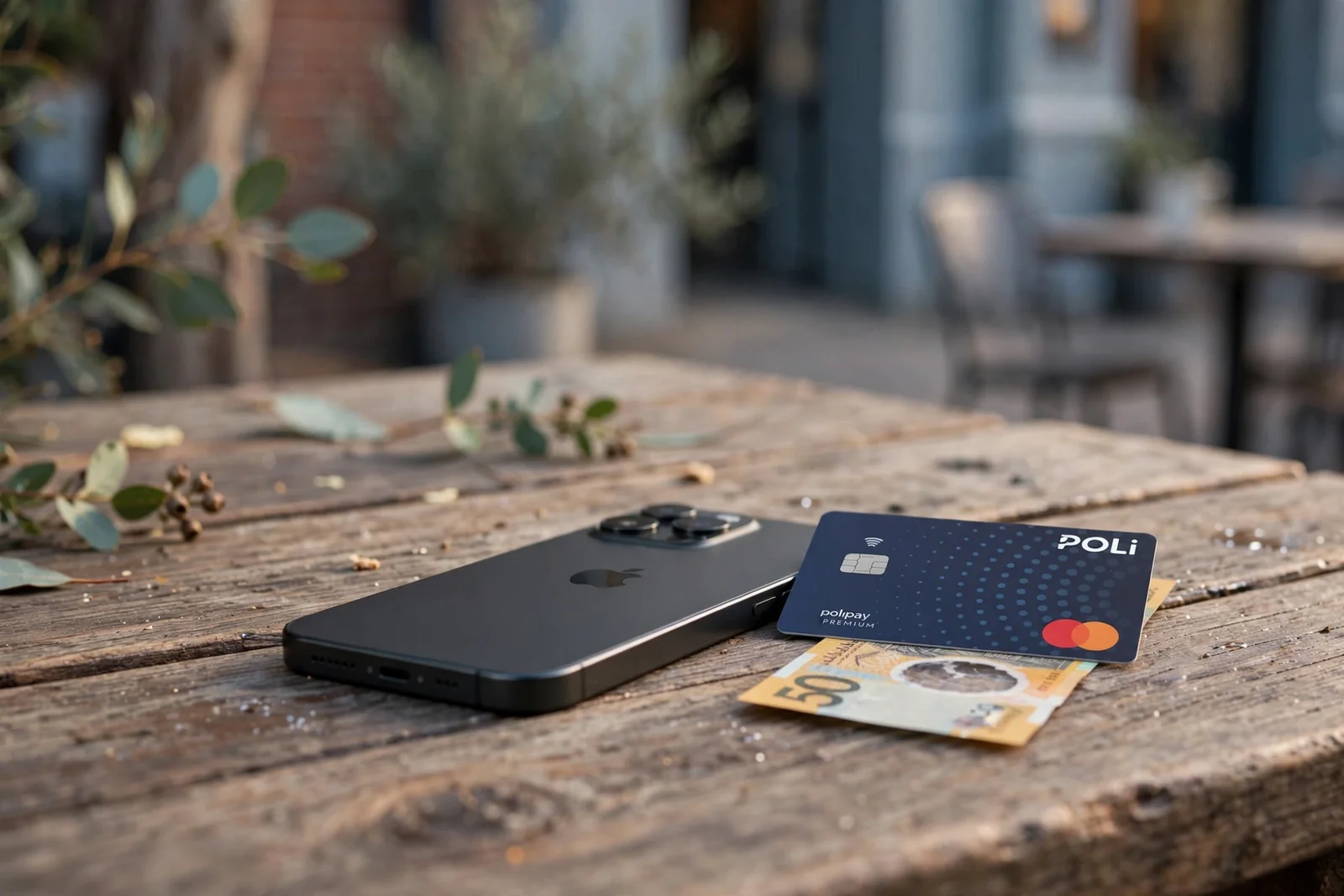
POLi is a recognisable name in Australian online payments, and its appearance beside “pokies” can make the two seem like a settled pairing. They are separate questions, though: whether a service accepts a particular payment method, and whether that service may lawfully offer online casino games to people in Australia. A familiar payment brand does not answer either question on its own.
No particular online casino or pokies service can be identified here as accepting POLi. That is not a reason to turn a guess into a recommendation. Names and payment logos can circulate in promotional material, but a claim about acceptance needs to be tied to a specific operator and current terms. Even then, a payment option would not establish that the casino’s underlying service is lawful for people in Australia. The cashier and the law are not the same thing.
The legal setting is unusually important to this subject. Under the Interactive Gambling Act 2001, operators are barred from providing online casino games to people in Australia. The Act places the prohibition on the operator’s offer of the service; it does not explicitly make an individual player’s use of an offshore site a criminal offence. That distinction can be mistaken for approval. It is not. A lack of explicit criminal liability for players does not turn an offshore casino into an authorised Australian service.
Poli availability can vary by casino and may change, so check the payment options shown for your account before depositing. This list gives a concise reference to the information available for each operator.
Roby Casino
Roby Casino is listed with a Curacao eGaming license held by Roby Games Ltd.
DragonSlots Casino
DragonSlots Casino is listed with a Curacao Gaming Authority license held by Jumpman Gaming Ltd.
Thor Casino
Thor Casino is listed with a Curacao license from Antillephone N.V., with Versus Odds B.V. named as the operator. Its minimum deposit is EUR 20.
7Bit Casino
7Bit Casino is listed as operated by Dama N.V. under a Curacao license.
Golden Pokies
Golden Pokies is listed with a Curacao license.
Rollero Casino
Rollero Casino is listed with a Curacao Gaming Control Board license, OGL/2023/176/0095, held by Hollycorn N.V.
MrPacho
MrPacho lists crypto payouts at 30–120 minutes and fiat payouts at 24–72 hours. Its minimum deposit is A$30.
Kingmaker
Kingmaker lists crypto payouts at around 90 minutes and fiat payouts at 1–5 days. Its minimum deposit is A$30.
JustCasino
JustCasino is listed with a Curacao Gaming Control Board license.
WinSpirit Casino
WinSpirit Casino is listed with a Curacao eGaming license, OGL/2024/923/0383, from Antillephone N.V. Its minimum deposit is A$30.
The Australian Communications and Media Authority (ACMA) enforces the Act. Its role concerns the rules governing the supply of these services, rather than conferring local approval on an offshore operator because a website can be reached or a payment screen appears. Access is not endorsement. Nor does the presence of a payment option alter the legal character of the games being offered.
The distinction matters because online casino pages often combine practical details with a tone of ordinary retail choice: a cashier, a payment logo, a button to continue. That visual neatness can make a prohibited service look like a routine local transaction. Yet Australian consumer law does not protect players who use offshore casinos. The interface may be polished; the protections are not thereby imported with it.
POLi’s presence in Australian life can make it seem like a natural fit for any online transaction. But general familiarity with a payment service says nothing about whether a particular casino accepts it, whether a transaction would proceed, or what terms might apply. Those details cannot be inferred from a brand name, a mobile-friendly page, or a general claim that a site serves Australians. A payment route is not a legal status.
The same caution applies to labels such as “Australian casino” or “Australian pokies”. A site may use Australian language or display Australian-facing content without being an Australian-authorised provider. In this context, the word “Australian” can describe the intended audience rather than the location or legal standing of the operator. It is a small word carrying a large ambiguity.
 Payments and Crypto for Australian Online CasinosExplore Australian casino payment topics, including the listed card, bank, e-wallet, prepaid and cryptocurrency options.
 BPAY at Australian Casino Sites: What Is VerifiedLearn why BPAY claims need casino-specific confirmation, how card acceptance differs, and why deposits and withdrawals may follow different rules.
A mobile site does not change that distinction. A cashier displayed on a phone remains part of the operator’s service, and a POLi option shown there would not settle whether the operator may provide online casino games to people in Australia. Convenience of access is not a substitute for lawful availability. A screen can make a transaction feel local while the legal framework says otherwise.
That leaves a narrow but useful conclusion about POLi: no named online pokies service can be presented as a confirmed POLi option here. Filling that space with a ranked selection would imply both payment acceptance and a suitability that cannot be established. It would also risk making an offshore casino sound like a recommended consumer choice, despite the Australian restrictions and the absence of consumer-law protection for players using such services.
This is not a claim that every website behaves in the same way, or that a payment logo can never appear on a casino page. It is a boundary between what a label suggests and what it proves. A payment method can be familiar; a site can be accessible; neither fact demonstrates lawful provision or confirmed POLi acceptance. The distinction is plain. The consequences are not.
Legal Warning
Under the Interactive Gambling Act 2001, operators are barred from providing online casino games to people in Australia, and Australian consumer law does not protect players using offshore casinos.
A deposit method is more than a logo in a cashier. It is a chain of conditions: whether the option is available, what information a transaction requires, what amount may be entered and whether the payment is accepted. For POLi and online casino deposits in Australia, that chain cannot be described as an established process. No dependable amount, set of cashier steps or general availability can be stated.
That matters when a small deposit is part of the question. A suggested figure in a heading or search phrase does not establish that a casino accepts a deposit of that size, much less that it accepts POLi. Naming an amount without an operator’s published terms would turn a guess into practical financial guidance. The same caution applies to claims that POLi is available at a particular cashier or across a class of casino sites.
The cashier is where payment options become concrete, but its contents are determined by the operator and can differ from one service to another. A method familiar from other kinds of online payment is not automatically a casino deposit method. Nor does a general claim that a service accepts deposits show whether it supports POLi, what steps it uses, or what limits attach to the transaction. Those are separate details, and each needs confirmation from the relevant operator before it can be stated.
 Casinos That Accept Tether (USDT) in AustraliaLearn how to check whether an online casino accepts Tether, what the TRC20 question means, and how offshore play differs in consumer…
 Casino Sites and Osko in Australia: What Is VerifiedLearn why references to bank transfers do not verify Osko availability, and what cashier details would be needed to support a casino…
There is a further distinction between an advertised payment option and a completed transaction. A cashier may list a method, while the payment can still depend on the account, the issuer or the operator’s conditions. Without reliable, current terms for a named service, it would be misleading to describe a POLi deposit as a routine sequence—selecting an option, entering an amount and submitting payment. That would suggest a process whose details have not been established.
The silence around specifics is not a technicality. Depositing involves money, and a reader may use a stated minimum or a described sequence to decide whether an account is usable. An invented minimum could prompt a failed transaction; an invented cashier route could send someone looking for an option that is not there. General wording cannot repair that problem. “Low deposit” and “easy payment” are not useful substitutes for confirmed terms.
A separate requirement is often part of opening an account’s financial functions: online casinos typically ask customers to undergo a Know Your Customer assessment before they can make financial transactions. This is an identity-checking step, not a POLi instruction. It does not establish that POLi is accepted, set a deposit amount, or explain how a payment would be sent. Keeping those questions apart prevents an account verification requirement from being mistaken for evidence about a particular cashier method.
The distinction also clarifies why being able to pass identity checks does not settle the deposit question. Verification concerns who is conducting the transaction; payment acceptance concerns how funds can be moved and which methods an operator makes available. One does not answer the other. A customer might complete an identity assessment and still have no basis for assuming that a given payment method appears in the cashier.
Likewise, a cashier’s general function does not prove that every familiar bank-linked payment service is available there. Payment names can travel easily between contexts: a method used for ordinary online purchases may be assumed to work for gambling, and a method that works at one operator may be presumed to work elsewhere. Neither inference is sound without specific terms. Familiarity is not acceptance.
The phrase “POLi deposit” can therefore cover several different claims: that an operator supports POLi at all, that it is available to Australian users, that a particular amount is permitted, and that the transaction follows a particular route. These claims should not be compressed into a single assurance. Each would need current, operator-specific confirmation, and none should be inferred from the wording of a search or from a payment method’s presence in another setting.
A cashier should not be described as offering a method merely because the method is familiar.
For anyone comparing payment arrangements, the useful boundary is plain. KYC concerns identity before financial activity; a deposit method concerns the operator’s payment arrangements. They are related only in the broad sense that both can affect whether a transaction proceeds. They are not interchangeable evidence.
A shortlist of casinos that accept POLi would need to establish a specific, current fact about each operator: that POLi is offered as a payment option for Australian customers. A name on a list is not a neutral ornament. It implies that the payment route has been checked and that the operator can be compared with others on that basis. Without that confirmation, ranking sites as “best” would turn an untested claim into advice.
 PayID and Australian Casinos: What Payment Menus ProveLearn why PayID availability cannot be confirmed from the evidence, and how Australia’s Interactive Gambling Act separates payment routes from casino legality.
 Cashtocode Casinos in Australia: What the Evidence ShowsThe article separates payment acceptance from legality, explains what the Interactive Gambling Act 2001 says, and why a 2026 search cannot confirm…
Payment methods cannot be treated as interchangeable badges. An operator’s acceptance of Amex, for instance, does not establish that it accepts POLi. The two services have different payment arrangements, and one cannot be used as a proxy for the other. A specialist review may discuss Amex deposits or withdrawals at particular casinos; that information remains specific to Amex. It does not establish POLi availability, transaction conditions, or suitability for a POLi-focused ranking.
That distinction can be easy to lose in the compressed language of online comparisons. A page may group several payment options under a general heading, or describe a site as accepting “bank payments” without identifying the route involved. But a broad category is not proof that a named service is supported. Nor does a casino’s general availability to Australian users establish what appears in its cashier. The claim has to be about POLi itself.
“Best” adds another layer of judgement. A meaningful comparison would require consistent information about acceptance, as well as criteria for deciding what makes one option better than another. A list based on unrelated payment details would not answer the practical question. It would merely place operators beside a POLi label that those details do not justify.
The same problem applies to claims about instant withdrawals. A deposit method and a withdrawal method are not automatically the same thing, and a stated processing time for one payment service cannot be transferred to another. Amex-related timing, where reported, says nothing about the speed of a POLi withdrawal. Calling a site an instant POLi withdrawal option would therefore make two unsupported leaps: that POLi is accepted and that withdrawals through it meet the promised timing.
Attention A casino's acceptance of one payment method, such as Amex, does not establish that it accepts POLi or that the same transaction conditions apply.
There is a quieter problem with lists, too. Once a site has been named as a recommended POLi destination, readers may reasonably assume that the claim has been checked against the operator’s current payment arrangements. Payment options can change, and a comparison that does not identify its basis can outlive the conditions it was meant to describe. A ranking may look precise while concealing the fact that its central category has not been established.
The surrounding operator comparisons serve a different purpose. A site’s overall attributes, or its acceptance of a different payment method, cannot be taken as evidence that it accepts POLi. Keeping those questions separate is not pedantry; it prevents a neighbouring detail from being mistaken for confirmation. A neat table can make a weak inference look official. Neatness is not proof.
For the same reason, no operator can responsibly be placed at the top of a POLi casino ranking here. That is not a claim that no casino accepts POLi, nor a claim that POLi can never be used for gambling transactions. It is a narrower point: a particular operator’s POLi acceptance must be established on its own terms before a shortlist can name it. Without that step, the list would be a guess presented in the dress of a comparison.
The honest boundary is plain. Amex-specific payment information belongs to Amex; it cannot carry a POLi claim across the gap. A casino shortlist built on that substitution would answer a different question from the one its heading promises. No shortlist, then.
 Casinos That Accept Visa in Australia: Legal ContextThe Interactive Gambling Act 2001 prohibits operators from providing real-money online casino games in Australia. Learn why Visa acceptance does not change…
 Skrill Casino Sites in Australia: Legal and Payment FactsLearn how Australia’s Interactive Gambling Act treats online pokies, what Skrill availability can establish, and why payment options do not prove legality.
“Instant withdrawal” sounds like a single, measurable feature. In practice, it is a claim that needs to identify the payment method and explain what the stated speed covers. A casino’s handling of a withdrawal and the time taken for funds to arrive are not necessarily the same thing. Without method-specific information, the word “instant” is more advertisement than timetable.
That distinction matters when POLi is part of the question. It would be misleading to describe POLi as a way to make an instant withdrawal, or to promise that a real-money casino will send winnings through it. The same caution applies to claims about newer POLi pokies: a new label does not establish that a particular payment method is supported.
The processing-time detail that can be described concerns Amex, not POLi. A specialist review reports that an Amex casino withdrawal may take up to five days to clear. That is a reported upper timeframe for that card method, not a general benchmark for Australian casinos and not a basis for estimating how a POLi payment would move. Different methods cannot be treated as interchangeable simply because they appear in the same cashier.
Nor does the Amex detail establish that every casino accepts Amex withdrawals. Some casinos may not return winnings to that card, and a specialist review notes that an additional withdrawal fee may apply. These are method-specific qualifications, not a template for POLi. Transferring them across would turn one payment’s terms into another’s fiction.
Specialist reviews report that casino withdrawals to Amex may take up to five days to clear and may incur additional fees; these terms are specific to Amex and not a benchmark for POLi.
The language of speed can also blur what is being measured. “Instant” might refer to an initial approval, an operator’s internal handling, or the time until money becomes accessible. Without a clear description, those meanings collapse into one appealing adjective. A precise claim would need to state what stage it covers and which payment route it concerns.
A request for instant POLi withdrawals therefore cannot be answered with a reliable duration or a named casino. Familiarity with a bank-linked payment service does not prove that an online casino accepts it for deposits or withdrawals.
The distinction is especially important around real-money play. A fast-sounding payment description does not establish that a casino is available to Australian residents, or that a withdrawal will be permitted. Nor does searching for a no-deposit offer change the payment evidence: an offer and a withdrawal route are separate claims, each requiring its own terms. A promotional label cannot supply a missing processing time.
Speed belongs to the specific transaction, not to a payment name in isolation. Amex information stays with Amex. POLi should not inherit its timeline.
A payment method and the legality of the service accepting it are separate matters. In Australia, the Interactive Gambling Act 2001 places the legal restriction on operators: providing real-money online casino games to people in Australia is prohibited. The rule covers casino-style play such as poker, blackjack, roulette and pokies. A cashier displaying a familiar payment option would not change that legal position.
 Litecoin casinos in Australia: access and legal limitsUnderstand how Australia’s online casino rules apply to Litecoin, why the coin changes no legal boundary, and ACMA’s enforcement role.
 Bitcoin Cash Casinos in Australia: Legal and Payment GuideLearn how Australian rules treat offshore crypto casinos, what BCH transfers involve, and why the Interactive Gambling Act 2001 focuses on operators.
The distinction between operator and player matters. The Act does not explicitly make an individual player’s use of an offshore casino a criminal offence. That is not the same as approval, a guarantee of access or a sign that the service is protected under Australian rules. Offshore casino services are not lawful offerings to Australian residents simply because a person can reach a website or attempt to use it.
Enforcement sits with the Australian Communications and Media Authority, which administers the Act’s restrictions. Authorities actively enforce the framework, including measures to block access to prohibited services. Advertising real-money online casinos to Australian audiences is also prohibited. The law is therefore not a quiet licensing system in which foreign operators can obtain a local casino licence and advertise freely. It restricts the services themselves.
There is another practical consequence: Australian consumer law does not protect people who use offshore casinos. If a dispute arises over an account, a payment or winnings, the protections available for domestic consumer transactions cannot simply be assumed to apply. The absence of criminal liability for the player does not supply a substitute remedy. A narrow legal distinction, not a safety net.
That context is relevant to searches for casinos accepting POLi, but it cannot establish that any casino accepts the service. Nor does it turn a payment route into a lawful casino offering. The law addresses the provision of online casino games to people in Australia; it does not certify a cashier option, endorse a foreign operator or resolve whether a particular transaction will be accepted.
The Australian approach reflects a choice about who bears the central legal burden: operators are barred from offering these games to people in the country, while the Act does not explicitly criminalise players for using offshore sites. Those two points can coexist, even if they are often blurred in casual descriptions of online gambling rules. The distinction is easy to lose when a website looks ordinary and a payment screen seems routine. Appearance is not legal status.
For Australian residents, a POLi label, a foreign licence or a functioning website should not be read as evidence that an online casino is authorised under Australian law. The legal framework is restrictive, enforcement is active, and consumer protections do not extend to offshore casino use. These are questions of law and risk, not a guide to finding or using an offshore gambling service.
A game and a way to pay belong to different parts of a casino’s operation. A title may describe the entertainment on offer; a payment method describes how a transaction is handled. Putting the two together in a phrase does not establish that the method can fund play, or that any particular game is connected to it.
That distinction matters with POLi. There is no substantiated basis for saying that casino games can be played using POLi, or that POLi is accepted as a casino payment method in Australia. Nor is there a verified connection between POLi and a particular game category. The wording may suggest a neat pairing, but suggestion is not confirmation.
A cashier’s payment options and a casino’s game catalogue are separate claims, each needing its own support. Even if a service were described as accepting a payment method, that would not show which games it offered, or whether the method applied to every transaction. Conversely, a list of games would say nothing about how a customer could pay. One label cannot do the work of two pieces of evidence.
This is not a merely technical distinction. Payment branding can make an online service sound familiar, while a game name can make it sound specific. Together, they can give an impression of a verified arrangement where none has been established. The Australian setting makes that impression particularly misleading: the presence of a payment name does not amount to an endorsement of an online casino service or change its legal status.
The same care applies to broad claims about payment options. General familiarity with bank-linked services in Australia does not prove that POLi is accepted by a casino. Acceptance must be established for the particular service and transaction, rather than inferred from the method’s presence elsewhere in everyday commerce.
So a reference to games alongside POLi should be read as two ideas placed next to one another, not as proof of a working combination. The distinction is plain, though online labels often blur it: a game is not a payment method, and a payment method does not establish a game offering.
Payment branding and game catalogues are separate operations; a reference to games alongside a payment method does not prove a working combination exists.
Payment habits in Australia are shaped by a retail landscape where contactless cards are part of ordinary commerce. Credit and debit cards can be tapped in almost every corner of daily life, from a quick purchase to a routine household bill. Mobile wallets such as Google Pay and Apple Pay have become similarly familiar. Their convenience has made switching between a physical card and a phone feel less like a choice than a small matter of circumstance.
That ease belongs to general commerce, however, not automatically to every online service. A payment method’s broad presence in shops does not establish that an online casino accepts it. The same distinction applies to POLi: familiarity with bank-linked payments says something about Australian habits, but it does not show whether a particular gambling cashier offers POLi.
Australians are comfortable moving among cards, mobile wallets and services connected to bank accounts, including PayPal. The arrangement reflects a practical payment culture: people use the route that fits the transaction, the device and the account already in reach. There is little ceremony in changing methods. The infrastructure has made choice ordinary.
But ordinary is not universal. A wallet accepted by a local retailer may not appear in an online service’s cashier; a bank-linked service used for other purchases does not become a casino option by association. Payment acceptance is set by each business and its arrangements, not by national familiarity with a method.
This is why the phrase “Australian casino using POLi” carries more certainty than the everyday context can support. Australia’s comfort with digital and bank-linked payments explains why POLi may seem like a natural possibility. It does not, on its own, establish casino acceptance.
A familiar habit is not a receipt.
A casino withdrawal through POLi is a different question from making a deposit through a bank-linked service. A payment option used to send money into an account does not, by itself, establish a route for winnings to travel back. No general POLi withdrawal process can be described as an established feature of Australian-facing casino services.
That distinction matters because withdrawal arrangements are not simply the reverse of deposits. The method used to fund an account may not be offered for payouts, and a casino’s payment options can differ by transaction direction. A claim that a service accepts POLi for deposits is therefore not enough to establish that it pays withdrawals through POLi. The two functions should not be bundled together.
There is a separate, limited point about Amex. A specialist review reports that casino withdrawals to Amex can take as long as five days to clear. The same type of review notes that not every Australian online casino permits withdrawals to Amex. These are Amex-specific statements, not a template for estimating another payment method’s timing or availability.
Amex conditions cannot be carried across to POLi by analogy. The reported clearing period says nothing about POLi, and restrictions attached to Amex do not establish that POLi has the same restrictions—or that it is available for payouts at all. A withdrawal claim needs to identify the payment method and the direction of the transaction precisely. Small distinction, large consequence.
Attention A payment option used for deposits does not automatically establish a route for withdrawals, as these functions are often handled differently by operators.
The phrase “POLi withdrawal” can sound as though the transaction is a familiar counterpart to a POLi deposit. In practice, the wording alone proves nothing about how a particular casino handles winnings. Nor does a general reference to online pokies in Australia establish a POLi payout route. Without a clearly stated operator policy, presenting POLi as a withdrawal option would turn an assumption into a financial claim.
For anyone comparing payment arrangements, the relevant distinction is between a method that may be used to fund an account and one explicitly available for withdrawals. Amex illustrates why those details should be kept separate: even within one method, withdrawal access and processing time are distinct conditions. POLi should not be assigned those Amex terms, or any invented equivalent.
A payment method is not a process in itself. For a casino transaction, the cashier would need to identify POLi as an available option and set out the conditions attached to using it. Without those operator-specific details, there is no sound basis for describing a POLi payment as a working route, or for stating which casino accepts it.
That distinction matters because a familiar payment service does not automatically carry over to every kind of merchant. A casino’s cashier, rather than the name of a service in isolation, determines whether a payment can be made and what terms apply. A label or passing mention would not establish the steps, any fees, or the conditions for a transaction.
Nor can a POLi process be inferred from the general use of bank-linked services in Australia. Everyday familiarity and casino acceptance are separate matters. The difference is small in wording and large in consequence: an assumed payment route can shape decisions about where money is sent.
The legal setting also cannot be set aside when describing casino payments. The Interactive Gambling Act 2001 prohibits operators from providing real-money online casino games to people in Australia. Australian consumer law does not protect players who use offshore casinos. A payment option, if presented by an offshore service, would not make that service lawful or provide local consumer protection.
So a description of paying for casino play with POLi cannot responsibly supply a cashier sequence, transaction conditions or fee claims as though they were established. The point is not that a particular button or procedure is difficult to explain; it is that an operator-specific process must exist before it can be described accurately. Familiarity is not proof.
A promotion tied to POLi would need to be judged by its actual terms, not by the payment method named in its headline. A bonus can carry conditions about eligibility, deposits, expiry, withdrawals or how winnings may be used. Without reliable details for a particular offer, none of those conditions can be described or assumed.
That distinction matters because a payment option and a promotion are separate things. A casino mentioning POLi would not, by itself, establish that a bonus is available to customers using it; nor would a general welcome offer prove that POLi qualifies. The wording on a promotional banner is not a substitute for the applicable terms.
There is also a wider Australian context. The Interactive Gambling Act 2001 makes it illegal for operators to provide real-money online casino games to people physically in Australia. Australian consumer law does not protect people who use offshore casinos. A bonus label does not change either point.
The language of promotions tends to make conditions sound incidental. They are not. A reward may be restricted by rules that affect whether it can be claimed or withdrawn, and those rules matter more than a payment brand printed beside the offer. Where the full terms and the operator’s position cannot be established, a POLi-specific casino bonus should not be treated as an available offer.
No reliable promise can be built from a payment name alone. That is the whole distinction.
Deposit and withdrawal limits are set by each casino and can vary. Check the casino’s cashier or payment terms for its limits; Amex transaction limits are usually higher than those for Visa or Mastercard.
Jackpot City Casino, Spin Palace, Ruby Fortune, Ignition Casino, Joe Fortune and PlayAmo are listed as supporting Amex deposits for Australian players. Availability can vary, and an Amex deposit does not mean the casino is authorised to offer online casino games in Australia.
Amex deposits are typically free, but a casino may add a 1.5% surcharge, and currency conversion can incur a 3% fee. Withdrawal fees may also apply.
Yes. Each casino sets its own Amex deposit and withdrawal limits, so check the relevant cashier or payment terms.
Yes, at casinos that accept American Express, gift cards can be used for deposits only.
Amex deposits typically have no fee, though a casino may charge a 1.5% surcharge. Currency conversion can cost 3%, and withdrawal fees may apply.