In Australia, casino status depends on a licence issued in the state or territory where the property operates.
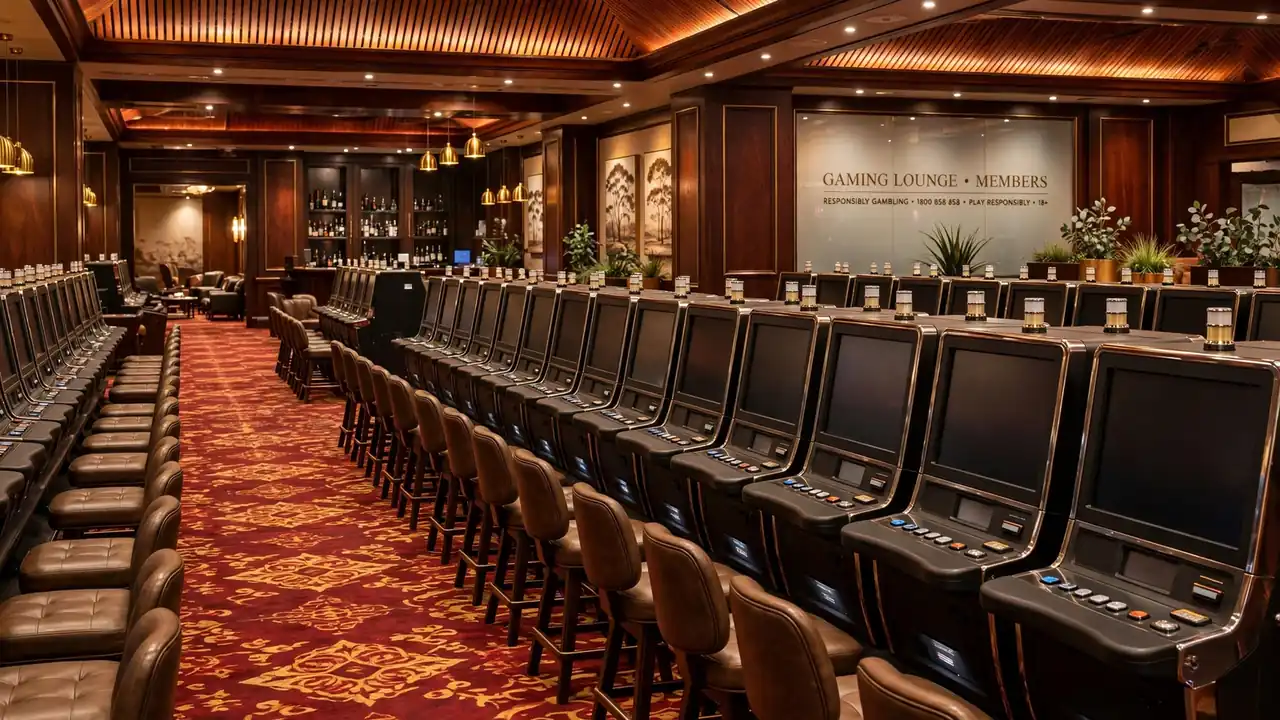
“Pokies parlour” sounds like a distinct kind of venue: a room set apart for electronic gaming, with its own door and identity. In Australia, however, the phrase is better understood as informal language than as a single national category of casino. “Pokies” is the familiar local word for poker machines; “parlour” suggests a dedicated space. Together, the words may describe the atmosphere someone imagines, but they do not replace the legal identity of the place. A casino is a licensed property, governed within a state or territory system.
That distinction matters because Australia does not issue one national casino licence. Each casino operates under a licence granted by the jurisdiction in which the property sits. The arrangement reflects the country’s federal structure: authority over casino venues is held locally, so the rules and oversight belong to the relevant state or territory rather than to a single national casino regulator. The venue’s address is therefore more than a point on a map. It places the property inside a particular licensing system.
Choosing an online pokies destination in Australia calls for checking the details available about each operator, rather than relying on a name alone. This list provides a concise reference to the stated licensing, deposit and payout information for the 2026 topic.
Roby Casino
Roby Casino is listed with a Curacao eGaming licence held by Roby Games Ltd.
DragonSlots Casino
DragonSlots Casino is listed with a Curacao Gaming Authority licence held by Jumpman Gaming Ltd.
Thor Casino
Thor Casino is listed with a Curacao licence from Antillephone N.V., with Versus Odds B.V. named as operator. Its minimum deposit is EUR 20.
7Bit Casino
7Bit Casino is listed as operating under a Curacao licence, with Dama N.V. named as operator.
Golden Pokies
Golden Pokies is listed with a Curacao licence.
Rollero Casino
Rollero Casino is listed with a Curacao Gaming Control Board licence, OGL/2023/176/0095, and Hollycorn N.V. is named as operator.
MrPacho
MrPacho lists crypto payouts at 30–120 minutes and fiat payouts at 24–72 hours. Its minimum deposit is A$30.
Kingmaker
Kingmaker lists crypto payouts at around 90 minutes and fiat payouts at 1–5 days. Its minimum deposit is A$30.
JustCasino
JustCasino is listed with a Curacao Gaming Control Board licence.
WinSpirit Casino
WinSpirit Casino is listed with a Curacao eGaming licence, OGL/2024/923/0383, from Antillephone N.V. Its minimum deposit is A$30.
The phrase can also blur differences between casinos and other places where poker machines may be found. A room with machines is not, by that description alone, a casino; nor does a sign calling a room a parlour confer casino status. In the physical landscape, the defining feature is the licensed property and its jurisdiction, not the decorative language used for an interior or the shorthand used in conversation. A “pokie parlour” may be a useful mental picture, but it is not a substitute for identifying what kind of venue it is.
Australia’s casino sector is substantial, though its precise size depends on how the count is assembled and when it is made. A specialist casino review counts more than 20 full-scale casinos across the country’s eight states. That is a reported tally, not a permanent national register carved in stone. Venues, licences and classifications can change, and a figure assembled by a review should be read as that review’s accounting rather than a timeless definition of the market.
The licensed casino itself is also not simply a room devoted to machines. It is a property with a formal operating status, and the casino floor sits within that larger arrangement. The popular word “parlour” narrows attention to a particular feeling of space: rows of play, the hum of a room, a place organized around staying indoors. The licensing framework, by contrast, is deliberately less atmospheric. It asks which jurisdiction has authorised the property and what responsibilities accompany that licence. One is a picture of a room; the other is the legal skeleton of the venue.
 Best Pokies in Melbourne: Venues, Hours and ChecksLearn how to assess Melbourne pokies listings, from airport distance and “open now” claims to venue hours, room rules and what best-paying…
 Casino Hotels in Melbourne: Rooms and Visit DetailsLearn how to assess casino hotel listings, compare nearby stays and check practical visit details. A casino label alone does not confirm…
That difference can seem fussy until the language starts doing too much work. “Casino parlour” may suggest that every Australian casino has a separately named parlour, or that parlour is a standard class of licensed business. Neither follows from the phrase itself. The country’s casino properties are regulated locally, while the words used to describe their interiors may vary. A familiar label is not a legal instrument.
There is a practical quality to the physical casino landscape that online vocabulary often obscures: these are places with doors, addresses, staff and entry conditions. Major Australian casinos operate around the clock, making them unusual buildings in a city’s daily rhythm. Their all-hours operation does not make them public halls without conditions. Valid photo identification is required for entry to all major Australian casinos, and the minimum age for casino entry is 18 nationwide. The open door is still a threshold.
The word “parlour” carries an older suggestion of a room set aside for a particular social purpose, something between a public space and a private one. In a casino, that atmosphere can be intensified by the separation of the gaming floor from the street outside. Yet the national picture is less romantic and more administrative: a collection of properties, each attached to the authority of its own state or territory. Local licensing is the structure beneath the lights.
So the phrase “pokies parlour casino” points toward a recognisable kind of physical experience, but it does not name a uniform Australian venue type. The clearest description begins with the actual casino property and the jurisdiction responsible for licensing it. The parlour is the room people picture. The licence is what makes the venue a casino.
Entry Requirements
Valid photo identification is required for entry to all major Australian casinos, and the minimum age for entry is 18 nationwide.
A website can load, accept account traffic and present itself as a casino without being authorised to provide online casino games in Australia. Those are facts about access and presentation, not proof of Australian regulatory status. The distinction matters because a familiar name or a polished page can make a service seem locally established when its legal position is quite different.
The federal rule is not a licensing pathway for offshore casinos. Under the Interactive Gambling Act 2001, operators are prohibited from providing real-money online casino games to people in Australia. Slots, poker and table games fall within that category. A foreign licence, if a site displays one, does not turn the service into an Australian-licensed online casino.
That leaves an awkward gap between what a screen appears to offer and what Australian law permits. A page may describe itself as a digital parlour, invite account creation or continue to receive traffic. None of those actions establishes that its casino service is lawful here. Nor does a site’s accessibility amount to regulatory approval. The internet is good at making a door visible; it is less reliable at identifying who is entitled to open it.
Blocking is one part of the enforcement picture. The Australian Communications and Media Authority can ask internet service providers to block websites supplying prohibited interactive gambling services or advertising them in Australia. ACMA has taken blocking action against illegal gambling services, including alternate domains associated with Fair Go. Such action concerns access to particular web addresses; it does not certify another address that appears later.
 Best Pokies in Canberra: Hours and AccessLearn why a venue listing cannot confirm current opening status, and why checking directly is the soundest way to verify whether it…
 Best pokies in Brisbane: what rankings can showLearn how Brisbane venue searches and opening-hour checks differ from claims about game quality. Some casinos can choose different RTP settings for…
Domain changes complicate the picture. Website blocking can affect which addresses resolve through Australian internet providers, while alternate addresses may emerge over time. A specialist review has described this shifting domain pattern in connection with gambling sites. That observation should be read as a description of changing access, not as evidence that each new address has been approved or that the underlying service has changed its legal status.
The difference is easy to lose in ordinary browsing. One address fails; another opens. The second can feel like a correction, perhaps even a sign that the service has found a legitimate route back. It proves only that the second address is reachable at that moment. A new domain is not a new Australian authorisation.
The same caution applies to account functions. A registration page, login form or payment prompt tells little about whether an operator may provide casino games to people in Australia. Those features are designed to make a service usable. They are not a public licence register, and their presence cannot substitute for the legal status that the site itself lacks under Australian law.
ACMA’s work is enforcement, not a consumer endorsement system for offshore casino websites. Blocking may interrupt access to a domain, but the appearance of a replacement address should not be mistaken for a regulator’s decision in its favour. In that sense, a site’s technical life and its legal position can move on separate tracks. One changes with the address bar; the other does not.
The distinction also holds when a site uses language associated with a physical pokies parlour or offers a free-play mode. The wording may suggest a familiar venue or a harmless form of entertainment, but it does not determine whether the operator is permitted to provide online casino services in Australia. Online labels are not licences.
Legal Warning
Under the Interactive Gambling Act 2001, operators are prohibited from providing real-money online casino games, including slots, poker and table games, to people in Australia.
Availability, then, is a thin measure. It can show that a web address currently responds, or that a service is attempting to attract Australian traffic. It cannot establish that the operator has Australian authority to provide real-money online casino games. A working page is still only a working page.
A promise of a sign-up reward or a no-deposit bonus can sound like a small matter of marketing: an invitation to open an account, perhaps framed as a welcome gesture rather than a wager. In Australia, that framing does not alter the underlying question. If the promotion is for online casino-style gambling offered to people in Australia, the issue is not whether the offer appears generous or whether it can be claimed without an initial payment. The issue is whether the service may lawfully be provided or advertised here.
The Interactive Gambling Act 2001 prohibits operators from providing real-money online casino games to people physically located in Australia. The prohibition covers casino-style services such as slots, poker and table games. Advertising those services to Australian audiences is also prohibited. A bonus label cannot turn a prohibited service into a permitted one, just as calling an inducement a welcome offer does not make it legally separate from the gambling it is designed to promote.
 Best Pokies in Perth: Venue Hours and What to CheckLearn why Perth gaming-floor hours need venue-specific confirmation, and how “best-paying” claims differ from what broad searches can verify.
 Best RTP Pokies in Australia: What the Figures MeanUnderstand how RTP works over extensive play, why a listed figure may depend on the casino, and why it cannot predict an…
That distinction matters because promotional language often draws attention away from the service behind it. A page may emphasise a sign-up reward, describe an offer as “no deposit”, or present registration as the main event. But the promotional claim remains connected to the product being advertised. If that product is an online casino service prohibited for Australian customers, the offer should not be treated as an ordinary consumer discount.
The regulator at the federal level is the Australian Communications and Media Authority, or ACMA. It enforces the Interactive Gambling Act and monitors compliance with federal interactive gambling laws. ACMA can investigate and take action when an operator provides or advertises prohibited online gambling services. It can also ask Australian internet service providers to block access to websites that provide those services or advertise them in Australia.
This is not merely a rule printed in legislation and left to gather dust. Following enforcement actions, ACMA has blocked more than 1,455 illegal gambling and affiliate websites since November 2019. The figure includes affiliate websites as well as gambling services, a reminder that promotion is part of the regulatory picture, not a decorative layer sitting outside it. A bonus page can therefore raise concerns even when it is not itself the place where a game is played.
There is also a reported measure of services leaving the Australian market after enforcement began in 2017. Here, published figures disagree: one account says more than 210 illegal services withdrew, while another puts the number at over 190. Those figures should not be quietly blended into a single total or presented as if there were no discrepancy. The difference itself is a useful caution about neat-looking claims in a changing enforcement environment.
A page describing a no-deposit offer may establish that someone has written those words. It does not, by itself, establish that the offer is lawful, that the service is authorised to accept Australian customers, or that the promotion will be honoured. The same is true of a sign-up bonus presented in polished terms or repeated across several pages. Repetition is not regulatory approval.
Nor does a working registration form settle the question. A website may load, accept account details or display a promotional page while still offering a service that Australian law prohibits. The presence of a bonus is evidence of a marketing claim, not evidence of permission. That distinction can be obscured by the familiar language of online retail, where a welcome offer might otherwise suggest a routine commercial relationship. Gambling law does not inherit the assumptions of a department-store checkout.
The phrase “no deposit” can be especially persuasive because it appears to remove a financial barrier. Yet the absence of an initial payment does not remove the legal character of the service being promoted. A free entry point may still be an inducement to engage with an online casino. In this context, the important question is not how the offer is packaged, but what activity it invites and whether that activity may be offered to people in Australia.
There is a social history behind the appeal of such language. Promotions borrow the vocabulary of welcome, generosity and access: the new customer is invited in, the first step is made to seem easy, and the commercial purpose is softened. Those devices are ordinary features of advertising across many industries. But where the underlying online casino service is prohibited, the inviting tone cannot make its promotion acceptable. The law follows the substance, not the mood.
A claim may also be surrounded by statements about account conditions, eligibility or later access. Such detail can make an offer look precise, but precision is not the same as legitimacy. Nor should a disclaimer or a promotional label be mistaken for an official assessment. The federal regulator’s role is enforcement; a site’s own description of its offer cannot substitute for that oversight.
ACMA’s blocking powers help explain why promotional pages and websites may become unavailable through Australian internet service providers. A block is an enforcement measure directed at access to websites associated with prohibited services or their advertising. It is not a consumer rating, a verdict on whether a bonus is worthwhile, or a sign that another address for the same service has acquired lawful status. The changing visibility of a page is a poor substitute for a legal basis.
For readers encountering a claim about a pokies parlour sign-up bonus, the careful interpretation is therefore restrained: it is a claim being made about an online gambling service, not proof that the service may lawfully target Australians. Likewise, a no-deposit label does not create an exception to the federal prohibition. The offer’s wording may be designed to make the first step seem modest. The regulatory question remains substantial.
This is why bonus language deserves particular caution in Australia. It can make an unlawful service feel familiar, reduce the perceived distance between browsing and participation, and shift attention from the operator’s conduct to the supposed value of the offer. ACMA’s enforcement record shows that both gambling websites and affiliate promotion have been within its blocking actions. A promotional page is not outside the story.
The law is not a bonus term.
The language of free spins and free chips belongs to the vocabulary of promotion. It can suggest a no-cost taste of casino play, but a phrase on a page is not evidence that an offer exists, that it applies in Australia, or that its terms are what the wording implies. “Free” is a persuasive little word; the conditions around it do the less glamorous work.
The distinction matters because promotional language travels easily. A phrase may appear in a headline, a copied description or a page designed to attract attention, while the actual service behind it remains unclear. A reference to complimentary play does not establish who provides it, where it can be used or whether it is available to a particular person. Nor does the appearance of a familiar casino term turn a claim into a confirmed feature of a physical venue.
Chips and spins also belong to different idioms of play. Chips evoke table games and the visible rituals of a casino floor; spins point towards machine play. In promotional copy, both can be made to sound like small gifts detached from the larger arrangement. In practice, the words alone explain neither the setting nor the conditions. They are labels, not a record of what a venue offers.
Australian casino gaming has a measurable physical footprint. The total number of gaming machines recorded as both endorsed on venue licences and installed in casinos is 3,308. That figure describes machines across casino venues; it does not say that every property has the same layout, that a particular machine is present at a named location, or that a free-play offer accompanies any of them.
 Best Pokies in Geelong: Checking What's OpenLearn why Geelong pokies listings can point to venues but cannot confirm current access, machine availability or temporary closures.
 Canberra Casino Guide: Hotels, Gaming and Practical ChecksLearn what can be confirmed about Canberra casino stays, poker and nearby amenities, and which hotel, food and online-gambling claims need checking.
There is a difference between a national count and an invitation. The count gives a sense of scale: casino machines are a defined part of the country’s licensed venue landscape, not merely an image summoned by promotional wording. But it cannot be converted into a directory of games, a promise of availability, or evidence that visitors receive complimentary turns. The number is useful precisely when kept within its limits.
That restraint can feel almost quaint beside advertising designed to compress a complicated arrangement into two cheerful words. Yet a description of free chips or spins remains a claim requiring context, not proof by repetition. Even when such wording is attached to a casino name, it does not establish a current offer or explain what participation entails. The noun is not the contract.
For anyone assessing the language, the firm ground is narrower than the promise: Australian casinos have 3,308 licensed and installed gaming machines in total, while promotional terms by themselves establish no particular free-play entitlement. The scale is documented; the supposed giveaway is not confirmed by its label. A modest distinction. A necessary one.
A review of a casino is most useful when it can be tested against a place. The name on the page should lead to a location that can be identified, not merely to a mood assembled from words such as “grand”, “exclusive” or “best”. Praise travels easily between venues; an address does not.
Located at 93 Barrett Drive in Alice Springs, Northern Territory.
Situated on Broadbeach Island on the Gold Coast.
Located on Country Club Avenue in Prospect, within Meander Valley.
Lasseters Casino gives a review a clear geographical anchor: it stands at 93 Barrett Drive in Alice Springs, in the Northern Territory. That detail matters because a venue in a regional centre belongs to a different everyday setting from one on a coastal resort strip or in a capital city. A review that names Alice Springs has begun to describe an actual destination, rather than an abstract parlour.
The Gold Coast example has a different setting. Jupiters Gold Coast Casino & Hotel sits on Broadbeach Island. The name and place can be checked together, while the island setting helps distinguish it from a venue described only as being somewhere on the Gold Coast. That is the modest but important work of location: it gives a claim edges.
Country Club Casino is listed on Country Club Avenue in Prospect, within Meander Valley. Here, the place-name trail runs through a suburb and a regional municipality. A review that preserves those distinctions is more useful than one that compresses them into a loose label such as “Launceston area” or “Tasmania”. Geography is not decoration. It is part of the venue’s identity.
This is a sensible way to read a pokies parlour review: separate what can be pinned to a map from what is merely an evaluation. A named address is concrete. “Lively atmosphere” is a judgement, and “excellent service” is an impression that may vary with the day, the crowd and the reviewer. Such observations can have a place, but they should not be mistaken for stable facts about a property.
Access context deserves the same care. A review can distinguish the casino from the hotel, restaurants or other facilities around it, rather than implying that every part of a complex has identical entry arrangements. Valid photo identification is required for entry to major Australian casinos. That practical condition belongs beside the location in any account of visiting a venue, not buried beneath a string of compliments.
The shape of a good review is therefore plain: identify the property, place it accurately, and keep impressions recognisable as impressions. It need not turn into a directory entry, but it should leave enough solid ground for a reader to understand which place is being described. Where rankings offer a verdict, a map offers a check.
Not the same thing.
Australia’s gambling map is not simply a map of capital cities. A specialist gambling directory puts the number of cities with gambling facilities at 147, a count that suggests how widely the activity is distributed beyond the familiar metropolitan centres. It is a directory’s tally, not a permanent national classification: facilities open, close and change, while the meaning of “gambling city” depends on what the count includes.
The same directory identifies Sydney as the country’s largest gambling city, listing 11 facilities. That figure gives the harbour city a prominent place in the national picture, but it does not make the rest of the map a footnote. Australia’s states and territories cover very different distances and population patterns. A venue in a major centre and one in a regional city belong to the same broad industry, yet occupy quite different social landscapes.
The Northern Territory makes that contrast visible. A specialist directory lists three casinos across three cities there. It names Alice Springs as the territory’s city with the most casinos, counting one. The wording is revealing: in a distribution where the directory records one casino in each of three cities, “most” describes a tie rather than a dense cluster. The statistic is less a measure of urban scale than a reminder that a single venue can place a small city on a national gambling map.
Alice Springs is not a capital, nor does its place in this count make it comparable to Sydney. Its significance comes from geography as much as from the number itself. In a vast territory, cities are separated by long distances, and a casino’s presence is not just another metropolitan amenity. It becomes part of the limited set of large public venues through which visitors and residents encounter commercial leisure. The map measures distribution; it cannot measure what a venue means to a place.
That distinction matters when figures are read side by side. A count of cities says something about reach. A count of facilities says something about concentration. Neither, on its own, describes how many people attend, how far they travel, or how a venue fits into local life. The apparent precision of a national total can conceal those differences. Geography resists neat columns.
The Northern Territory’s three-city spread also cautions against assuming that casino activity belongs only to Australia’s largest population centres. Regional locations form part of the country’s gambling geography, even when their scale is modest. Sydney’s listed 11 facilities and Alice Springs’ one sit on the same chart, but they represent unlike kinds of place and unlike patterns of access.
These directory figures are best read as a dated snapshot assembled for comparison, not as an official census or a settled description of every community. Their value is in showing the breadth of the map and the unevenness within it: a national network whose largest concentration is in a major city, yet whose reach extends into remote and regional Australia. A map, not a verdict.
“VIP” suggests a threshold: a door within a door, a smaller room where status is made visible. In casino language, however, the label alone establishes no particular venue, membership arrangement or entry privilege. It can describe an idea in a listing or a promotional phrase without identifying a verified place.
That distinction matters in Australia, where entry to a casino is not an adult privilege without qualification. The minimum age is 18 nationwide. A VIP label does not replace that baseline or prove that access is available to someone who has not met it. Nor does the word, by itself, tell a visitor what a venue’s own entry arrangements are.
The label also carries a social history. Gambling rooms have long sorted people by access, whether through architecture, dress codes or forms of invitation. Such distinctions can make status feel like a feature of the room rather than a decision made by its operator. “VIP” does that work efficiently: it implies recognition, while leaving the practical meaning unstated.
For a phrase such as “VIP parlour casino” to be useful, it would need to point to a specific, identifiable venue and a clear description of what the label means there. Without that, it is safer to read “VIP” as a category of language, not as evidence of a special casino or confirmed access. The word is easy. The details are the point.
Australia’s nationwide age floor remains the firm reference: casino entry begins at 18. Any further claim about a VIP room, invitation or privilege belongs to the particular venue’s stated arrangements, not to the label itself. A title cannot open a door.
The word “parlour” can make casino gaming sound intimate: a room apart, with its own atmosphere and a clear boundary from the rest of the venue. Yet the national count of casino gaming machines points to a larger, more institutional picture. Australian casino venue licences endorse 3,308 machines, and that same total is reported as installed across the country’s casinos.
The distinction between “endorsed” and “installed” matters. A licence records what a venue is authorised to have; an installation count describes equipment in place. Here, the two measures are presented together in a single national figure. It conveys scale, but not a map of individual rooms or a guide to what can be found at a particular casino.
That limit is useful. A number covering the country cannot establish that every venue has the same arrangement, or that a particular parlour exists behind a particular set of doors. Nor does it reveal how machines are distributed between properties. The figure is a measure of the casino sector’s licensed and installed equipment, not a portrait of any one gaming floor.
“Pokies” belongs to familiar Australian speech, while “gaming machines” is the more precise description for this count. The change in wording is more than administrative tidiness. It moves the subject away from the inviting suggestion of a small, separate parlour and towards the regulated infrastructure of licensed venues. The machines are counted as part of a system, not as a collection of individual attractions.
That is the scale worth keeping in view: 3,308 machines nationally, without assuming that the total says what is available in any one location. A parlour may be a useful way to picture a room, but it is not a reliable substitute for venue-specific information. Counts describe an industry. They do not describe a visit.
A site may call itself a real-money pokies parlour, display account functions and accept registrations. Those features describe what the site presents to visitors; they do not establish that it is authorised to provide online casino gambling in Australia. A working page is evidence of a working page, nothing more.
The legal distinction is sharper than the language of a website. Under the Interactive Gambling Act 2001, operators are prohibited from providing real-money online casino games to people physically located in Australia. Casino-style services include slots, poker and table games such as blackjack and roulette. An offshore address, polished interface or account dashboard does not alter that rule.
This matters because online services borrow the reassuring vocabulary of physical venues. “Parlour” suggests a room, a door and a place governed by a local licence. A website can borrow the same word without becoming a licensed Australian gaming venue. Nor does a domain name, an account screen or apparent access establish a local authorisation. These are signals of presentation and availability, not proof of legal status.
The distinction also puts real-money claims in perspective. A site may describe deposits, balances or play, but those descriptions cannot make a prohibited service lawful for Australian users. The relevant question is not whether a page loads or appears operational; it is whether the service may legally be offered to people in the country. For online casino games, Australian law prohibits operators from supplying that service.
The word “real” does little work here. It may distinguish cash-based play from a demonstration mode in a site’s own language, but it cannot confer regulatory standing. A claim on a screen remains a claim. The law is less impressionable.