Live dealers and software may work differently, but both remain online services when offered for real-money play in Australia.
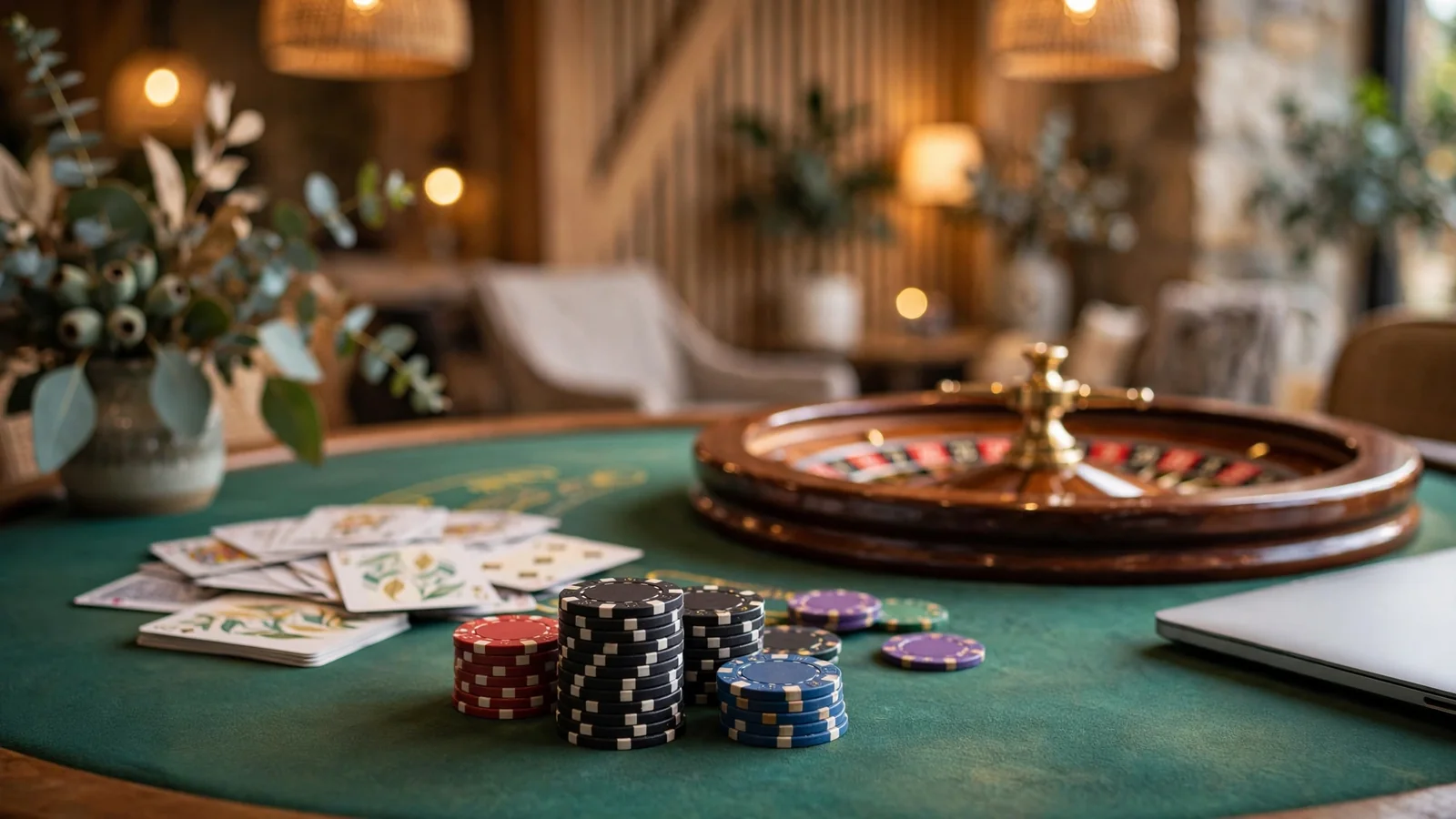
An online table can look like a casino table without being one in the legal sense. The distinction begins with how the game is delivered. In a live-dealer format, a real dealer operates real casino equipment while a camera sends the session to players. In a software version, a random-number generator determines outcomes, such as which cards are dealt or where a roulette ball lands. The screen may make the two formats feel similar; their mechanics are not.
That difference matters when discussing real-money casino table games in Australia, but it does not create a legal exception for either format. A live video feed is still part of an online service, and a virtual table is still a game delivered through software. Neither the presence of a human dealer nor the use of a random-number generator changes the central question: whether an operator may provide real-money interactive casino gambling to people in Australia.
The governing law is the Interactive Gambling Act 2001. Under it, online casino-style services—including table games—are prohibited when provided for real money to people physically located in Australia. Section 5 is part of the framework restricting operators based in Australia from offering real-money interactive casino games to residents. The prohibition concerns the service being offered, not whether its table is filmed in a studio or drawn on a screen.
For real-money table games in Australia in 2026, it is worth checking an operator’s stated licensing and the practical payment details available before deciding where to play. These short verdicts highlight only the information provided for each operator.
Roby Casino
Roby Casino is listed with a Curaçao eGaming license held by Roby Games Ltd.
DragonSlots Casino
DragonSlots Casino is listed with a Curaçao Gaming Authority license held by Jumpman Gaming Ltd.
Thor Casino
Thor Casino is listed with a Curaçao license issued through Antillephone N.V. to Versus Odds B.V. Its minimum deposit is EUR 20.
7Bit Casino
7Bit Casino is listed as operating under a Curaçao license, with Dama N.V. as its operator.
Golden Pokies
Golden Pokies is listed with a Curaçao license.
Rollero Casino
Rollero Casino is listed with Curaçao Gaming Control Board license OGL/2023/176/0095, held by Hollycorn N.V.
MrPacho
MrPacho lists crypto payouts at 30–120 minutes and fiat payouts at 24–72 hours. Its minimum deposit is A$30.
Kingmaker
Kingmaker lists crypto payouts at around 90 minutes and fiat payouts in 1–5 days. Its minimum deposit is A$30.
JustCasino
JustCasino is listed with a Curaçao Gaming Control Board license.
WinSpirit Casino
WinSpirit Casino is listed with Curaçao eGaming license OGL/2024/923/0383, issued through Antillephone N.V. Its minimum deposit is A$30.
This is an important distinction in a market where “online casino” can be used casually to describe a website, a game format or an operator. Those descriptions do not establish that the service is lawful. A platform’s overseas location, its presentation as an international casino, or the existence of a live stream does not make the offer permissible under Australian law. Offshore operators are not a lawful route around the prohibition on providing these services to Australians.
The law places the responsibility on operators, rather than turning the act of playing into a criminal offence for the individual. That distinction should not be mistaken for permission. The Interactive Gambling Act bars the provision of the service, and Australia’s regulatory approach includes active enforcement and access blocking. The Australian Communications and Media Authority (ACMA) is responsible for enforcing compliance; blocking is part of the practical boundary around prohibited online gambling. A site appearing on a screen is not proof that it may lawfully serve Australian residents.
There is a familiar temptation to treat access as a verdict: if a page loads, the reasoning goes, the activity must be allowed. But websites are not legal opinions. Availability can change, and a platform’s own claims about its status do not displace Australian law. In this setting, the more useful distinction is between seeing a service and having a lawful basis for it to provide real-money gambling in Australia.
The same caution applies to promotions attached to online tables. A bonus or other inducement does not alter the underlying character of a real-money casino service. Nor does describing a table as free, social or promotional settle the question if real-money gambling is being offered. The legal status turns on the service and its operation, not simply on the label placed above a button. Offers that invite Australians to use prohibited real-money casino services should not be treated as ordinary consumer deals.
The difference between live-streamed and software-resolved tables is therefore useful for understanding what happens on screen, but not for finding a loophole. One format shows a dealer and physical equipment; another lets software determine outcomes. Both can sit within the broader category of online casino gambling, and real-money provision to people in Australia remains prohibited. A polished broadcast does not soften the law. Neither does code.
This boundary also explains why a discussion of online table games in Australia needs to separate description from recommendation. The formats can be described as technology and entertainment products, while the legal framework sets limits on who may offer them and where. Treating those as separate questions avoids confusing an available interface with an authorised service. It also avoids suggesting that international branding, a live studio or a digital recreation makes real-money play lawful for Australians.
The result is a narrow but clear account of casino tables online: live dealer and random-number formats differ in how outcomes reach the screen, yet neither format is exempt from the Australian prohibition on real-money online casino services. The distinction is technical. The boundary is legal.
Legal Prohibition
Under the Interactive Gambling Act 2001, providing real-money online casino services to people physically located in Australia is prohibited.
Bitcoin belongs to the payment side of a casino comparison; a table game belongs to the play side. Putting the two together can make them seem like a single feature, as though choosing a digital currency also changes the hand, the dealer or the wager. That connection does not follow. A payment method and a game’s rules answer different questions.
The phrase “Bitcoin table games” can therefore mean no more than table games associated with Bitcoin as a payment option. It does not, by itself, describe a distinct kind of table, a special set of rules or a different way of deciding what happens in a round. The same distinction applies to comparisons between Bitcoin games and “normal” casino table games: the word *Bitcoin* identifies the payment angle, not a new gameplay category.
A sound comparison would need to hold the game constant and examine the payment arrangement separately. It would also need evidence about costs, processing, withdrawal conditions and the way each option is handled. Without those details, claims that Bitcoin makes a table game cheaper, faster or more convenient are assertions, not conclusions. A currency’s name is not a fee schedule.
Nor does a payment method settle what happens at the table. In a software-based version, a random-number generator determines the outcome; in a live-dealer version, a real dealer and equipment are shown through a live stream. Whether Bitcoin is associated with either format does not establish that it changes the rules or the outcome. A hand is not improved by the label attached to a deposit, and a wheel does not acquire new odds because a payment method is mentioned nearby.
That matters when searches for the best Bitcoin table games blur several different ideas: popularity, payment access, game preference and chances of winning. These are not interchangeable measures. A game cannot be called the best on the strength of its association with Bitcoin alone. Nor can a table be ranked as a better choice merely because its payment route sounds more modern. The comparison would need a defined measure and evidence for it.
The same restraint applies to claims about the best odds in a Bitcoin casino. Bitcoin does not supply a basis for ranking table games by probability. It is not a rule of play, and its presence does not reveal the chance of a particular result. Questions about odds belong to the design of a game and the terms of its rules, not to the name of a payment method. Those questions need their own evidence.
There is a social history in the way these categories are packaged. Casino language often places the game, the table and the means of payment side by side, turning a practical transaction into a promise of a unified experience. But the labels remain separate. A table has its own rules; a payment method has its own conditions. Joining them in a heading does not make one explain the other.
So “Bitcoin casino table games” is a useful description of a subject, but not proof of a special class of play. It cannot establish which tables are available, what they cost to use, or which offers the strongest chance of winning. Those conclusions require specific, comparable information about the games and the payment terms. Without it, a confident ranking would be decoration.
The distinction is plain. Bitcoin may describe how a payment is made. It does not, on its own, describe the contest.
Bitcoin is a payment method and does not change the gameplay, rules, or odds of a casino table game.
The hunt for the best odds at casino table games often assumes that every game can be placed on a single ladder, from generous to punishing. That neat chart would make comparison easy. It would also conceal what odds describe: not a promise about an individual result, but a mathematical relationship shaped by the rules and by the wager being considered.
A table game may offer several ways to bet, and those choices need not share the same chance of winning. A comparison that labels an entire game “best” or “worst” can therefore flatten differences within the game itself. The rules matter; so does the particular bet. A house-edge chart, however tidy, is only meaningful when its entries are defined on comparable terms.
That is the difficulty behind asking what casino table games have the best odds. A ranking needs comparable figures for the specific games, rules and wagers being compared. Without that foundation, naming a champion would turn a question about probability into a claim without a clear measure. The same restraint applies to the supposed worst odds. A confident ordering is not more useful merely because it is decisive.
There is another distinction worth keeping in view: the chance of winning a particular bet is not the same thing as a guarantee of profit over time. A favourable-looking result in one round says little about what follows. In games resolved by random-number software, the outcome is determined by the software; in live dealer games, real equipment and a streamed dealer shape the format. Neither format, by itself, supplies a universal ranking of odds.
The language of probability has always carried a social promise: that uncertainty can be made legible, perhaps even domesticated, by a table of figures. Casinos have reason to present games as orderly systems, while players have reason to look for an advantage. But arithmetic does not become a forecast simply because it is printed beside a felt layout. The house edge, when properly established for a particular wager and set of rules, describes a long-run mathematical expectation. It does not tell a player what the next hand, roll or spin will bring.
A sound comparison would need to say exactly which rules apply, which bet is being assessed, and how the quoted measure is defined. Otherwise, two figures may look directly comparable while answering different questions. A chart can be useful when those distinctions are visible; without them, its precision is mostly decorative. The table looks settled. The uncertainty is not.
So “best table games” is not a reliable synonym for “best odds.” Enjoyment, pace and the kind of decision-making a game involves are separate matters, and none can be inferred from a ranking of probabilities. Even a valid mathematical comparison would not turn chance into control. It would describe a structure, not confer an advantage on every player at every moment.
The appeal of a single answer is understandable. A short list promises to turn a complicated subject into a shopping choice. Yet odds belong to specific bets under specific rules, not to a game name in isolation. A comparison that does not preserve that detail may rank labels while leaving the actual wager unexamined.
Probability can clarify the shape of uncertainty. It cannot abolish it.
A table game turns an uncertain event into a public one. Cards are dealt, hands are compared, or dice are rolled; wagers give those events a consequence for the people gathered around them. The equipment differs, but the recurring structure is compact: an outcome is produced, and players have chosen what they think it will be.
In Blackjack, the contest is between a player and the dealer. Each seeks a hand whose value comes closer to 21. That simple aim gives the game its shape: the player’s hand is not judged in isolation, but in relation to the dealer’s. The dealer is therefore more than the person handling the cards. The role marks the boundary of the contest, turning a collection of individual decisions into a comparison with a common opponent.
Other table formats organise the wager around more than one possible hand. A player may bet on their own hand, the Banker’s hand, or a tie. Here, the point is not necessarily to take part in every hand personally; the wager can attach to one side of the comparison or to the possibility that neither side prevails. The table presents several destinations for a stake, while the cards determine which one, if any, matches the result.
Dice make the same social arrangement feel different. In one table game, players roll a pair of dice and bet on the outcome. Cards have disappeared, as has the hand to be compared with a dealer’s. What remains is the shared pause before the dice settle: the event is brief, visible and difficult to mistake for anything other than chance. The wager gives that moment a structure.
These forms are often grouped together because they make outcomes legible. A hand can be set against another hand; a roll can be observed; a tie can be named as a possible result before it occurs. The table is a small theatre of rules. Its rituals make uncertainty manageable enough to organise, though never to abolish.
That distinction matters when describing how to play. Knowing the broad contest is not the same as knowing every rule governing a particular table. In Blackjack, the stated aim concerns the hand’s value relative to 21 and the dealer’s hand. In a hand-based wager, the choice may concern the player, the Banker, or a tie. In a dice game, the wager concerns the roll’s outcome. Each description identifies the central relationship, not every permitted decision or variation.
The dealer-centred contest also reveals an old division in games of chance: sometimes the house appears as an opponent, sometimes as the organiser of a wager placed on an event. A dealer’s presence gives the game a human face, but the role remains part of the rules rather than proof of personal rivalry. The dice, by contrast, offer no opponent at all. Only the roll.
Different rituals, similar bargain. The wager waits on an outcome, and the table gives that wait a form.
A request for a casino close by is a request about place. It imagines distance, a door, a room and perhaps a table at which people gather. Adding table games narrows the picture but does not change its geography: the question is still where a venue is, not whether an online game is available to someone in Australia.
That distinction matters because a map result and an online casino are not interchangeable answers. A venue listing concerns a physical location. A website concerns a service delivered across a network. The word *casino* can make them appear to belong to one simple category, though their relationship to Australian law is different.
For people physically in Australia, the Interactive Gambling Act 2001 prohibits operators from providing real-money online casino games, including table games. The law places the restriction on the service provider, rather than making a nearby search a route to online play. ACMA enforces the rules and blocks unlicensed domestic platforms. A search result cannot alter that boundary.
Location-based phrasing can also conceal a change of subject. Someone looking for the closest casino with tables may be thinking of travel and a physical destination. Someone searching for table games online is asking about a remote service. The two searches may use similar words, but one is measured in distance and the other in access. A screen does not become a local venue simply because it displays a table.
Nor does a city name settle the matter. Searches framed around a particular city or state still begin with a location, but the place-name alone says nothing about the availability or legal status of an online casino service for someone in Australia. Geography is good at locating things. It is less useful as a legal argument.
The online version of the question therefore has a narrower answer than its wording may suggest. The existence of a website, a page about table games or a result that appears relevant does not make real-money online casino games lawful to provide to people in Australia. Offshore presentation does not turn the service into a local venue, either. The distinction is not cosmetic; it is the line between a place people might visit and an online gambling service governed by a national prohibition.
This is why “near me” can lead nowhere useful when the real subject is online play. It asks a search engine to solve a problem of distance, while the underlying question is about what kind of service is being offered and whether it may be provided in Australia. A map can describe proximity. It cannot grant permission.
The phrase *new casino table games* belongs to yet another kind of search: it asks about novelty, not neighbourhood. Putting that phrase beside a local search does not make an online offering a physical destination, nor does freshness change the legal position. Newness is not a jurisdiction.
The nearby-table idea starts with a familiar human image: strangers sharing a room, watching the same hand or waiting on the same roll. Online language borrows that image, then removes the room. In Australia, the distance between those two meanings is more than a matter of atmosphere.
A casino table game online is not defined by a wooden surface on screen. The important distinction is how the event is produced: either a real dealer works with physical casino equipment and a camera carries the action live, or software determines the result. The screen can make these formats look similar. Their sources of action are different.
In a live-dealer game, the dealer and equipment are real; players see a video stream of the proceedings. The table is therefore a physical setting made visible at a distance. Its familiar rituals—the dealer’s presence, the equipment and the unfolding action—survive the move to a screen, although the people watching are elsewhere. Technology transports the scene rather than creating its outcome.
A real dealer operates physical equipment, and the action is delivered via a live video stream.
A random-number generator determines the outcome, which is then presented on the screen.
An online version without a live dealer works another way. Random-number software determines the result, such as which cards are dealt or where a roulette ball lands. There is no live physical event being broadcast for that result. The screen presents an outcome generated by software.
That distinction helps answer the broad question of what table games are in a casino when the setting is online. The category can include both streamed tables and software-based versions; “online” describes how the activity reaches the screen, not necessarily how its result comes about. A video feed is not the same thing as a digital simulation, even when both appear within a similar interface.
The difference also clarifies what casino table-games software means in this context. In a software-based version, a random-number generator is responsible for the outcome. In a live-dealer format, the stream shows a real dealer using real equipment. Those are meaningful descriptions of the formats, not claims about particular management systems or how a venue operates behind the scenes. The machinery is not always visible, but its role separates one kind of table from another.
There is a small cultural shift in that separation. A traditional table gathers people around a shared physical object; an online table can preserve the dealer’s image while dispersing the audience, or replace the live scene with a software-determined result. One format carries a room across distance. The other dispenses with the room.
Neither appearance alone settles the matter. A rendered table does not establish that a dealer is present, and a live image does not mean the event is generated by a random-number system. The useful definition rests on the source of the action: real equipment and a live dealer, or software determining the result.
Same table, different machinery.
A casino table can organise chance in several ways, but a catalogue is not the same thing as an account of how play works. Some games turn on cards and the comparison of hands; others make the dealer the central opponent. A dice table has a different rhythm: the roll becomes the event around which wagers are placed. These are broad forms of activity, not a reliable inventory of every game offered under the table-games label.
The distinction matters because the label can make variety sound more settled than it is. A table may bring players together around a shared event, or set one player’s result against a dealer’s. With dice, the action is concentrated in the throw itself. Players roll a pair of dice and bet on the outcome. The equipment is modest; the social choreography is not. A roll is brief, but its meaning depends on the wager and the rules surrounding it.
That small scene belongs to a long human habit: turning uncertainty into a public ritual. Dice are among the simplest objects to read, yet they invite elaborate expectations. The throw is visible to everyone; the result arrives all at once. Cards, by contrast, can conceal information and unfold over a hand. Neither form needs a grand apparatus to make a table feel like a stage. A felt surface and a set of agreed rules are enough.
This is why a supposed list of casino table games can be less informative than it appears. Names alone say little about whether a game is organised around a dealer, a player’s hand, a shared outcome or a dice roll. Those mechanics shape the atmosphere as much as the equipment does. They also explain why broad categories overlap: “table game” describes a setting and family of play, not one uniform contest.
Live tables add another layer to the scene, because a dealer and physical equipment are presented through a stream. Yet the presence of a visible table does not make every experience identical. The social cues of a dealer-led game differ from the compressed suspense of dice, while a card hand has its own pace and attention. Calling all of them “live table games” can flatten those differences into a single label.
There is no useful reason to call one format the best in the abstract. A game’s shape may appeal for its visible communal event, its unfolding hand or its direct wager on a roll. That is a description of form, not a ranking of quality or chances. In the broadest sense, table play gives uncertainty a place, a procedure and an audience. The audience is part of the design.
A card table turns a handful of paper into a public argument about chance. The cards may be hidden, displayed or gathered into a hand, but the contest depends on what that hand represents: a position against a dealer, or one side of a wager placed before the result is known. The table gives uncertainty a shape. It also gives everyone present a role.
In blackjack, the player’s hand is measured against the dealer’s. The aim is to finish closer to 21 than the dealer, so the central comparison is not simply between a hand and a target. It is between two hands, each occupying a different seat in the contest. The dealer is both participant and appointed opposition: not another player choosing a side, but the figure against whom the player’s result is judged.
That arrangement has a spare, almost theatrical quality. Two hands enter the frame; one is assessed against the other. The number matters, but so does the structure around it. A dealer-facing game makes the player’s attention personal and immediate: this hand, that hand, and the distance between them.
Other card-table wagers organise attention differently. A bet may be placed on the player’s hand, the Banker’s hand or a tie. Here, the wager names the possible outcome before it is settled. The player need not be wagering only on a personal hand; the contest can be watched from the position of someone backing one side, or the possibility that neither side prevails over the other.
That distinction helps explain why card table games are not all the same kind of encounter. Some put the player directly opposite a dealer, with the hand as the measure of their relative positions. Others make the table itself a field of outcomes, where the wager may attach to either named hand or to a tie. The cards remain central, but the social geometry changes: opposition in one case, selection among outcomes in another.
The word “hand” carries more than a count of cards. It marks a temporary claim, a small case presented to the table. In blackjack, that claim is tested against the dealer’s. In a wager on a player’s hand, the Banker’s hand or a tie, it becomes the object of a chosen stake. Different arrangements; the same ritual of waiting for a result.
The cards do not settle the meaning of the contest on their own. The rules decide whose hand is compared, and what a wager is attached to. That is the table’s quiet invention: turning private uncertainty into a shared event.
Roulette rules are easiest to distinguish by looking at the pockets on the wheel. European and French layouts share the same basic feature: numbered pockets alongside a single green zero. The American layout has a green zero and a green double zero. That extra marking is not decoration; it is the most visible structural difference between the versions.
The names can suggest a grand cultural divide, but the useful distinction is smaller and more concrete. European and French Roulette have 36 numbers and one green 0. American Roulette includes both 0 and 00. A description that merely says “roulette” therefore leaves an important detail unresolved: which layout is being described?
That matters when rules are being read, whether in a printed explanation, a demonstration or a digital interface. The wheel’s markings define the layout, while the table surface shows where bets are placed. A clear explanation should identify the version before describing its rules, rather than treating every wheel as interchangeable. The double zero is a small pocket with a large presence.
The same care applies to labels such as “free play.” A free demonstration and real-money gambling are not the same thing, and the word alone does not explain what a page provides. In Australia, real-money online casino games are prohibited when offered to people in the country. A description of roulette layouts can explain the game’s structure without presenting online play as an available or lawful service.
For anyone comparing written rules, the green pockets are a simple first check. A single 0 points to the European or French layout described here; a wheel marked 0 and 00 is American. The distinction identifies the format, not a promise about outcomes. Nor does the name alone explain every rule attached to a particular table: the layout is only the beginning of the description.
Roulette’s vocabulary has a curious economy. One extra symbol can separate familiar variants, while the word “roulette” conceals that difference until the wheel is examined. That is enough to make the layout worth naming plainly.
Poker is often grouped with casino table games, but its defining contest is not simply a player facing a dealer. Players compete with one another, each trying to build the best possible hand. The table becomes a small social arena: attention is divided between the cards and the people holding them, and the object is to prevail within that shared contest.
That distinction gives poker a different character from games organised around a dealer’s hand or a single external outcome. The central comparison is among the players’ hands. The rules establish what counts as a hand and how competing hands are judged; the contest itself is carried by the people at the table. Poker’s enduring appeal is easy to understand in that light. It turns a game into a meeting of rivals, even when the rules remain the same from hand to hand.
The label covers a broad family of games, but a catalogue would imply distinctions that are not needed to explain this basic idea. The common thread is the struggle to assemble the strongest hand. That is enough to separate poker from table play whose central action is a wager against a dealer or on the result of a roll.
In Australia, the setting matters. The Interactive Gambling Act 2001 prohibits operators from providing real-money online poker to people located in the country. Poker may be discussed as a form of play, but that description does not make a real-money online service lawful for Australian residents. The law draws its line around the service, not around the social meaning of the game.
A contest, then, but not an invitation. Poker’s place among casino table games rests on competition between players; its online real-money status in Australia is constrained by law.
Real-money online casino table games may not lawfully be provided to people in Australia under the Interactive Gambling Act 2001, whether they use a live dealer or software. The law targets operators; playing is not itself a criminal offence for the individual.
Treating a website’s availability as proof that it is authorised to serve Australians is a major mistake. A site loading, using an overseas address or showing a live dealer does not make its real-money casino service lawful in Australia.
There is no lawful route for an operator to provide real-money online casino table games to people in Australia. The restriction applies to both live-dealer and software games.
Real-money online casino services, including table games, are prohibited when provided to people in Australia. The Interactive Gambling Act places the responsibility on operators, rather than making the act of playing a criminal offence for the individual.
They may be less useful for table game players because blackjack and roulette can contribute only 10–20% toward wagering requirements, and some games may be excluded. Check the bonus terms, including game contributions and maximum bets, before accepting an offer.